- Wine Spectator · Tier 2
- Wine Spectator Best of Award of Excellence · 2026
- World's Best Wine Lists Awards WBWL 3-Star · 2025
- World's Best Wine Lists Awards WBWL 3-Star · 2024
Frogner's Formal Dining Tier and Where Ambassaden Sits Within It
Henrik Ibsens gate runs through one of Oslo's most composed residential and diplomatic quarters. The Frogner district has long housed embassies, law firms, and the kind of long-standing restaurants that attract regulars who value consistency over novelty. Dining here feels different from the more trend-sensitive energy of Grünerløkka or the Aker Brygge waterfront: the pace is deliberate, the expectations calibrated toward craft rather than spectacle.
Ambassaden operates within this context. Its name, a direct reference to the embassy world that characterises the neighbourhood, signals its register before a guest has ordered anything. The 3-Star Accreditation from the World of Fine Wine & Lifestyle Awards places it in a peer group defined by programme seriousness and front-of-house depth, rather than novelty or media visibility. In Oslo's fine dining hierarchy, that positions it distinctly from the high-volume tasting-menu circuit and closer to the kind of formal European dining room that prioritises the guest's sustained comfort over theatrical flourish.
For visitors approaching Oslo's fine dining scene for the first time, the contrast worth understanding is this: Maaemo and Kontrast represent the city's internationally flagged tasting-menu tier, where the format is fixed and the narrative around sourcing and New Nordic identity is central to the meal. Ambassaden occupies a different register, one more aligned with a European dining tradition where the wine list and the room carry as much weight as the kitchen output.
The Ingredient Question in Norwegian Fine Dining
Norwegian fine dining has spent the past decade building a coherent sourcing story, and it has become one of the country's strongest culinary arguments internationally. The fjords, the northern coastlines, the mountain farms, and the brief but intense growing season produce ingredients, Arctic char, king crab, reindeer, cloudberries, hand-dived scallops, that carry genuine geographical identity. At the highest tier of the Oslo dining scene, the credibility of a kitchen now partly rests on how directly it can trace those relationships with producers.
This is not incidental to how restaurants like Ambassaden are assessed. The World of Fine Wine & Lifestyle accreditation system, which awarded the restaurant its 3-Star standing, evaluates not only food and wine pairing but the overall programme quality, a framework that implicitly rewards kitchens with clear sourcing intelligence and front-of-house teams capable of articulating it. In practical terms, that means the leading meals in this tier tend to have a legible connection between what arrives on the plate and where in Norway it came from.
The broader Norwegian sourcing picture is worth understanding for any guest: domestic producers have become more visible on menus partly because logistics have improved but also because the culinary culture shifted around 2010 toward treating Norwegian geography as an asset rather than a limitation. Restaurants operating at the 3-Star accreditation level are expected to reflect that shift in a credible way, whether through direct farm relationships, seasonal menu changes tied to harvest calendars, or wine pairings selected to complement specifically Nordic flavour profiles rather than defaulting to standard French or Italian references.
Compared to peers elsewhere in Norway, RE-NAA in Stavanger, FAGN in Trondheim, or the more remote propositions like Iris in Rosendal and Under in Lindesnes, Oslo kitchens work with the logistical advantage of being the country's largest market, meaning access to a wider range of suppliers. The trade-off is that the city's restaurants must be more deliberate about communicating sourcing provenance, because it doesn't carry the same automatic narrative weight as cooking in a remote fjord-side location.
The Frogner Experience: Arriving and Reading the Room
The address on Henrik Ibsens gate puts guests in a street that feels more like a European capital's diplomatic core than a dining destination in the conventional sense. There are no queues, no neon, no street-level theatre. The approach is quiet, the entrance considered. This is a neighbourhood where restaurants earn their clientele through word of mouth and repeat visits rather than social media saturation.
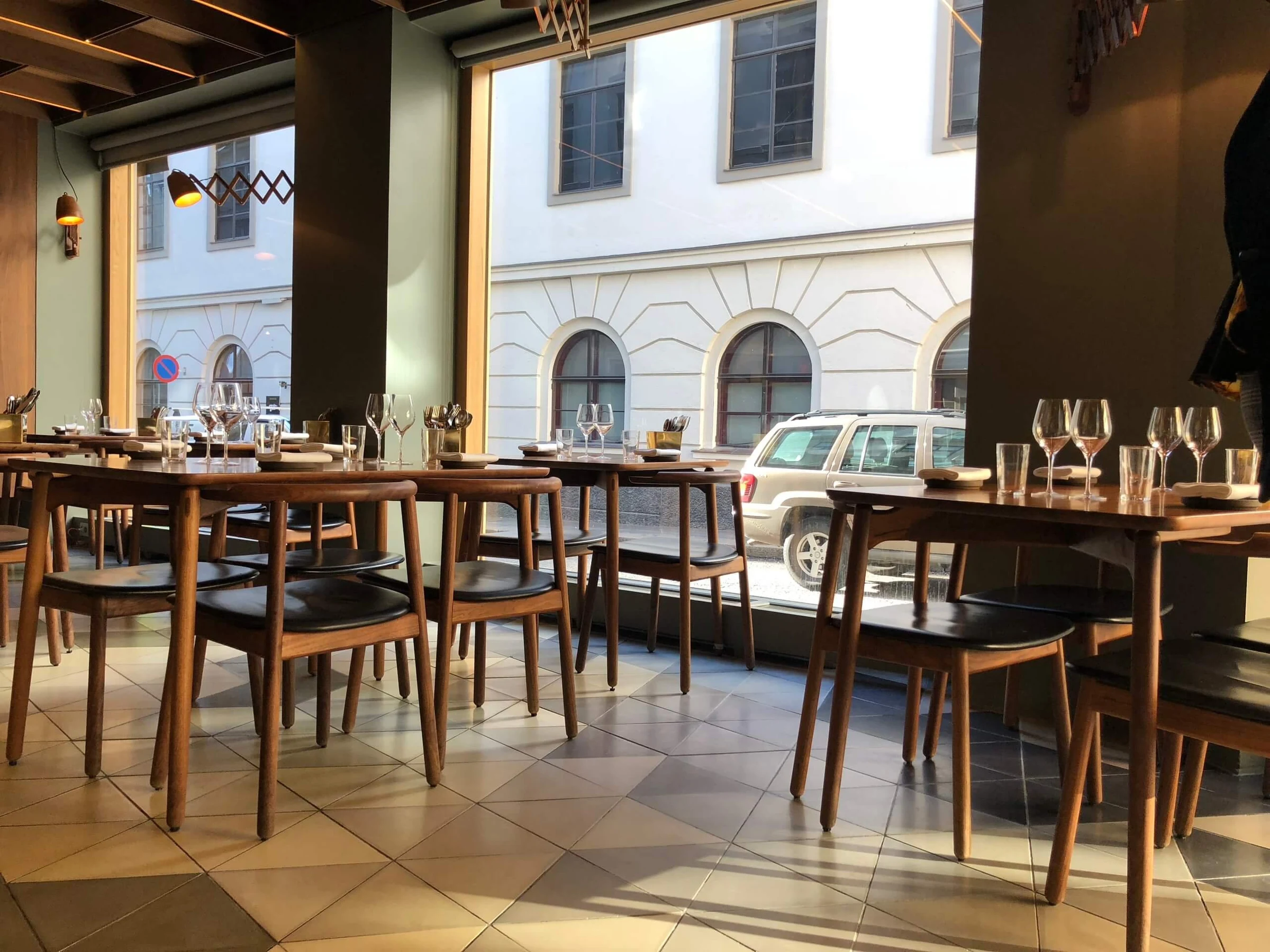
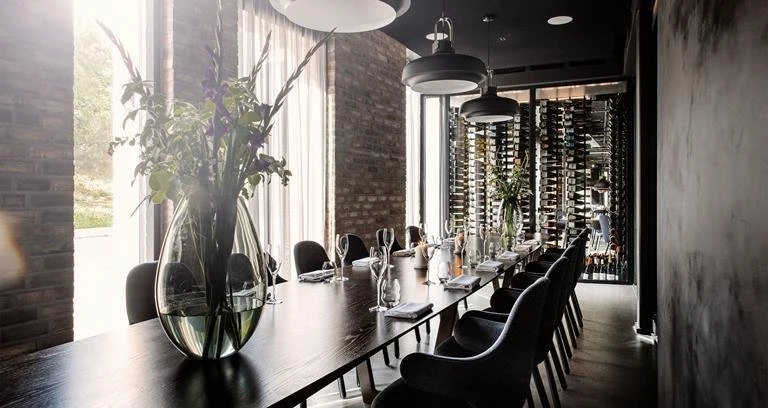
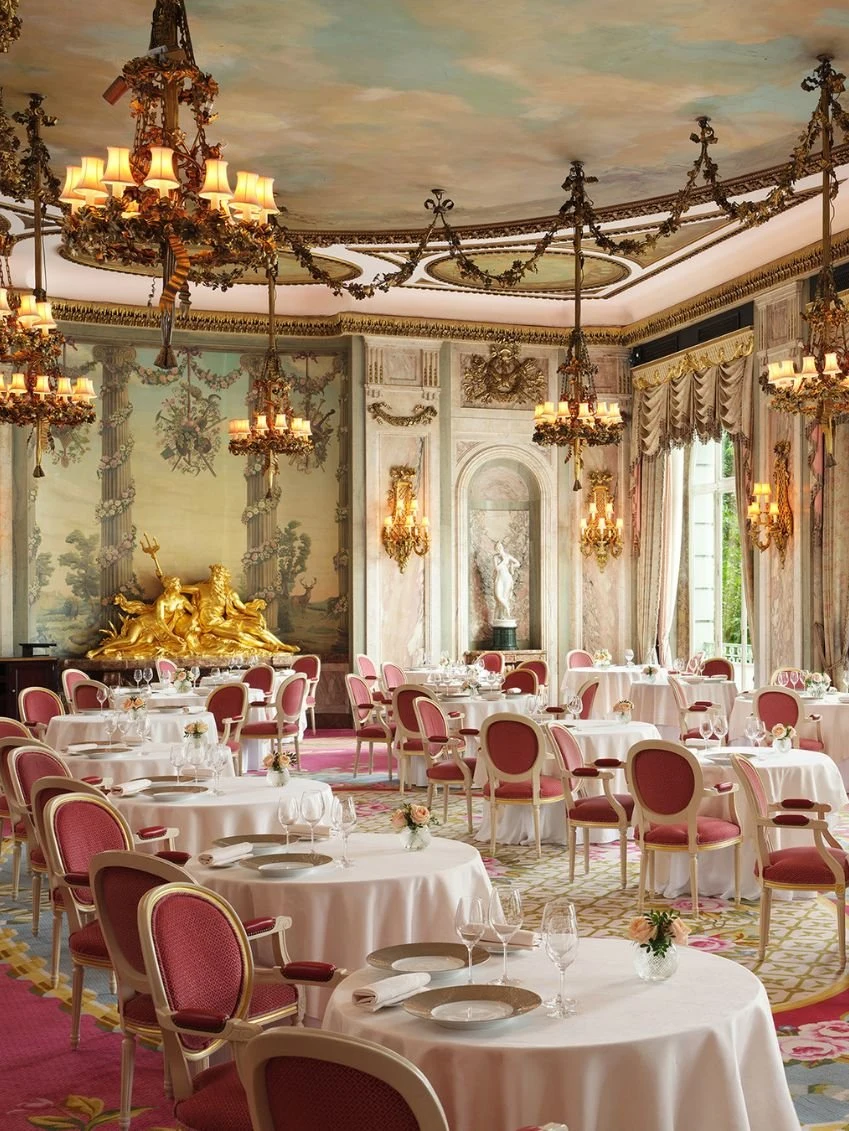
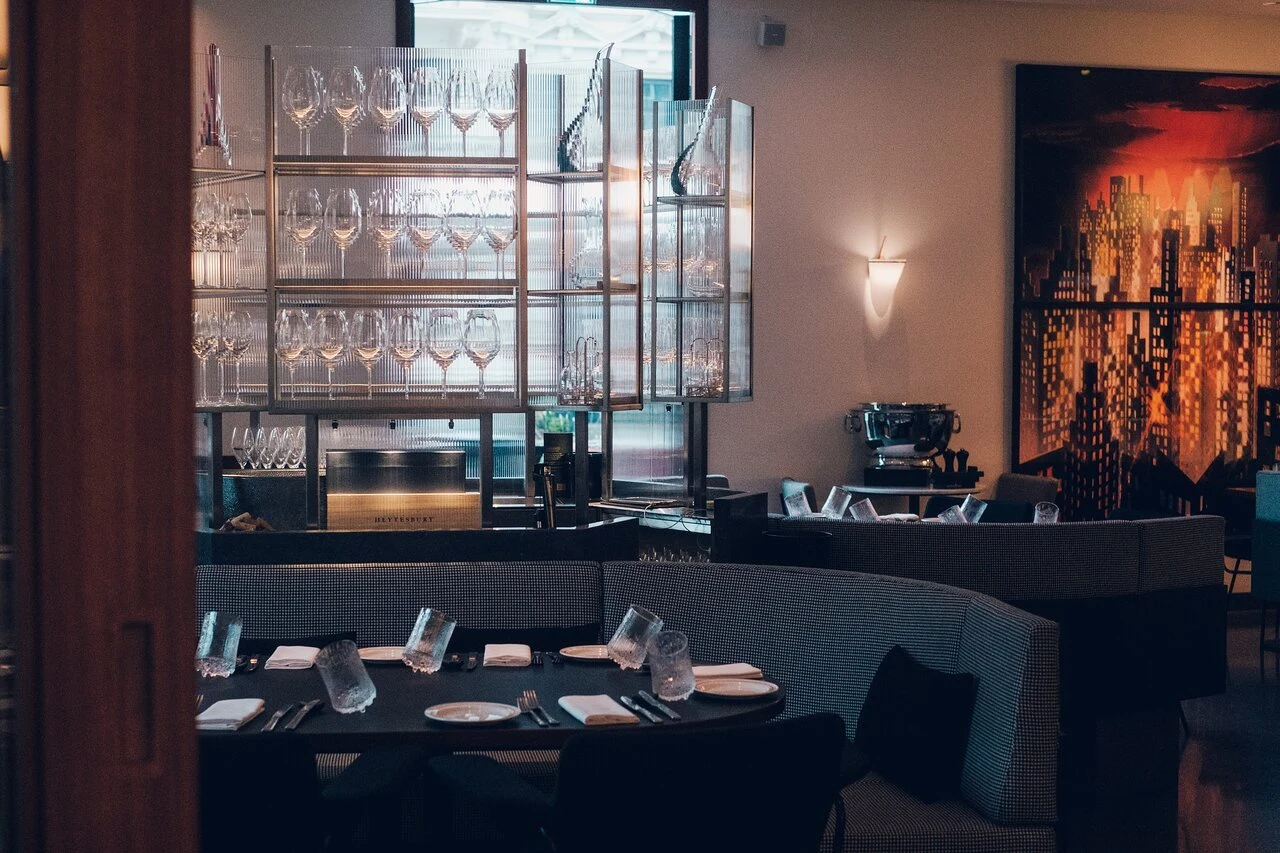
Oslo's formal dining rooms in this district share certain qualities: they tend toward neutral, considered interiors that allow the table and its contents to anchor attention; service is structured without being rigid; and the wine programme is taken seriously enough that the list functions as a destination in itself rather than a supplement to the food. The World of Fine Wine & Lifestyle framework, under which Ambassaden has achieved its 3-Star Accreditation, is specifically attentive to this relationship between kitchen and cellar, making it a particularly relevant credential for a room in this mould.
Guests visiting from outside Oslo often find that the Frogner dining tier rewards a slower pace than they might expect from a city restaurant. Booking ahead is advisable; this category of restaurant typically operates with a structured service schedule rather than walk-in flexibility. For logistics around the neighbourhood, accommodation, bars, and the wider cultural offer,
Contextualising the Award and What It Signals
The World of Fine Wine & Lifestyle Awards 3-Star Accreditation is not a Michelin star and should not be read as one. It represents a different evaluative lens, one that foregrounds the integration of wine and food programmes and the overall quality of the dining experience as a whole. For guests whose priority is kitchen technique above all else, the Michelin-starred tier, including Maaemo, remains the benchmark. For guests who weight the wine programme heavily, or who are seeking a formal dining room rather than a tasting-menu format, the World of Fine Wine accreditation is a credible signal of the room's seriousness.
Oslo's fine dining scene now has enough depth that these distinctions matter. The city is no longer simply divided between high-concept New Nordic and casual bistros. There is a mid-to-upper tier, represented by addresses like Hot Shop, Bar Amour, and Mon Oncle, and then a smaller number of rooms operating at the level of formal European dining. Ambassaden belongs to the latter group. Internationally, the comparison points are not other Oslo restaurants but European dining rooms with serious wine programmes and long-standing reputations for consistency: places like Le Bernardin in New York City or the more institution-like rooms of Paris and Vienna.
For visitors who want to understand where Ambassaden sits within a broader Scandinavian fine dining circuit, the restaurants worth knowing include Gaptrast in Bergen, Boen Gård in Tveit, and the internationally recognised Under in Lindesnes. Each operates in a distinct register; collectively, they show how Norwegian fine dining has distributed itself geographically and stylistically rather than concentrating in Oslo alone.
Questions
Frequently asked
Who works at Ambassaden?
Made By profiles Francesco Marzola (Sommelier) at Ambassaden.
How expensive is Ambassaden?
Ambassaden is listed at a price level of $$$$.
Where is Ambassaden and what does it serve?
Ambassaden is in Ruselokka, Oslo, serving Nordic Brasserie.
The field
How it compares
| Place | Cuisine | Notes | Awards |
|---|---|---|---|
| Ambassaden | Nordic Brasserie | Ruselokka, $$$$ | · |
| Arakataka | Modern Nordic | Oslo | · |
| Kontrast | Modern Nordic Fine Dining | Oslo | Michelin 2 Stars |
| Maaemo | New Nordic Fine Dining | Oslo | Michelin 3 Stars, World's 50 Best |
| SAVAGE | Modern Scandinavian Fine Dining | Oslo | Michelin 1 Star |
| Statholdergaarden | Classic Norwegian-French Fine Dining | Oslo | Michelin 1 Star |
| Tim Wendelboe | Specialty Coffee Espresso Bar | Oslo | · |
In residence
Similar places
Modern Nordic
Arakataka
Oslo, Norway
Modern Nordic Fine Dining
Kontrast
Oslo, Norway
★★
New Nordic Fine Dining
Maaemo
Oslo, Norway
★★★ · 50 Best
Modern Scandinavian Fine Dining
SAVAGE
Oslo, Norway
★
Classic Norwegian-French Fine Dining
Statholdergaarden
Oslo, Norway
★
Specialty Coffee Espresso Bar
Tim Wendelboe
Oslo, Norway