Apicius
In Residence
Benjamin Andreux
Chef
- 01CuisineModern French Fine Dining
- 02CityParis, France
- 03RecognitionOne Michelin Star
Seasonal French work, tightly paced
- 1 Michelin Star · Michelin Guide
- Michelin 1 Star · 2026
- La Liste Top Restaurants: 85pts · 2026
- Opinionated About Dining Classical in Europe Ranked #127 · 2026
- Opinionated About Dining Top Restaurants in Japan Recommended · 2026
- Gault & Millau Remarkable Restaurant: 15.5pts · 2025
- We're Smart World 2 Radishes · 2025
Control before the first plate
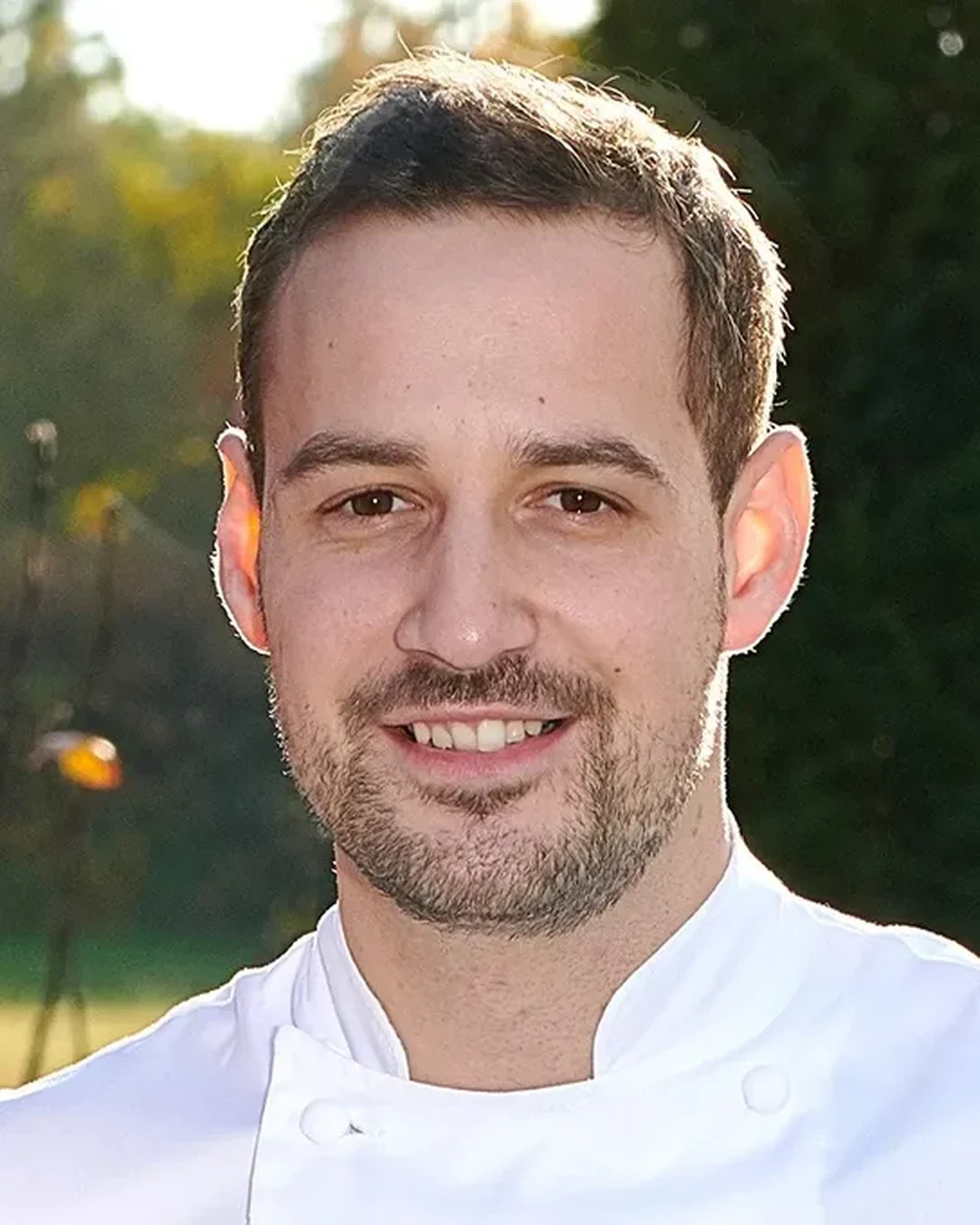
Before service, stock, spend, pacing, and the shape of the menu decide everything: Apicius in Paris asks for polish without visible strain, and the pass depends on decisions made long before a sauce reaches heat. The room may read as French fine dining, but the craft behind it is operational: inventory that arrives in rhythm, a menu that can hold its line, and a kitchen that knows the cost of every gesture without letting the guest feel the calculation. Mathieu Pacaud took the house on at 37 and reworked it toward a lighter, seasonal, produce-centred kitchen, a deliberate turn away from the heavier register it carried under Jean-Pierre Vigato. Pacaud is the son of Bernard Pacaud of the three-starred L’Ambroisie, and the inheritance shows less as a signature flourish than as the habit of keeping a system coherent. He has also worked as consulting chef for Domaine de Murtoli in Corsica, which is part of why a Corsican line runs through the card.
A modern French program held by season
Apicius works in a modern French register, with tasting menu, à la carte, and prix fixe formats built around produce, season, and classical technique. The kitchen’s known architecture includes menus of 3 or 6 courses, a structure that gives the pass room for progression without turning the meal into spectacle. The cooking is built from ingredients that carry their own precision: foie gras with grilled candied cédrat, smoky eel, and garden herb mousseline; green asparagus with spring herbs, aromatic curry, Comté soufflé, and vin d’Arbois; Saint-Pierre with shellfish, slow-cooked fennel, marjoram-glazed squid, and sorrel sauce. Grilled and raw summer squash can arrive with girolles, fresh almonds, and a Tomme de Brebis sauce. The house’s most repeated dessert is chocolate soufflé, served with bourbon vanilla ice cream, crème chantilly, or cacao sorbet. There is an exceptional wine program beside it, including rare French bottles and a marked Corsican thread. In a restaurant of this kind, the cellar is not decoration. It is another station, calibrated against sauce, fat, salt, and the length of the meal.
The mansion, the garden, the pass
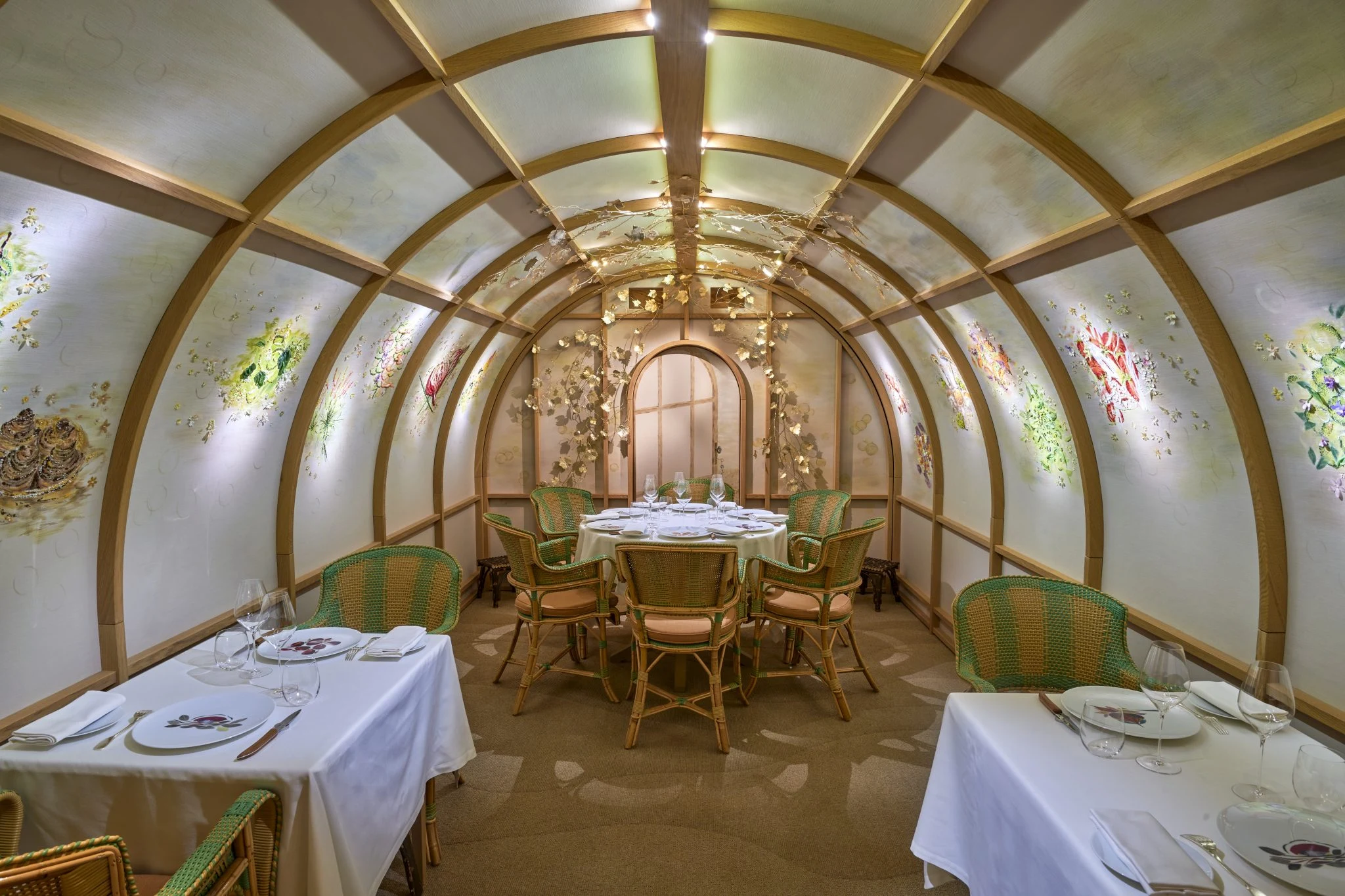
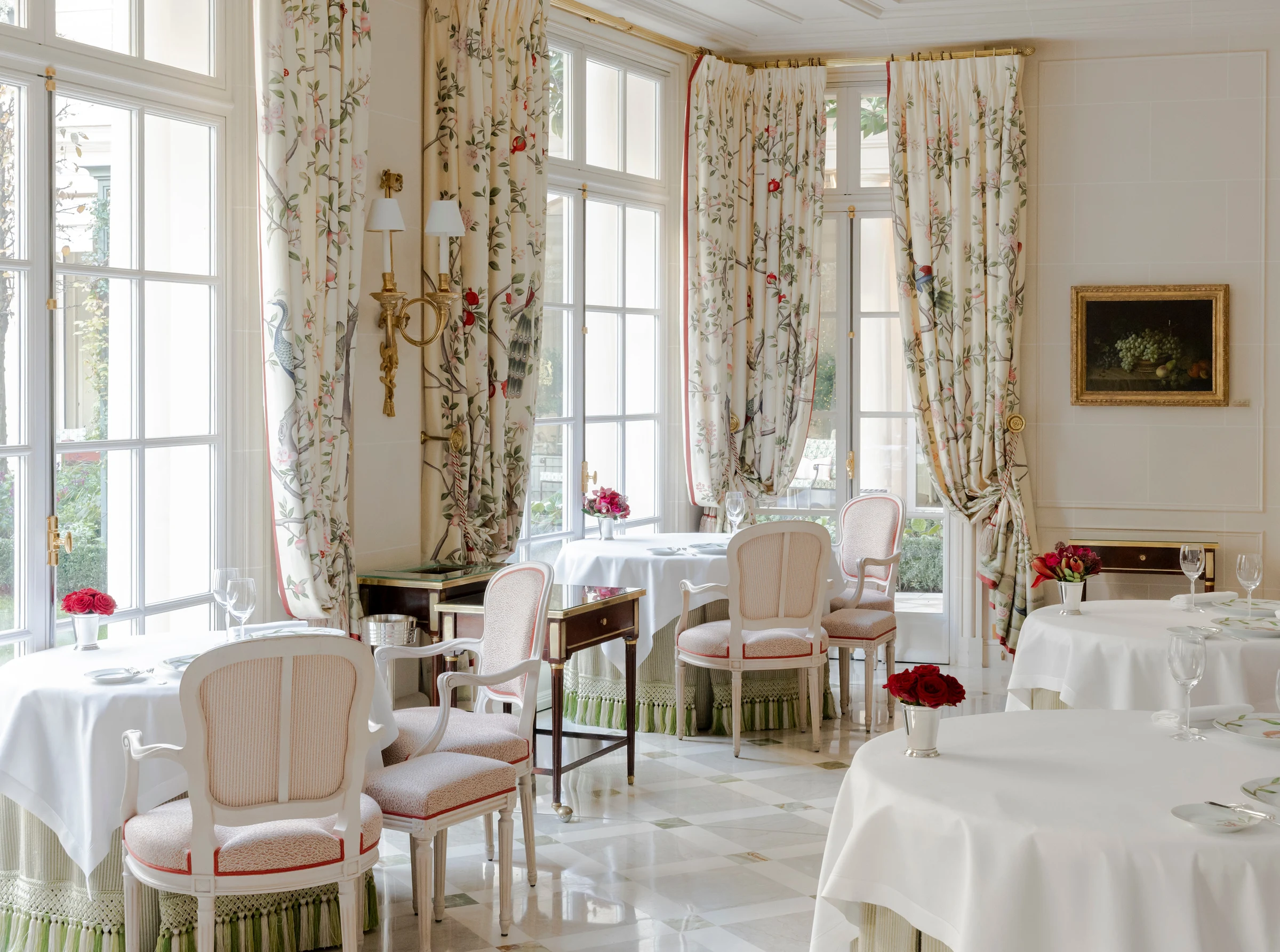
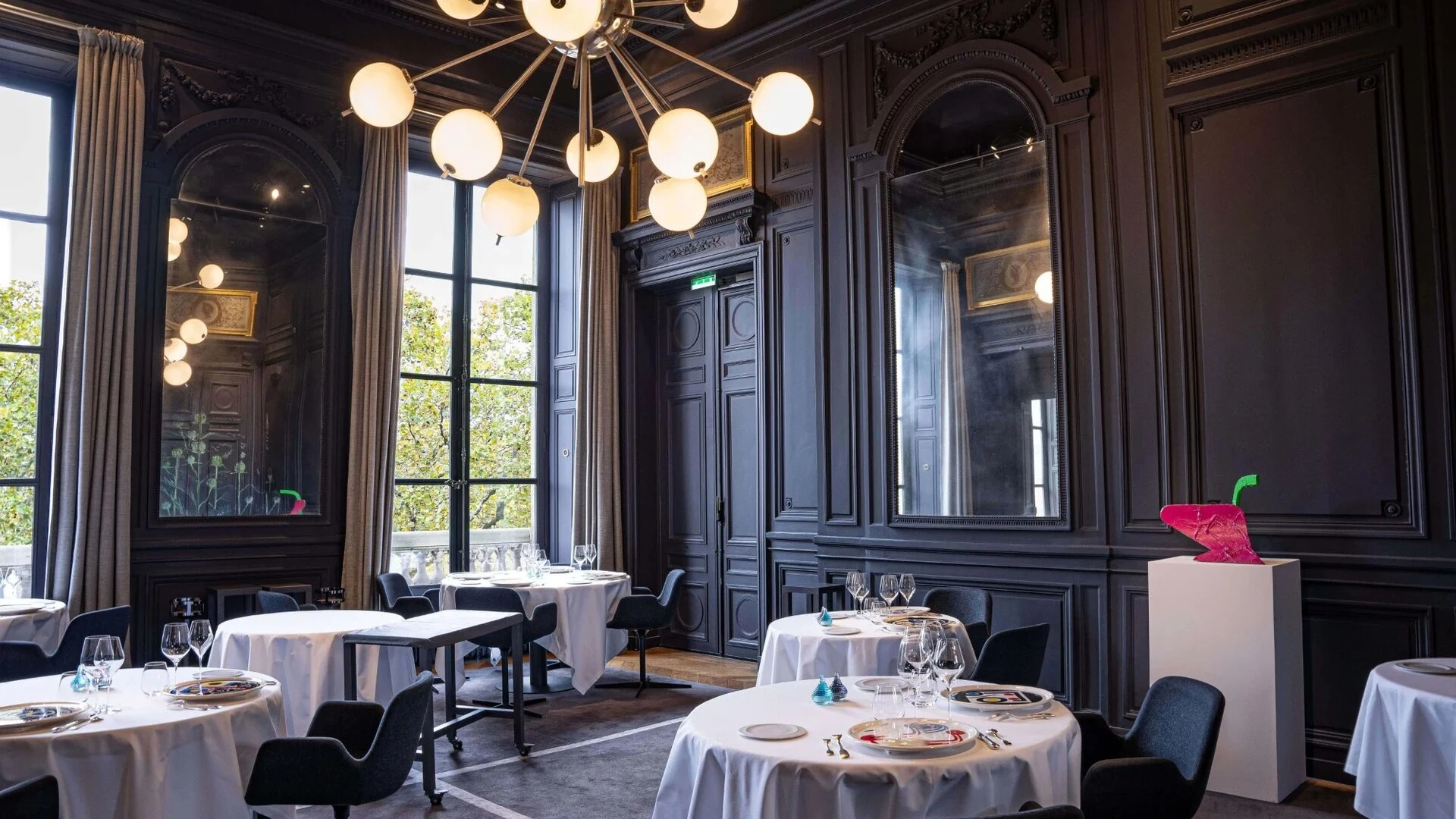
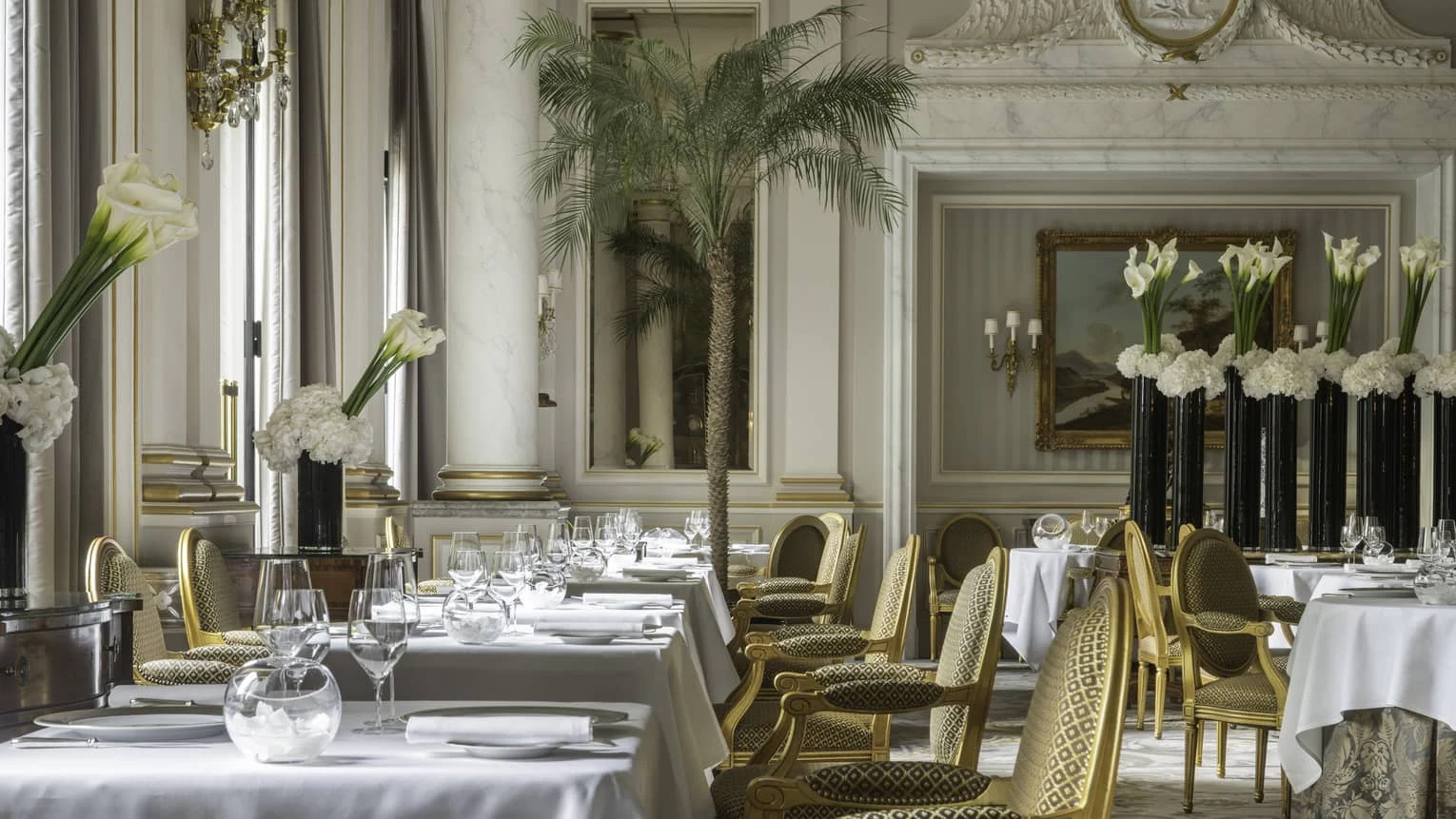
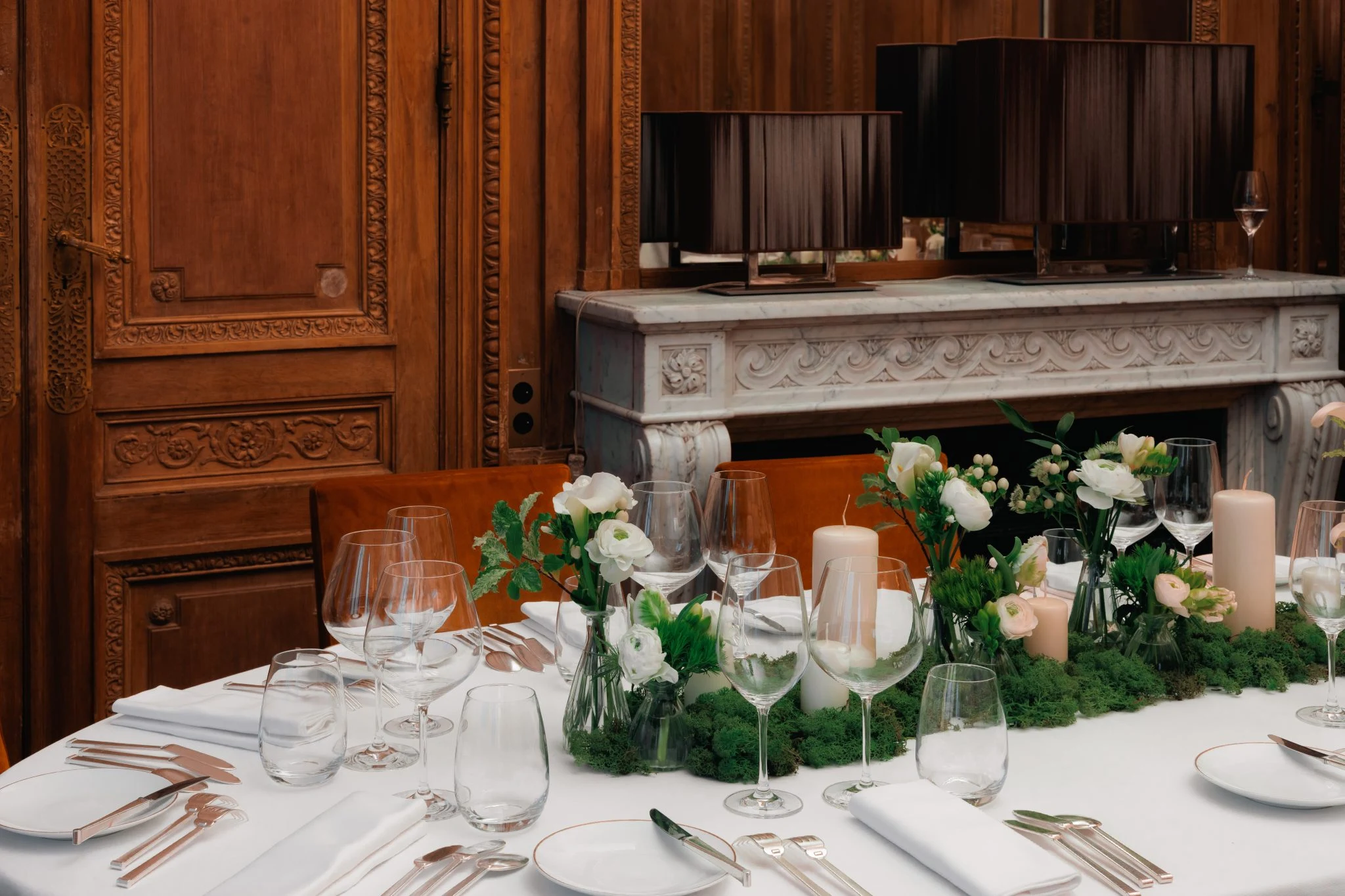
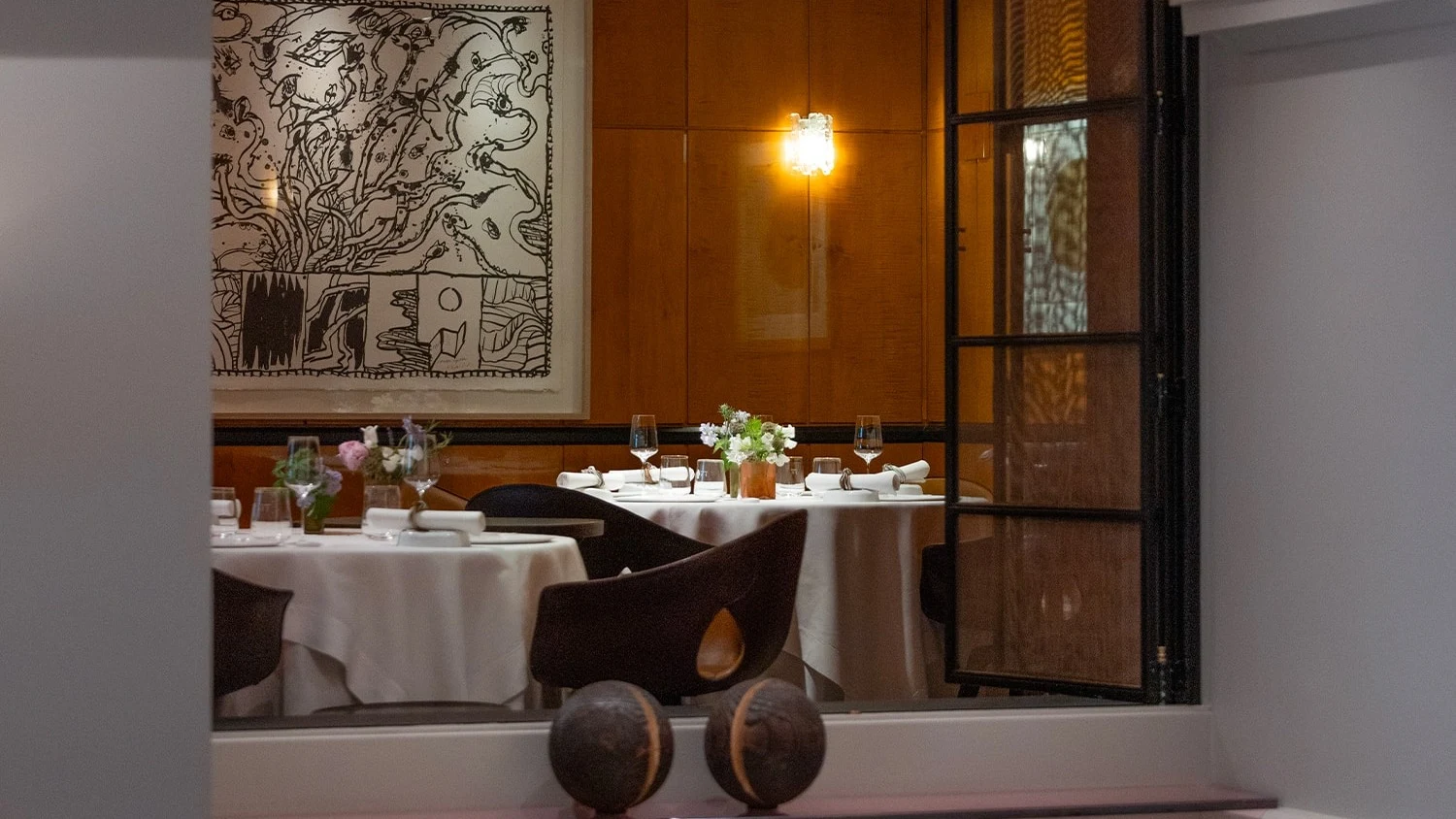
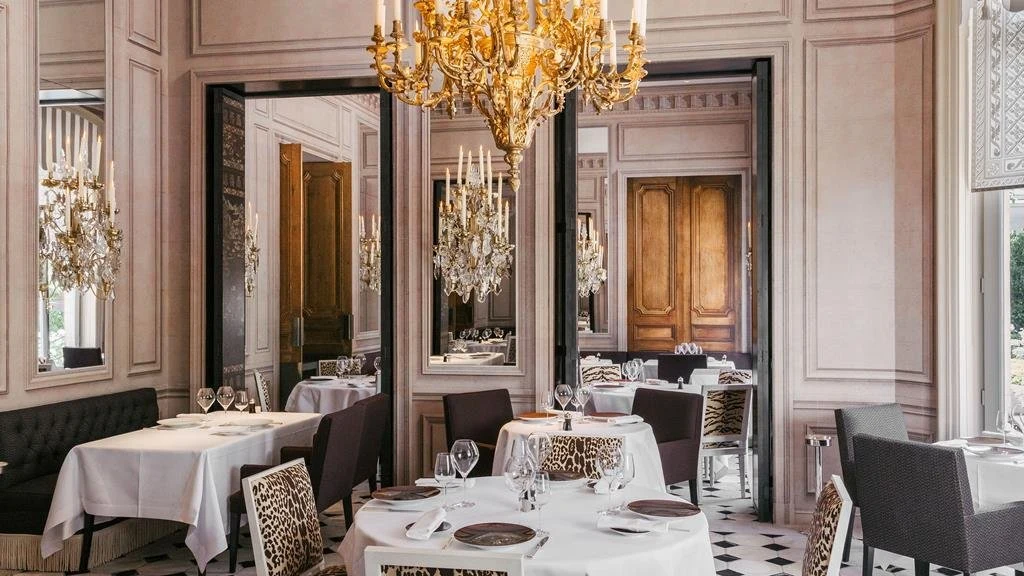
The address is a private mansion in the 8th arrondissement, set back from the usual movement of central Paris. Its limestone history is part of the atmosphere: the site was once tied to the stables of the Comte d’Artois, brother of King Louis XVI, and the mansion was built in 1860 for the Marquis Auguste de Talhouët-Roy. The restaurant carries the name of the Roman epicurean credited with one of the first cookbooks in antiquity. Inside, the room carries oyster-grey wainscoting, trompe l’oeil carpeting that recalls octagonal stone tiles, and animal print chairs. Natural light softens the formality. Outside, the hidden garden terrace changes the pace of the meal, giving the kitchen’s work a quieter frame. The service style remains formal, but the house is not severe; the counterpoint is the garden, the hush, and the sense that the city has been held at the gate.
A house measured by continuity
Apicius holds 1 Michelin star and sits within a field where awards matter only when the plate and room can bear them. What carries is continuity: a mansion with a long memory, a French kitchen working in a lighter seasonal key, and a bench that treats consistency as something built before the first guest sits down. The object is plain enough: the chocolate soufflé at Apicius.
Questions
Frequently asked
What kind of restaurant is Apicius?
Apicius is a modern French fine dining restaurant in the 8th arrondissement of Paris, working with tasting menu, à la carte, and prix fixe formats built around produce, season, and classical technique.
Who is behind the kitchen at Apicius?
Mathieu Pacaud took on the house at 37 and reworked it toward a lighter, seasonal, produce-centred kitchen. He is the son of Bernard Pacaud of L’Ambroisie, and he has also worked as consulting chef for Domaine de Murtoli in Corsica.
What is the setting like?
The restaurant is set in a private 1860 mansion at 20 Rue d'Artois in the 8th arrondissement, with oyster-grey wainscoting, trompe l’oeil carpeting, animal print chairs, and a hidden garden terrace.
What is Apicius known for on the menu?
The kitchen is known for menus of 3 or 6 courses and for dishes such as foie gras with grilled candied cédrat, green asparagus with spring herbs and Comté soufflé, Saint-Pierre with shellfish and slow-cooked fennel, and chocolate soufflé with bourbon vanilla ice cream, crème chantilly, or cacao sorbet.
Does Apicius take reservations and what recognition does it hold?
Reservation is essential, and Apicius holds 1 Michelin star.
The field
How it compares
| Place | Awards | Cuisine | Notes |
|---|---|---|---|
| Apicius | Michelin 1 Star | Modern French Fine Dining | 8th arrondissement, $$$$ |
| Arpège | Michelin 3 Stars, World's 50 Best | Vegetable-Focused French Fine Dining | Paris |
| Epicure | Michelin 3 Stars | Contemporary French Fine Dining | Paris |
| Guy Savoy | Michelin 2 Stars, World's 50 Best | Classic French Fine Dining | Paris |
| Le Cinq | Michelin 3 Stars, World's 50 Best | Modern French Fine Dining | Paris |
| Le Taillevent | Michelin 2 Stars, World's 50 Best | Classic and Modern French Fine Dining | Paris |
| Pierre Gagnaire | Michelin 3 Stars, World's 50 Best | Avant-Garde French Fine Dining | Paris |
In residence
Similar places
Vegetable-Focused French Fine Dining
Arpège
Paris, France
★★★ · 50 Best
Contemporary French Fine Dining
Epicure
Paris, France
★★★
Classic French Fine Dining
Guy Savoy
Paris, France
★★ · 50 Best
Modern French Fine Dining
Le Cinq
Paris, France
★★★ · 50 Best
Classic and Modern French Fine Dining
Le Taillevent
Paris, France
★★ · 50 Best
Avant-Garde French Fine Dining
Pierre Gagnaire
Paris, France
★★★ · 50 Best