Auberge des Ruines
In Residence
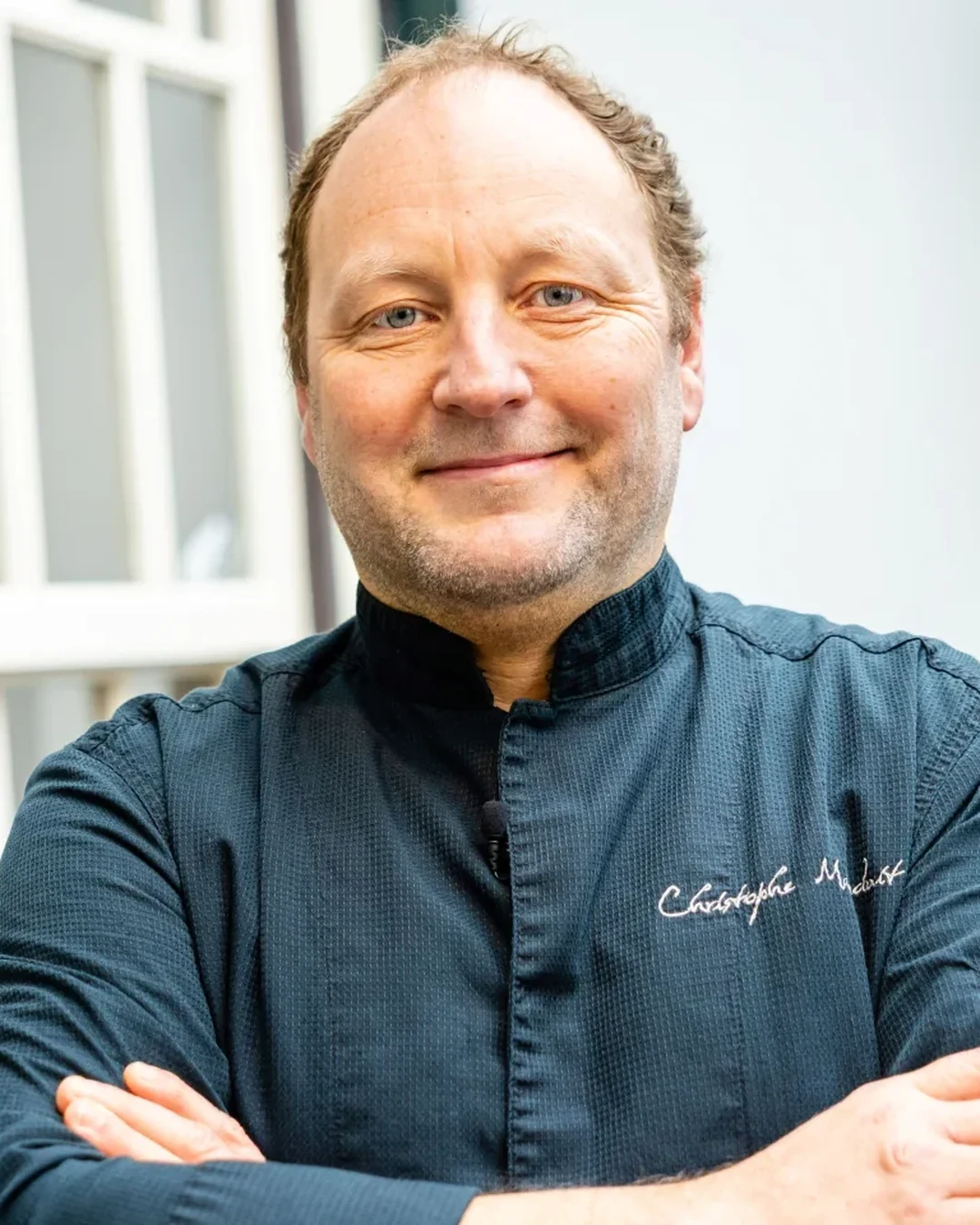
Christophe Mauduit
Chef
- 01CuisineModern Norman French
- 02CityJumièges, France
- Michelin Plate · 2026
- Michelin Plate · 2025
- Michelin Plate · 2024
Where the Abbey Ruins Set the Mood
Arrive at Place de la Mairie in Jumièges on a grey Norman morning and the scene already frames what is about to happen at the table. The ruined towers of the Abbaye de Jumièges, an eleventh-century Benedictine structure that the Michelin editors themselves cite as backdrop, loom across the square from the half-timbered facade of Auberge des Ruines. The physical environment here is not decorative detail; it is the argument the restaurant makes before you have even opened the door. You are in a village of fewer than two thousand people in the Seine valley, an hour west of Rouen, in a part of Normandy that the agricultural and artisanal produce of the region reaches its densest expression. Everything on the plate is, in a direct and verifiable sense, a product of what surrounds you.
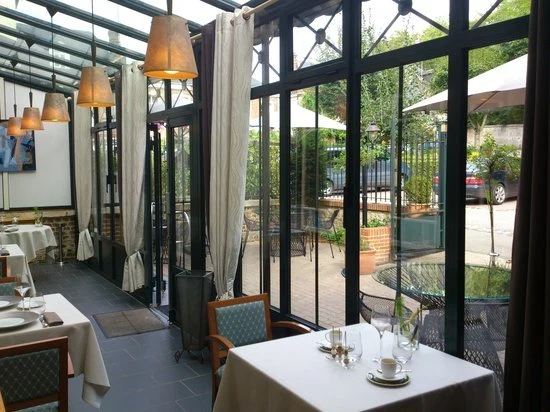
Inside, the room is contemporary rather than rustic: clean lines and a chic finish that resists the temptation to cosplay medieval hospitality. A glass-paned extension opens onto the terrace, which is worth timing around if the weather cooperates. Both spaces carry a 4.7 average across 411 Google reviews, suggesting consistency rather than the occasional transcendent meal propping up an otherwise variable record.
A Kitchen Garden as Editorial Stance
France has a strong tradition of the auberge that treats its local terroir as a closed-loop system. You find it in various registers across the country, from Bras in Laguiole, where the Aubrac plateau dictates the menu's architecture, to Auberge du Vieux Puits in Fontjoncouse, where a remote Languedoc village setting has not prevented Michelin recognition at the highest level. Auberge des Ruines belongs to this tradition in its most literal form: Chef Christophe Mauduit plants and harvests his own kitchen garden, and the fruit and vegetables on the plate trace back to that patch of ground adjacent to the restaurant itself. This is not a sourcing footnote on a menu card; it is a structural decision about what cooking here means.
The Michelin Plate awarded in 2025 signals good cooking without placing the restaurant in the starred tier. The Plate designation, as Michelin applies it, acknowledges good cooking without positioning the restaurant in the starred tier. At Auberge des Ruines, the recognition arrives in the context of a €€ price point, a combination that makes it the kind of proposition that the starred rooms in Paris, from Alléno Paris au Pavillon Ledoyen to AM par Alexandre Mazzia in Marseille, simply cannot replicate. Michelin-acknowledged cooking at a mid-range price in a Norman village with a kitchen garden is a specific and uncommon value equation.
Normandy as a Set of Ingredients
The terroir argument for Normandy in the kitchen is not sentimental. The region produces some of France's most consequential ingredients: apple-based ferments (cider, pcalvados, pommeau), cream and butter from dairy herds that graze near-permanently on the bocage pastures, lamb from the salt meadows of the bay, river trout from the Orne and its tributaries, and a cheese culture that runs from Camembert and Livarot to the sharper, younger goat's cheeses from smaller farmsteads. Mauduit's reported menu moves through trout, beef, and lamb alongside the region's ciders and Calvados, with a cheese trolley composed from neighbouring farms. This is not a selection of Norman ingredients deployed as a concept; it is the full range of the region's larder, organised by the season and the kitchen garden's current output.
Seasonal structure here aligns Auberge des Ruines with a broader movement in French regional cooking that has been gaining institutional weight for two decades. Chefs trained in the classical French hierarchy, apprenticeships, brigade systems, the gradual ascent toward independence, who then return or relocate to a specific territory and rebuild their cooking around what that territory offers. Restaurants like Flocons de Sel in Megève or Auberge de l'Ill in Illhaeusern represent this pattern at the starred level. Auberge des Ruines occupies a different tier but follows the same structural logic: the region is not a backdrop but the actual subject of the cooking.
The Cheese Trolley as a Statement
It is worth pausing on the cheese trolley specifically. In a period when many restaurants have reduced or eliminated the fromage course for reasons of cost and service complexity, maintaining a trolley built from produce sourced from neighbouring farms is a deliberate commitment. Norman cheese culture is varied enough to fill such a trolley with range and contrast: aged cow's milk cheeses, washed-rind types, fresh and semi-fresh goat's cheeses, each reflecting a slightly different microclimate or production method. The trolley at Auberge des Ruines, as described in the Michelin entry, uses this variety as its logic rather than assembling a greatest-hits selection from national distributors. That distinction matters to anyone who uses the cheese course as a way to read how seriously a kitchen takes its sourcing claims.
Planning Your Visit
Jumièges sits in a loop of the Seine west of Rouen, and reaching it typically requires a car or a combination of train to Rouen followed by a local bus or taxi. The village is small enough that the restaurant on Place de la Mairie is immediately obvious on arrival. Given the kitchen garden structure and the seasonal menu, timing your visit around the growing season, late spring through autumn, offers the fullest expression of what the kitchen is doing, though Norman dairy and cheese production runs year-round. The €€ pricing means that a full meal with the cheese trolley and a Norman cider or Calvados pairing remains accessible compared with the starred rooms in Paris or on the Côte d'Azur, where Mirazur in Menton and Assiette Champenoise in Reims operate at a significantly higher price band. No dress code is on record, and the contemporary interior suggests a relaxed but considered approach to presentation is appropriate.
Further afield in France, the auberge tradition runs through rooms as varied as Troisgros in Ouches, Au Crocodile in Strasbourg, and Paul Bocuse in Collonges-au-Mont-d'Or. For a contrast in format and register from outside France, Frantzén in Stockholm and FZN by Björn Frantzén in Dubai show how the modernist end of the same kitchen-garden logic plays at a different scale.
Questions
Frequently asked
Who works at Auberge des Ruines?
Made By profiles Christophe Mauduit (Chef) at Auberge des Ruines.
How expensive is Auberge des Ruines?
Auberge des Ruines is listed at a price level of $$$.
Where is Auberge des Ruines and what does it serve?
Auberge des Ruines is in Jumièges, Jumièges, serving Modern Norman French.
The field
How it compares
| Place | Cuisine | Notes | Awards |
|---|---|---|---|
| Auberge des Ruines | Modern Norman French | Jumièges, $$$ | · |
| Elkano | Basque Grilled Fish | Getaria | Michelin 1 Star, World's 50 Best |
| Hélène Darroze at The Connaught | Three Michelin-Star Modern French Fine Dining | London | Michelin 3 Stars |
| Les Amis | Classic French Haute Cuisine | Singapore | Michelin 3 Stars, World's 50 Best |
| Quintonil | Modern Mexican Fine Dining | Mexico City | Michelin 2 Stars, World's 50 Best |
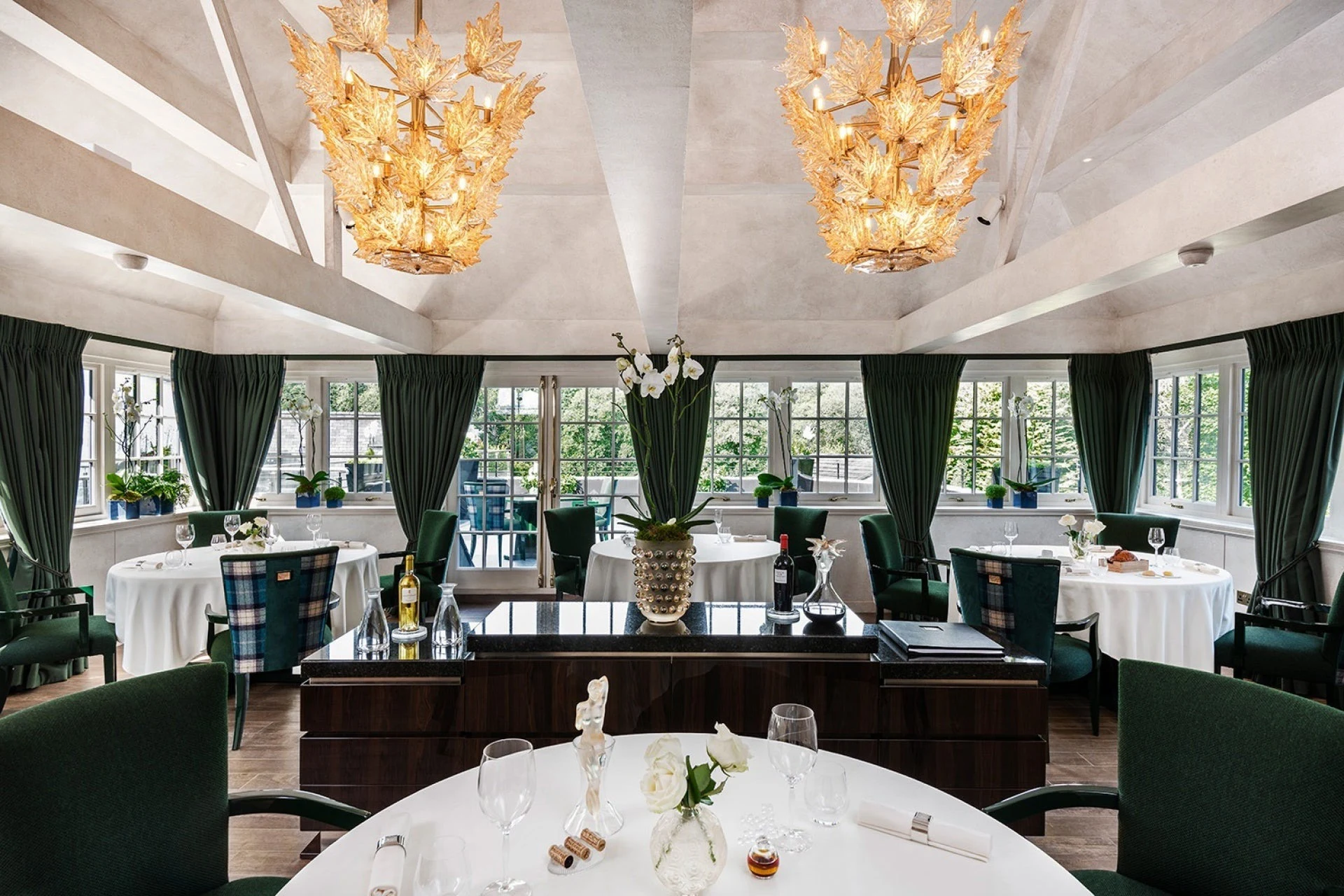
| The Glenturret Lalique Restaurant | Modern Scottish Fine Dining | Crieff | Michelin 2 Stars |
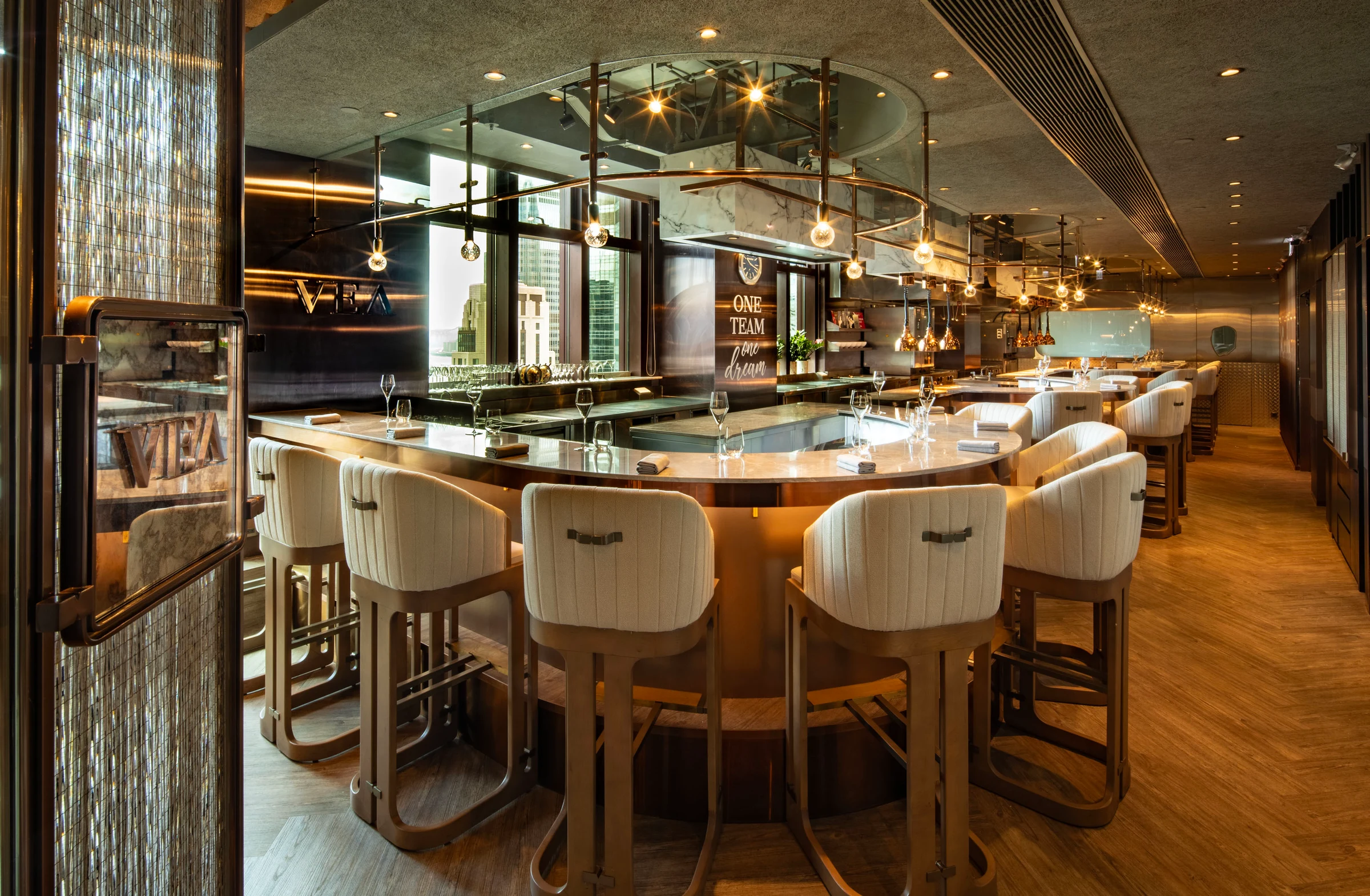
| Vea | Modern Chinese-French Fusion | Hong Kong | Michelin 1 Star, World's 50 Best |
In residence
Similar places
Basque Grilled Fish
Elkano
Getaria, Spain
★ · 50 Best
Three Michelin-Star Modern French Fine Dining
Hélène Darroze at The Connaught
London, United Kingdom
★★★
Classic French Haute Cuisine
Les Amis
Singapore, Singapore
★★★ · 50 Best
Modern Mexican Fine Dining
Quintonil
Mexico City, Mexico
★★ · 50 Best
Modern Scottish Fine Dining
The Glenturret Lalique Restaurant
Crieff, United Kingdom
★★
Modern Chinese-French Fusion
Vea
Hong Kong, Hong Kong
★ · 50 Best