Azienda Agricola Castello di Monastero
- 01CityCastelnuovo Berardenga, Italy
- Falstaff Winery - Listed · 2026
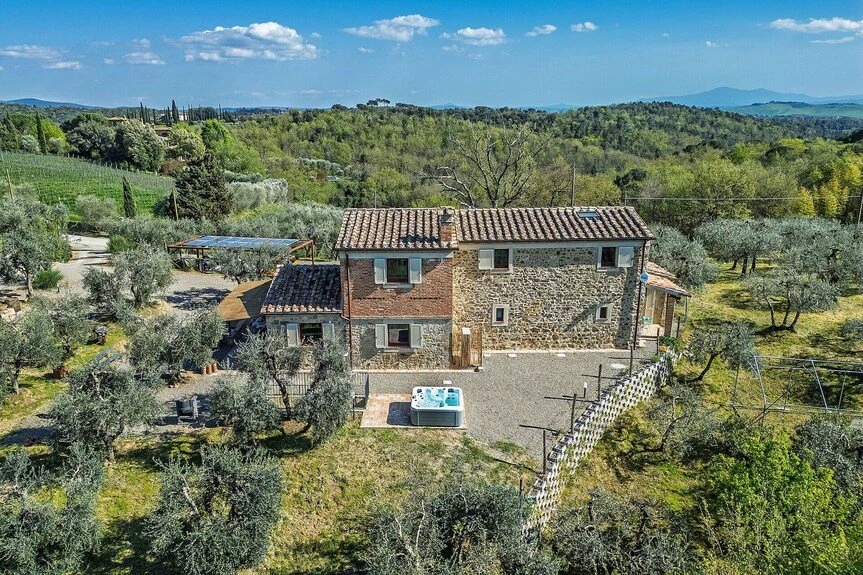
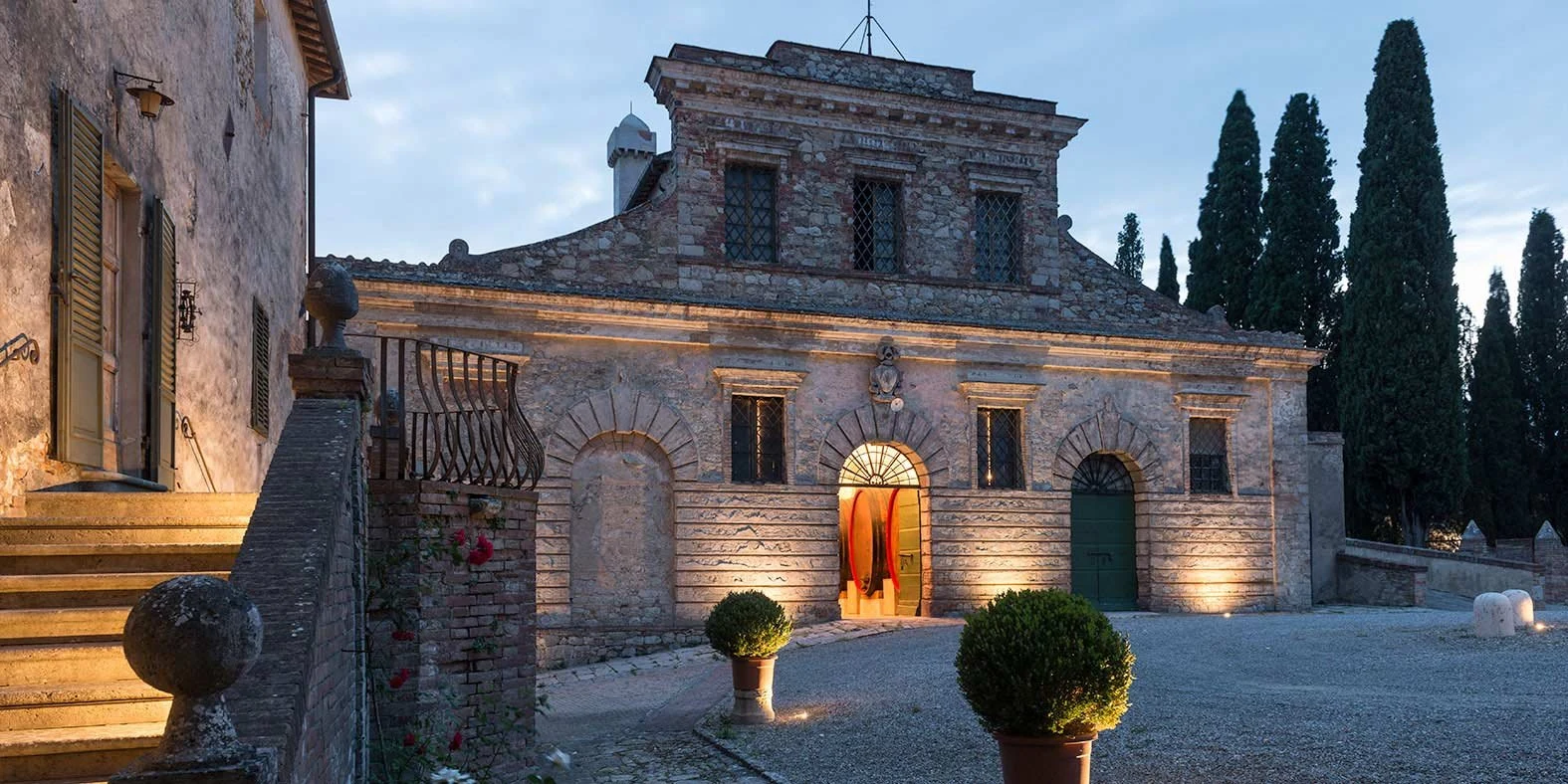
Approaching wine country in Castelnuovo Berardenga, the mood changes from postcard Tuscany to working Chianti Classico: vineyard rows, stone, shade, and the quiet pace of estates that treat hospitality as an extension of farming rather than theatre. Azienda Agricola Castello di Monastero belongs to that older register. The setting is rustic and scenic, with vineyard views and a small-capacity format that suits visitors who want the land to do the talking.
Castelnuovo Berardenga sits at the southern edge of Chianti Classico, where Sangiovese often carries more breadth and structure than in cooler northern communes. That matters here because the estate’s identity is tied to Sestano, a locality with a long agricultural memory and a medieval winegrowing association linked to the Canons of the Cathedral of Siena. In a region where new labels can sometimes outpace vineyard literacy, this is the opposite proposition: history, Sangiovese, and a relatively restrained hospitality frame.
Sestano Sangiovese in a quieter Chianti Classico register
The central argument for the winery is terroir expression, not brand choreography. Chianti Classico remains one of Italy’s clearest tests of place because Sangiovese is difficult to disguise: it reacts sharply to exposure, soil, altitude, and season. Around Castelnuovo Berardenga, wines often sit in a firmer, more sun-marked idiom than those from higher, cooler zones, while retaining the acidity that gives the appellation its table value.
The estate’s production focus includes Chianti Classico, with still red and still white wines in the portfolio. Its 2009 Chianti Classico Riserva received 88 points from Falstaff in 2013, a useful external marker because Riserva is where the region’s questions become sharper: fruit concentration, oak management, tannin shape, and whether the wine has the frame to age without losing its Chianti identity. The rating is not a trophy cabinet, but it gives the property a concrete place inside the critical conversation around traditional Tuscan red wine.
Natural and traditional winemaking is the stated direction, and in this part of Tuscany that phrase has meaning only when it supports the vineyard rather than masking technique. The stronger reading is that the wines should be approached through Sangiovese’s structure: acidity, tannin, savoury lift, and the way the grape translates calcareous and clay-rich Tuscan soils into firmness rather than polish. That is the point of visiting estates like this in situ. The glass makes more sense when the surrounding hills are part of the explanation.
A small estate visit, not a tasting-room circuit
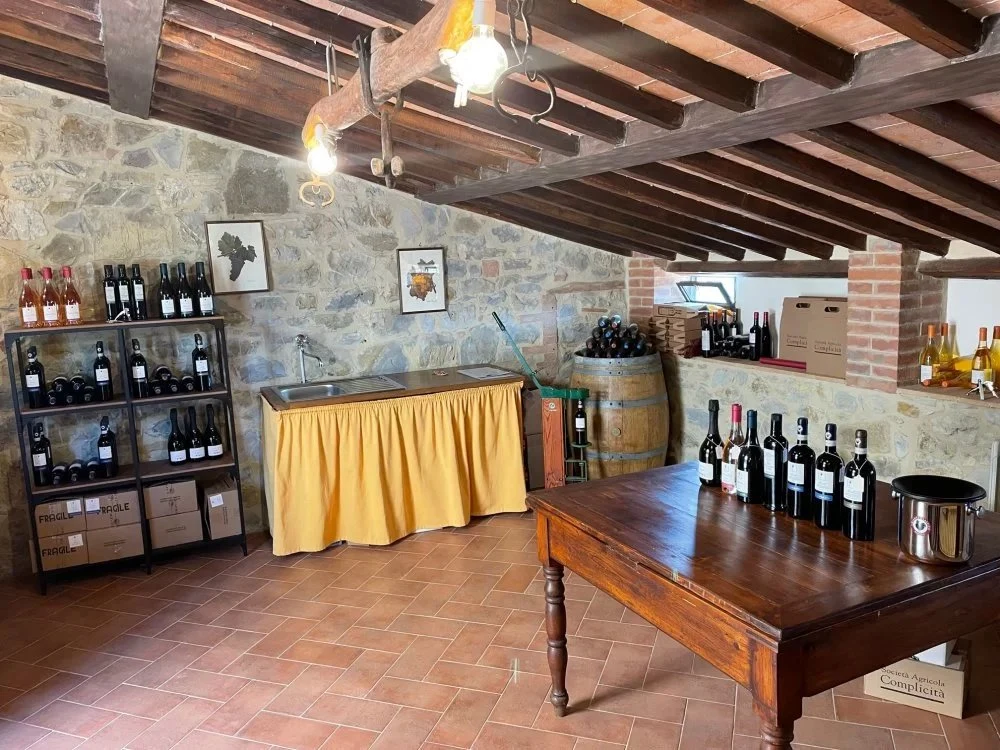
The hospitality format is appointment only, and that detail is not incidental. Chianti Classico has plenty of polished cellar-door experiences, but smaller visits tend to reward guests who arrive with regional context rather than a checklist. Here, the quiet noise level, vineyard outlook, and small capacity suggest a slower appointment built around the estate’s wines rather than a high-volume tasting sequence.
For travellers building a Castelnuovo Berardenga wine day, the useful frame is density. This is a commune where short distances can still feel slow because rural roads, lunch hours, and cellar appointments set the rhythm. Anchor the day around one or two wineries rather than trying to turn the area into a rapid itinerary. The broader local map can be explored through Our full Castelnuovo Berardenga wineries guide, with nearby editorial context from Our full Castelnuovo Berardenga restaurants guide, Our full Castelnuovo Berardenga hotels guide, Our full Castelnuovo Berardenga bars guide, and Our full Castelnuovo Berardenga experiences guide.
Within the same commune, readers planning a deeper wine itinerary can also look at Agricola Losi, Bindi Sergardi, Boschetto Campacci, Canonica a Cerreto, and Carpineta Fontalpino. For a wider Italian and European winery lens, see 3GP SRL in Treviso, 47 Anno Domini in Trebaseleghe, A Mano Wine in Noci, »der Steiner« Hans Steiner in Podersdorf am See, and & Handwein in Mannheim.
Why it matters in Castelnuovo Berardenga
Azienda Agricola Castello di Monastero is strongest as a reading of place: a small Tuscan estate, tied to Sestano, working inside the Chianti Classico tradition with Sangiovese at the centre. Lionello Marchesi’s association gives the property a contemporary name, but the more interesting story is older than any single proprietor. In Castelnuovo Berardenga, the appeal lies in how medieval agricultural continuity, warm-climate Sangiovese, and quiet cellar hospitality combine into a visit that feels grounded rather than staged.
Questions
Frequently asked
How expensive is Azienda Agricola Castello di Monastero?
Azienda Agricola Castello di Monastero is listed at a price level of $$.
The field
How it compares
| Place | Notes |
|---|---|
| Azienda Agricola Castello di Monastero | Località Sestano, $$ |
| Castell'in Villa | Castelnuovo Berardenga |
| Fèlsina | Castelnuovo Berardenga |
| Pagliarese | Castelnuovo Berardenga |
| Soc. Agr. Complicità | Castelnuovo Berardenga |
| Tenuta Moraia | Castelnuovo Berardenga |
| Terra di Seta | Castelnuovo Berardenga |