Bare
- 01CityCape Town, South Africa
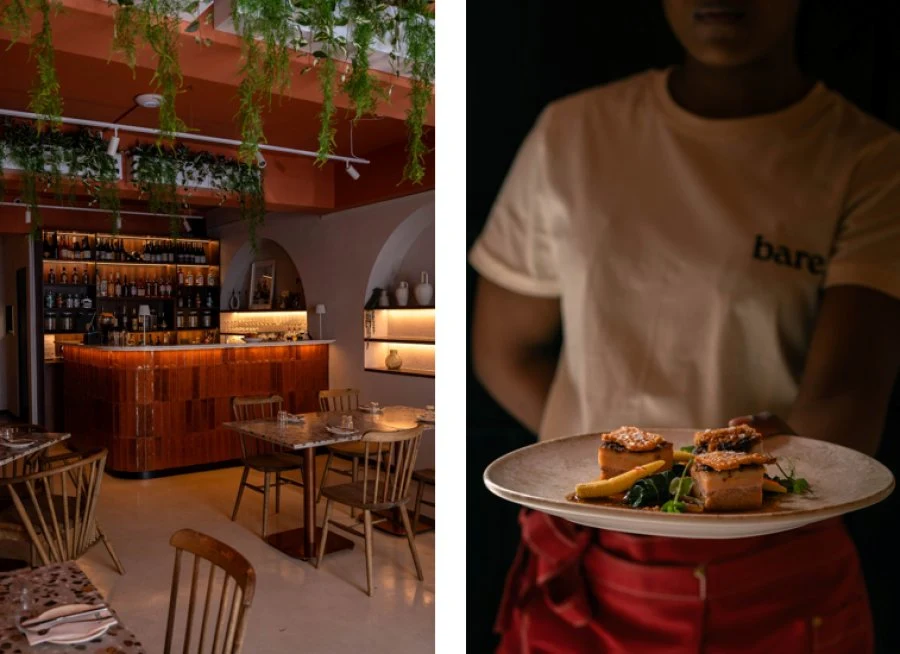
Cocktails and unusual local wines
A bar built for the first glass
Cocktails come first here, and the wine list is chosen to sit beside them rather than behind them. Bare opened in 2025 on Shortmarket Street in Cape Town City Centre, on the corner where Shortmarket meets Bree, inside the historic block of Heritage Square. The house sets its own terms plainly, promising effortless living and, in its own phrase, “a delicious, delightful bit of anarchy.” That reads as a brief rather than a slogan. A drink has to promise something, arrive with that identity intact, and hold its shape from the first sip to the last, which is the part of the work a guest never sees. Behind the counter it means proportion before flourish, and a list short enough for the station to repeat when the room fills.
Local wine as the second argument
The wine side is where the bar makes its more particular claim. The list leans on unusual local bottles rather than the familiar Cape names, which is a harder sell across a counter and a better one for a room built on conversation. A guest offered something they cannot place has to be talked through it, so the floor has to know the list rather than recite it. That is a staffing decision as much as a buying one. Cocktails and wine then share the same job, because a bar this size cannot afford two programmes pulling in different directions, and the food that comes out of the kitchen is built to sit under both.
Shortmarket Street after the first round
The room is small in feeling, tuned for close conversation rather than distance. Warm, pared-back interiors meet the indoor-outdoor pull of Shortmarket Street, so the bar carries both city movement and a softer table-side privacy. The noise is lively, not careless. It suits a guest who wants a drink to arrive with polish and a wine list that does not default to the obvious. The counter matters here because the programme has to hold two tempos at once: the quick read of an all-day bistro-bar and the slower cadence of lingering meals. Heritage Square gives that its setting, a block of old buildings now working as a dining quarter, with the street outside busy enough to become part of the room.
A list still being set in service
Bare is new enough that its bar language is still being set in public service rather than treated as inheritance. That gives the room a particular weight. The question is not only what goes on the menu, but how the house will sound when a guest asks for the first glass. If the list keeps its nerve, the answer will be legible in the room itself, on Shortmarket Street.
Questions
Frequently asked
What is Bare known for?
Bare is a bar where cocktails come first, and the wine list is chosen to sit beside them rather than behind them. The drinks programme leans on crafted cocktails and unusual local wines, with food built to sit under both.
Where is Bare located?
Bare opened in 2025 on Shortmarket Street in Cape Town City Centre, on the corner where Shortmarket meets Bree, inside the historic block of Heritage Square.
What kind of food does Bare serve?
The kitchen makes comfort food that is designed to work with both the cocktails and the wine list.
Do I need to book at Bare?
Reservations are recommended.
Is there a dress code at Bare?
The dress code is smart casual.
The field
How it compares
| Place | Notes |
|---|---|
| Bare | Cape Town City Centre, $$ |
| Cause Effect Cocktail Kitchen | Cape Town |
