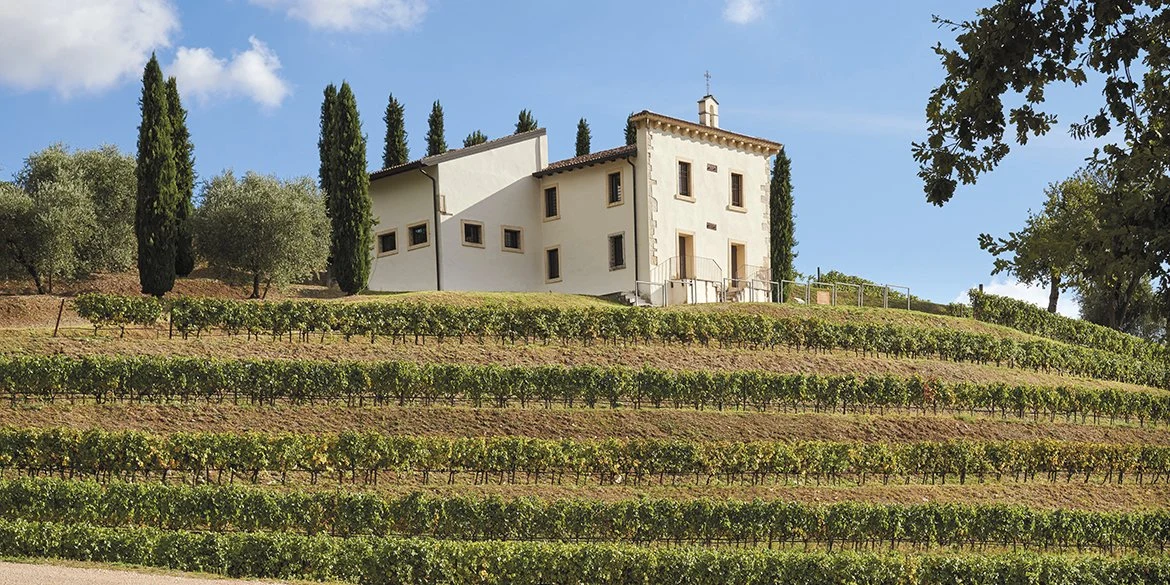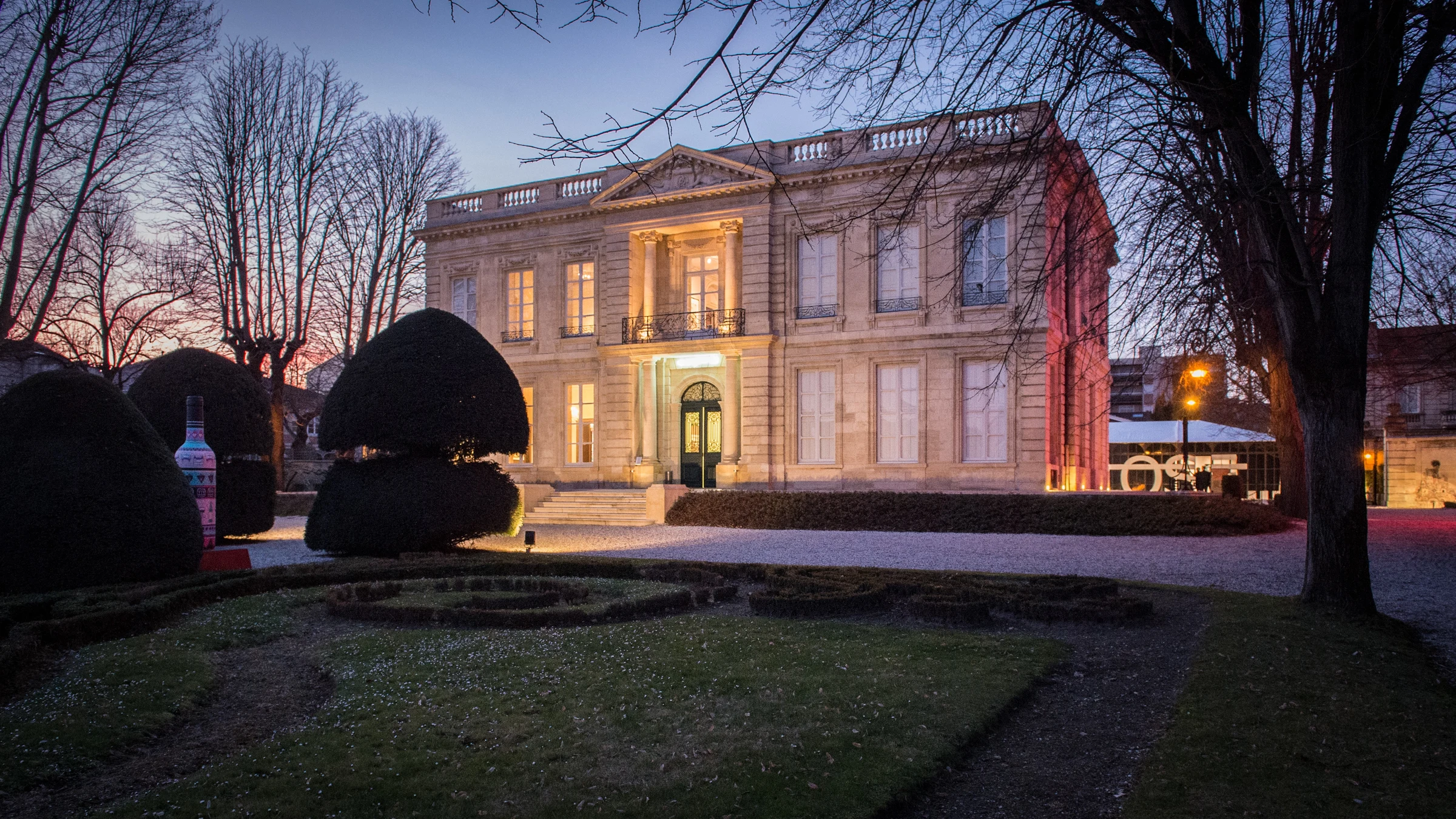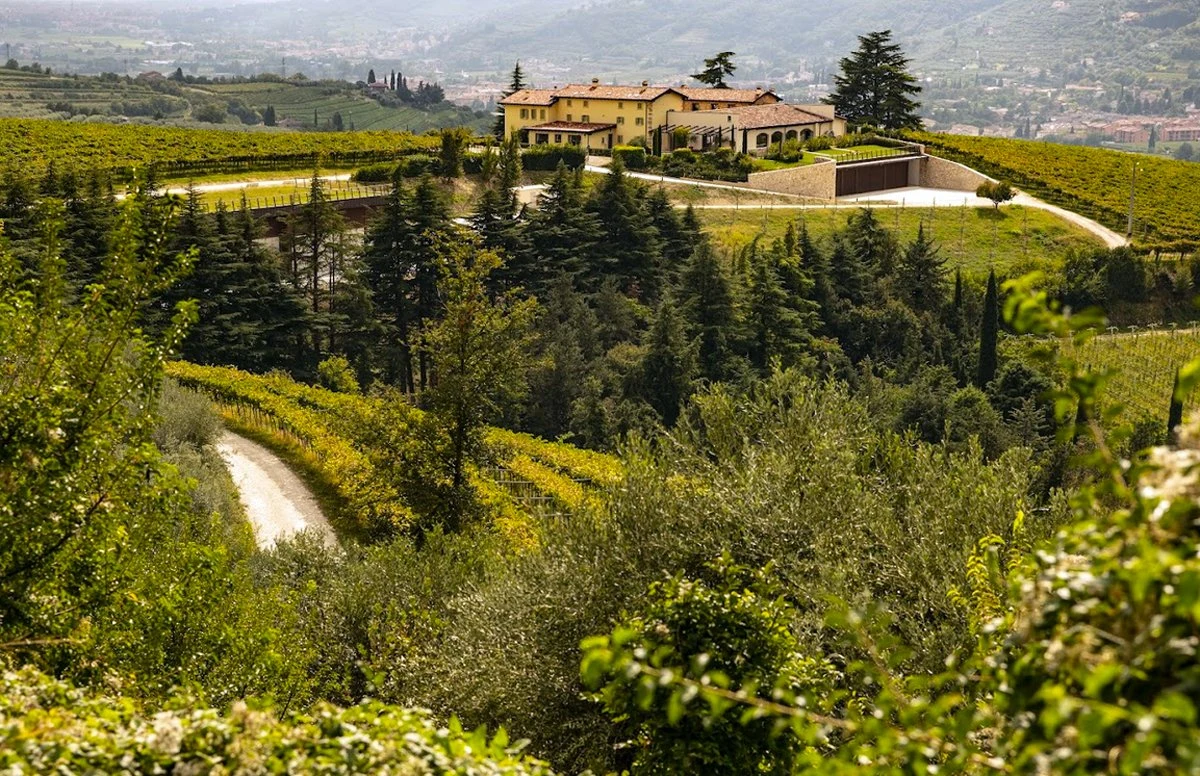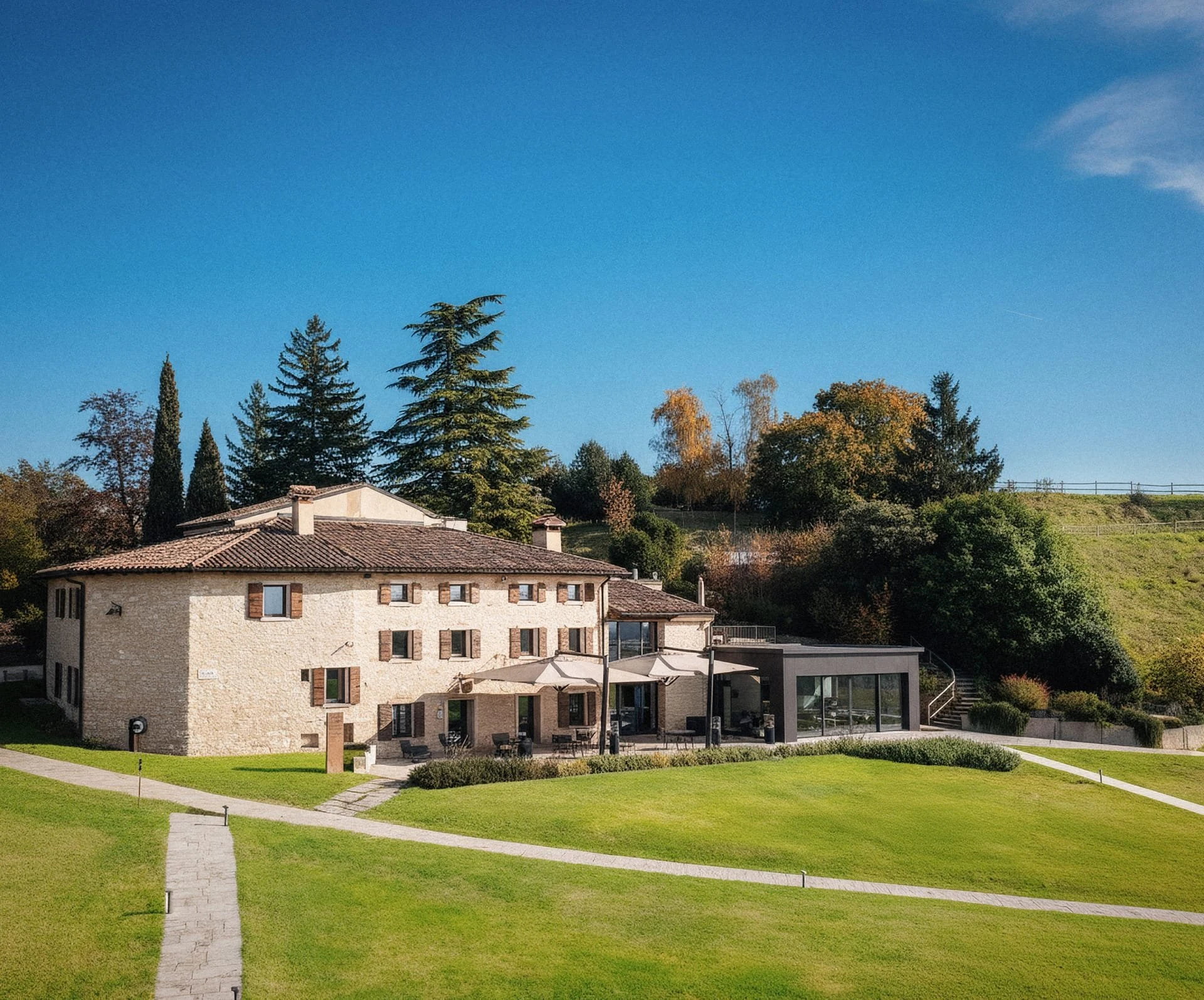
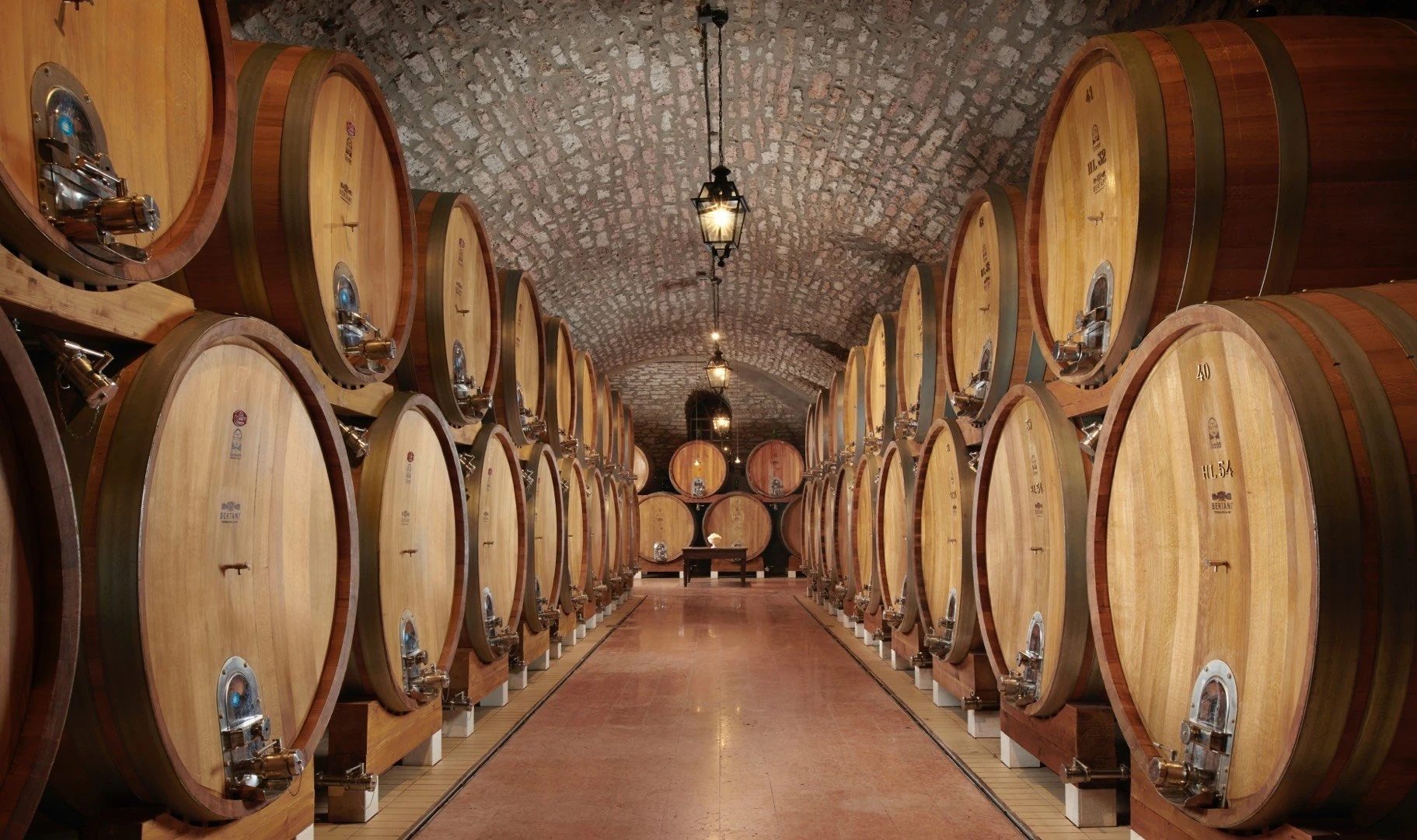
Bertani sits in the hills above Verona at Grezzana, where the Valpolicella and Soave terroirs converge on a single estate with over a century and a half of production history. A Pearl 2 Star Prestige rating in 2025 places it among the upper tier of Veneto heritage producers. For visitors tracing the region's wine identity, it is a serious point of reference.
<article><h2>Where the Valpolicella Hills Shape the Glass</h2><p>The road into Grezzana climbs east from Verona into limestone country, the valley floor giving way to hillside vineyards that have defined the Valpolicella Classico production zone for generations. The combination of alluvial valley soils and the chalky, basalt-laced slopes above the Adige corridor is precisely what separates the structural weight of a properly raised Amarone from the flatter expressions grown further east in the extended denomination. Bertani, operating from its estate at Via Asiago 1 in Grezzana, sits within this original production heartland, where altitude, aspect, and soil composition do the editorial work before any winemaking decision enters the picture.</p><p>Across Italian wine regions, the gap between heritage producers anchored in classic zones and newer entrants working the expanded appellations has widened in critical perception. Veneto is no exception. The same pattern visible in Montalcino, where producers like <a href="https://www.enprimeurclub.com/wineries/lenoteca-banfi">L'Enoteca Banfi</a> and <a href="https://www.enprimeurclub.com/wineries/poggio-antico">Poggio Antico</a> draw their authority partly from estate position within the original Brunello core, applies here. Bertani's location inside the Grezzana corridor gives its terroir argument a geographic foundation that promotional claims alone cannot replicate.</p><h2>Terroir as the Structural Argument</h2><p>Valpolicella's most debated variable is the appassimento process: the drying of harvested Corvina, Corvinone, and Rondinella grapes on bamboo racks to concentrate sugars and phenolics before fermentation. What that process amplifies, for better or worse, is whatever the underlying terroir delivered at harvest. In a growing season where the Grezzana hillsides produced grapes with genuine acidity and mineral tension, appassimento builds complexity. In a weaker year, it can amplify flatness as easily as it concentrates depth. The soil composition in this specific zone, with its calcaire-heavy subsoil and red clay topsoil, tends toward grapes with higher natural acidity than the sandy plains to the east, which means the raw material arriving at the drying lofts carries more structural potential.</p><p>This is the reason that Grezzana's position within the Classico zone carries meaning beyond regulatory denomination. Producers working this terrain are drawing on a different climatic signature than those operating in the broader Valpolicella DOC: cooler nights through September, more pronounced diurnal swings, and a harvest window that typically runs later into October for the parcels destined for Amarone. These are not abstract distinctions. They read in the glass as firmer tannin, slower evolution, and a higher ceiling for long-aging bottles. The same argument applies in other Italian regions where terroir fidelity defines the premium tier: <a href="https://www.enprimeurclub.com/wineries/castello-di-volpaia-radda-in-chianti-winery">Castello di Volpaia in Radda in Chianti</a> draws a comparable authority from its altitude and cooler Classico positioning relative to lower-elevation Chianti.</p><h2>The 2025 Pearl 2 Star Prestige and What It Signals</h2><p>Bertani received a Pearl 2 Star Prestige rating in 2025. In the context of Italian heritage producers, prestige-tier recognition at this level places Bertani in a comparable set that includes producers across the peninsula whose authority rests on a combination of terroir specificity, production consistency, and historical depth. That combination is harder to manufacture than a single exceptional vintage. It requires a track record of decisions that prioritize the estate's long-term identity over short-term market positioning.</p><p>For comparative context, the Veneto operates differently from Tuscany's tightly branded appellations. Barolo has Piedmont counterparts such as <a href="https://www.enprimeurclub.com/wineries/aldo-conterno-monforte-dalba-winery">Aldo Conterno in Monforte d'Alba</a> as a reference frame. Valpolicella Classico's reference producers are fewer in number but no less serious in intent. Bertani belongs to the group that helped define what Amarone could be before it became a widely imitated category style, which adds a documentary dimension to any visit beyond direct tasting.</p><h2>The Veneto's Wider Drinks Tradition</h2><p>Grezzana and the surrounding Verona hills exist within a broader northern Italian drinks culture that extends well beyond wine. The grappa tradition is woven into the same agricultural fabric: estates that dry grapes for Amarone generate pomace that feeds the distillation economy. Producers such as <a href="https://www.enprimeurclub.com/wineries/distilleria-marzadro-nogaredo-winery">Distilleria Marzadro in Nogaredo</a>, <a href="https://www.enprimeurclub.com/wineries/distilleria-romano-levi-neive-winery">Distilleria Romano Levi in Neive</a>, <a href="https://www.enprimeurclub.com/wineries/nonino-distillery-pavia-di-udine-winery">Nonino Distillery in Pavia di Udine</a>, and <a href="https://www.enprimeurclub.com/wineries/poli-distillerie-schiavon-vicenza-winery">Poli Distillerie in Schiavon</a> represent the regional craft distillation tradition that complements the wine estates in any serious itinerary of northeastern Italy. Understanding Bertani's place in the local production hierarchy is easier when you map it against this broader regional context: it is a wine estate with deep Veneto roots, not an isolated prestige property that exists apart from its agricultural surroundings.</p><p>The same breadth of reference applies if you are building a broader Italian wine tour. <a href="https://www.enprimeurclub.com/wineries/lungarotti-torgiano-winery">Lungarotti in Torgiano</a> offers a comparable study in a single-family estate that shaped an Umbrian appellation. <a href="https://www.enprimeurclub.com/wineries/planeta-menfi-winery">Planeta in Menfi</a> does the same in Sicily. <a href="https://www.enprimeurclub.com/wineries/ca-del-bosco-erbusco-winery">Ca' del Bosco in Erbusco</a> traces how Franciacorta's identity was constructed around a handful of serious producers. Bertani in Grezzana belongs in that conversation as the Valpolicella Classico representative.</p><h2>Planning a Visit to Grezzana</h2><p>Grezzana sits roughly twelve kilometres northeast of Verona's historic centre, making it accessible as a day excursion from a Verona base. The estate address at Via Asiago 1 is the practical anchor for any visit. Planning around the autumn harvest period, roughly late September through October, offers the most active estate atmosphere, though early spring visits to Valpolicella Classico can be equally rewarding for understanding how the wines from the previous vintage are developing.</p>
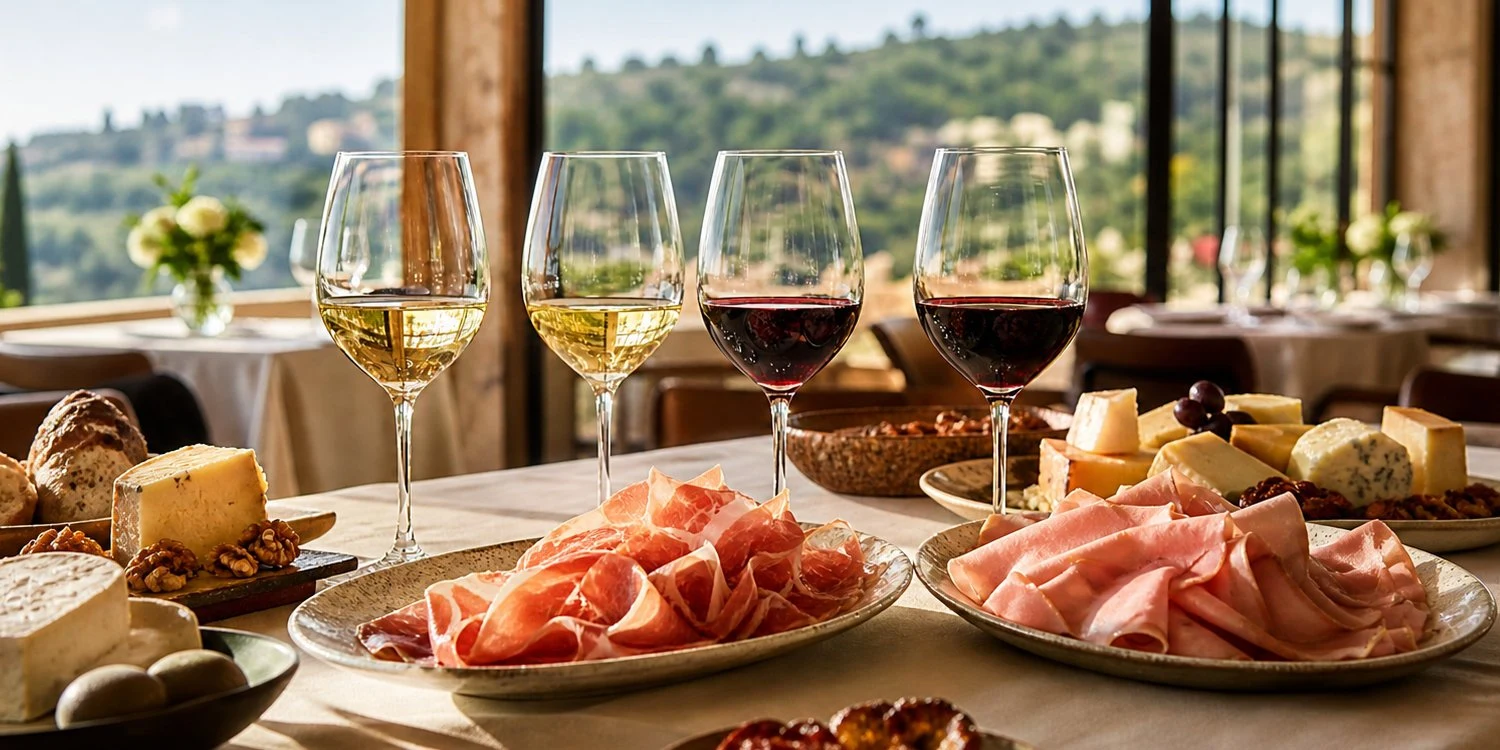
Bertani is an estate operation in Grezzana's limestone hillside country rather than a city restaurant or hotel, so the register leans toward considered and purposeful rather than formal. Visits are typically oriented around tasting and the vineyard context. The Pearl 2 Star Prestige recognition (2025) signals a serious production house, not a casual drop-in cellar door.
Bertani has received recognition including: Pearl 2 Star Prestige (2025).
Bertani's reputation is anchored in the Valpolicella tradition, with Amarone della Valpolicella — produced through the appassimento drying process applied to Corvina, Corvinone, and Rondinella — at the centre of its identity. The estate's Pearl 2 Star Prestige rating in 2025 reflects the depth of that heritage production. Specific current releases are best confirmed directly with the estate at Via Asiago, 1, Grezzana.
Bertani is located at Via Asiago, 1, 37023 Grezzana VR, Grezzana.
Bertani draws visitors interested in one of the Veneto's most documented heritage producers, set in the Valpolicella hills east of Verona. The 2025 Pearl 2 Star Prestige rating positions it among Italy's prestige-tier wine estates, making it a reference point for anyone tracing Amarone's structural traditions. The twelve-kilometre proximity to Verona means it fits cleanly into a day itinerary from the city.
Given Bertani's standing as a Pearl 2 Star Prestige estate (2025), advance contact is strongly advisable rather than arriving without arrangement. The estate is located at Via Asiago, 1 in Grezzana, a working wine-producing property rather than a retail venue with guaranteed open hours. Contact details are available through the estate directly to confirm current visit arrangements.
The Pearl 2 Star Prestige designation, awarded to Bertani in 2025, places it within the upper tier of recognised Italian heritage producers alongside estates where multi-generational Valpolicella production is the primary credential. For a Grezzana-based estate working within the appassimento framework of Corvina and Corvinone, this tier of recognition reflects both viticultural consistency and the structural weight of wines like Amarone. It is one of the more substantive external validations a northern Italian producer of this profile can carry.
Via Asiago, 1, 37023 Grezzana VR
Valpolicella Valpantena