- Opinionated About Dining Cheap Eats in North America Recommended · 2026
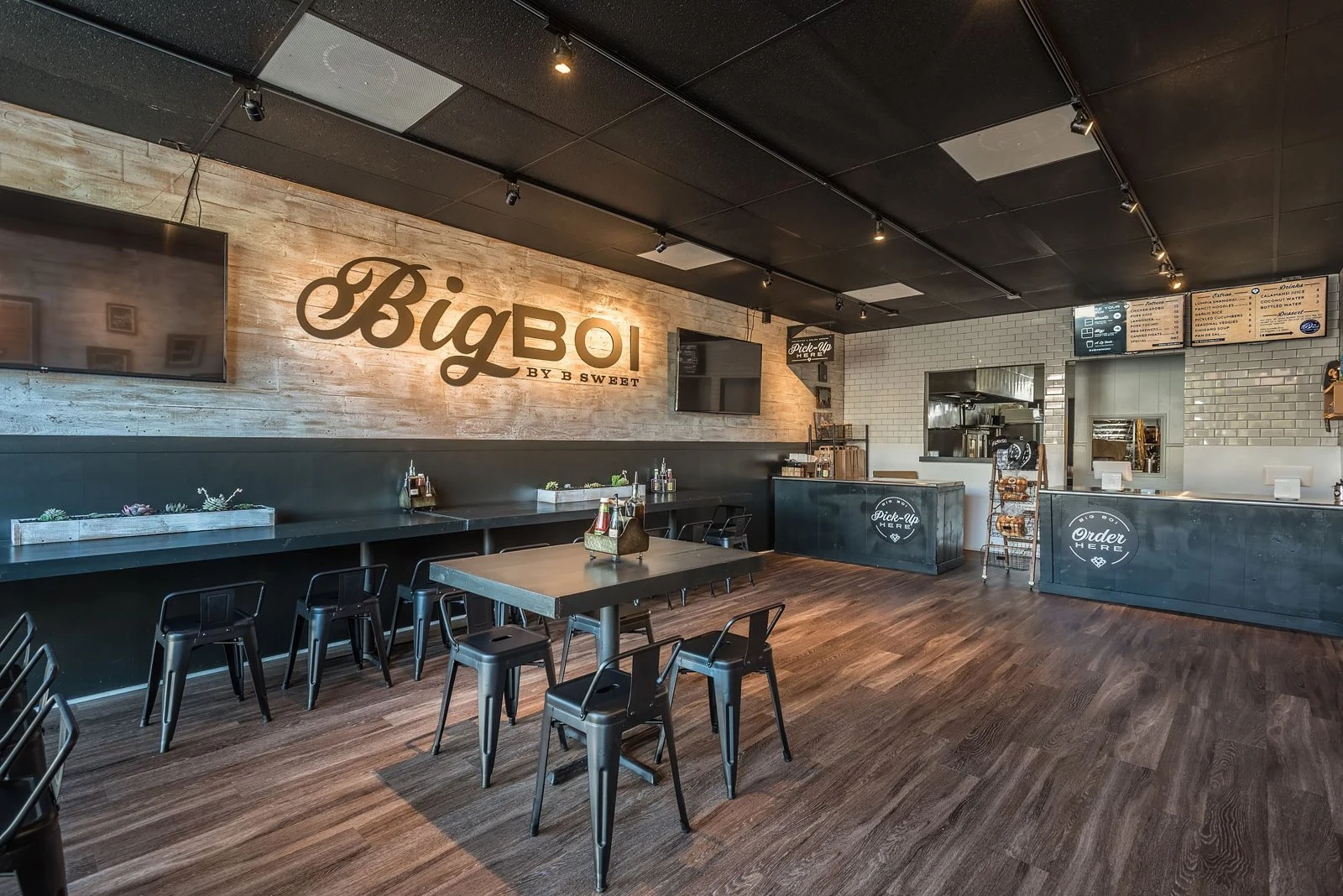
Sawtelle announces itself through compression: narrow storefronts, quick queues, bright signs, and constant shifts between snack, supper, and takeout. Here, Filipino cooking reads differently than in a formal dining room. Rice, vinegar, garlic, pork, coconut, and tropical fruit need no ceremony; they need a kitchen that understands how comfort food can move through Los Angeles without becoming trend food. Big Boi fits this corner of the city, where the casual format is not a limitation but part of the point.
Los Angeles has spent the past decade widening the public vocabulary around Filipino food. The city no longer treats the cuisine as a single category of adobo and lumpia, though those remain useful reference points for first-timers. The stronger conversation now is about regions, diaspora, pantry logic, and how Filipino cooking absorbs Spanish, Chinese, American, and island influences without losing its grammar. Big Boi’s role comes through scale and accessibility: Filipino food can be serious without becoming expensive, and contemporary without sanding down the ingredients that give it structure.
Filipino pantry logic in a Sawtelle fast-casual frame
The ingredient story matters because Filipino food is built on balance, not plating theatrics. Sourness is not garnish; vinegar, citrus, and fermented notes set the rhythm. Rice is not an afterthought; it anchors salt, fat, and acid. Coconut, alliums, soy, fish sauce, pork, chicken, and slow-cooked sauces belong to a pantry where preservation, heat, and comfort developed together. In Los Angeles, that pantry has force because Filipino communities are part of the region’s everyday food culture, not a visiting trend.
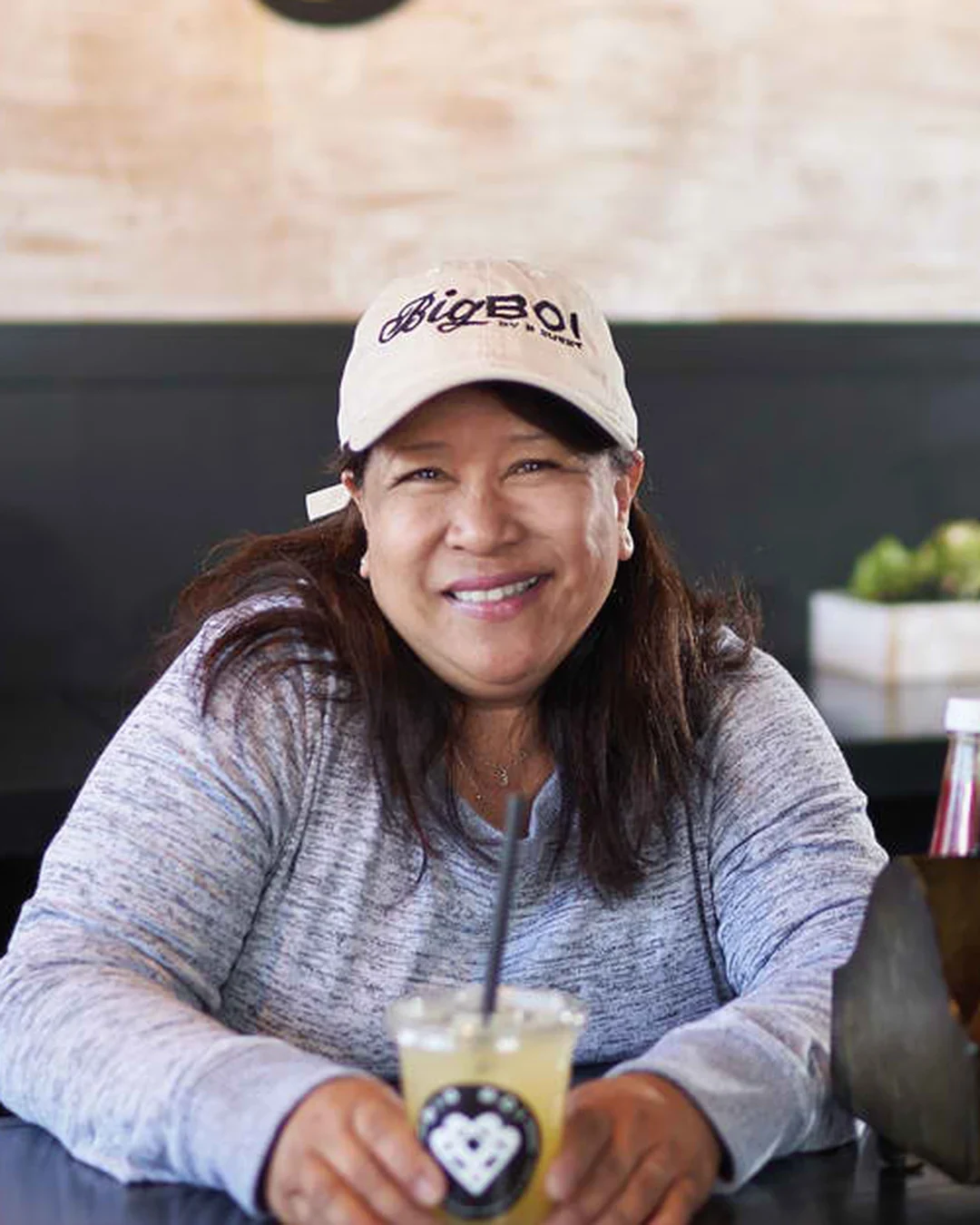
Chef Barb Batiste gives Big Boi a named culinary author, but the larger story is civic. Filipino cooking in Los Angeles has had to serve diners who grew up with it while translating its range to guests with a narrow frame of reference. The stronger restaurants do not over-explain; rice plates, stews, fried textures, and sweet-savory combinations make the case. A compact, casual room can be especially effective, stripping away the pressure to perform cultural importance and returning focus to sourcing, seasoning, and portion logic.
The 2026 Opinionated About Dining Cheap Eats Recommended citation places the restaurant in a category serious travelers often underuse. Cheap Eats recognition is not about luxury cues; it rewards value, clarity, and food that holds attention without tasting-menu apparatus. In Los Angeles, where dining runs from strip-mall specialists to hotel dining rooms, that matters. A recommended casual Filipino counter on Sawtelle shows where quality now lives: not only in rooms with long menus and wine programs, but in focused kitchens that understand their pantry.
How this corner of Los Angeles reads the food
Sawtelle is shorthand for Japanese dining, dessert shops, and quick-turn meals, but its value is broader than cuisine labels. The corridor rewards directness. Diners arrive with limited time, firm preferences, and many alternatives within walking distance, so a restaurant must communicate quickly. Filipino food benefits from that pressure when confident: garlic rice, braised meats, fried items, stews, and bright condiments register immediately while carrying deeper cultural context.
That makes Big Boi useful for visitors trying to understand Los Angeles beyond the polished reservation circuit. The city’s food identity is dispersed across neighborhoods, immigrant communities, beach-adjacent hotels, late-night corridors, and strip malls where rent, audience, and culinary memory meet. A Filipino stop on Sawtelle sits naturally beside the modern Filipino conversation at LASA, the pork-forward casual lane at Spoon & Pork, the coastal Californian register at 1 Pico (Californian Seafood), the burger-and-nightlife spectrum at 25 Degrees, and the Japanese precision of 715 (Japanese).
Ingredient sourcing here is less about luxury provenance than respecting base materials. Filipino cooking exposes weak shortcuts quickly: dull vinegar, underpowered garlic, dry rice, or sweetness without acid disrupts balance. Seeking a casual Filipino restaurant in Los Angeles is not chasing rarity; it is seeing familiar staples become expressive through proportion. That is why the city’s Filipino dining has matured: the strongest kitchens need not apologize for comfort or dress it in fine-dining language.
Where Big Boi fits in a wider eating itinerary
For a Los Angeles food day, Big Boi works as part of a neighborhood-led plan, not a single-destination pilgrimage. Sawtelle pairs easily with Westside shopping, galleries, beach hotels, and cross-city eating, but its practical strength is flexibility. The restaurant’s OAD Cheap Eats Recommended status signals value in a city where casual meals can become expensive quickly, making it a useful counterweight to higher-spend dining elsewhere.
The broader lesson is that Los Angeles rewards diners who move between registers. A serious trip might include Filipino cooking, Japanese counters, coastal seafood, a hotel bar, and a low-key lunch without treating any format as lesser. For planning, Our full Los Angeles restaurants guide maps the dining spread, while Our full Los Angeles hotels guide, Our full Los Angeles bars guide, Our full Los Angeles wineries guide, and Our full Los Angeles experiences guide place meals inside a complete city stay.
Its relevance also extends beyond Los Angeles. North American casual dining is more interesting where immigrant cuisines remain specific and affordable. The same traveler who understands a focused Filipino stop here will recognize the logic in Onigiri Time in Pasadena, ¿Por Qué No? in Portland, 'Ai Love Nalo in Waimanalo Beach, 'āina in San Francisco, 'Ama 'Ama in Kapolei, 'Dashery in Baltimore, Bayan Ko, Filipino in Chicago, and BB's, Filipino in Toronto. The shared thread is not sameness; it is the growing seriousness of casual formats when kitchens cook from a defined cultural pantry.
Big Boi’s value is clearest by that standard. It is not converting Filipino food into luxury performance. It belongs to a more useful Los Angeles category: compact, culturally grounded, price-conscious restaurants that make the city’s dining life deeper than headline reservations suggest.
Questions
Frequently asked
Who works at Big Boi?
Made By profiles Barb Batiste (Chef) at Big Boi.
How expensive is Big Boi?
Big Boi is listed at a price level of $$.
Where is Big Boi and what does it serve?
Big Boi is in Sawtelle Japantown, Los Angeles, serving Filipino Comfort Food.
The field
How it compares
| Place | Cuisine | Notes | Awards |
|---|---|---|---|
| Big Boi | Filipino Comfort Food | Sawtelle Japantown, $$ | · |
| Hayato | Traditional Japanese Kaiseki | Los Angeles | Michelin 2 Stars |
| Holbox | Modern Mexican Seafood | Los Angeles | Michelin 1 Star, World's 50 Best |
| Kato | Modern Taiwanese Fine Dining | Los Angeles | Michelin 2 Stars, World's 50 Best |
| Mélisse | California-French Fine Dining | Los Angeles | Michelin 2 Stars |
| Providence | Modern Seafood Fine Dining | Los Angeles | Michelin 3 Stars, World's 50 Best |
| Somni | Modern Spanish Fine Dining | Los Angeles | Michelin 3 Stars, World's 50 Best |
In residence
Similar places
Traditional Japanese Kaiseki
Hayato
Los Angeles, United States
★★
Modern Mexican Seafood
Holbox
Los Angeles, United States
★ · 50 Best
Modern Taiwanese Fine Dining
Kato
Los Angeles, United States
★★ · 50 Best
California-French Fine Dining
Mélisse
Los Angeles, United States
★★
Modern Seafood Fine Dining
Providence
Los Angeles, United States
★★★ · 50 Best
Modern Spanish Fine Dining
Somni
Los Angeles, United States
★★★ · 50 Best