- Michelin Selected · 2025
South Kensington's Quiet Counter-Argument to Grand Hotel Scale
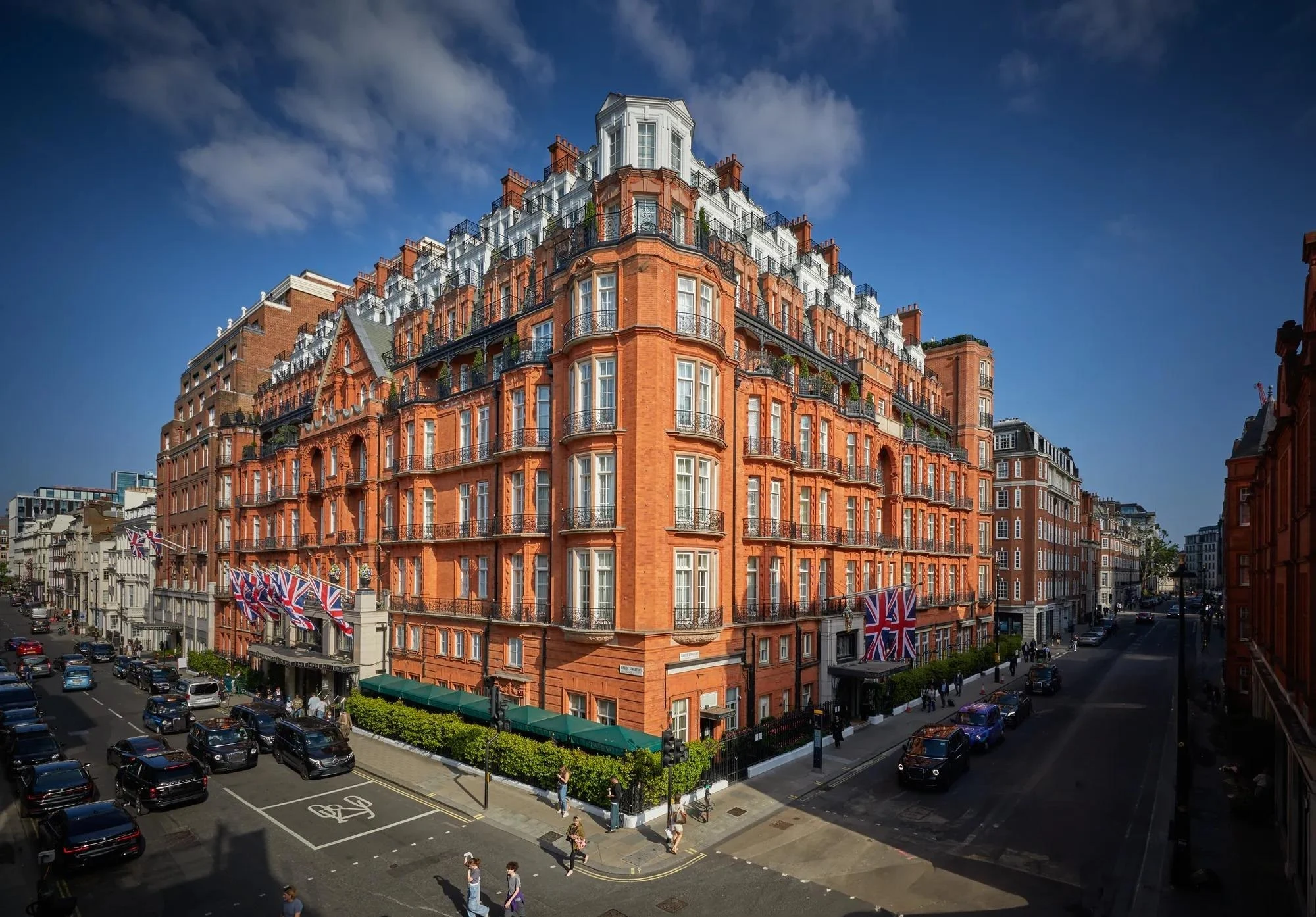
London's luxury hotel conversation tends to orbit Mayfair and the Strand, where Claridge's, The Savoy, and The Connaught command the upper bracket through institutional scale, heritage dining rooms, and a lobby culture built for being seen. Blakes Hotel on Roland Gardens has always operated from a different premise. The address, 33 Roland Gardens in South Kensington, sets the register before you open the front door: narrow street, no canopy, no uniformed phalanx at the entrance. The arrival is deliberately low-key, and that restraint is the product, not an oversight.
This positioning matters in context. Since the late 1970s, London's design-led hotel niche has argued that intimacy and aesthetic density can replace the reassurance of scale. Blakes was among the first properties in the city to test that argument seriously, and the neighbourhood has since attracted a cluster of smaller, character-driven addresses that treat South Kensington's residential calm as an asset. The street-level quiet is real: Roland Gardens sits a short walk from the Natural History Museum and the Victoria and Albert Museum but reads as a street where people actually live, not a hotel district.
The Retreat Logic: Why the Format Works for Wellness-Minded Stays
At a moment when London's luxury sector is investing heavily in branded wellness programming, roof terraces, and spa floors, Blakes takes a structural rather than programmatic approach to the retreat experience. The property's 44 rooms are small by London luxury standards, which means the noise floor inside is low. Corridors are quiet. The pace is unhurried in a way that larger properties with busier lobbies and in-house restaurants serving non-guests cannot replicate without deliberate management effort.
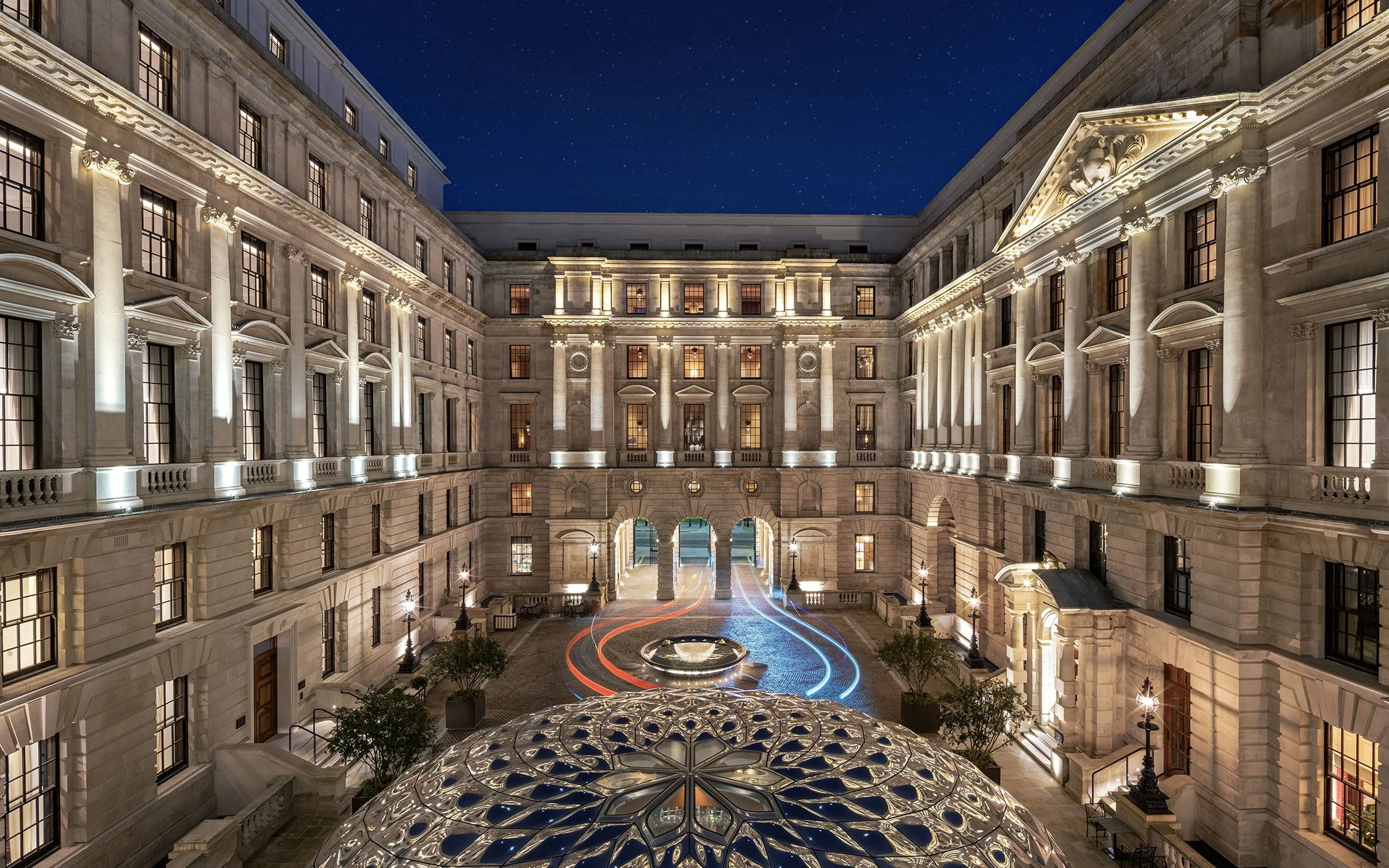
Properties with serious wellness infrastructure, such as The Emory or 1 Hotel Mayfair, offer formal spa programming and fitness facilities as part of the proposition. Blakes operates differently: the retreat here is spatial and atmospheric rather than service-driven. For guests who find formal spa environments an extension of the city's ambient intensity rather than an escape from it, a smaller, quieter property with a strong design identity can function as the more effective decompression chamber. The logic resembles what properties like Lime Wood in Lyndhurst or Estelle Manor in North Leigh achieve through countryside isolation, but applied within a Zone 1 postcode through density and scale restraint instead.
Design as the Primary Amenity
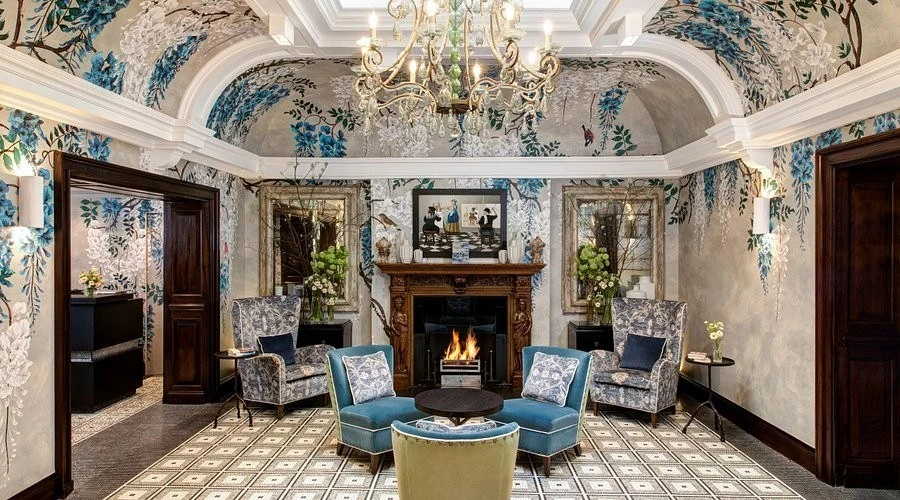
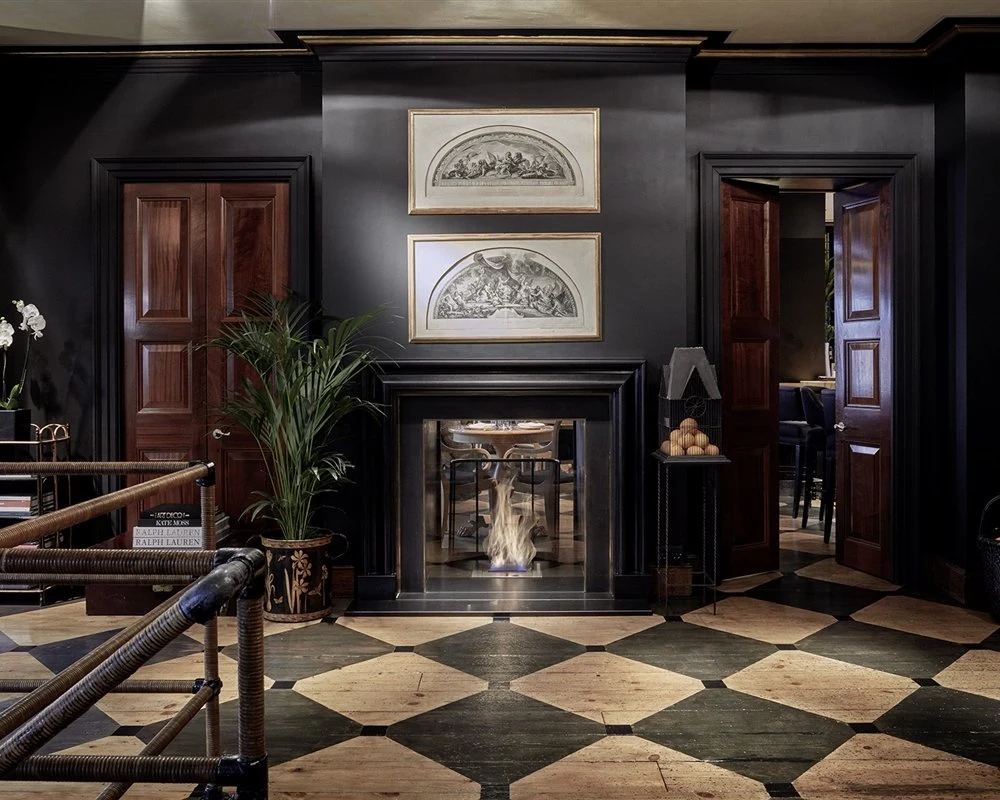
The interiors at Blakes are among the most referenced in London's hotel history. Anouska Hempel's original scheme drew on lacquerwork, deep colour blocking, and a collector's instinct for textile and object density that was unusual in British hospitality when the property opened. The approach sits in a distinct design lineage, more aligned with a private house assembled over time than a hotel brief executed to specification. For guests accustomed to the more neutral palettes that dominate contemporary luxury, the Blakes aesthetic is directional rather than deferential.
This specificity is both the property's credential and its qualifier. Guests who respond well to a highly individual visual environment tend to become returning guests; those who prefer the legible neutrality of a NoMad London or the institutional authority of Raffles London at The OWO may find Blakes too opinionated. That self-selection dynamic is not unusual in the design-hotel category. Properties like 11 Cadogan Gardens, also in the Chelsea and South Kensington corridor, attract a similarly specific guest profile through strong aesthetic identity rather than broad-appeal programming.
The South Kensington Position and What It Affords
South Kensington's museum corridor, the V&A, the Natural History Museum, and the Science Museum, sits within walking distance, which makes the location practical for culturally oriented stays. The neighbourhood's restaurant provision has matured considerably over the past decade; the streets between the Cromwell Road and Fulham Road now carry a range of serious dining addresses across multiple price points. For guests treating a London stay as a cultural and culinary itinerary rather than a business trip, South Kensington functions well as a base.
The neighbourhood also connects efficiently to Hyde Park, a meaningful amenity for guests who treat morning exercise as a non-negotiable. The park's running loop and open water swimming at the Serpentine Lido function as the kind of natural, low-infrastructure wellness option that aligns with the retreat-by-design approach Blakes represents structurally. It is the equivalent of what countryside properties like The Newt in Somerset or Gleneagles in Auchterarder achieve through managed grounds, but accessed through the city's public infrastructure rather than a private estate.
Planning a Stay: What to Know Before You Book
Blakes sits in a price bracket that reflects its position in the boutique luxury tier rather than the grand hotel segment. Given the key count and the property's consistent reputation since opening, forward planning is advisable for peak periods, particularly during Chelsea Flower Show week in May and the September auction and fashion event cluster. The South Kensington address means Gloucester Road tube station is within easy walking distance, connecting directly to Heathrow via the Piccadilly line, which is a practical advantage for guests arriving from or departing to the airport without the complication of a taxi across central London traffic. Room selection matters here more than at a standard luxury hotel where the inventory is relatively uniform.
Questions
Frequently asked
Who works at Blakes Hotel?
Made By profiles Anouska Hempel (Other) at Blakes Hotel.
How expensive is Blakes Hotel?
Blakes Hotel is listed at a price level of $$$$.
The field
How it compares
| Place | Notes | Awards |
|---|---|---|
| Blakes Hotel | West Brompton, $$$$ | · |
| Brown's Hotel, a Rocco Forte Hotel | London | · |
| Claridge’s | London | Michelin 3 Keys, World's 50 Best |
| Raffles London at The OWO | London | Michelin 3 Keys, World's 50 Best |
| The Connaught | London | Michelin 3 Keys, World's 50 Best |
| The Peninsula London | London | Michelin 3 Keys |
| The Ritz London | London | Michelin 2 Keys |