Blume
- 01CuisineSeasonal Swiss Regional
- 02CityUster, Switzerland
Risotto, offal, flame at table
- Michelin Bib Gourmand · Michelin Guide
- Michelin Bib Gourmand · 2025
- Michelin Bib Gourmand · 2024
Risotto at the pass, offal close behind
At Blume in Uster, head chef Michael Müller takes the pass first in a farm-to-table Swiss register. MICHELIN inspectors name risotto among his specialties, alongside offal work such as tripe or liver. The house sits at Freudwilerstrasse in Freudwil, a short run out of Uster and close enough to Zurich to be reached on an evening, but rural enough that the room is never rushed. The restaurant works in the Swiss regional register, with seasonal cooking, local sourcing and home-made products at the center of the method. The kitchen’s named specialties are not decorative signatures; they are old forms that ask for timing, heat and restraint. Risotto sits alongside tripe, liver, sweetbreads, Zurich Oberland venison and homemade ravioli. Chateaubriand belongs to the shared table. The spit-roast skewers come with flame at the table, a gesture that turns service into part of the cooking rather than a flourish added afterward.
Seasonal Swiss cooking by heat and advance work
The program at Blume is built around à la carte cooking in the evening and a regional Swiss vocabulary that favors the whole cut, the pan, the roast and the sauce. Risotto gives the kitchen a quiet test: stock, rice, agitation, rest, and the final texture held long enough to reach the table. Offal asks for a different hand. Tripe and liver do not forgive vague timing, and sweetbreads carry their own sequence of soaking, trimming and heat. The table-side spit-roast skewers add another layer, because the cook and the room meet at the same moment. Flame can lift aroma, but it also exposes the station. There is nowhere to hide a dry skewer or a sauce that has lost its line. Chateaubriand, ordered in advance for the whole table, shifts the rhythm again. The kitchen prepares for a shared cut rather than a single plate, and the pass has to think in portions, rest and carving before the dish reaches the room. Blume’s wine program is described through curation rather than volume; it serves the food without turning the meal into a cellar exercise.
Downstairs rustic, upstairs composed
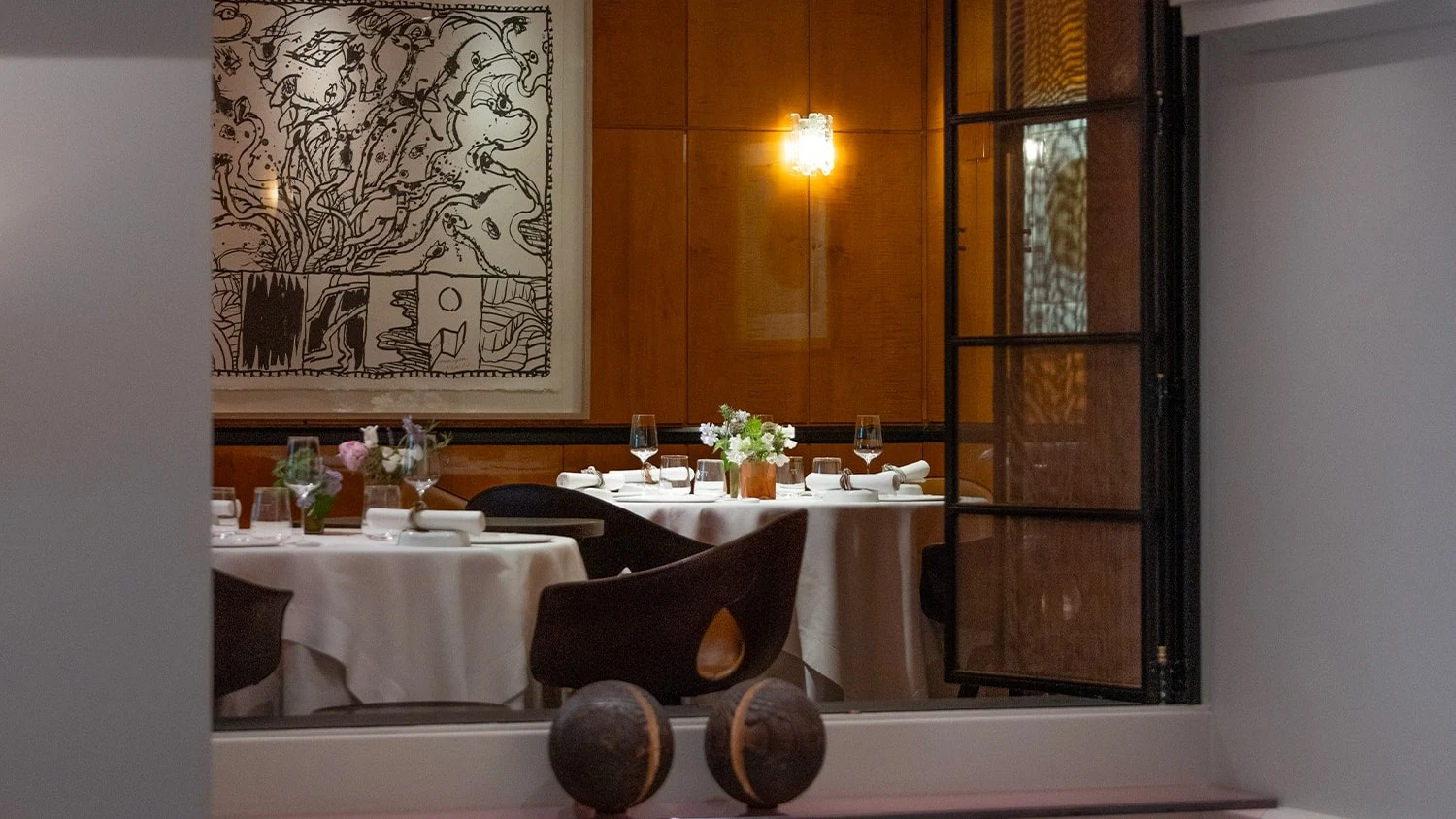
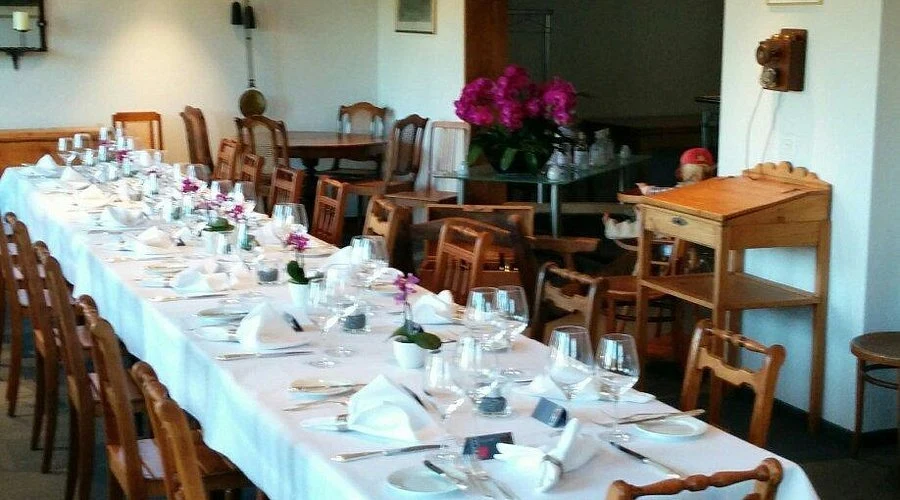
The room gives the work a low register. Downstairs, the space is rustic and close, more counterpoint than stage set, with the quiet of the rural setting pressing gently against the service. Upstairs, the room turns more elegant, but the house does not lose its warmth. This is upscale casual in the Swiss sense: comfort kept in order, linen and glassware serving the plate rather than announcing themselves. The pass has to carry both kinds of service, the intimate table and the larger group, the risotto ordered for appetite and the Chateaubriand ordered for company. The noise stays low enough for the details to register: the arrival of a sauce, the flame at the skewer, the pause before a shared cut is divided.
A Bib Gourmand with old dishes still on the bench
Blume holds a MICHELIN Bib Gourmand, and the recognition suits the house because the food’s value is tied to craft rather than simplification. What is at stake here is not a louder room or a longer menu, but whether the kitchen keeps giving regional dishes the patience they require. The final word belongs to the table where risotto, tripe and a flambéed spit-roast skewer can sit inside the same Swiss meal at Blume.
Questions
Frequently asked
What kind of cooking does Blume do?
Blume works in a seasonal Swiss regional register, with local sourcing and homemade products at the center of the kitchen. The menu leans on dishes such as risotto, tripe, liver, sweetbreads, Zurich Oberland venison and homemade ravioli.
Who is the chef at Blume?
Head chef Michael Müller runs the kitchen at Blume.
What is the restaurant known for?
MICHELIN inspectors name risotto among Blume’s specialties, alongside offal such as tripe and liver. Chateaubriand is served for the whole table, and the spit-roast skewers come with flame at the table.
Does Blume have any recognition?
Blume holds a MICHELIN Bib Gourmand.
Is it necessary to book?
Reservations are recommended at Blume.
The field
How it compares
| Place | Cuisine | Notes | Awards |
|---|---|---|---|
| Blume | Seasonal Swiss Regional | Freudwil, $$ | · |
| Alchemist | Avant-Garde Molecular Gastronomy with Social Commentary | Copenhagen | Michelin 2 Stars, World's 50 Best |
| Den | Modern Japanese Kaiseki | Tokyo | Michelin 2 Stars, World's 50 Best |
| ESqUISSE | Modern French with Japanese Influences | Tokyo | Michelin 2 Stars, World's 50 Best |
| Les Amis | Classic French Haute Cuisine | Singapore | Michelin 3 Stars, World's 50 Best |
| Pierre Gagnaire | Avant-Garde French Fine Dining | Paris | Michelin 3 Stars, World's 50 Best |
| The French Laundry | French-Californian Fine Dining | Yountville | Michelin 3 Stars, World's 50 Best |
Similar places
Avant-Garde Molecular Gastronomy with Social Commentary
Alchemist
Copenhagen, Denmark
★★ · 50 Best
Modern Japanese Kaiseki
Den
Tokyo, Japan
★★ · 50 Best
Modern French with Japanese Influences
ESqUISSE
Tokyo, Japan
★★ · 50 Best
Classic French Haute Cuisine
Les Amis
Singapore, Singapore
★★★ · 50 Best
Avant-Garde French Fine Dining
Pierre Gagnaire
Paris, France
★★★ · 50 Best
French-Californian Fine Dining
The French Laundry
Yountville, United States
★★★ · 50 Best