Made ByWinery
Bodegas Castillo Viejo
- 01CitySan José, Costa Rica
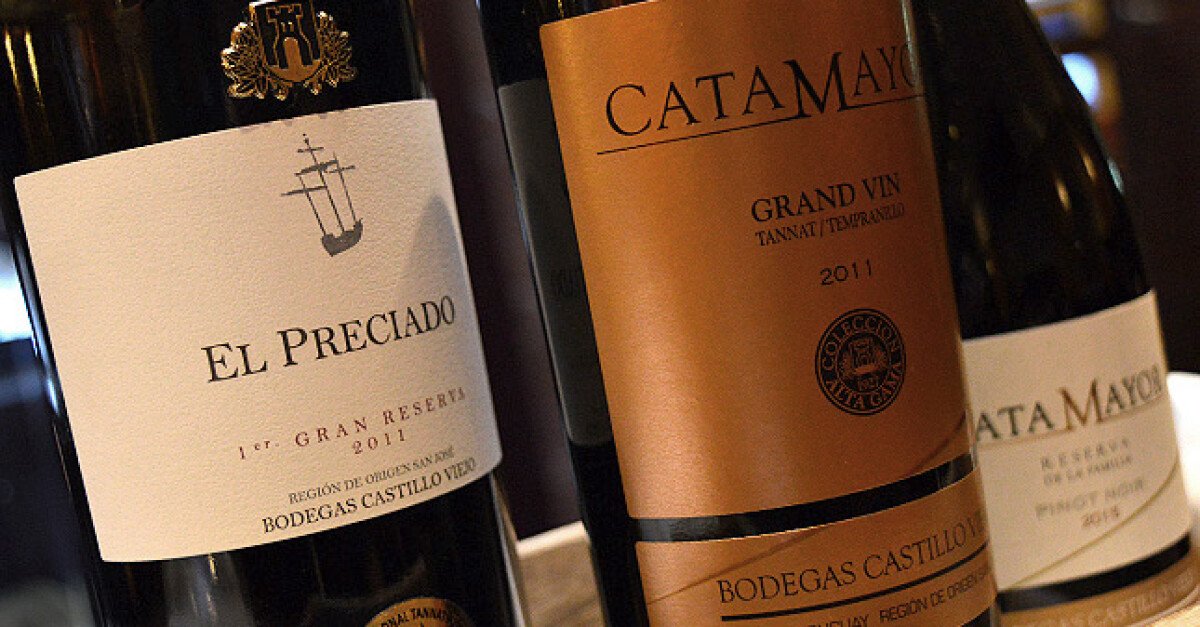
Bodegas Castillo Viejo holds a Pearl 1 Star Prestige (2025), placing it among San José's most formally recognised wine producers. Costa Rica's wine culture sits at an early but serious stage, and this producer represents one of the clearest reference points for how the country's conditions translate into the glass. A considered visit for anyone tracking Central American viticulture.
Wine in the Tropics: What San José Tells You That Europe Cannot
Costa Rica is not a country that appears in most conversations about serious wine production. The climate sits outside the conventional viticultural band, humidity is a persistent challenge, and the absence of a cold winter makes the vine's annual rhythm behave differently than it does in Burgundy or the Rhône. That gap between expectation and reality is precisely what makes Bodegas Castillo Viejo instructive. The questions the winery is forced to answer, about altitude, about drainage, about which varieties tolerate equatorial light patterns, are not questions those European estates have ever needed to ask. The terroir conversation here starts from a fundamentally different premise.
San José's position in the Central Valley places it at elevations that soften the equatorial heat. The valley floor sits roughly 1,100 metres above sea level, and diurnal temperature variation, the gap between daytime highs and cooler nights, is the primary tool viticulture has to build acidity and slow the rush to sugar accumulation. In established New World regions, that swing might be eight to twelve degrees Celsius. In San José's surroundings, producers have to work harder to find sites where that variation is meaningful. The result is that geography, not simply variety selection, becomes the first editorial decision in any bottle that comes out of this region.
The Case for a Pearl 1 Star Prestige
Bodegas Castillo Viejo received a Pearl 1 Star Prestige award in 2025, placing it in a tier of formal recognition that demands context. The Pearl Prestige designation signals a property operating above the regional average, demonstrating consistency and a defined approach to quality. For a wine producer in Costa Rica, that recognition functions differently than it would for, say, Accendo Cellars in St. Helena or Alpha Omega Winery in Rutherford, where Napa's infrastructure of critics, auction records, and allocation lists provides a dense peer network. In San José, the reference points are thinner and the award carries more weight as a navigation tool for visitors unfamiliar with the local field.
To understand what that star means in practice, it helps to compare it against producers operating in similarly non-canonical wine regions. Amrut in Bengaluru spent years producing spirits in a country not associated with distilling excellence before the international trade noticed. All Saints Estate in Rutherglen built its reputation in a corner of Australia that sits outside the fashionable zones of the Yarra Valley or Barossa. In both cases, the award or recognition mattered more as a signal than it would for a producer in a more densely covered region. Bodegas Castillo Viejo operates in comparable conditions: the accolade is a shortcut through genuine unfamiliarity.
Terroir Expression in a Non-Canonical Climate
The editorial angle on any Central Valley producer has to start with the growing conditions, because those conditions determine everything downstream. Volcanic soils derived from the Cordillera Central provide good drainage and mineral content, but they also mean that vine stress patterns differ from the clay-limestone structures that give Burgundy its character or the well-drained gravel of the Médoc its drainage advantages. Producers working these soils are, in effect, writing a terroir vocabulary from scratch rather than translating an established one.
That parallel is worth holding up against established houses elsewhere. Adelaida Vineyards in Paso Robles made a point of identifying calcareous soils in the Adelaida District at a time when Paso Robles was not yet divided into sub-appellations. Adelsheim Vineyard in Newberg was among the first generation of producers arguing that the Chehalem Mountains could produce Pinot Noir with legitimate cellar potential. Both cases involved producers doing the interpretive work of explaining a terroir before any shorthand existed. Costa Rica's Central Valley producers are at a similar juncture, which means a visit to Bodegas Castillo Viejo is, in part, a visit to an argument still being made.
Variety selection in this context becomes a statement about what the land can actually do rather than what a market expects. Producers in the region have experimented with varieties from warm Mediterranean climates, Grenache, Tempranillo, Malagouzia, alongside international standards, because the heat accumulation and growing season length suggest different tolerances than the cool-climate varieties that dominate European prestige production. The choices made at a producer like Bodegas Castillo Viejo reflect that calculation, even if the specific details of their range sit outside the verified data available here.
Where San José Sits in the Regional Picture
Costa Rica's wine industry is small in absolute terms. The country's agricultural identity is dominated by coffee, and the coffee-growing highlands of the Central Valley are, ironically, the same zones that offer the most viable viticultural conditions. That overlap matters: the infrastructure, the altitude knowledge, and even some of the drainage and microclimate management techniques from coffee farming carry over into viticulture. It is not a coincidence that wine production has developed in the same corridor where Costa Rican coffee built its international reputation.
Against that backdrop, a producer earning formal prestige recognition sits at the front of a field that does not have many established names. The comparison set for Bodegas Castillo Viejo is not Alexander Valley Vineyards in Geyserville or Aberlour in Speyside. It is the small cohort of serious Central American producers trying to establish that wine grown between the tropics can carry a sense of place. The comparable set is regional and emerging, which means the bar for distinction is being set now, in real time.
For visitors arriving in San José with a primary interest in the city's food and drink culture, the winery sits in a useful category: it offers a specifically Costa Rican reference point at a moment when the local wine story is still in its first chapter. Those already tracking what is happening in less-documented wine regions will recognise the format: a producer doing serious work at the edge of the map, with formal recognition beginning to catch up.
Planning Your Visit
Specific booking details, opening hours, and pricing for Bodegas Castillo Viejo are not available through our current database. Visitors should confirm visit logistics directly through local contacts or tourism channels in San José before travelling. The broader San José dining and drinks scene rewards advance planning, particularly for properties that operate on appointment or limited-visit models, which is common among smaller prestige producers in the region. The Central Valley's dry season, running roughly from December to April, generally provides the most stable conditions for travel in the area, though the region's altitude moderates temperature year-round. For producers working with harvest-aligned visit programmes, timing around the March to May period, when the Central Valley's growing cycle typically concludes, can add a layer of context to any tasting.
Those building a wider wine itinerary should note that Andrew Murray Vineyards in Los Olivos or Alban Vineyards in Arroyo Grande offer useful reference points for how Rhône-variety specialists have approached warm-climate production, a comparison that may sharpen the perspective brought to any Costa Rican tasting.
Frequently asked
Is Bodegas Castillo Viejo more low-key or high-energy?
The atmosphere leans toward the contemplative end of the spectrum. A Pearl 1 Star Prestige award (2025) signals a producer serious about wine craft rather than spectacle, and serious wine producers in emerging regions tend to prioritise the cellar conversation over theatrical presentation. Visitors should expect an environment shaped by the work itself.
What awards has Bodegas Castillo Viejo received?
Bodegas Castillo Viejo has received recognition including: Pearl 1 Star Prestige (2025).
What's the must-try wine at Bodegas Castillo Viejo?
Contact Bodegas Castillo Viejo directly before visiting and ask what the winemaking team considers representative of their Pearl 1 Star Prestige standard — that question typically surfaces the bottles worth prioritising.
What is Bodegas Castillo Viejo known for?
Bodegas Castillo Viejo is one of the most formally recognised wine producers in Costa Rica, holding a Pearl 1 Star Prestige award in 2025. That recognition carries weight precisely because serious wine production in San José operates outside the canonical viticultural framework of Europe or South America, making the credential harder earned and the producer harder to contextualise against a global comparable set.