- Falstaff Winery - Listed · 2026
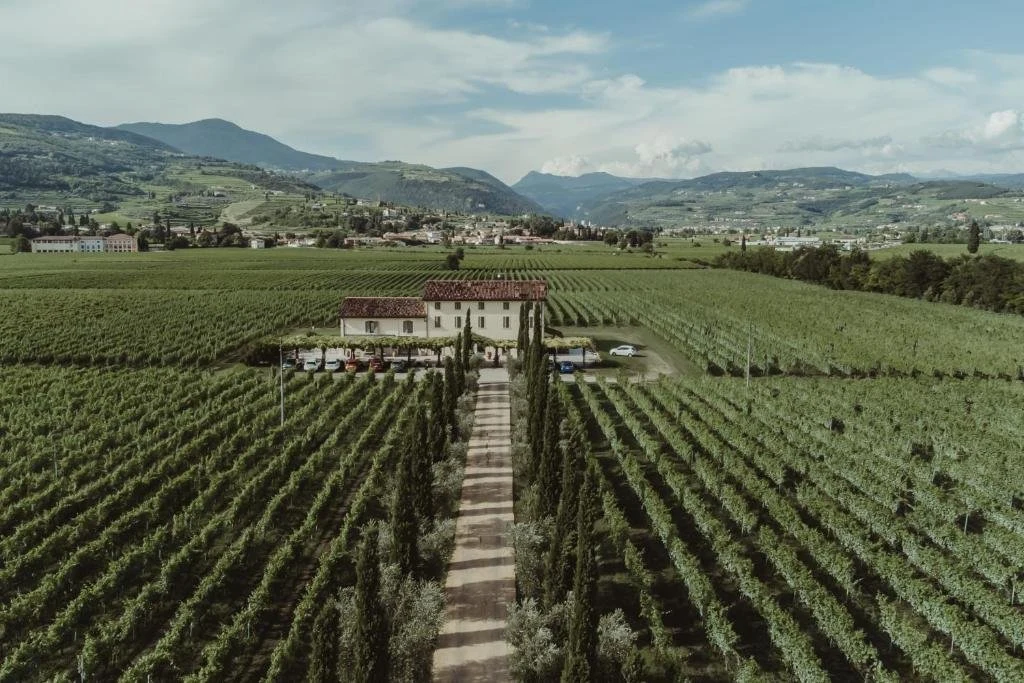
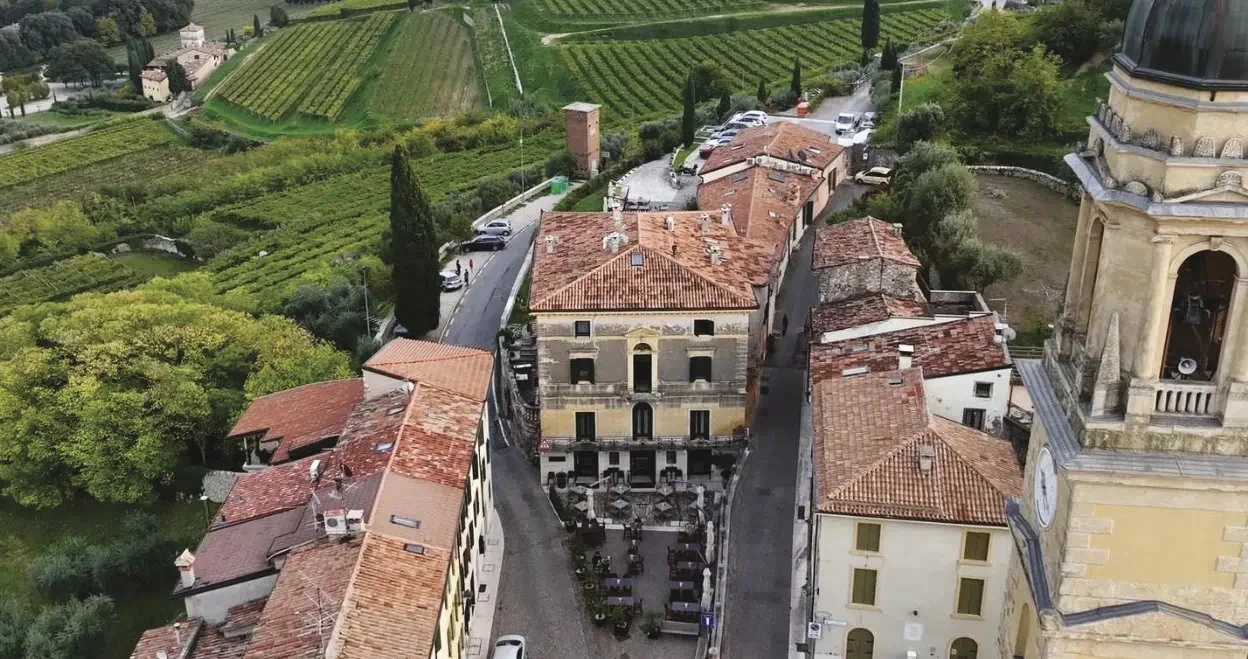
Approaching a Valpolicella cellar on a hill changes the rhythm of a tasting before a glass is poured. The view pulls the eye across vineyards and rising ground; inside, the mood contracts into barrels, stone, and mosaic work. Borghetti Giampiero belongs to that smaller, family-cellar tradition in San Pietro In Cariano, where hospitality is not staged as a luxury performance but organized around a clear regional subject: how Corvina, Corvinone, Rondinella, and related local grapes behave in the historic red-wine zone of Valpolicella Classica.
The useful way to read this address is through terroir and time. Valpolicella’s reputation rests on a set of techniques that make patience visible, especially appassimento, the drying of grapes for Amarone and Recioto. That process is not a decorative detail; it changes weight, texture, alcohol, sweetness, and tannic shape. A tasting here is strongest when treated as a study of those shifts, moving from fresher Valpolicella expressions toward Ripasso, Amarone, and sweet passito styles rather than treating every pour as a separate attraction.
Valpolicella Classica told through red grapes, drying, and cellar time
The region’s core blend gives the experience its spine. Corvina and Corvinone form the aromatic and structural base, while Rondinella plays its traditional supporting role; Molinara also sits within the local varietal vocabulary. In practical tasting terms, that means the conversation is less about novelty and more about controlled variation: still red wines, dessert-leaning passito, and the concentration created when fruit is dried before fermentation.
Amarone occupies the serious end of that spectrum, and Borghetti Giampiero’s Amarone Classico della Valpolicella DOCG has carried a 93-point Falstaff rating. That matters because Valpolicella has a wide commercial range, from simple restaurant bottles to ambitious cellar wines, and third-party recognition gives a useful signal inside a crowded category. The producer also has a documented family history in the area, with Casa Fraccaroli dating to 1790 and the modern cellar established in 1980, which places the visit inside a longer local lineage rather than a newly built tasting-room circuit.
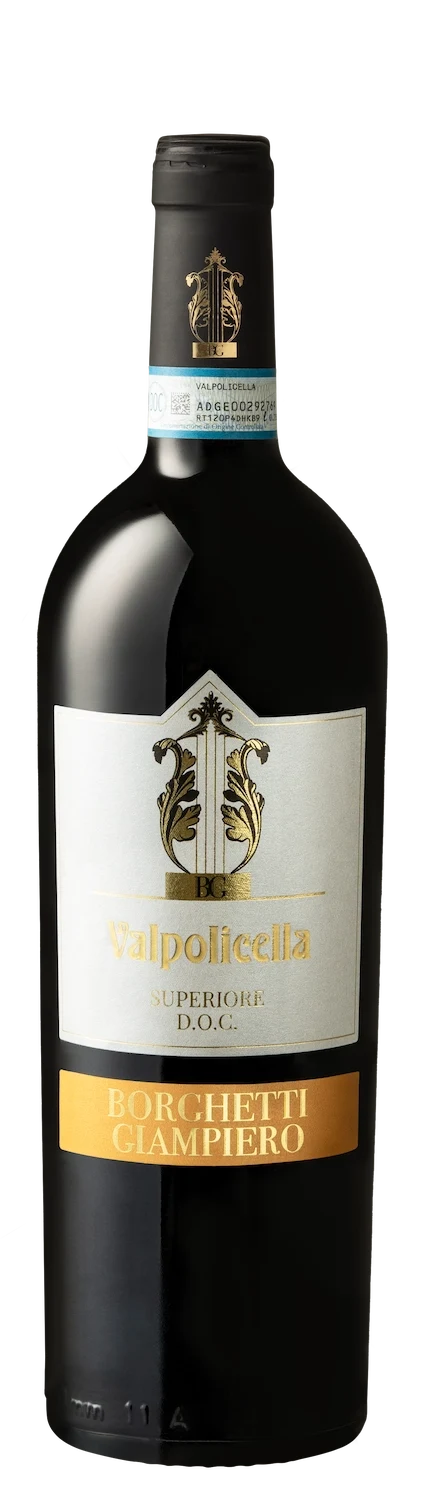
The house style, as presented through its portfolio, keeps to the classic grammar of the place: Valpolicella Classico Superiore DOC, Ripasso, Amarone, Recioto, IGT Corvina, and sweet red passito. The Castrum line adds an art-historical layer linked to the Fraccaroli family, but the stronger editorial point is regional discipline. This is not a winery trying to make every international variety relevant. It is working within the boundaries that made this corner of Veneto legible to collectors and travelers in the first place.
A cellar visit shaped by mosaics, barrels, and hill-country scale
The room is part of the argument. In 2022, the cellar was reworked as a more scenic tasting setting, with artistic mosaics placed around the historic family context rather than a neutral hospitality suite. That design choice could have tipped into theatre; here, it works because Valpolicella already carries an old tension between rustic agriculture and polished export culture. The mosaic-lined cellar, barrel-room setting, and panoramic outlook make that tension visible without moving the tasting away from wine.
Small-format hospitality also suits the appellation. Valpolicella Classica is easier to understand when a tasting slows down enough to explain why a Ripasso has a different relationship to skins and concentration than a younger Valpolicella, or why Recioto and Amarone share dried-grape roots but land in different registers. The available formats include seated tastings, cellar tours with tasting, food-pairing tastings, and panoramic terrace tastings, with Italian, English, and German among the hosted languages. That range gives the place flexibility without turning it into a high-volume attraction.
Food matters here in the restrained, regional sense. Pairing formats and the Castrum bistro point toward local products rather than an elaborate restaurant identity. For travelers using San Pietro In Cariano as a base, that distinction is useful: this is a wine-led stop with food as context, not a dining room that happens to pour estate bottles. The setting also links cellar, relais, and bistro under the Castrum name, which makes the experience feel integrated into the property rather than bolted on for visitors.
How to place it within a San Pietro In Cariano wine day
San Pietro In Cariano rewards travelers who build a day around contrasts inside the same appellation rather than racing across Veneto. A compact itinerary can compare cellar architecture, family scale, and tasting formats while keeping the subject fixed on Valpolicella. Nearby planning references include Azienda Agricola Monte Faustino, Azienda Agricola Selùn, Begali Lorenzo, Bolla, and Brigaldara. Those links are useful for mapping the wider local wine circuit without flattening each cellar into the same category.
The editorial case for Borghetti Giampiero is strongest for travelers who want a tactile Valpolicella visit: historic family setting, red-wine focus, art inside the cellar, and a panorama that keeps the vineyard context in view. It is less suited to anyone looking for a broad international tasting or a walk-through of multiple Italian regions. The reward is narrower and more coherent: an encounter with Valpolicella Classica on its own terms, where the language of dried grapes, barrel aging, and family cellar continuity carries the visit.
For wider trip planning in the city, use Our full San Pietro In Cariano wineries guide alongside Our full San Pietro In Cariano restaurants guide, Our full San Pietro In Cariano hotels guide, Our full San Pietro In Cariano bars guide, and Our full San Pietro In Cariano experiences guide. Travelers comparing wine regions beyond Veneto can also look at 3GP SRL in Treviso, 47 Anno Domini in Trebaseleghe, A Mano Wine in Noci, »der Steiner« Hans Steiner in Podersdorf am See, and & Handwein in Mannheim.
Questions
Frequently asked
Who works at Borghetti Giampiero?
Made By profiles Giampiero Borghetti (Winemaker) at Borghetti Giampiero.
How expensive is Borghetti Giampiero?
Borghetti Giampiero is listed at a price level of $$$.
The field
How it compares
| Place | Notes |
|---|---|
| Borghetti Giampiero | Castelrotto, $$$ |
| Azienda Agricola Monte Faustino | San Pietro In Cariano |
| Begali Lorenzo | San Pietro In Cariano |
| Cantina Spada | San Pietro In Cariano |
| Fumanelli | San Pietro In Cariano |
| Kyrenia | San Pietro In Cariano |
| Rino Sartori | San Pietro In Cariano |