- Falstaff Winery - 3 Stars · 2026
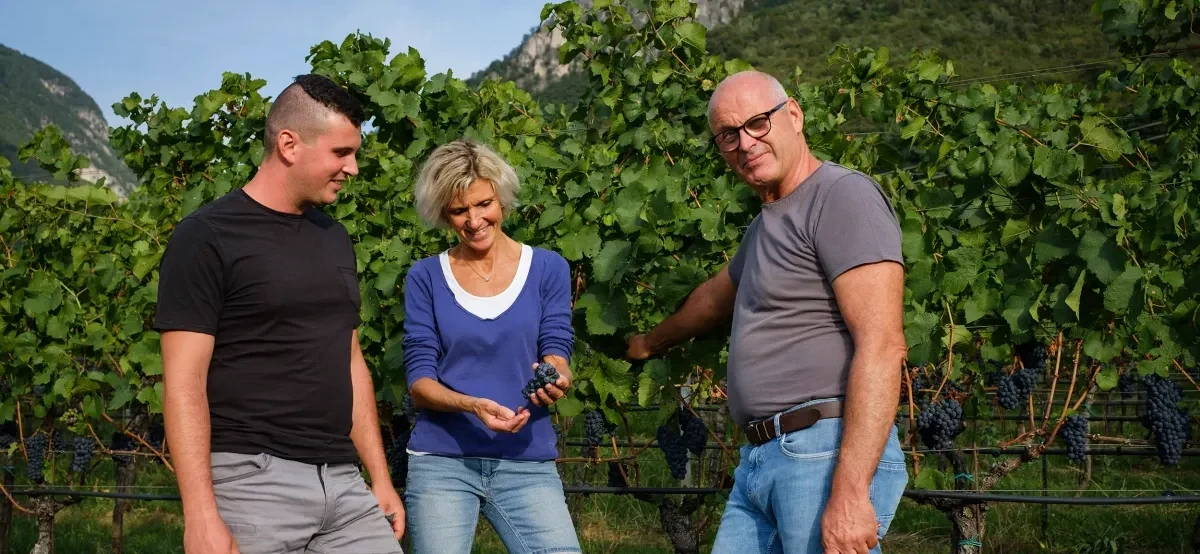
Approaching wine in Mazon means dealing first with altitude, wind, and light. The slopes above Neumarkt sit in that charged South Tyrolean zone where Alpine coolness and Mediterranean ripening pressure meet, and Pinot Noir is the variety that makes the argument clearest. Brunnenhof Mazzon belongs to the quieter side of that story: a small family-run estate, organic in philosophy, where the vineyard rather than cellar theatre sets the tone.
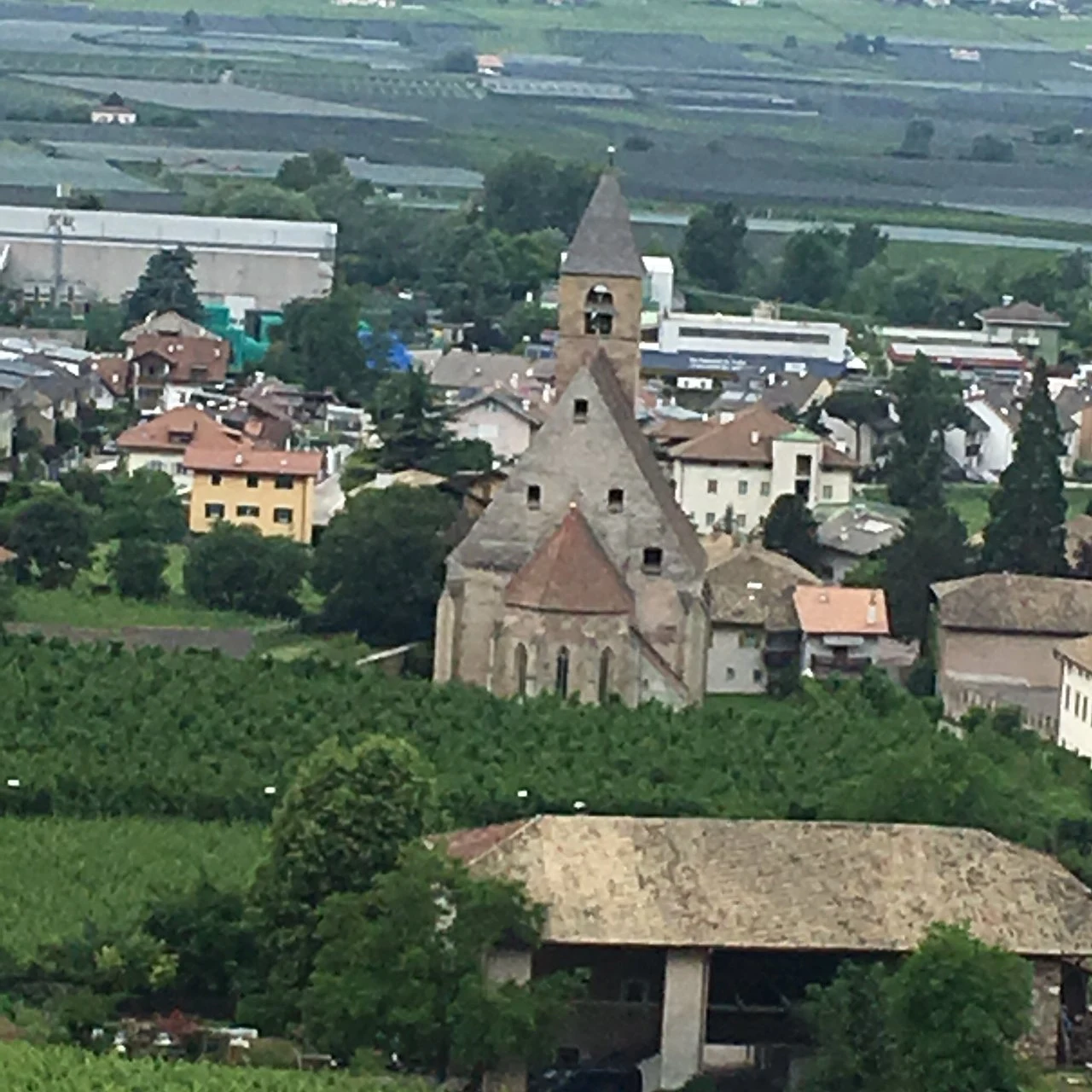
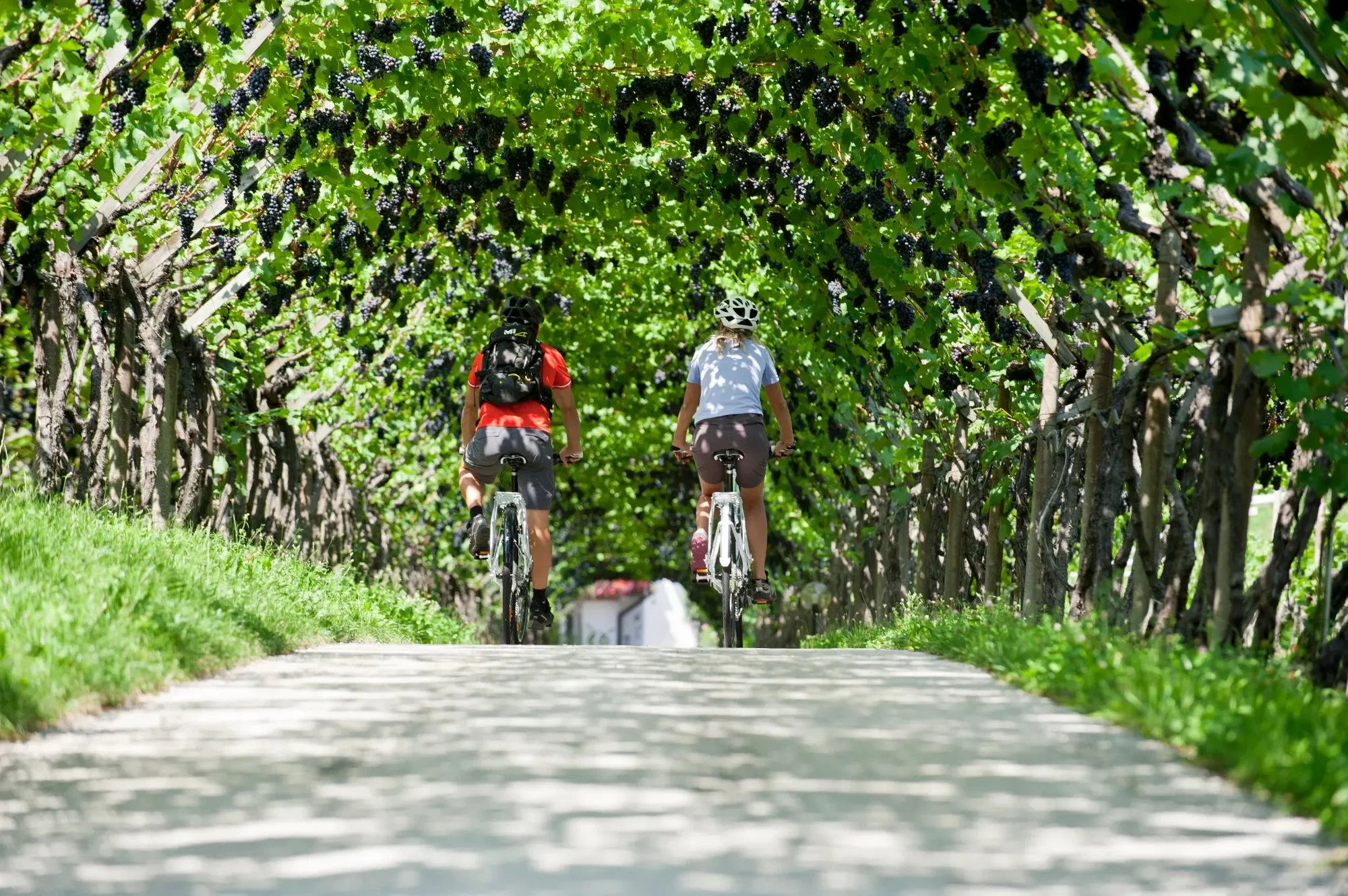
This is not a winery built around scale. The estate works from 5 hectares, with 2 hectares in Mazon, and the format reads accordingly: calm, rural, low-volume, and focused on guided understanding rather than high-traffic hospitality. The setting carries the sensory logic of the wines: vineyard slopes at roughly 280 to 450 meters, mountain views, afternoon sun, cool nights, and the Ora wind moving up from Lake Garda. Those are not decorative details; they explain why Pinot Noir has become the local reference point.
Mazon Pinot Noir, read through altitude and soil
South Tyrol’s wine identity is often discussed through contrast: Germanic precision, Italian table culture, steep vineyards, and a range of varieties that would look scattered in a warmer region. Mazon narrows that conversation. Here, Pinot Noir is not an imported curiosity but a long-established local discipline, with more than a century of cultivation behind it. Brunnenhof Mazzon’s defining feature is its focus on that terrain, especially Alto Adige DOC Pinot Noir grown in a place where slower ripening and diurnal shift matter.
The viticultural detail is unusually legible. Sandy clay slopes in Mazon give one register; limestone-rich moraine soils in Vill give another. Western exposure brings afternoon sun, while cool nights preserve tension. For drinkers used to Pinot Noir framed through Burgundy, Sonoma, or Central Otago, the South Tyrolean version asks for a different reading: less about copying a global template, more about how alpine edges shape fruit, structure, and aromatic lift.
The estate’s varietal range broadens the point without losing focus. Pinot Noir anchors the red side, with Lagrein adding a darker regional counterweight. Gewürztraminer, Manzoni Bianco, and Chardonnay cover the white spectrum, each useful in understanding why Alto Adige resists single-variety simplification. Still, the intellectual center remains Pinot Noir from Mazon, because that is where site, history, and cellar choices line up most clearly.
Organic farming and restrained cellar work
Move to organic cultivation in 2011 gives the estate’s farming a concrete frame rather than a lifestyle slogan. Bioland certification reinforces that direction, and the broader production philosophy is consistent with a small alpine property: estate focus, soil health, and a preference for restraint over extraction. In a region where vineyard work is physically demanding and parcels can be highly specific, organic farming is not a decorative badge. It changes the rhythm of the year and makes site expression harder to fake.
Cellar technique follows the same logic. Pinot Noir is fermented in large wooden barrels, with aging in used tonneaux for the Riserva style. That choice matters because new oak can quickly flatten the finer distinctions of cool-climate Pinot. Used wood and larger formats keep the emphasis on fruit, tannin shape, and the particular register of Mazon rather than on barrel sweetness. The result is a house style best understood through patience and site translation, not volume or polish.
Recognition has come through wine-specific critique rather than broad trophy culture. Falstaff rated the 2019 Mazzon Pinot Nero Riserva Südtirol DOC at 90/100, and the 2008 Gewürztraminer has also been noted at 90/100 in critic review. Those scores are useful not as decoration, but as signals that the estate’s small-production approach has landed beyond local reputation. For a winery of this scale, that kind of external reference helps place the bottles within a wider Alto Adige conversation.
A quiet tasting format for drinkers who care about place
The experience is shaped for wine education more than performance. Tastings are guided, the atmosphere is quiet, and the estate setting keeps attention on vineyard context, historic buildings, and the relationship between grape variety and slope. Tour languages include German, English, and Italian, which suits the region’s cultural overlap and makes the visit accessible without sanding down its local character.
Brunnenhof Mazzon is strongest for travelers who want to understand why Neumarkt matters as a wine stop rather than simply add another cellar door to a route. The visit type works for solo exploration, small groups, special occasions, and drinkers building a more serious map of Alto Adige Pinot Noir. It is less suited to visitors seeking a food-pairing program or family-oriented estate day, since the focus remains wine, vineyards, and the estate grounds.
For broader local planning, use Our full Neumarkt wineries guide alongside the city’s dining and travel references: Our full Neumarkt restaurants guide, Our full Neumarkt hotels guide, Our full Neumarkt bars guide, and Our full Neumarkt experiences guide. Nearby Neumarkt wine pages include Baron Longo, EnoPartner Italia S.r.l. Glassierhof, Weingut Gottardi, and Weingut Peter Dipoli. For a wider winery map beyond Alto Adige, compare regional formats through 3GP SRL in Treviso, 47 Anno Domini in Trebaseleghe, A Mano Wine in Noci, »der Steiner« Hans Steiner in Podersdorf am See, and & Handwein in Mannheim.
Questions
Frequently asked
Who works at Brunnenhof Mazzon?
Made By profiles Johanna Rottensteiner (Winemaker) and Kurt Rottensteiner (Winemaker) at Brunnenhof Mazzon.
How expensive is Brunnenhof Mazzon?
Brunnenhof Mazzon is listed at a price level of $$.
The field
How it compares
| Place | Notes |
|---|---|
| Brunnenhof Mazzon | Mazon, $$ |
| Baron Longo | Neumarkt |
| EnoPartner Italia S.r.l. | Neumarkt |
| Glassierhof | Neumarkt |
| Weingut Gottardi | Neumarkt |
| Weingut Peter Dipoli | Neumarkt |
| Weingut Praxmarer | Neumarkt |