Café Deco
- 01CuisineSeasonal European Bistro
- 02CityLondon, United Kingdom
From the people index
Recommended by
2 trusted voices point here.

- Michelin Plate · 2026
- Michelin Plate · 2025
- The Good Food Guide GFG Good · 2025
- Michelin Plate · 2024
A Bloomsbury Bistro That Trusts the Ingredients
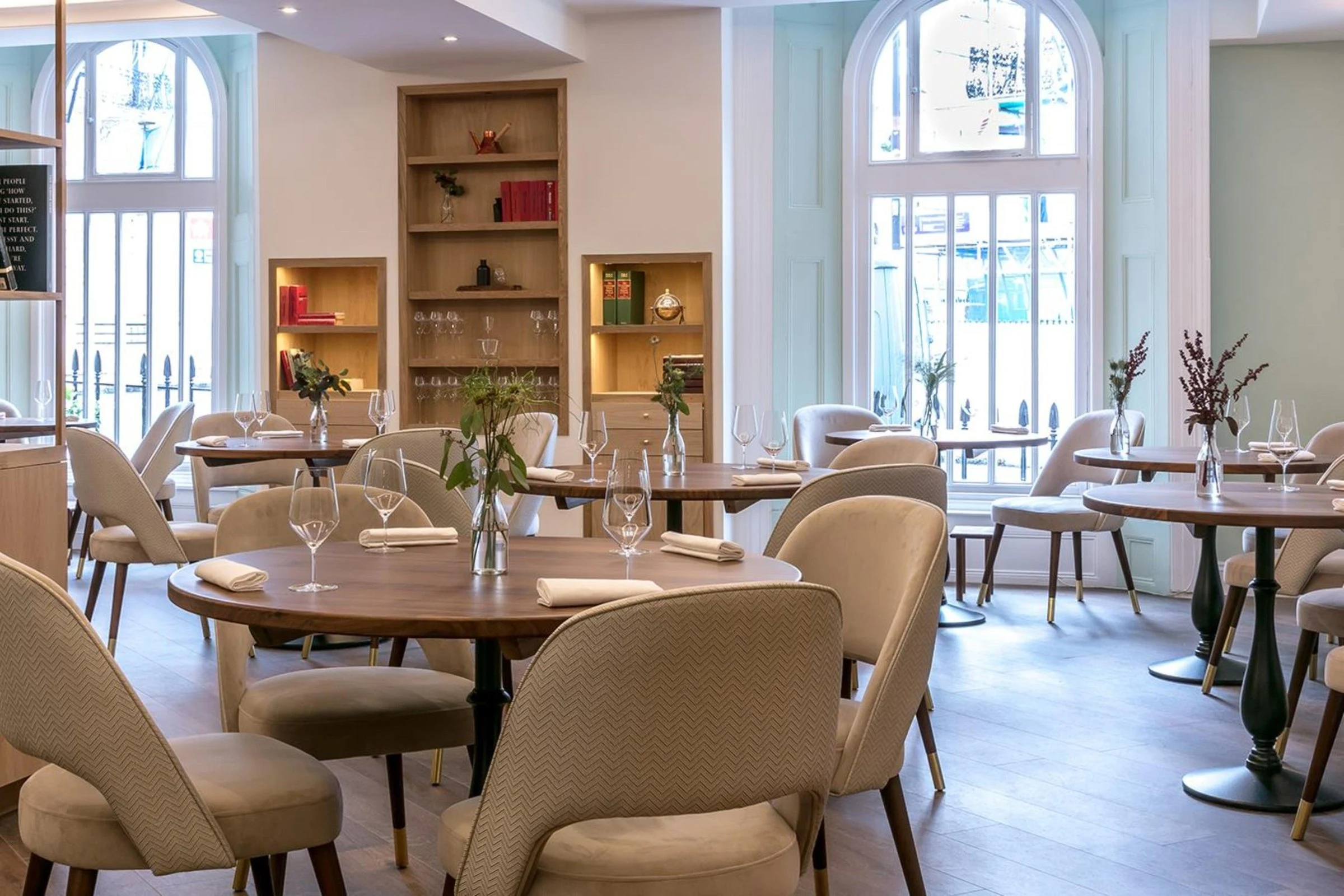
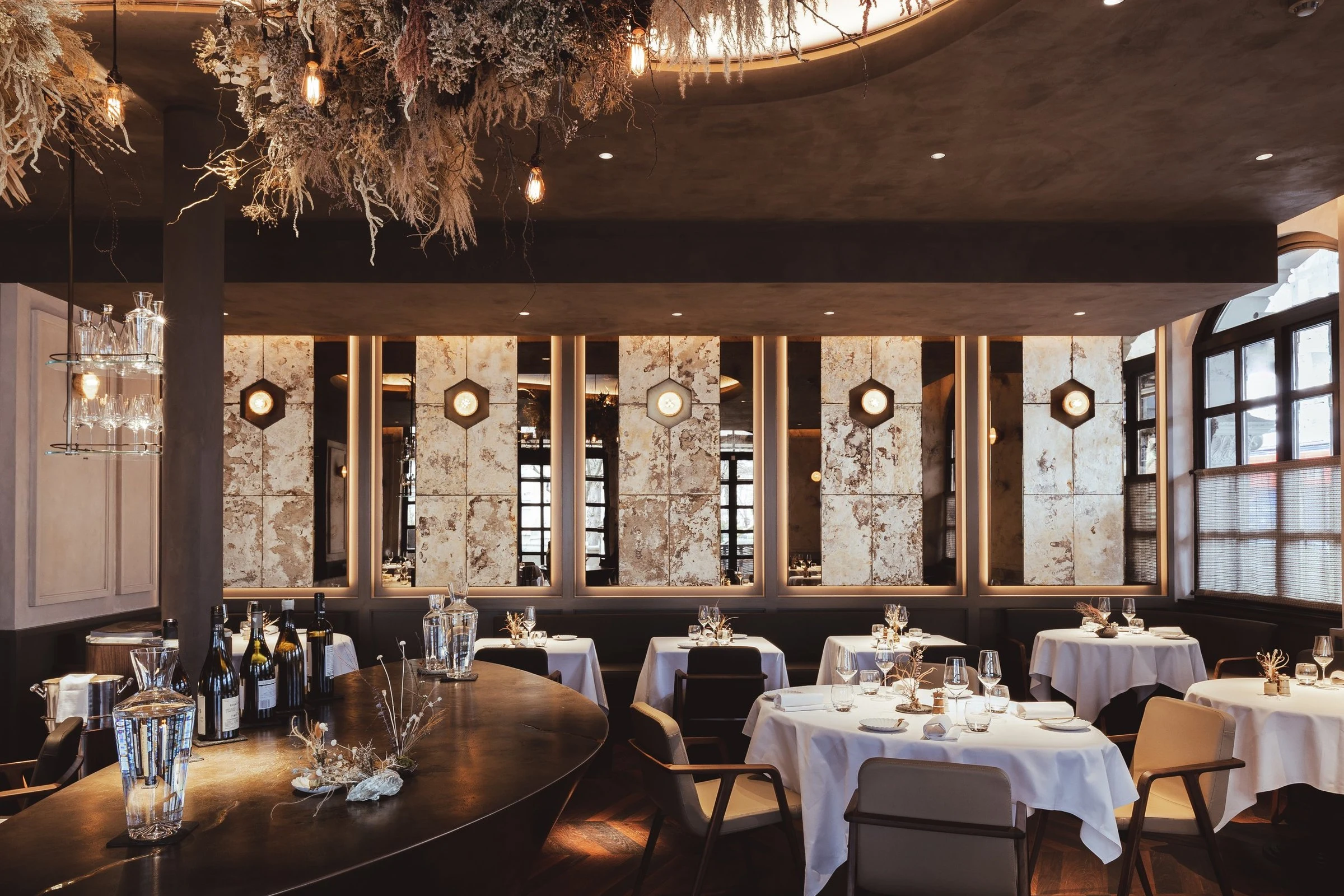
Store Street in Bloomsbury runs quietly between Tottenham Court Road and the British Museum, lined with architecture studios and independent traders. Café Deco sits at number 43, and the exterior gives little away: clean lines, simple signage, the kind of understated frontage that belongs to a neighbourhood long settled into its own identity. Inside, the room is intimate and simply furnished, with the chefs visible from the floor and, more to the point, often delivering dishes to the tables themselves. That last detail matters: it collapses the usual distance between kitchen and dining room and signals something about the kitchen's confidence in what it is producing.
Bloomsbury has long occupied an interesting position in London dining. It catches a significant tourist flow from the nearby museum, yet the neighbourhood also has a working residential and academic population that supports year-round trade rather than weekend peaks. The restaurants that last here tend to be the ones that earn loyalty rather than footfall. Café Deco, recognized in the 2025 Michelin Guide, sits in that sustained category.
The Case for Weekly-Changing Menus
One of the more telling signs of a kitchen's relationship with sourcing is the frequency with which its menu changes. At Café Deco, the menu rotates weekly. That cadence is not a marketing position; it is a structural commitment to cooking with whatever is in season and in supply, which in practice means the kitchen cannot build habits around out-of-season produce or fixed supplier relationships that outlast their usefulness. It is an approach that aligns closely with a broader shift in British contemporary cooking toward shorter supply chains and reduced ingredient miles.
The food that comes out of this approach has what Michelin's own notes describe as a deceptively domestic quality: dishes that appear simple but demonstrate a precise understanding of flavour combinations. Salt cod fritters arrive with aïoli and carry punchy, resonant garlic. Bistro references appear throughout the menu, from artichoke vinaigrette to tuna with radish and winter tomato. Main courses aim at unabashed sustenance: a Spanish-influenced ranch stew of sausage, morcilla, bacon and beans; baked brill with potato. These are not dishes built for visual theatre. They are built for eating, which is a different brief entirely.
The weekly rotation also makes the charcuterie and mussels in escabeche function differently from the same dishes at a fixed-menu restaurant: they are there because they make sense this week, not because they anchor a permanent brand identity. That distinction matters for anyone thinking about the ethics of a restaurant's sourcing model. The kitchen under chef Anna Tobias has chosen a format that keeps waste lower and keeps the team attentive to what is actually available, rather than reverse-engineering supply to fit a fixed menu.
Where Café Deco Sits in London's Contemporary British Tier
London's contemporary British category spans an enormous price and ambition range. At the formal end, restaurants like CORE by Clare Smyth and Restaurant Gordon Ramsay operate at ££££, with tasting menus, large front-of-house teams, and the full apparatus of fine dining. Sketch, The Lecture Room and Library occupies a similarly formal register. Café Deco at ££ operates in a different register entirely, one where the cooking carries Michelin recognition but the format is closer to a neighbourhood bistro than a destination tasting-menu room.
A more useful peer comparison is the cohort of London restaurants that have earned Michelin attention without the ceremony: places like Anchor and Hope in Waterloo, which has long held a similar position as a Michelin-noticed, ingredient-led pub restaurant at accessible prices. Apricity in Mayfair represents a more recent iteration of this tendency, with an explicit sustainability framework built into its sourcing and waste model. Café Deco's weekly-menu discipline puts it in conversation with that cohort, even if it does not carry the same explicit environmental positioning.
For readers interested in the broader British contemporary scene beyond London, the conversation extends to places like The Fat Duck in Bray, L'Enclume in Cartmel, Moor Hall in Aughton, and further afield, Gidleigh Park in Chagford, Hand and Flowers in Marlow, and Le Manoir aux Quat' Saisons in Great Milton. British contemporary cooking at Café Deco's register also travels: Jaan by Kirk Westaway in Singapore and Dog and Gun Inn in Skelton show how the idiom extends across formats and geographies.
The Wine List as a Sourcing Argument
A weekly-rotating kitchen that takes its ingredient sourcing seriously will often express the same instinct through its wine list, and Café Deco follows that logic. The list is largely European and tilts toward producers and regions that sit outside the mainstream: a Tarragona Macabeu-Muscat blend from Catalonia, a cherry-edged Sicilian Frappato. These are choices that reflect an understanding of viticulture beyond the familiar appellations, and they pair naturally with a menu that leans on similar off-centre references, Spanish stews and escabeche alongside classic French bistro preparations. The list is described by Michelin's guide as showing enterprising discernment, which in wine-list terms means it rewards readers who look past the first page.
Café Deco in the Context of Sustainable British Dining
The conversation about sustainability in London restaurants has moved well past its early phase of gestures toward locally-sourced garnishes. Kitchens that have built genuine sourcing ethics into their structure tend to share certain operational features: short menus, frequent changes, close supplier relationships, and a willingness to let availability dictate the offer rather than the other way around. Café Deco's weekly-menu model aligns with all of those features. It does not carry an explicit environmental certification or a programmatic sustainability statement, but its operating logic, a small, intimate room, a frequently rotating menu, chefs who serve and therefore maintain direct accountability for what reaches the table, reflects the same priorities through practice rather than positioning.
Google reviewers rate the restaurant 4.3 across 326 reviews, which at that volume and in central London represents consistent satisfaction rather than the inflated score of a recently opened room with a small early-adopter base. That consistency, alongside the 2025 Michelin Plate, is the evidence that the kitchen's approach is working at scale rather than just in principle.
Know Before You Go
- Address: 43 Store Street, London WC1E 7DB
- Price range: ££
- Cuisine: British Contemporary
- Recognition: Michelin Plate (2025)
- Google rating: 4.3 (308 reviews)
- Menu format: Weekly-changing; arrive knowing the menu will differ from any previous visit
- Nearest landmarks: A short walk from the British Museum and Tottenham Court Road station
- Booking: Reservations are recommended.
Explore More of London
Café Deco is one point in a wide and varied London dining scene.
Questions
Frequently asked
How expensive is Café Deco?
Café Deco is listed at a price level of $$$.
Where is Café Deco and what does it serve?
Café Deco is in Fitzrovia, London, serving Seasonal European Bistro.
The field
How it compares
| Place | Cuisine | Notes | Awards |
|---|---|---|---|
| Café Deco | Seasonal European Bistro | Fitzrovia, $$$ | · |
| CORE by Clare Smyth | Modern British Fine Dining | London | Michelin 3 Stars, World's 50 Best |
| Ikoyi | Modern West African Fine Dining | London | Michelin 2 Stars, World's 50 Best |
| Kitchen Table | Modern British Fine Dining | London | Michelin 2 Stars |
| KOL | Modern Mexican Fine Dining | London | Michelin 1 Star, World's 50 Best |
| Row on 5 | Modern British Fine Dining with Mediterranean & Asian Influences | London | Michelin 2 Stars |
| The Ledbury | Modern British Fine Dining | London | Michelin 3 Stars, World's 50 Best |
Similar places
Modern British Fine Dining
CORE by Clare Smyth
London, United Kingdom
★★★ · 50 Best
Modern West African Fine Dining
Ikoyi
London, United Kingdom
★★ · 50 Best
Modern British Fine Dining
Kitchen Table
London, United Kingdom
★★
Modern Mexican Fine Dining
KOL
London, United Kingdom
★ · 50 Best
Modern British Fine Dining with Mediterranean & Asian Influences
Row on 5
London, United Kingdom
★★
Modern British Fine Dining
The Ledbury
London, United Kingdom
★★★ · 50 Best