Café Chelsea
- 01CityNew York City, United States
From the people index
Recommended by
2 trusted voices point here.
- Wine Spectator Award of Excellence · 2026
The Pull of 23rd Street
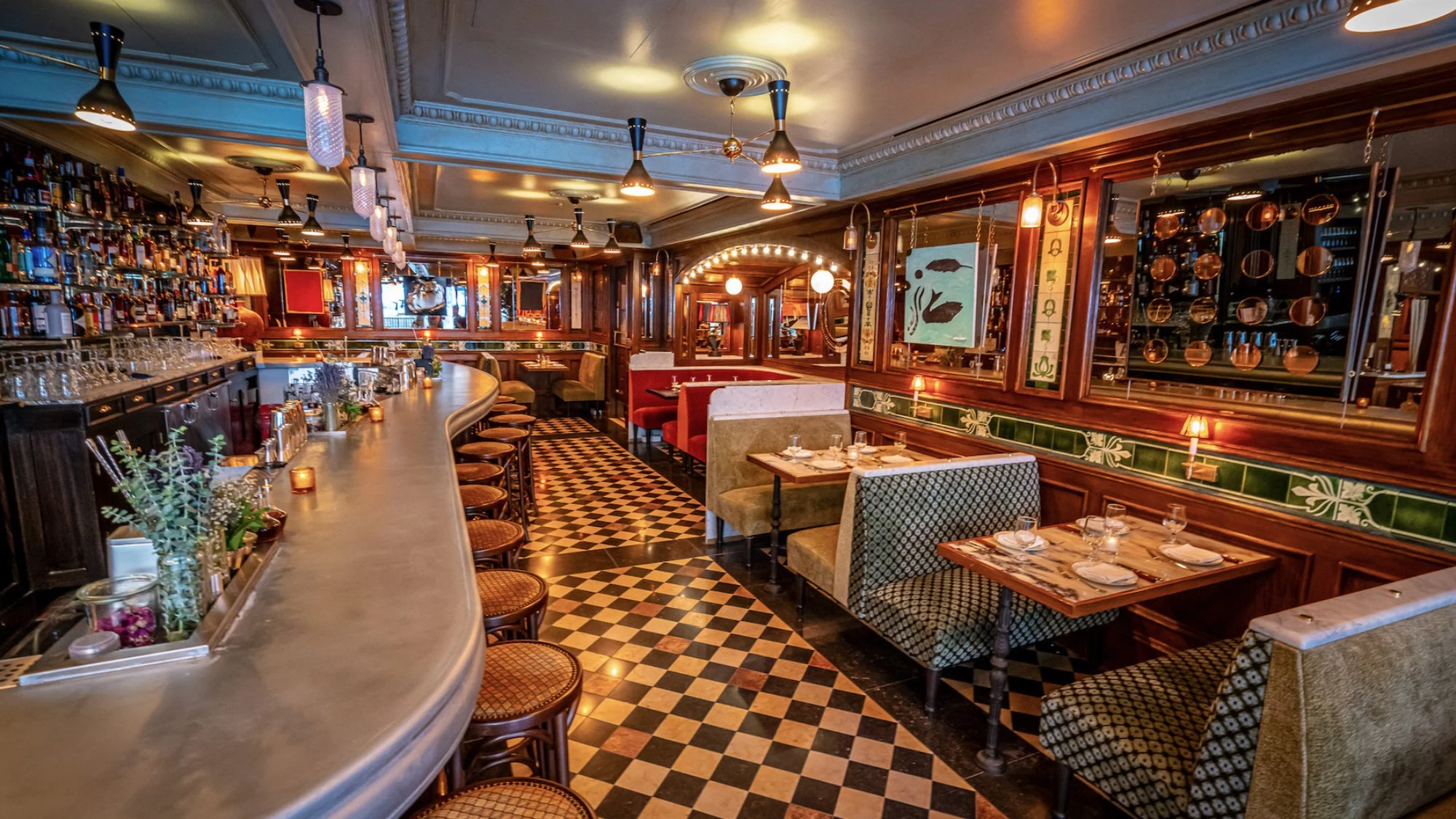
West 23rd Street in Chelsea sits at an unusual intersection of New York identities. The block between Seventh and Eighth Avenues holds the Chelsea Hotel's legacy guests and a rotating cast of gallery workers, longtime residents, and the kind of people who have eaten at the same table for fifteen years. Café Chelsea at 218 W 23rd St is a bar in Chelsea, New York City, with. It occupies that social fabric more than it commands it, which is exactly what keeps certain people returning week after week.
The neighborhood itself sets the frame. Chelsea's dining character has always split between the destination-driven, which cluster near the High Line and the gallery strips on the far west side, and the genuinely local, which thread through the residential blocks closer to Seventh Avenue. Café Chelsea falls into the second category, a kind of room that Manhattan produces less often now that real estate pressure pushes every new opening toward a defined concept and a revenue-per-seat calculus that leaves little room for the unhurried return visit.
What Regulars Come Back For
The regulars' perspective on a place like this rarely has much to do with the menu changing. It has to do with the menu staying coherent. In a city where kitchen pivots follow investor timelines and seasonal rebranding arrives with a new Instagram filter, the neighborhood café format survives by doing the opposite: maintaining enough consistency that someone who was in last Tuesday knows roughly what Tuesday will look like this week.
That kind of dining relationship is harder to build than it looks. New York's transient population and its appetite for novelty work against it. The venues that sustain a genuine regular clientele in Manhattan tend to share a few structural qualities: moderate footprint, a room that doesn't demand performance from its guests, and a price register that doesn't require an occasion to justify the visit. Café Chelsea's address alone, sitting between the hotel and the residential blocks that run south toward the Flatiron, positions it to attract exactly that kind of repeat traffic.
For those familiar with the city's broader bar and café scene, the contrast is instructive. Bars like Amor y Amargo and Attaboy NYC have built devoted followings through deep technical programs that reward the curious. Angel's Share draws on a different compact: restraint, precision, a room that asks you to match its register. Superbueno operates at a higher energy level with a defined point of view. Each of those places earns loyalty through expertise and specificity. The neighborhood café earns it through something adjacent but different: reliability and the low-friction return visit.
Chelsea's Position in the New York Café Conversation
Manhattan's café-dining category has become genuinely stratified. At one end sit the coffee-forward third-wave operations that treat food as secondary. At another end are the full-service brasserie formats that use café vocabulary for something closer to restaurant ambition. In between sits a middle tier, more numerous than either extreme, where the format is loose enough to accommodate a quick lunch and slow enough to allow a two-hour stay without anyone looking at a table turn. That middle tier is where Chelsea's residential blocks have historically found their daily-use venues.
The comparison set for Café Chelsea isn't the New York dining press circuit. It's the rooms that people stop mentioning in print because they don't need the press. Long Island Bar in Brooklyn built that kind of loyalty by being consistently itself. The neighborhood café analogue in Manhattan works on similar logic, though with less critical surface area, partly because Chelsea's arts-world adjacency means the people in the room often know each other, and the room functions partly as a social node rather than a pure dining transaction.
The Broader Pattern: Neighborhood Institutions Across American Cities
The dynamics at work in Chelsea have parallels elsewhere. In other cities, venues like Kumiko in Chicago, ABV in San Francisco, Jewel of the South in New Orleans, Julep in Houston, and Allegory in Washington D.C. show that loyalty in hospitality is less about novelty than about a clear, consistent proposition maintained over time.
What those venues share with the neighborhood café format at its leading is a kind of earned trust. The room doesn't oversell itself. The proposition is clear enough that a regular knows what they're getting before they walk in. That clarity, in a city where every new opening arrives with a full press rollout and a waitlist, has a value that is easy to understate.
Planning a Visit
Café Chelsea sits at 218 W 23rd St in Manhattan's Chelsea neighborhood, accessible from the 1 train at 23rd Street or a short walk from the C and E at the same stop. The address places it directly adjacent to the Chelsea Hotel, making it a logical stop for hotel guests and a well-worn habit for the surrounding residential blocks. Given the café format and the neighborhood's daily-use character, reservations are recommended.
Questions
Frequently asked
How expensive is Café Chelsea?
Café Chelsea is listed at a price level of $$.
The field
How it compares
| Place | Notes | Awards | Cuisine |
|---|---|---|---|
| Café Chelsea | Chelsea-Hudson Yards, $$ | · | · |
| Attaboy | New York City | World's 50 Best | · |
| Double Chicken Please | New York City | · | american |
| Employees Only NYC | New York City | World's 50 Best | · |
| Overstory | New York City | World's 50 Best | · |
| Sip & Guzzle | New York City | World's 50 Best | · |
| Superbueno | New York City | World's 50 Best | · |