Cantina Kaltern
- 01CityKaltern, Italy

Cantina Kaltern is the cooperative wine center of Kaltern, shaped by Lake Kaltern, Alpine temperature swings, and a grower network that gives the village’s wine culture unusual scale. Its 590 member winegrowers, 440 hectares of vineyards, FAIR’N GREEN sustainability certification, and focus on Schiava, Pinot Blanc, Sauvignon Blanc, Cabernet Sauvignon, and Moscato Giallo make it a useful lens on Alto Adige wine rather than a simple tasting-room stop.
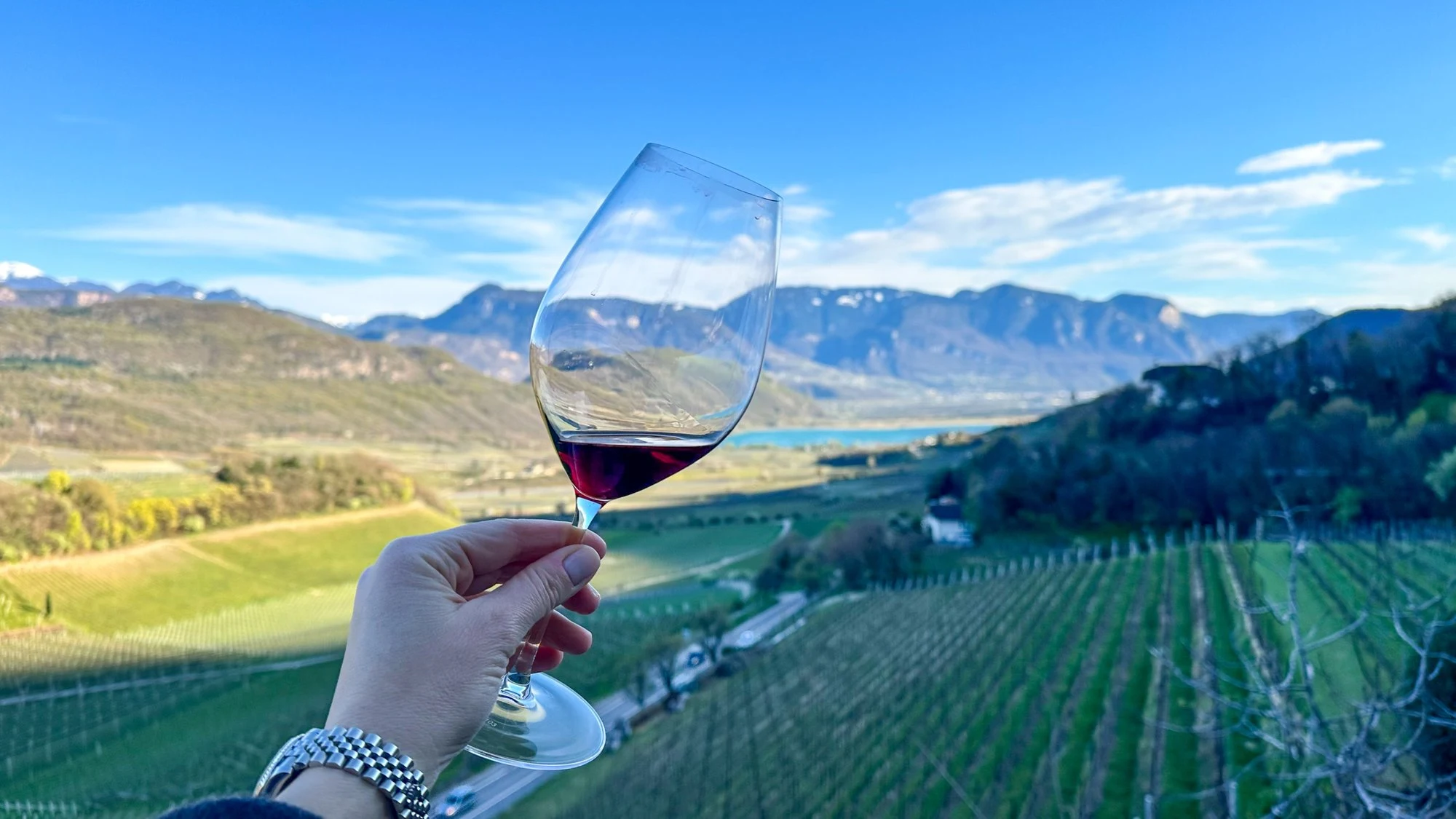
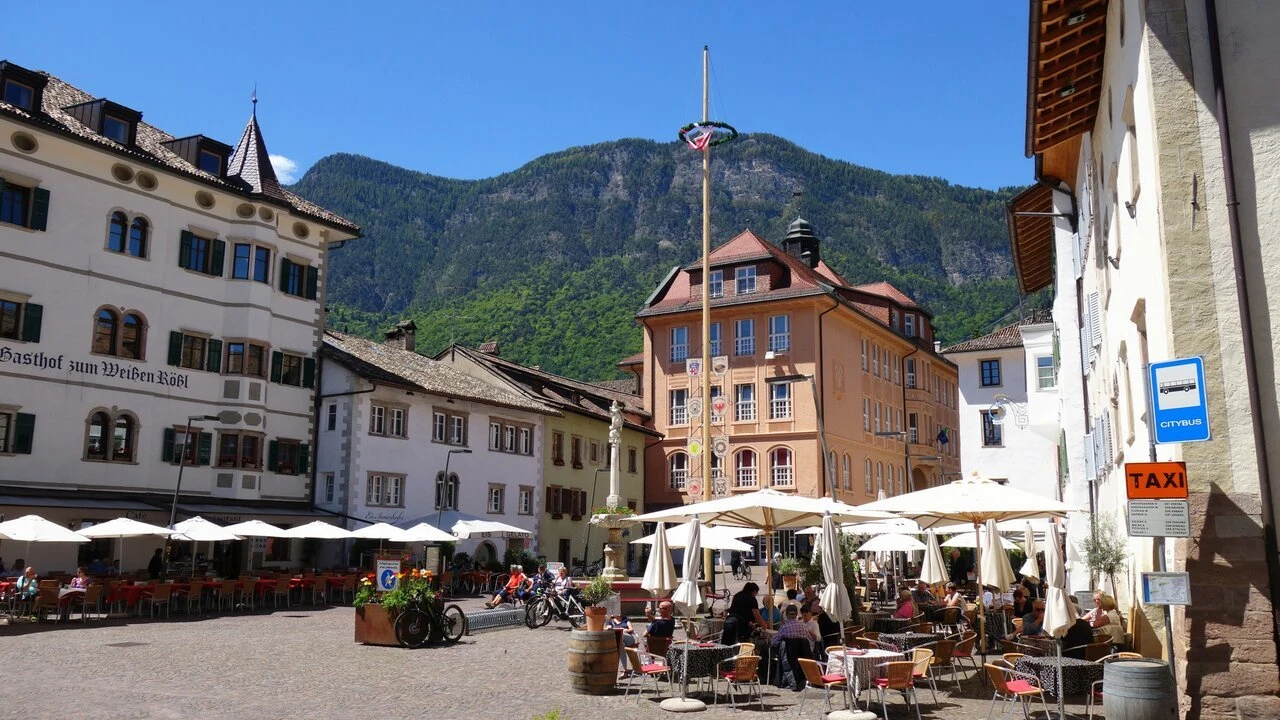
Approaching wine in Kaltern means reading the village through vines before reading a label. The lake moderates heat, the Mendel Mountains pull the eye upward, and local wine culture feels like a civic system, not a leisure add-on. Cantina Kaltern fits that setting as a cooperative wine center: tasting room, gallery, sales outlet, event space, and public-facing ambassador for a village whose economy and identity have long been tied to grapes.
Alto Adige confounds standard Italian wine shorthand. It is Alpine and Mediterranean at once, with warm growing days, cooler nights, German and Italian cultural overlap, and vineyard sites shifting from valley floor to steep slope within a short drive. Around Lake Kaltern, that duality matters. Schiava, as Lago di Caldaro, remains the local calling card, while Pinot Blanc, Sauvignon Blanc, Cabernet Sauvignon, and Moscato Giallo also have serious space. Cantina Kaltern’s importance comes from scale married to place: 590 member winegrowers, 440 hectares of grape-growing area, and roughly 4 million bottles a year, all tied to a village-level cooperative model rather than a single-estate narrative.
Lake Kaltern's cooperative model turns terroir into a collective discipline
Cooperatives can be misunderstood by luxury drinkers, especially where small domaines dominate wine romance. In Alto Adige, the format has different logic. Fragmented family holdings, steep vineyard work, and multilingual village economies make cooperation a quality mechanism rather than a fallback. Cantina Kaltern traces its cooperative roots to 1900, and its 2016 consolidation of five former wineries, including Erste+Neue, created a larger structure without erasing the small-grower base behind it.
The terroir argument is not built on one prized parcel but on coordination. Yield goals are set and inspected across about 2,000 plots, and member education runs from pruning to harvest. That discipline matters where altitude, lake influence, and soil variation shift rapidly. The cooperative’s work is to translate many small decisions into wines that still read as Kaltern, not anonymous volume.
Sustainability adds weight. Cantina Kaltern was the first wine producer in Italy, and the first cooperative anywhere, to receive FAIR’N GREEN Certification of Sustainability for Sustainable Viticulture. About 15 hectares are managed biodynamically, a modest share of total acreage but a clear signal inside a large cooperative structure. In a market where sustainability language is often decorative, certification plus scale makes the claim harder to dismiss.
Schiava, white Alpine precision, and a portfolio built beyond a single flagship
The local story starts with Schiava, especially Lago di Caldaro, because it belongs to this landscape in a way imported prestige varieties cannot. Around Kaltern, Schiava is not nostalgia; it links lakeside climate, village drinking culture, and Alto Adige’s lighter red tradition. Cantina Kaltern’s range also shows how the area has broadened its reputation. Pinot Blanc and Sauvignon Blanc suit the region’s temperature swing and altitude, while Cabernet Sauvignon and Moscato Giallo express the warmer, more aromatic side of the zone.
The named bottlings show that breadth. K-White Bianco Blend 2024 Alto Adige DOC sits in the modern white-wine register. Pinot Nero Saltner Riserva DOC 2021 and Campaner Cabernet Sauvignon Riserva, including 2021 and 2018 releases, show reserve-category work. Quintessenz Kalterersee Classico Superiore DOC 2018 keeps the local red tradition in view, while Project XXX is the experimental tier, produced in only a few hundred bottles per vintage and label. One bottle does not explain the house; the portfolio maps the village’s range, from everyday regional identity to small-lot experimentation.
Winery also states a zero-additives approach for certain wines, with no Mega Purple, no added sugar, and no flavor additives. That matters because it returns emphasis to fruit source and cellar restraint rather than cosmetic correction. For travelers, the point is not one trophy pour. Taste across the local red tradition, Alpine whites, and reserve or experimental releases where available.
How to place it within a Kaltern wine day
Cantina Kaltern works as an anchor because it explains the village at scale. Smaller winery visits then read less as isolated addresses and more as variations within the same climate and cultural system. For a broader Kaltern wine itinerary, nearby EP Club pages on Andi Sölva, Baron di Pauli, Erste+Neue, Kettmeir, and Lacus – Walter Schullian frame the village beyond one cooperative lens.
The visit format is accessible: a wine center rather than a hushed appointment-only cellar, with guided options running seasonally from Easter to the end of September on set weekly slots and by request. It is useful early in a Kaltern stay, when the region’s grape vocabulary still needs orientation. The setting also suits travelers who want wine without turning the day into cellar logistics alone, combining tasting, retail, exhibition, and events under one roof.
Kaltern rewards a wider itinerary. Use our full Kaltern wineries guide for wine planning, then connect the day with our full Kaltern restaurants guide, our full Kaltern hotels guide, our full Kaltern bars guide, and our full Kaltern experiences guide. Readers building a broader wine route through Europe can also compare regional styles through 3GP SRL in Treviso, 47 Anno Domini in Trebaseleghe, A Mano Wine in Noci, »der Steiner« Hans Steiner in Podersdorf am See, and & Handwein in Mannheim.
The editorial case is clear: Cantina Kaltern is strongest as a key to Alto Adige’s cooperative intelligence. It gives scale, sustainability credentials, local grape memory, and a direct reading of Lake Kaltern’s climate in one visit. For travelers trying to understand why this corner of Italy drinks differently from Tuscany, Piedmont, or the Veneto, that context is the reason to pay attention.
Questions
Frequently asked
What's the atmosphere like at Cantina Kaltern?
Cantina Kaltern is a cooperative winery in Kaltern, Alto Adige, Italien, so the atmosphere reads as organized and wine-led rather than restaurant-driven. Its 1900 origins give it a historical, working-winery character that fits the village setting.
Is Cantina Kaltern expensive?
Pricing at Cantina Kaltern is listed as $$.
What's Cantina Kaltern's location?
Cantina Kaltern is located at Kaltern, Alto Adige, Italien, Kaltern.
What's the defining thing about Cantina Kaltern?
Its defining feature is the cooperative model: a village winery built around collective grower production, with roots dating to 1900. That places Cantina Kaltern at the center of Kaltern’s wine identity, rather than as a standalone producer.
Is Cantina Kaltern reservation-only?
Cantina Kaltern is listed as a winery in Kaltern, Alto Adige, Italien, not as a dining venue with set service hours or a reservation policy. For a cooperative winery, advance planning is the practical assumption.
The field
How it compares
| Place | Notes | Awards |
|---|---|---|
| Cantina Kaltern | Kaltern/Caldaro, $$ | · |
| Sektgut Montris | Kaltern | · |
| Vega Sicilia | Valbuena de Duero | · |
| BOND Winery | Napa | · |
| The Macallan | Aberlour | · |
| Domäne Wachau | Dürnstein | World's 50 Best |
| Joseph Phelps Vineyards | Napa | World's 50 Best |