Made ByDistillery Tasting Room
Caporale Distillery
- 01CitySanta Fe, United States
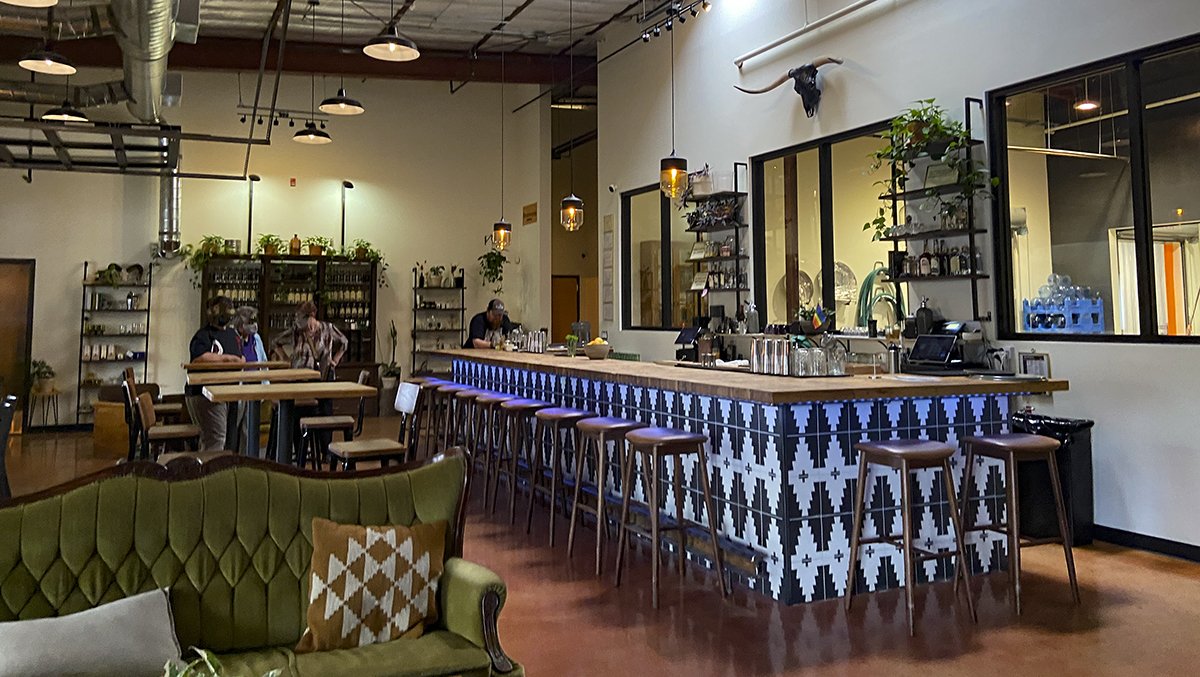
Caporale Distillery operates in Santa Fe, New Mexico, at the intersection of high-altitude craft production and the American Southwest's emerging spirits identity. The distillery earned a Pearl 1 Star Prestige award in 2025, placing it in a recognized tier of American craft producers. For visitors building a serious itinerary around Santa Fe's food and drink scene, it warrants attention.
High Altitude, High Standards: Santa Fe's Craft Spirits Context
Santa Fe sits at roughly 7,000 feet above sea level, a fact that shapes every fermentation and distillation decision made in the city. At altitude, water boils at lower temperatures, yeast behaves differently under reduced atmospheric pressure, and the wide diurnal temperature swings of the high desert create aging conditions that diverge sharply from what producers manage at sea level. These are not abstract variables. They are the physical conditions that any distiller working in northern New Mexico has to contend with, and, when handled well, use to their advantage. Caporale Distillery operates inside that context, and the 2025 Pearl 1 Star Prestige award it received places it within a recognized peer tier of American craft producers taking those conditions seriously.
The broader American craft spirits movement has matured considerably since its early-2000s expansion. What began as a proliferation of small-batch labels has sorted itself into distinct tiers, with formal recognition reserved for a smaller cohort of producers. A Pearl 1 Star Prestige designation signals placement in that group. It is an external validation rather than a marketing claim, which matters when assessing a distillery with limited public-facing data.
Santa Fe as a Spirits Terroir
The concept of terroir is not exclusive to wine. Whiskey distillers in Scotland have argued for decades that local water chemistry, grain sources, and warehouse microclimates produce place-specific character. American craft producers have been slower to make that argument with discipline, often defaulting to story over substance. In New Mexico, the argument is easier to make because the environmental conditions are so pronounced. The high desert's low humidity accelerates barrel evaporation rates, concentrating spirit character faster than humid climates like Kentucky or Tennessee. The clean, mineral-forward water that flows from the Sangre de Cristo watershed carries a different chemical signature than the limestone-filtered water underlying bourbon country.
Santa Fe also sits within a state with a growing agricultural identity. New Mexico's chile, grain, and fruit production gives local distillers access to raw materials that carry genuine regional character, not sourced grain rebranded with a local label, but ingredients shaped by the same soils and sun that define the region's culinary reputation. For context on how regional raw material sourcing translates across beverage categories, the approach mirrors what producers like Adelaida Vineyards in Paso Robles and Alban Vineyards in Arroyo Grande have done with Rhône varietals in California's Central Coast.
Where Caporale Sits in the Santa Fe Scene
Santa Fe's food and drink identity has historically centered on its restaurant culture, the city's cuisine is grounded in red and green chile, posole, and ingredients sourced from Pueblo and Hispanic agricultural traditions. The craft beverage sector is a younger addition to that identity, and distilleries occupy a smaller slice of it than breweries or the limited wine production that occurs at altitude. That relative scarcity means the few producers earning external recognition carry more weight in defining what Santa Fe spirits can mean at a serious level.
Caporale Distillery's Pearl 1 Star Prestige recognition in 2025 positions it at the top of that small field. For visitors constructing a drinks-focused itinerary in Santa Fe, it represents the category's current ceiling in the city. Comparable award-level craft producers elsewhere in the Southwest operate at price points and with booking formats that vary significantly, some run open tasting rooms with walk-in access, others require reservations or operate by appointment only. Plan directly with the distillery before visiting.
The Award Tier and What It Implies
Pearl awards within prestige-tier craft spirits evaluation programs assess production quality, consistency, and category expression, not marketing, scale, or distribution reach. A 1 Star Prestige designation in 2025 places Caporale within a cohort of producers that evaluation panels have identified as operating above the craft median. For reference, this is the kind of external signal that functions similarly to Michelin recognition for restaurants or critical scores from named publications for wineries: it does not tell you what to order or how the space feels, but it does tell you that the production quality has cleared a meaningful bar.
Across the broader American craft spirits sector, producers earning this level of recognition tend to share certain characteristics: deliberate sourcing, controlled aging environments, and formats that prioritize quality output over volume. The high-altitude conditions in Santa Fe would reinforce rather than contradict that profile. Producers working at elevation who earn formal recognition are, almost by definition, managing the environmental variables rather than ignoring them. For comparison, think about how Accendo Cellars in St. Helena or Aubert Wines in Calistoga approach site-specific production with a precision that formal recognition tends to confirm rather than create.
Planning a Visit
Specific operational details for Caporale Distillery, address, hours, booking format, pricing, are not confirmed. Santa Fe is a walkable city in its historic core, and most of its food and drink destinations cluster around the Plaza and the Railyard district, making sequential visits logistically manageable. The city's altitude means that spirits hit differently than they do at sea level: the conventional wisdom about alcohol absorption at high elevation has real physiological backing, and pacing is worth factoring into any tasting itinerary.
For visitors with broader regional interests in craft beverage production, the context extends beyond Santa Fe. The American Southwest has produced award-recognized producers across categories, Haak Vineyards and Winery represents the regional wine side of that picture. Further afield, the range of production approaches across American craft categories is illustrated by producers like Andrew Murray Vineyards in Los Olivos, Alexander Valley Vineyards in Geyserville, Alpha Omega Winery in Rutherford, Artesa Vineyards and Winery in Napa, Adelsheim Vineyard in Newberg, Au Bon Climat in Santa Barbara, B.R. Cohn Winery in Glen Ellen, Aberlour in Aberlour, and Achaia Clauss in Patras, each demonstrating how place-specific production, when taken seriously, produces results that distinguish themselves in formal evaluation.
Frequently asked
Has Caporale Distillery won any awards?
Caporale Distillery has received recognition including: Pearl 1 Star Prestige (2025).
What should I taste at Caporale Distillery?
Specific current offerings have not been confirmed in public records, so the prudent move is to check directly with Caporale before visiting. What is confirmed is that the distillery earned a Pearl 1 Star Prestige rating in 2025, an evaluation that focuses on production quality and category expression rather than brand profile — which suggests the spirits themselves are the reason to visit.
What's the defining thing about Caporale Distillery?
The Pearl 1 Star Prestige award (2025) is the clearest signal of what defines Caporale: production-led craft at a level that registers in formal spirits evaluation. Santa Fe's 7,000-foot elevation creates measurable variables in fermentation and distillation that most lowland producers never encounter, and Caporale is operating within that context.
How far ahead should I plan for Caporale Distillery?
Current hours, booking formats, and operational details for Caporale are not confirmed in public records. Contact the distillery directly before planning a visit to confirm availability, especially given Santa Fe's peak tourism windows in summer and during the autumn art season.
Why does Caporale Distillery's Pearl 1 Star Prestige award matter for craft spirits in New Mexico?
Pearl Prestige-tier evaluations assess production quality, consistency, and category expression independently of a producer's marketing or scale — making the 2025 Pearl 1 Star one of the more credible external validations a small distillery can receive. For New Mexico, a state where craft spirits production is still establishing its national profile, a prestige-tier award positions Caporale as one of the producers helping define what Santa Fe spirits can mean as a category.
What's Caporale Distillery a strong choice for?
Visitors with a serious interest in American craft spirits who want to taste work that has been independently assessed at the prestige tier. Santa Fe's food and drink scene is regionally coherent and restaurant-heavy, which makes a dedicated craft distillery with a 2025 Pearl 1 Star a meaningful detour within the city's broader drinks culture.
What should I do before I arrive at Caporale Distillery?
Verify current hours and access directly with the distillery, since address and operational details are not confirmed in available public records. Given Santa Fe's position as a destination city, it also helps to have an itinerary that accounts for altitude — at 7,000 feet, spirits hit differently than at sea level.
How it compares
Caporale Distillery
- Cuisine
- Winery
- Price
- —
- Awards
- 1 recognition
- Notes
- Santa Fe
Red Soles Winery
- Cuisine
- Cabernet Sauvignon, Zinfandel
- Price
- $$
- Awards
- 1 recognition
- Notes
- Willow Creek District
Donati Family Vineyard
- Cuisine
- Cabernet Sauvignon, Cabernet Franc
- Price
- $$
- Awards
- 1 recognition
- Notes
- Templeton Gap District
Bodega Suter
- Cuisine
- Winery
- Price
- —
- Awards
- 1 recognition
- Notes
- San Rafael
Cunningham Creek Winery
- Cuisine
- Chardonnay, Pinot Gris
- Price
- $$
- Awards
- 1 recognition
- Notes
- Palmyra
Montauk Distilling Co.
- Cuisine
- Winery
- Price
- —
- Awards
- 1 recognition
- Notes
- Montauk