- Falstaff Winery - Listed · 2026
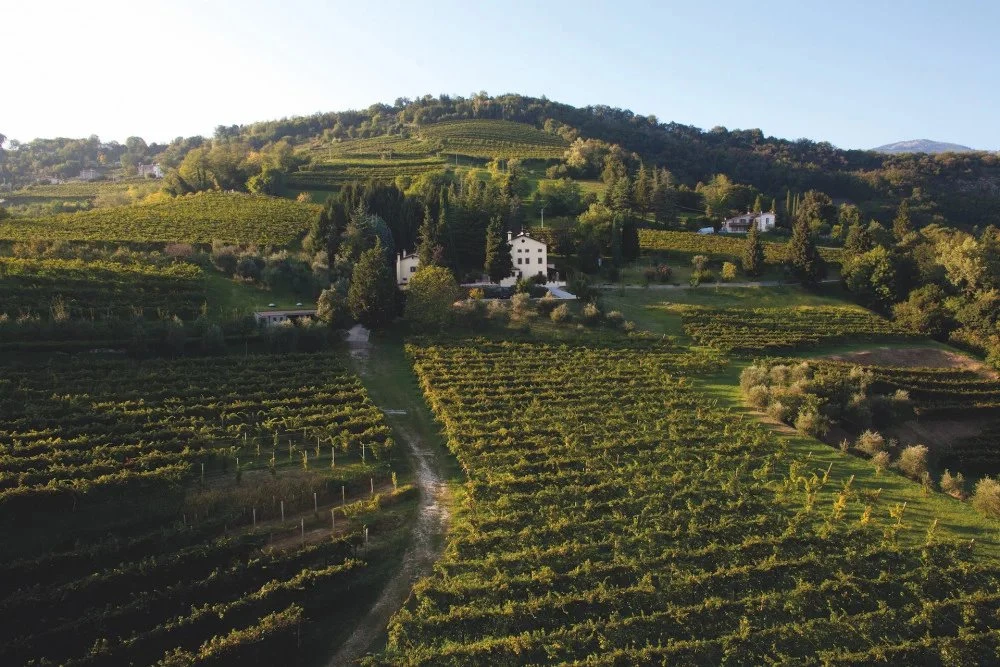
In Conegliano, Prosecco is not only an aperitif category; it is a hill language of Glera, limestone-rich soils, cool nights, and pressure tanks. Carpenè Malvolti belongs to the part of that story where sparkling wine became technical, repeatable, and territorially named. The house dates to 1868, and its atmosphere is less rustic farm visit than historic sparkling-wine institution: family heritage on one side, controlled fermentation on the other.
The useful way to read the place is through Conegliano Valdobbiadene Prosecco Superiore DOCG itself. This is a region where steep hills and calcareous soils push Glera toward freshness and aromatic lift, while the Charmat-Martinotti method protects the grape’s primary character rather than burying it under long bottle-ageing notes. Carpenè Malvolti’s importance sits there: not merely in age, but in helping turn local wine into sparkling Prosecco with a defined technical grammar.
Glera, pressure tanks, and the Conegliano argument
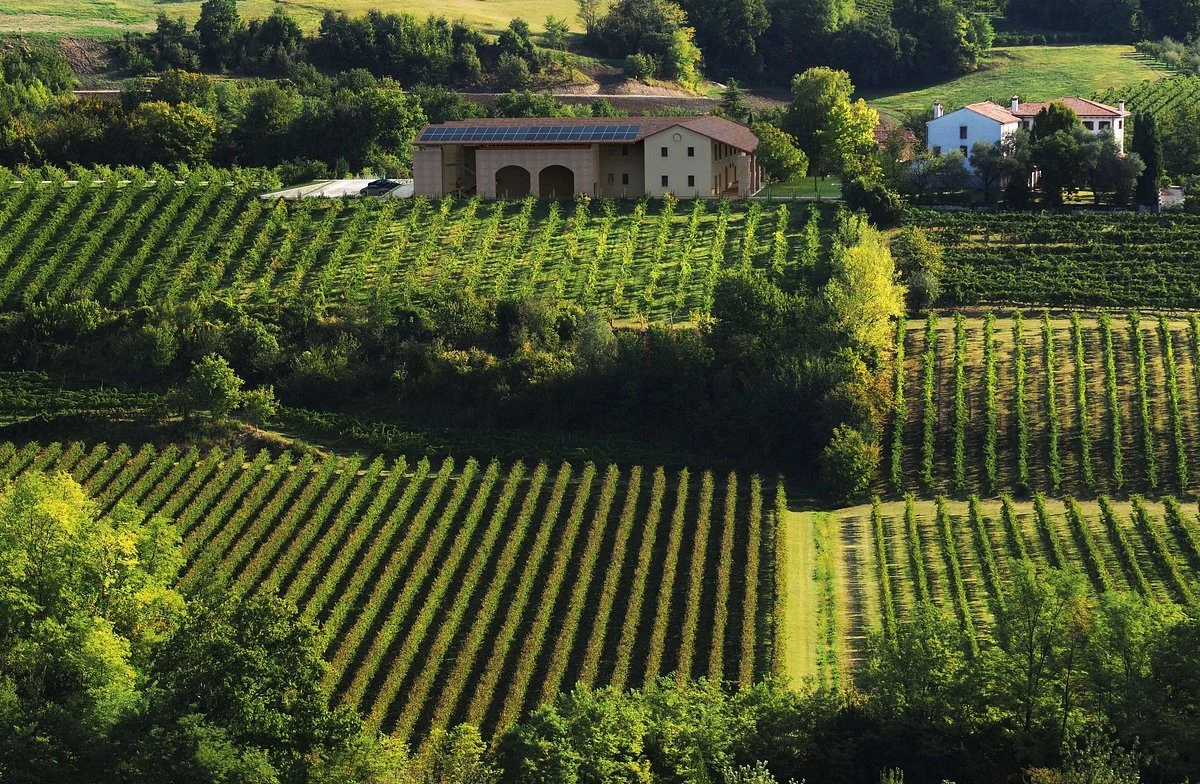
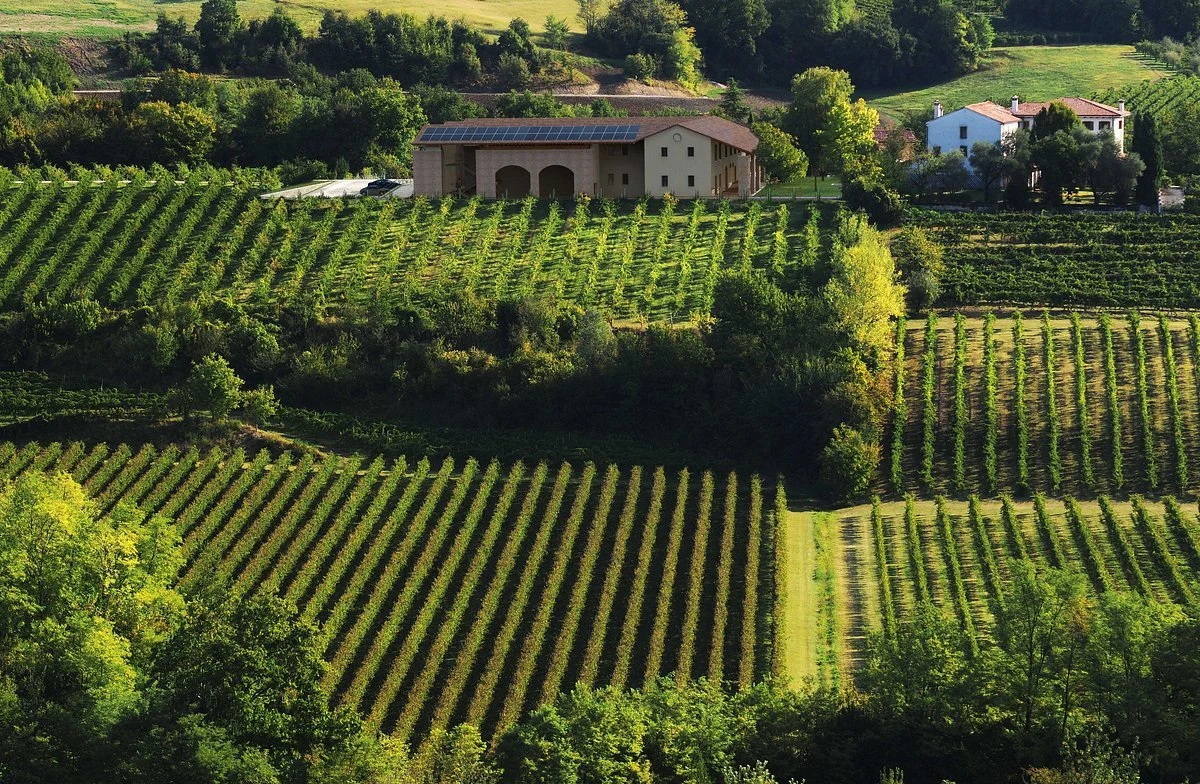
Prosecco often suffers from its own success. In mass-market form, the word can feel detached from place. Conegliano corrects that. The appellation frames Glera through a hill economy rather than a generic sparkling-wine shelf, and the region’s altitude, slope, and calcareous soils matter because the style depends on brightness, lift, and a clean line of fruit.
Carpenè Malvolti works inside that argument at large scale. Production is described at more than 5 million bottles annually, drawn from around 26 hectares of estate vineyards alongside many contracted growers. That combination says something important about Prosecco: this is not a tiny single-parcel culture in the Burgundy sense. It is an appellation built on grower networks, blending discipline, and technical consistency. For serious drinkers, the question is not whether the house is small, but whether scale can preserve regional identity. Here, the historical answer is tied to method.
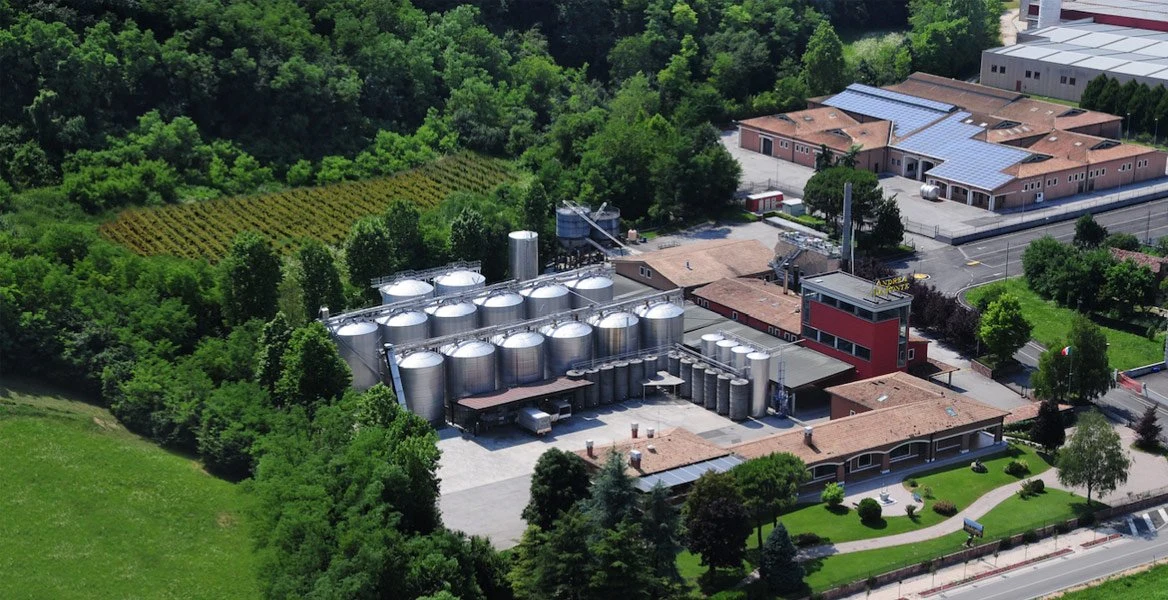
The Charmat-Martinotti process, with secondary fermentation in pressurised stainless steel tanks, suits Glera because it keeps the wine’s aromatic profile in the foreground. Carpenè Malvolti is closely associated with pioneering that route for sparkling Prosecco, and the house’s cellar environment reflects the industrial precision behind a wine that often reads as effortless in the glass. Computer-controlled temperature management and stainless steel maturation are not romantic details; they are the machinery that keeps acidity, fruit, and mousse in balance across volume.
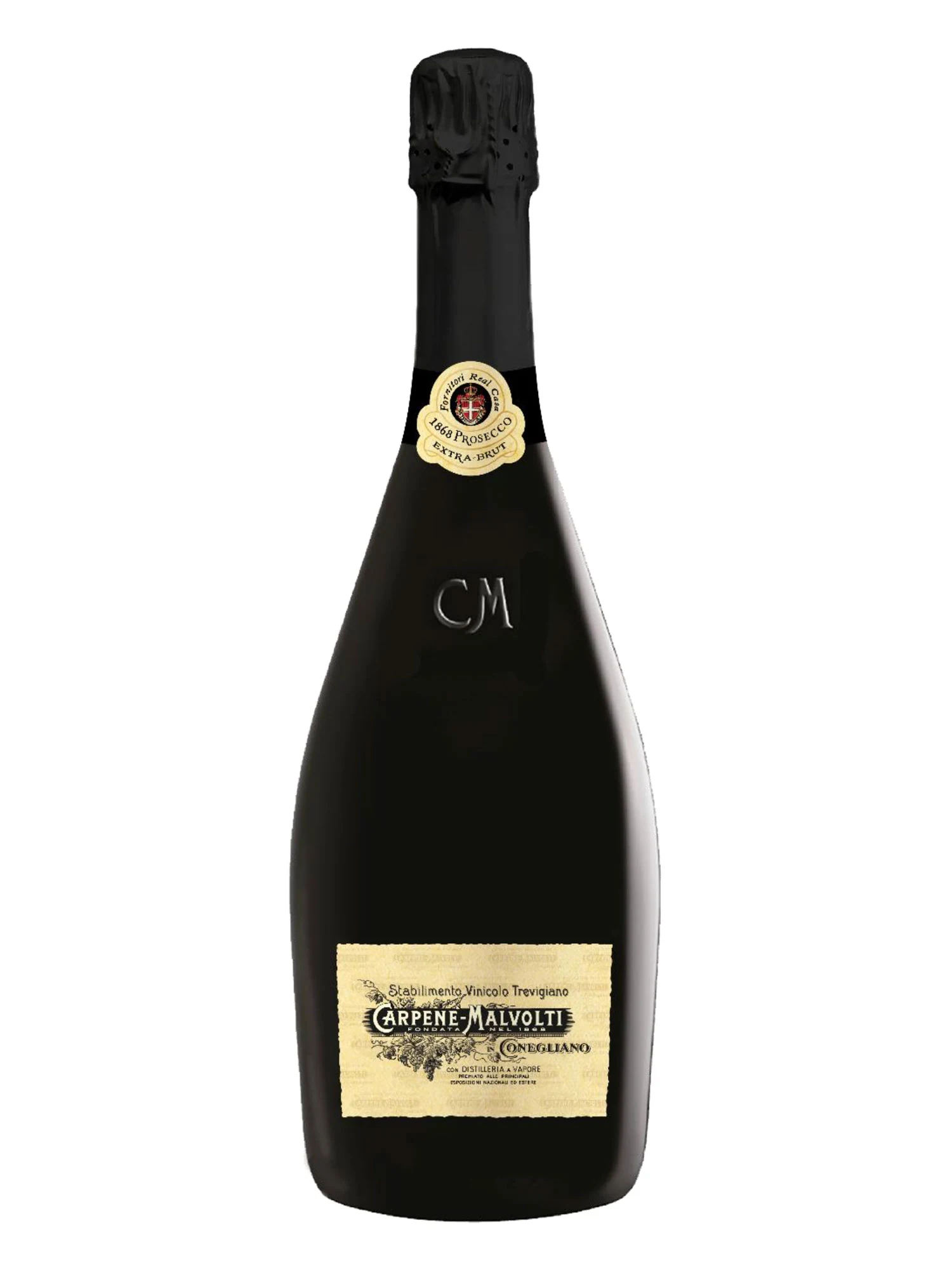
The portfolio is anchored in sparkling wines from Glera, including Conegliano Valdobbiadene Superiore DOCG expressions under the 1868 line. Recognition gives the house a useful quality signal without turning the visit into a trophy exercise: the 2023 Brut received 91 points from Vinibuoni, 92 points from Luca Maroni, and 90 points with Silver from Decanter; the 2023 Extra Dry received 92 points from Luca Maroni and recognition from Gambero Rosso. The Prosecco di Conegliano NV has also been rated 88 points by Wine Enthusiast.
A historic house visit built around education, not spectacle
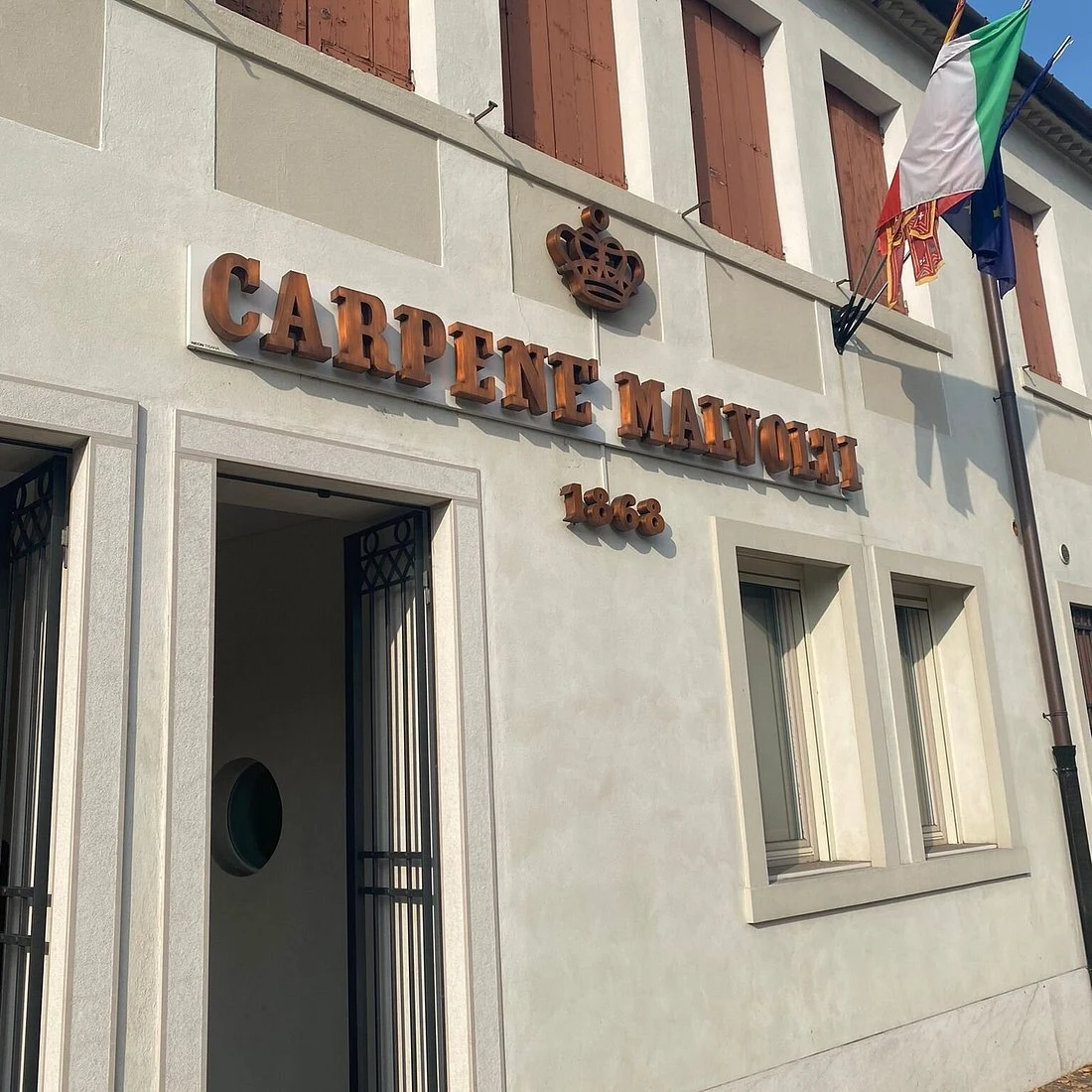
Visiting format is strongest when approached as a lesson in how Prosecco became modern. The house is family-owned across five generations, founded by Antonio Carpenè, whose background as a chemist and oenologist explains the producer’s unusually close link between science and regional tradition. In 1924, the company produced a bottle labelled “Prosecco di Conegliano,” a naming move that connected grape, wine, and place long before casual drinkers began debating what Prosecco should mean.
1868 Gallery gives the experience a museum-like spine, but the more interesting thread is the way history keeps returning to technique. Conegliano is also tied to formal wine education: Antonio Carpenè founded Italy’s first school of oenology in 1876. That matters because Prosecco’s rise was not only agricultural. It was institutional, scientific, and commercial. A tasting here is therefore less about chasing a rare bottle than understanding how a regional sparkling style gained structure.
Standard visit type includes bar and educational tasting formats, with tours in Italian and English and a typical duration of 60 to 90 minutes. The mood is conversational rather than hushed. Groups are a sensible fit, as are solo travellers who prefer context over scenery-driven tasting rooms. Children and dogs are not part of the hospitality profile, outdoor seating is not listed, and the format is reservation-led. Payment by credit card is listed, and shipping is available, which makes the experience more practical for travellers building a cellar rather than only tasting in place.
Food pairing is not the point here. The house’s value is in mapping Brut, Extra Dry, and related sparkling expressions against the logic of Glera and tank fermentation. Visitors looking for a longer Conegliano itinerary can pair the wine education with broader city planning through Our full Conegliano wineries guide, then round out the trip with Our full Conegliano restaurants guide, Our full Conegliano hotels guide, Our full Conegliano bars guide, and Our full Conegliano experiences guide.
Where it fits in a Veneto wine itinerary
Conegliano rewards visitors who treat Prosecco as a regional system rather than a single tasting stop. Carpenè Malvolti gives that system its historical and technical anchor: family continuity since 1868, a pioneering role in sparkling Prosecco, the 1924 “Prosecco di Conegliano” label, and production that shows how DOCG identity can operate at scale.
Travellers building a wider route can use nearby winery pages for context rather than as direct equivalents: BiancaVigna, Borgo Antico, Ca' Vittoria, Conca D'Oro, and Distilleria Andrea Da Ponte. For broader drinking culture beyond the city, useful reference points include 3GP SRL in Treviso, 47 Anno Domini in Trebaseleghe, A Mano Wine in Noci, »der Steiner« Hans Steiner in Podersdorf am See, and & Handwein in Mannheim.
The editorial case is clear: choose this stop for origins, method, and appellation literacy. Conegliano’s Prosecco hills can be beautiful, but the sharper pleasure here is intellectual, seeing how a local grape became a disciplined sparkling-wine category through chemistry, naming, grower networks, and a house that has stayed close to the region’s founding argument.
Questions
Frequently asked
Who works at Carpenè Malvolti?
Made By profiles Antonio Carpenè (Winemaker) at Carpenè Malvolti.
How expensive is Carpenè Malvolti?
Carpenè Malvolti is listed at a price level of $$.
The field
How it compares
| Place | Notes |
|---|---|
| Carpenè Malvolti | Conegliano, $$ |
| BiancaVigna | Conegliano |
| Borgo Antico | Conegliano |
| Distilleria Andrea Da Ponte | Conegliano |
| Gli Allori | Conegliano |
| Terre del Cima | Conegliano |
| Ville d'Arfanta | Conegliano |