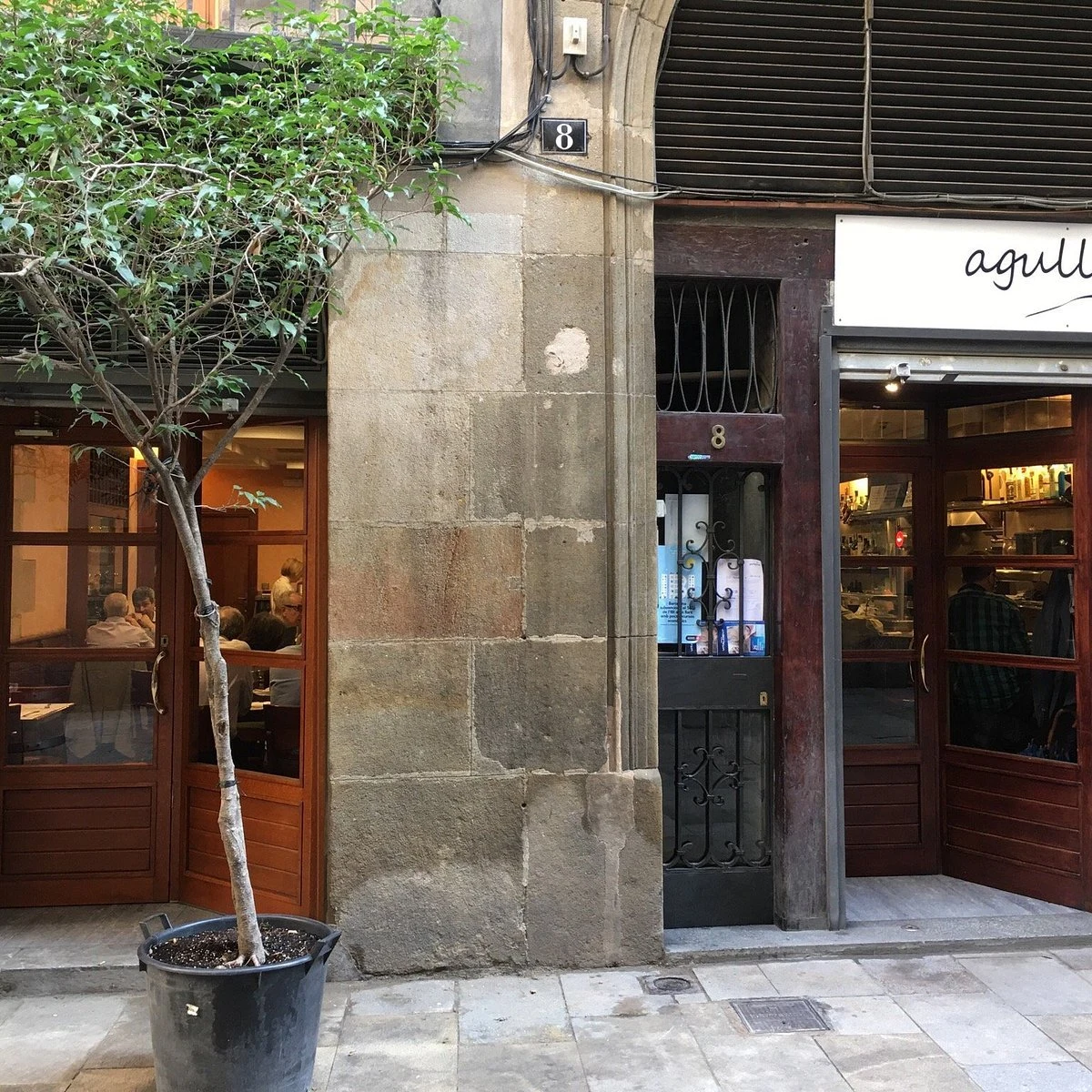
A Ciutat Vella address in the Gothic Quarter's drinking circuit, Carrer dels Agullers, 7 sits in one of Barcelona's most concentrated bar corridors, where natural wine lists and conscientious sourcing have gradually displaced the neighbourhood's older tourist-bar economy. The address draws a crowd that knows the difference between convenience and intention, and drinks accordingly.
<h2>Stone, Shade, and the El Born Shift</h2><p>Approach Carrer dels Agullers on foot from the Basilica de Santa Maria del Mar and the street's character announces itself before any doorway does. The narrow medieval lane runs through one of Barcelona's most contested drinking territories: close enough to the tourist flow of El Born to feel it, far enough inside the residential grid to filter it. Over the past decade, this corridor has been a testing ground for a particular kind of Barcelona bar culture, one less interested in spectacle and more concerned with what is actually in the glass and where it came from. The bars that have persisted here are the ones that built a local following on consistent sourcing decisions and a certain restraint about what they pour.</p><h2>The Sustainability Turn in Barcelona's Bar Scene</h2><p>Barcelona's drinking culture has undergone a quiet but consequential reorganisation over the past several years. The city that once exported the <em>vermutería</em> revival and cocktail theatre to the rest of Spain has progressively subdivided into distinct tiers. At one end sit the headline bars, <a href="https://www.enprimeurclub.com/bars/dry-martini-barcelona">Dry Martini</a> with its decades of institutional authority, <a href="https://www.enprimeurclub.com/bars/boadas-barcelona">Boadas</a> holding its corner near the Ramblas as a document of mid-century Catalan cocktail history, and <a href="https://www.enprimeurclub.com/bars/dr-stravinsky-barcelona">Dr. Stravinsky</a> occupying the technically ambitious, low-intervention end of the city's craft cocktail conversation. At the other end sit smaller neighbourhood addresses where the sustainability logic operates less as a marketing posture and more as a structural decision about which producers, farms, and suppliers to work with.</p><p>The bars in this second tier are harder to categorise by format alone. Some lean into natural wine, others into seasonal cordials and house-made modifiers. What links them is a shared resistance to disposability, disposable ingredients, disposable décor, disposable menus that swap out every quarter for novelty's sake rather than seasonal necessity. <a href="https://www.enprimeurclub.com/bars/foco-barcelona-bar">Foco</a> represents one version of this tendency in the city's bar circuit. Carrer dels Agullers, 7 sits in the same gravitational field.</p><h2>What Ethical Sourcing Actually Looks Like in a Bar Context</h2><p>The sustainability story in hospitality is often told at the level of the kitchen, farm-to-table sourcing, zero-waste menus, composting programmes. The bar side of that conversation is less frequently documented, but Barcelona's more considered venues have been running versions of it for some time. The logic is not complicated: a bar that sources vermouth from a single Catalan producer rather than a multinational label, that uses whole citrus rather than bottled juice, that builds a wine list around growers working without synthetic inputs, that bar is making a series of daily procurement decisions that compound into something with real supply-chain consequences.</p><p>Addresses in the El Born and Gòtic adjacencies have been quicker than most European city-centre bar districts to absorb these sourcing norms, partly because the local producer infrastructure in Catalonia is unusually well-developed. The Penedès and Priorat regions sit within two hours of the city and have both invested heavily in low-intervention winemaking. The vermouth producers of the Reus tradition are within similar reach. A bar on Carrer dels Agullers has access to a regional supply network that many international capitals would struggle to replicate, and the addresses that use it tend to attract a clientele that comes specifically for that specificity.</p><h2>The Neighbourhood's Drinking Rhythm</h2><p>El Born and its western fringe operate on a drinking timetable that differs from the city's more tourist-facing zones. The midday <em>vermut</em> hour, typically between noon and two, draws a working-week crowd before lunch. The early evening aperitivo window from around six to nine is when the neighbourhood's resident population moves between the area's smaller, slower bars before dinner claims the later hours. This rhythm suits venues that prioritise turnover of conversation over turnover of covers, and it self-selects for a clientele that knows what it wants before it arrives.</p><p>For travellers, this timetable matters practically. The city's most sought-after bar addresses in this quarter fill by eight on weekends; arriving closer to opening is both more comfortable and, often, more instructive, the room is easier to read, the staff less pressured, and the list easier to work through without the ambient competition for attention that comes later. The Spanish bar tradition that produced this neighbourhood's drinking culture values unhurried conversation as part of the format, not as a inconvenience to be managed.</p><p>Comparable rhythms define bars in other Spanish cities and islands that operate in this register. <a href="https://www.enprimeurclub.com/bars/angelita-madrid">Angelita in Madrid</a> runs a similar natural-wine-forward logic through a more formal dining adjacency. <a href="https://www.enprimeurclub.com/bars/bar-sal-gorda-seville-bar">Bar Sal Gorda in Seville</a> and <a href="https://www.enprimeurclub.com/bars/bar-gallardo-granada-bar">Bar Gallardo in Granada</a> each operate within Andalusian bar traditions that share the same unhurried structural premise. The Balearic versions, <a href="https://www.enprimeurclub.com/bars/la-margarete-ciutadella-bar">La Margarete in Ciutadella</a> and <a href="https://www.enprimeurclub.com/bars/garden-bar-calvia-bar">Garden Bar in Calvià</a>, translate the format into a coastal-island context where the supplier network is necessarily more limited but the sourcing commitment is no less present. Even a venue as geographically distant as <a href="https://www.enprimeurclub.com/bars/bar-leather-apron-honolulu">Bar Leather Apron in Honolulu</a> operates with a similar philosophy: that the provenance of what goes into a glass is not a secondary consideration.</p><h2>Planning a Visit</h2><p>Carrer dels Agullers runs between the Carrer del Born and the Plaça de les Olles in the Ciutat Vella district, within walking distance of the Arc de Triomf metro stop (L1) and a short walk from Barceloneta. The street is on foot-only access during most operating hours, which keeps the immediate environment quieter than the main El Born axis. Pricing is about $25 per person, and the bar is walk-in friendly.</p>
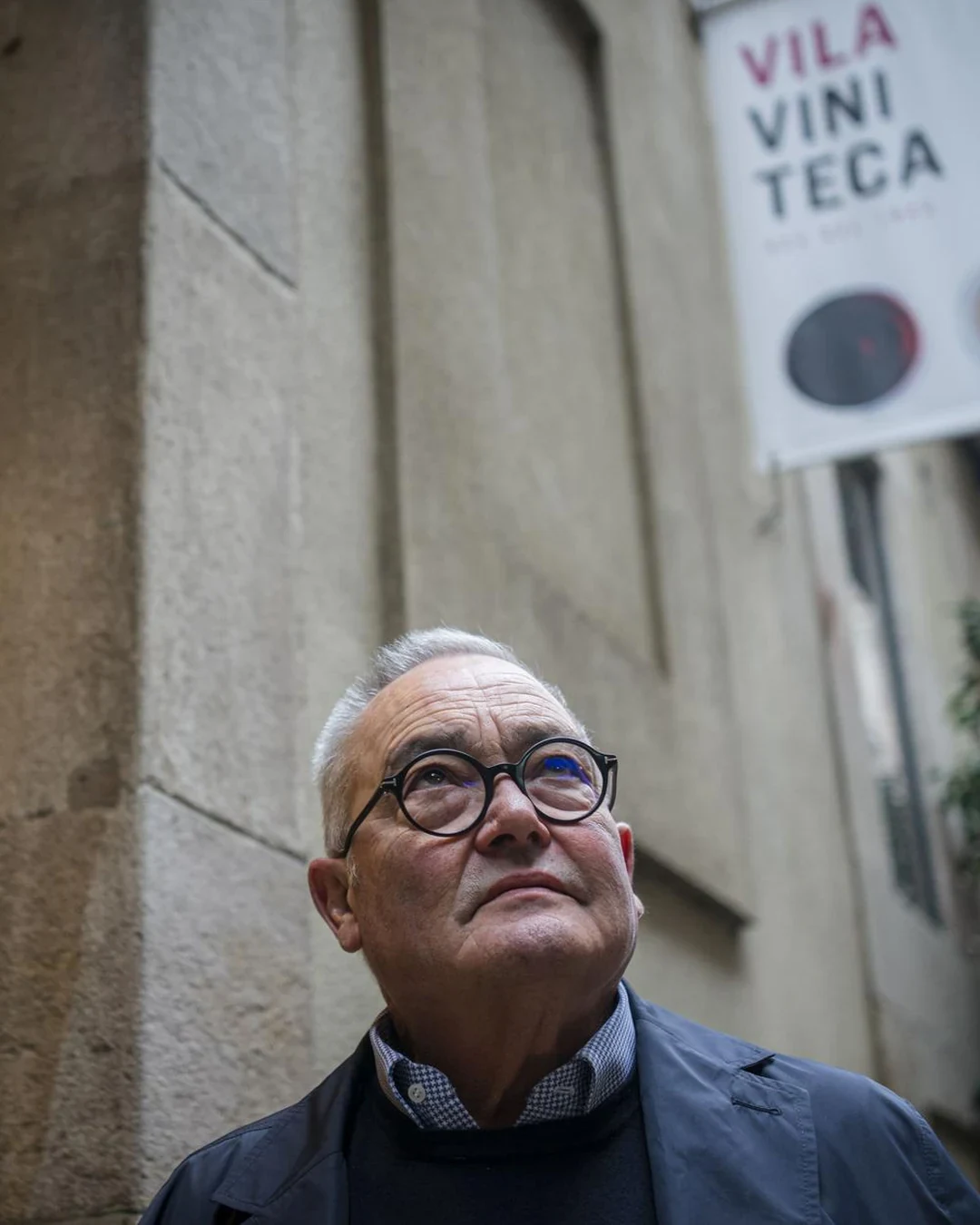
Vila Viniteca is located at Vila Viniteca, Ciutat Vella, 08003 Barcelona, Spain, Barcelona.
The address is directly accessible on foot from the Basilica de Santa Maria del Mar, making it a natural continuation of any visit to the Gothic-Catalan landmark in Ciutat Vella, Barcelona. Rather than the tourist-facing cafes that cluster around the basilica's main façade, this street represents the quieter, more locally oriented side of El Born's drinking culture. It is the kind of stop that rewards visitors who move one block further than the obvious.
The address sits within El Born's emerging sustainable bar corridor, where the focus has shifted toward low-intervention wines, local vermuts, and fermentation-led cocktails sourced from producers who can be named and traced. Barcelona's vermut tradition is the entry point for most visitors — the midday pour is taken seriously here, not treated as a tourist prop. Expect the list to reflect the neighbourhood's current preoccupation with ethical sourcing over brand recognition.
The street runs between Carrer del Born and Plaça de les Olles in Ciutat Vella, placing it at the working heart of El Born rather than its tourist-facing edge. That geography matters: the crowd skews local, the pace follows the neighbourhood's own rhythm, and the drinking culture operates on a timetable closer to the midday vermut hour than the late-night bar strip. For visitors staying near the Barceloneta or Gothic Quarter, it functions as a corrective — a block where Barcelona's bar scene reads as it does for the people who actually live inside it.
No booking details are published for this address at Vila Viniteca, 08003 Barcelona. El Born's neighbourhood bars generally operate on a walk-in basis during the midday and early evening vermut hours, though popular spots on this stretch fill quickly on weekend afternoons. Arriving before 13:30 or after the post-work rush at 20:00 is the practical approach if you want a seat without waiting.
Carrer dels Agullers, 7, Ciutat Vella, 08003 Barcelona, Spain
El Born