Casale dello Sparviero
- 01CityCastellina in Chianti, Italy
- Falstaff Winery - Listed · 2026
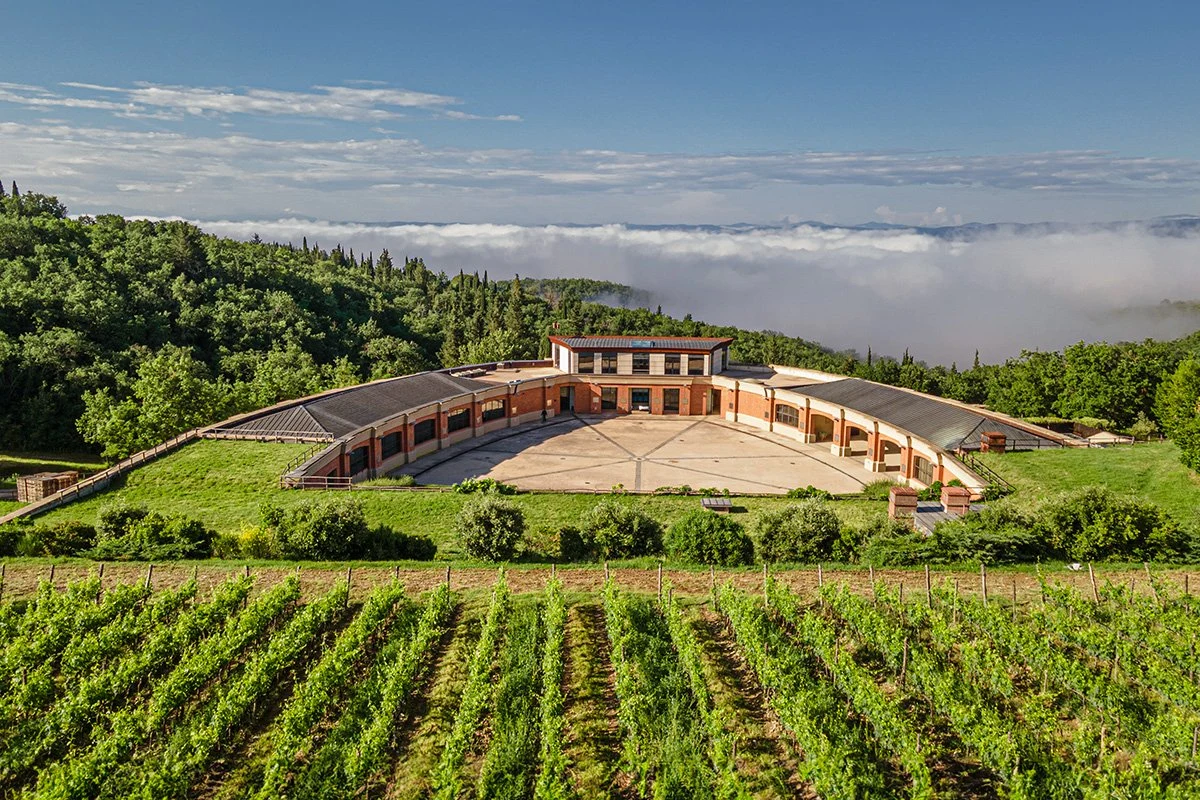
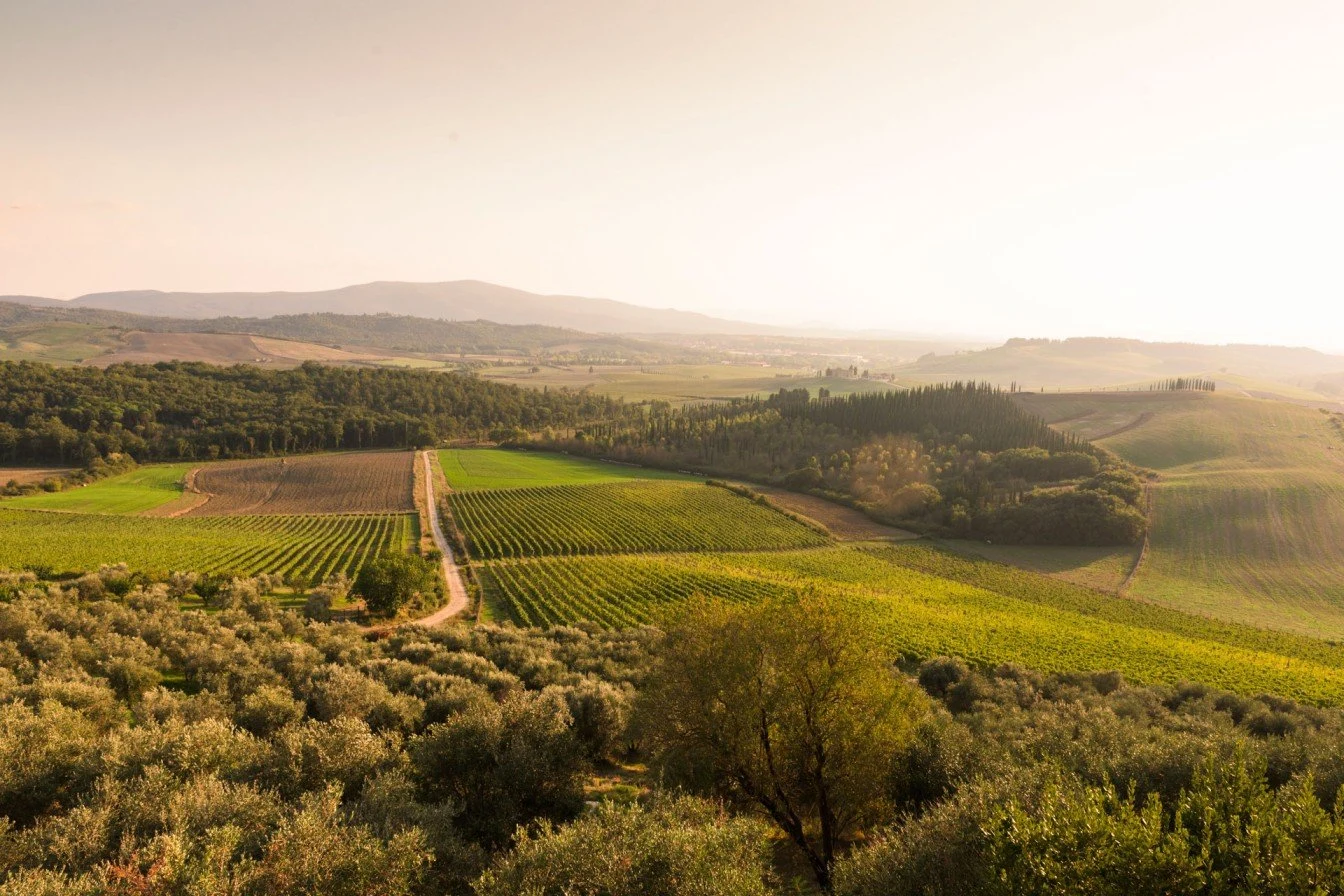
Approach in Castellina in Chianti and the first impression is agricultural rather than theatrical: vineyards, olive groves, old stone, and the quiet scale of a working Tuscan estate. Casale dello Sparviero occupies the lower part of Castellina in Chianti, inside Chianti Classico DOCG territory, where the wine conversation is led by Sangiovese, altitude, farming choices, and the long argument between rusticity and polish.
That setting matters because Chianti Classico is not a generic Tuscan red category. Its historic borders were defined in 1716, and the Black Rooster designation remains tied to a production code and a precise area. Here, the estate’s 380 hectares include around 90 hectares of vineyard at roughly 250 metres, a useful elevation for preserving freshness in Sangiovese during warm Tuscan summers. The surrounding forests, lakes, and spontaneous vegetation give the estate a more layered agricultural context than a cellar-door tasting built only around views.
Organic Chianti Classico with Sangiovese at the centre
The strongest argument for Casale dello Sparviero is terroir expression in a disciplined, recognisable Chianti Classico register. The core blend is 95% Sangiovese with 5% Canaiolo, a traditional composition that places the estate firmly inside the region’s classic grammar rather than the more internationalised side of Tuscan red wine. Production focuses on Chianti Classico DOCG, Chianti Superiore, and IGT wines, so the range moves between denominational structure and some flexibility, but Sangiovese remains the point of reference.
Organic farming is not a decorative claim here. The estate began its conversion in 2016 and reached 100% organic production by 2019, with the 2019 harvest marking the first organic vintage. In a region where sustainability language can become soft-edged, those dates give the claim shape. The cellar work also stays within a familiar Chianti Classico framework: 15 days of skin maceration in temperature-controlled concrete vats, followed by 18 months in French oak barriques for the Riserva. That combination points toward a style built on structure and maturation rather than quick, fruit-forward immediacy.
The estate’s deeper history adds weight without needing romance. The property traces its origins to an ancient monastery, later a farmhouse, before becoming a modern winery, and the Andrighetti family is tied to its recent stewardship. The relevant point is continuity: Chianti Classico has many estates that trade on scenery alone, but the stronger visits connect architecture, farming, and the bottle. Casale dello Sparviero does that through an estate format where the vineyard and hospitality spaces are part of the same agricultural system.
A tasting format built around cellar, terrace, and local products
Wine tourism in Tuscany often splits into two modes: high-traffic cellar visits that process visitors through a set flight, and smaller estate experiences where the surrounding land is part of the lesson. Casale dello Sparviero sits closer to the second model. Tastings may take place on the rooftop terrace or in the barrique cellar, with three organic wines and local products such as extra virgin olive oil, cheese, cold cuts, and organic honey. The format is compact enough to keep the focus on the wines rather than turning the visit into a long lunch.
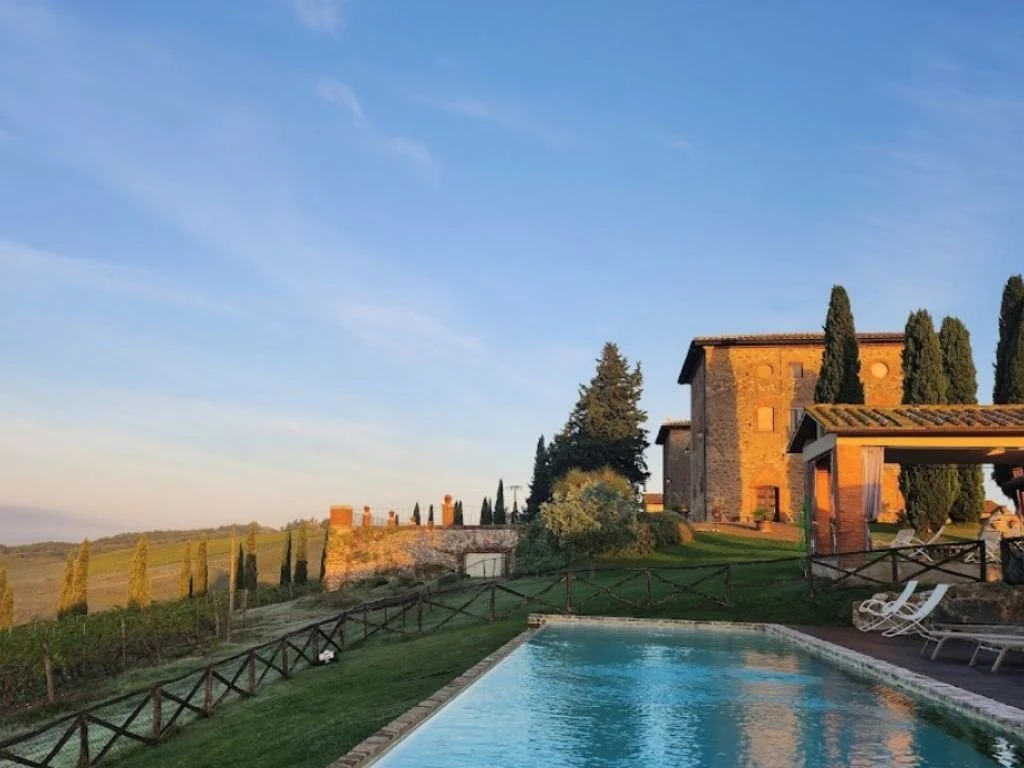
The standard tour length is about 90 minutes, which is enough time to understand how the estate’s vineyards, cellar work, and organic conversion connect. Languages include Italian and English, with Spanish, German, French, and Chinese available on request. Private tasting formats and estate tours broaden the experience for groups, celebrations, or wine education, while the presence of six furnished apartments makes the property more than a drive-in tasting stop for travellers using Castellina in Chianti as a base.
The mood is quiet and rural, with outdoor seating and vineyard, garden, and mountain views shaping the pace of the visit. This is useful context for the reader’s decision: the appeal is not late-night energy, chef-led dining, or a collector-only allocation culture. It is a small-capacity countryside estate where the vineyard-to-cellar line is easy to follow, and where the food pairing stays rooted in Tuscan pantry products rather than restaurant staging.
How it fits into a Castellina in Chianti wine itinerary
Castellina in Chianti rewards slow routing. The area’s stronger wine days are built by pairing one estate visit with time in the town and a restrained number of nearby stops, rather than compressing the region into a tasting marathon. For readers mapping the area, Our full Castellina in Chianti wineries guide is the logical starting point, with nearby estate pages such as Azienda Agricola Casavecchia alla Piazza, Azienda Agricola San Donatino, Belguardo, Casina di Cornia, and Castagnoli helping frame the local spread of styles.
The wider trip works better when wine is not planned in isolation. Use Our full Castellina in Chianti restaurants guide for the meal around the tasting, Our full Castellina in Chianti hotels guide for overnight planning, Our full Castellina in Chianti bars guide for a lighter evening, and Our full Castellina in Chianti experiences guide for non-wine structure. Travellers comparing Italian and European winery formats can also look beyond Tuscany to 3GP SRL in Treviso, 47 Anno Domini in Trebaseleghe, A Mano Wine in Noci, »der Steiner« Hans Steiner in Podersdorf am See, and & Handwein in Mannheim.
The editorial read is clear: Casale dello Sparviero is strongest for visitors who want Chianti Classico explained through land, farming, and a measured tasting format. Its trust signals are practical rather than trophy-led: Chianti Classico DOCG positioning, Black Rooster territory, organic production since 2019, a medium-sized estate footprint, and a guided format that ties vineyard, cellar, and glass together.
Questions
Frequently asked
How expensive is Casale dello Sparviero?
Casale dello Sparviero is listed at a price level of $$.
The field
How it compares
| Place | Notes |
|---|---|
| Casale dello Sparviero | Castellina in Chianti, $$ |
| Concadoro | Castellina in Chianti |
| Mazzei (Castello di Fonterutoli) | Castellina in Chianti |
| Rocca delle Macìe - Famiglia Zingarelli | Castellina in Chianti |
| Tenuta di Bibbiano | Castellina in Chianti |
| Tenuta Villa Trasqua | Castellina in Chianti |
| Tregole | Castellina in Chianti |