Castiglion del Bosco
- 01CityMontalcino, Italy
- Falstaff Winery - 3 Stars · 2026
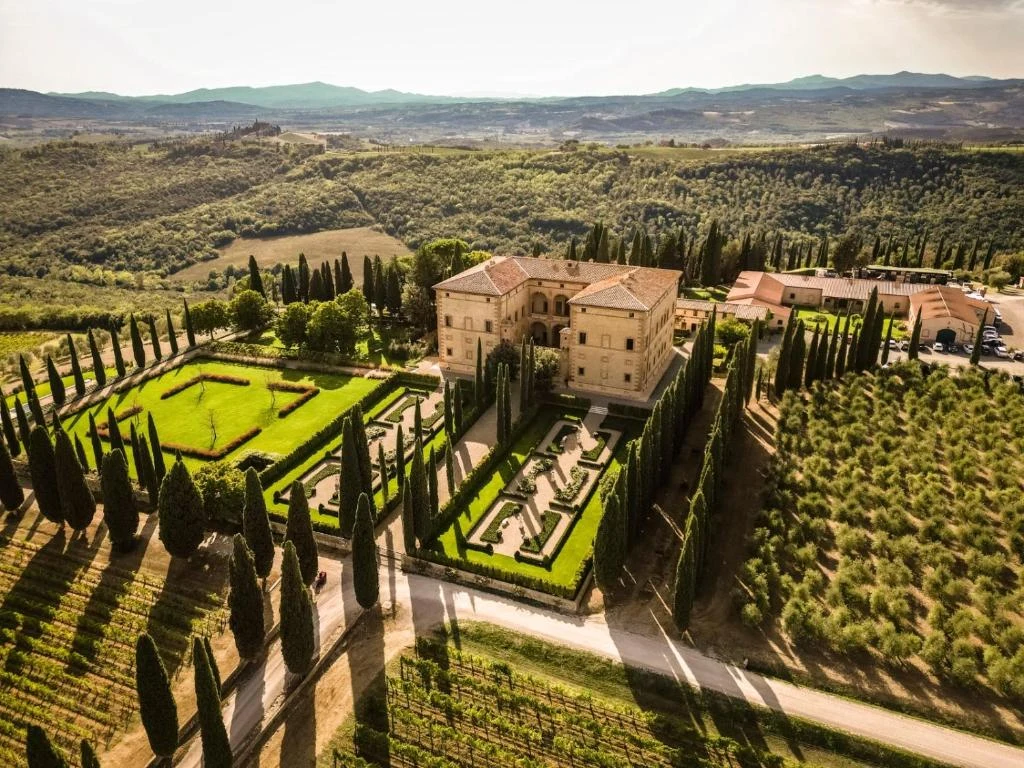
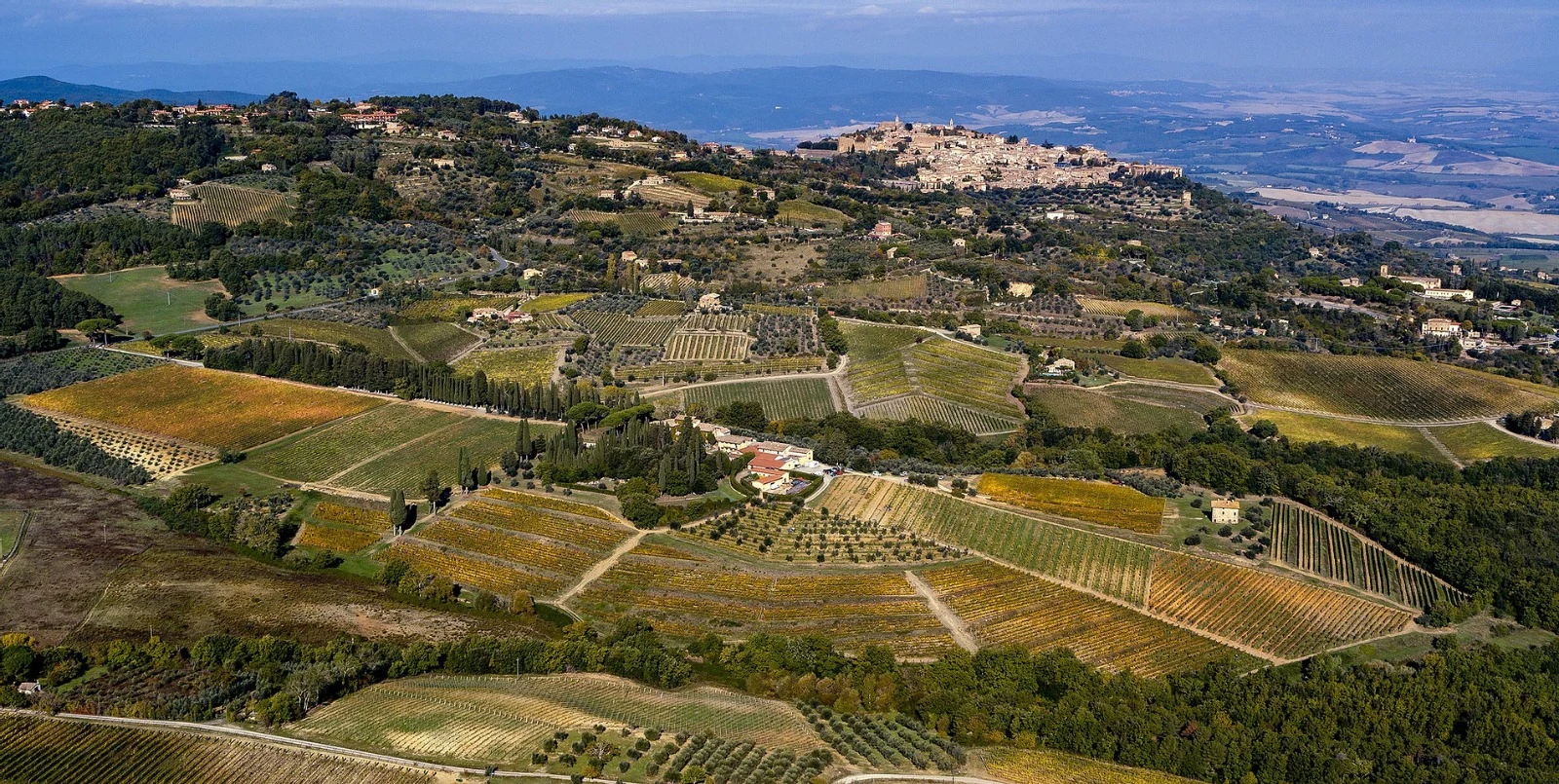
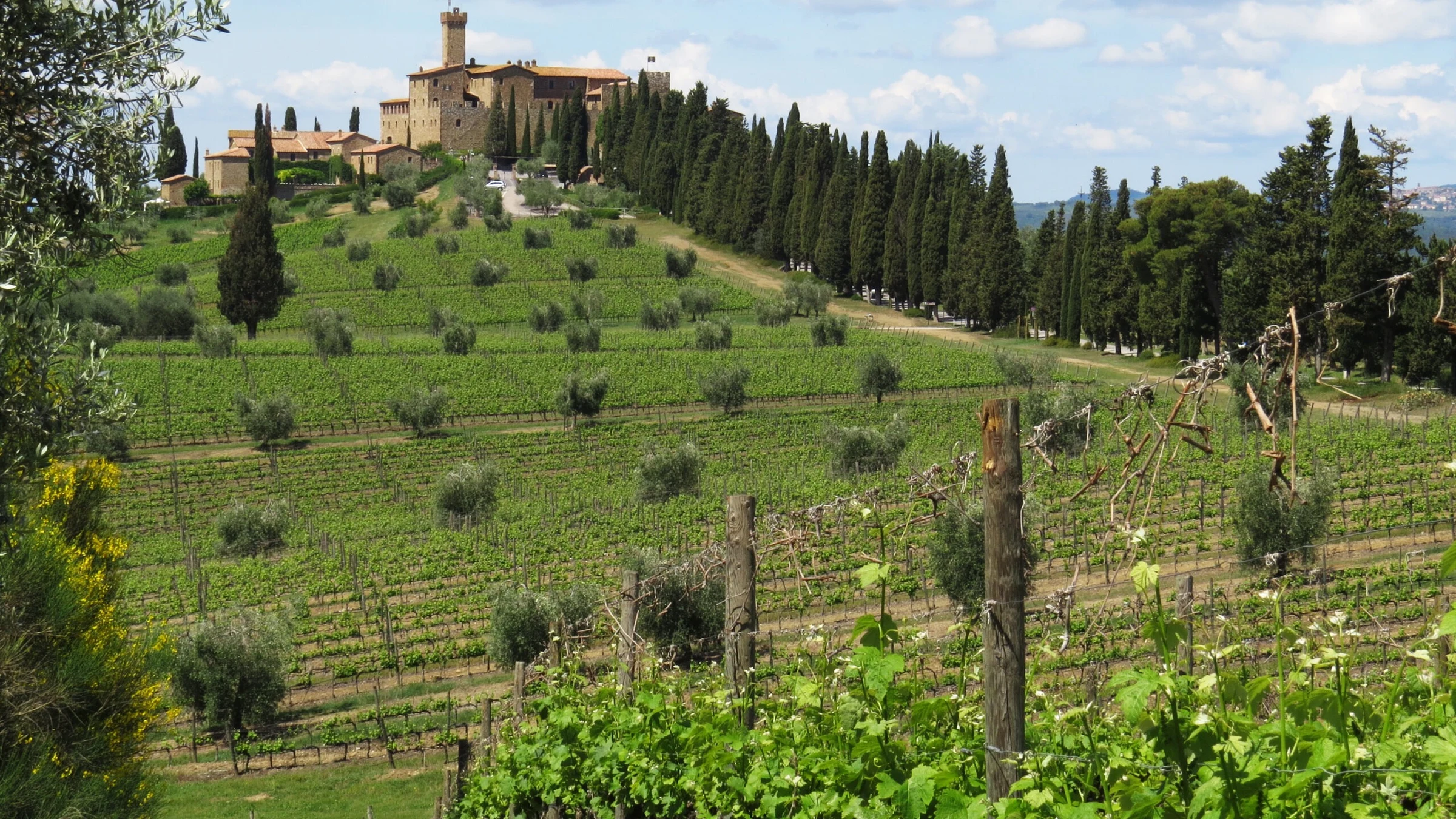
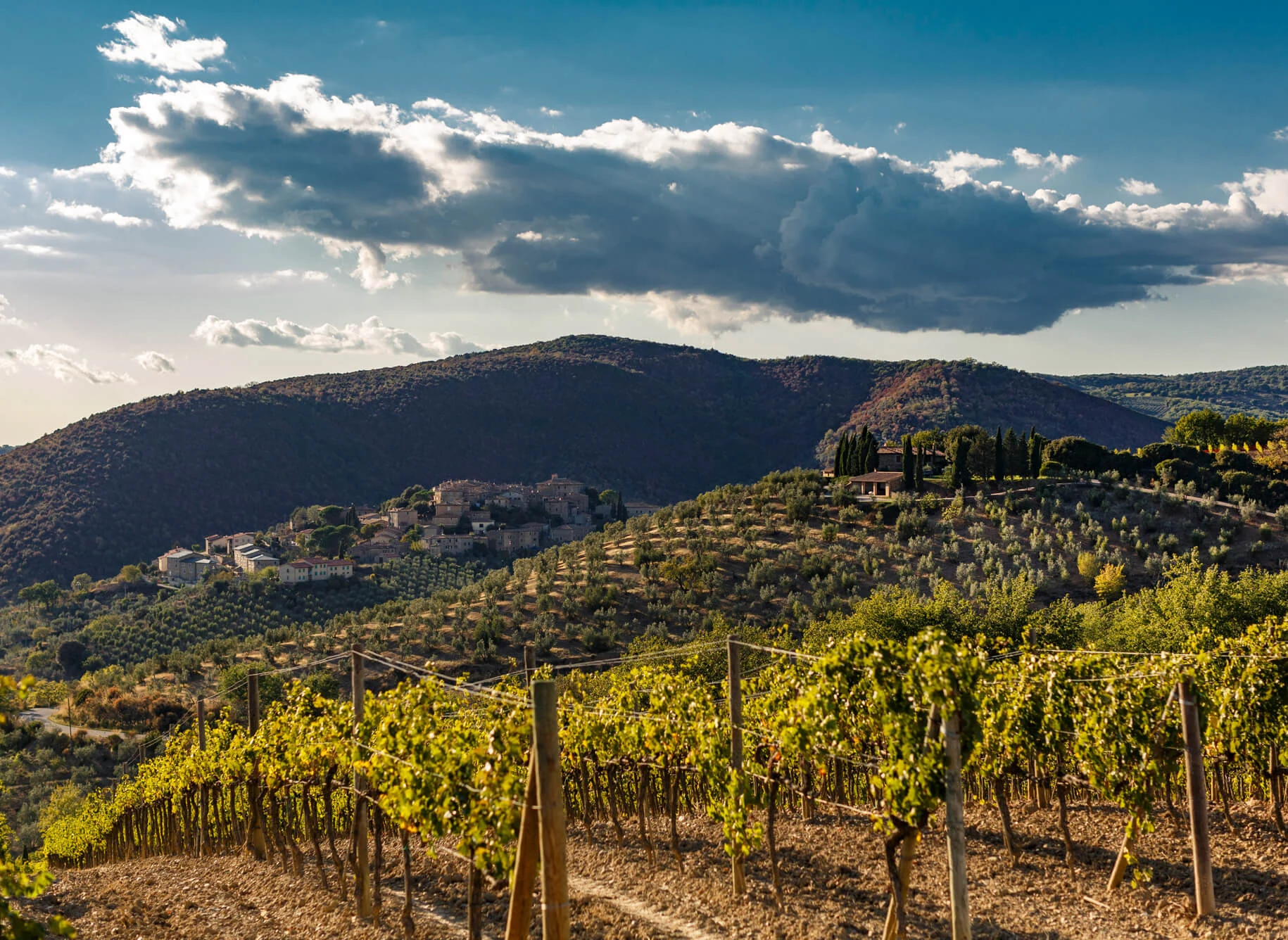
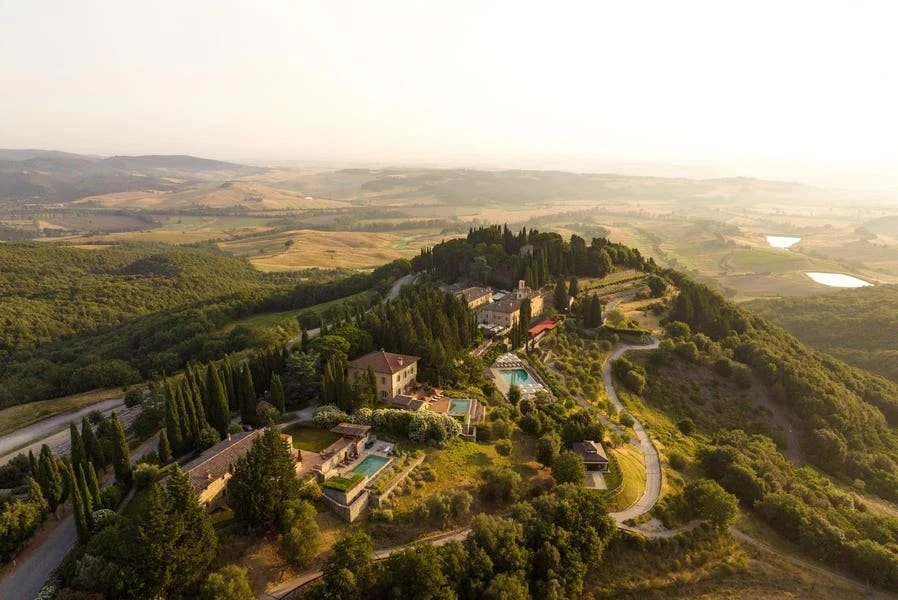
Approaching wine in Montalcino is rarely only about the glass. The place teaches first: stone farm buildings, cypress-lined ridges, vineyard rows bending with the hills, and Val d’Orcia’s quiet overlap of agriculture and theatre. Castiglion del Bosco belongs to estate-scale Brunello culture, where tasting is inseparable from the producing landscape. The setting is a 5,000-acre Tuscan property with vineyards, olive groves, a medieval borgo and winery facilities folded into the terrain, so the first impression is territorial, not decorative.
That matters because Brunello di Montalcino is built on specificity: Sangiovese interpreted through altitude, exposure, soil and long aging, not cellar trickery. Here, vineyards are planted to Sangiovese and tied to Brunello di Montalcino DOCG, with medium-textured clay among the estate’s soil markers. Clay can give Sangiovese architecture different from sandier or rockier sites: less immediate perfume alone, more structure, density and tannin shape. In a region where visitors chase labels, this reminds that Brunello is sharpest when the vineyard remains legible.
Brunello as estate culture, not just a cellar stop
Montalcino’s premium wine tourism has split into two modes: compact, producer-led cellar access and bottle education; or estate-based hospitality, where wine, lodging, dining, landscape and heritage form one system. Castiglion del Bosco is firmly the second. Its modern chapter began in 2003, and the property operates within the Rosewood Hotels & Resorts orbit, giving visits a more composed rhythm than a small farmhouse tasting room. Wine is not secondary; the frame changes. The estate asks visitors to read Brunello through architecture, distance and cultivated land as much as through glasses.
The history is not incidental. The estate traces its origins to 1100 and was a founding member of the Brunello di Montalcino Consortium in 1967. Those dates place it in both Tuscany’s medieval landholding story and Brunello’s modern institutional story, when Montalcino turned Sangiovese into one of Italy’s defining fine-wine categories. For travelers asking why this hill town matters, that dual identity is useful: old land, modern appellation discipline, and a hospitality model that makes the estate a complete wine-country base.
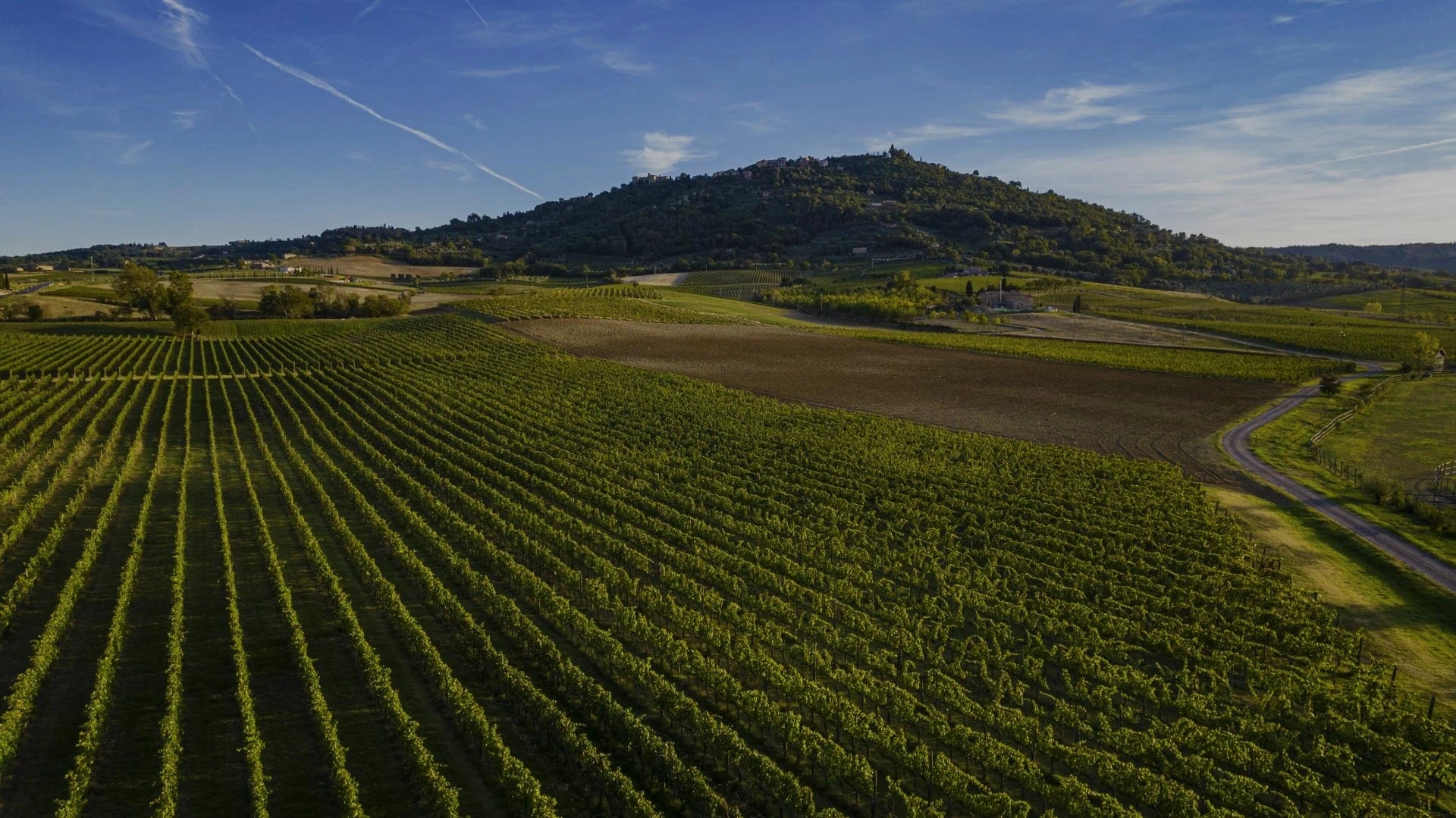
Production details point the same way. The estate has 62 hectares of vineyards within a much larger property, giving it weight in Montalcino without anonymous volume. The focus remains Sangiovese and still red wine, supported by sustainable farming language and an organic-certified viticultural approach. The cellar program includes guided seated tastings, vineyard tours with tasting, cellar tours, vertical tastings, barrel tastings and food-pairing formats. A vertical suits drinkers studying vintage and aging; a vineyard or cellar route fits travelers reading Brunello through place.
Sangiovese, clay and the slower grammar of Montalcino
The estate’s strongest editorial interest is terroir expression. Brunello is not casual Tuscan red scaled upward; it is Sangiovese under demanding appellation logic, with time, tannin and site doing the work. At Castiglion del Bosco, the Val d’Orcia setting, Sangiovese plantings and clay-influenced soils show why Montalcino can taste structured without heaviness when handled with restraint. The portfolio includes Brunello di Montalcino DOCG and Rosso di Montalcino, a useful pairing for seeing the same grape move between age-demanding depth and earlier-drinking clarity.
Rosso is often treated as a warm-up act, but in Montalcino it can be a sharper educational tool. Brunello shows the region’s long-form argument: aging, tannin resolution and the patience built into DOCG identity. Rosso shows a shorter line between vine and glass, often making site and fruit profile easier to read for visitors who do not cellar wine. Tasting them side by side can teach more than unrelated prestige bottles. Add a vertical tasting, and the conversation moves from grape to time.
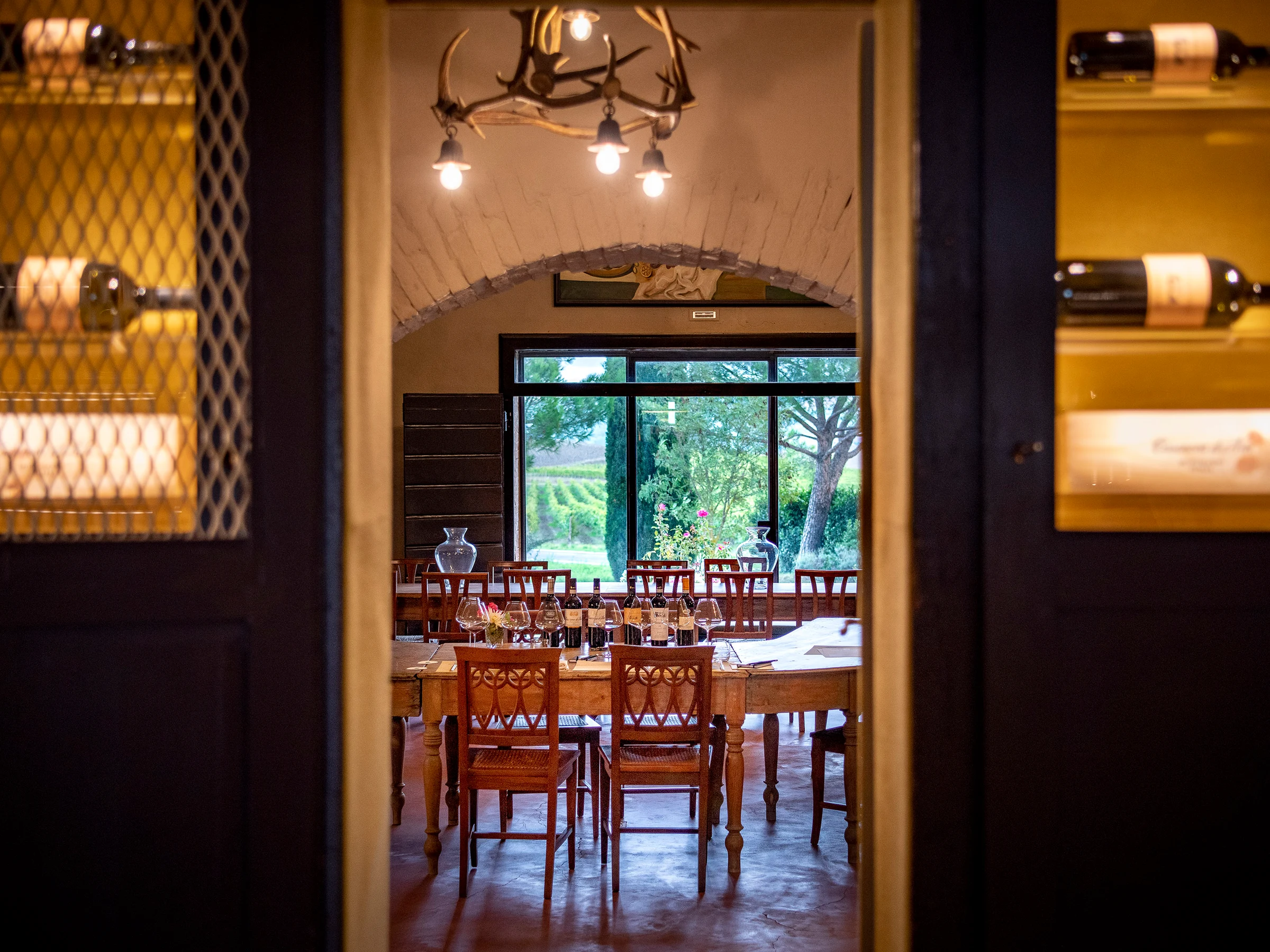
Estate format also shapes sensory expectation, though not through spectacle. The ambiance is warm interiors, stone and wood architecture, vineyard and valley views, and quiet, intimate tasting spaces. This fits Montalcino’s polished end of wine tourism: slower pacing, seated attention and a room that reinforces the agricultural setting rather than distracting from it. It suits travelers wanting the region to feel composed, not anyone seeking a quick roadside tasting or loose, bar-style pour.
Food pairing has a practical role because Sangiovese is structural. Acidity, tannin and savory depth make more sense against fat, salt and Tuscan cooking than in isolation. The estate includes pairing-led tastings and sits within a hospitality environment with dining, so wine education can move naturally from cellar language to table. That is often where Brunello becomes clearer: not trophy bottle, but wine built for food, temperature, texture and time.
How to place it within a Montalcino itinerary
Castiglion del Bosco is a strong anchor for a Montalcino wine day when the goal is breadth without rushing. Its appointment-only format, 60- to 90-minute tour duration and medium capacity point to planning rather than improvisation. The estate is better suited to adults, special-occasion travel, wine education, group outings and corporate hosting than family sightseeing. Outdoor seating, garden and vineyard settings, and on-site parking help fold it into a wider Val d’Orcia day, but the tone stays polished: smart casual dress fits.
For context beyond one estate, Montalcino rewards comparing producer scale, tasting format and vineyard emphasis across addresses. Nearby winery research can start with Aglieta Roberto, Agostina Pieri, Agricola Poggio Rubino, Aisna and Altesino. For trip structure, use Our full Montalcino wineries guide alongside Our full Montalcino restaurants guide, Our full Montalcino hotels guide, Our full Montalcino bars guide and Our full Montalcino experiences guide. Wider Italian and European winery browsing can extend to 3GP SRL in Treviso, 47 Anno Domini in Trebaseleghe, A Mano Wine in Noci, »der Steiner« Hans Steiner in Podersdorf am See and & Handwein in Mannheim.
The editorial case is clear: this is Montalcino for travelers who want Brunello interpreted through land, history and hospitality infrastructure, not bottle collecting alone. The founding-consortium credential gives regional authority, the Sangiovese focus keeps the wine story disciplined, and the property’s scale makes the visit a study of Tuscany’s estate tradition. Choose it when the day calls for context, not speed.
Questions
Frequently asked
How expensive is Castiglion del Bosco?
Castiglion del Bosco is listed at a price level of $$$$.
The field
How it compares
| Place | Notes | Awards |
|---|---|---|
| Castiglion del Bosco | Montalcino, $$$$ | · |
| Argiano | Montalcino | · |
| Azienda Agricola Casanova di Neri di Giacomo Neri | Montalcino | World's 50 Best |
| Biondi-Santi Tenuta Greppo | Montalcino | · |
| Castello Banfi | Montalcino | World's 50 Best |
| Poggio di Sotto | Montalcino | · |
| Valdicava | Montalcino | · |