Catch at The Old Fishmarket
In Residence
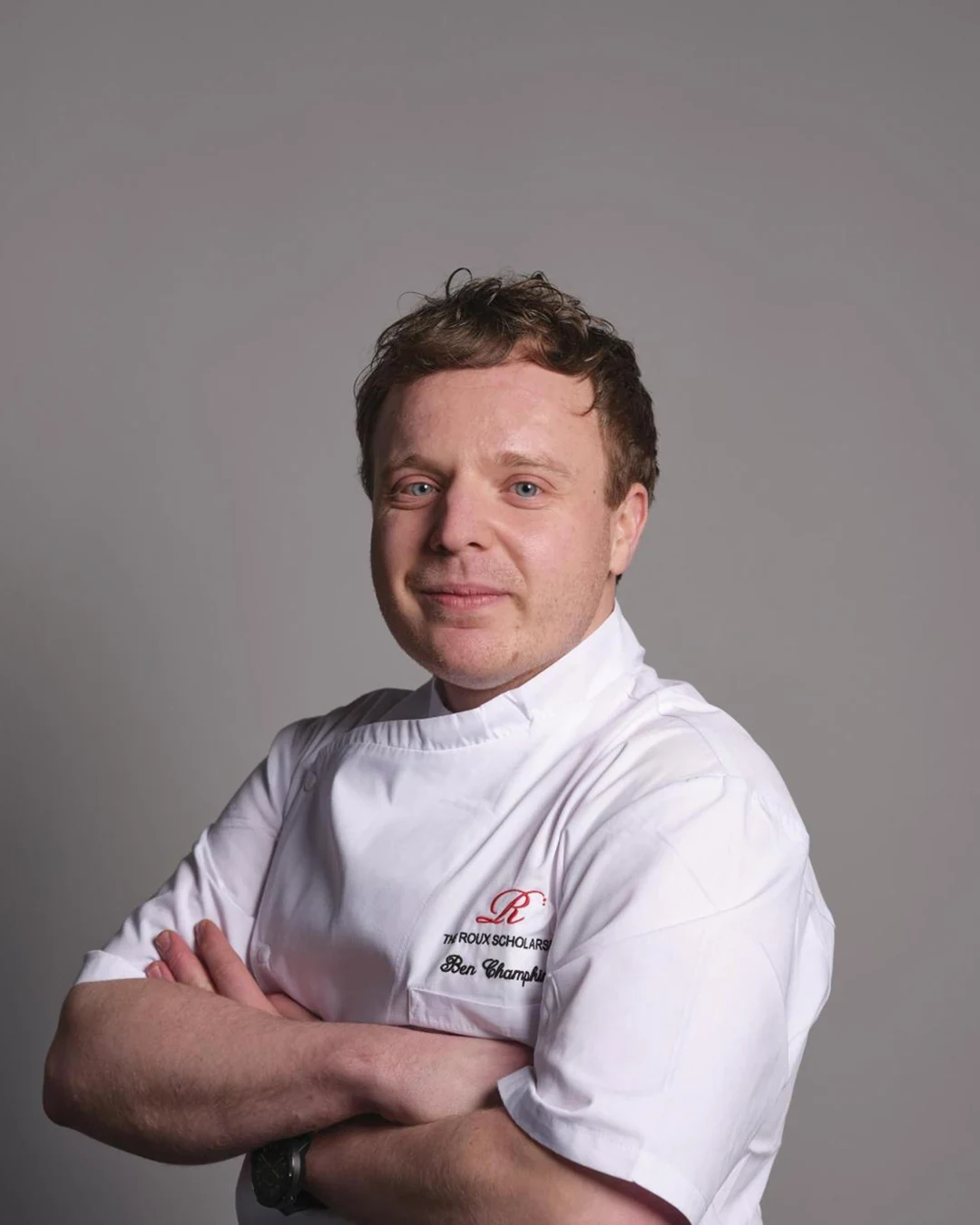
Ben Champkin
Other
- 01CuisineModern Seafood Tasting
- 02CityWeymouth, United Kingdom
- SquareMeal UK Top 100 Restaurants #81 · 2026
- Michelin Plate · 2026
- Michelin Plate · 2025
- The Good Food Guide GFG Very Good · 2025
- Michelin Plate · 2024
Portland Stone, Open Rafters, and a Spiral Staircase to the Sea
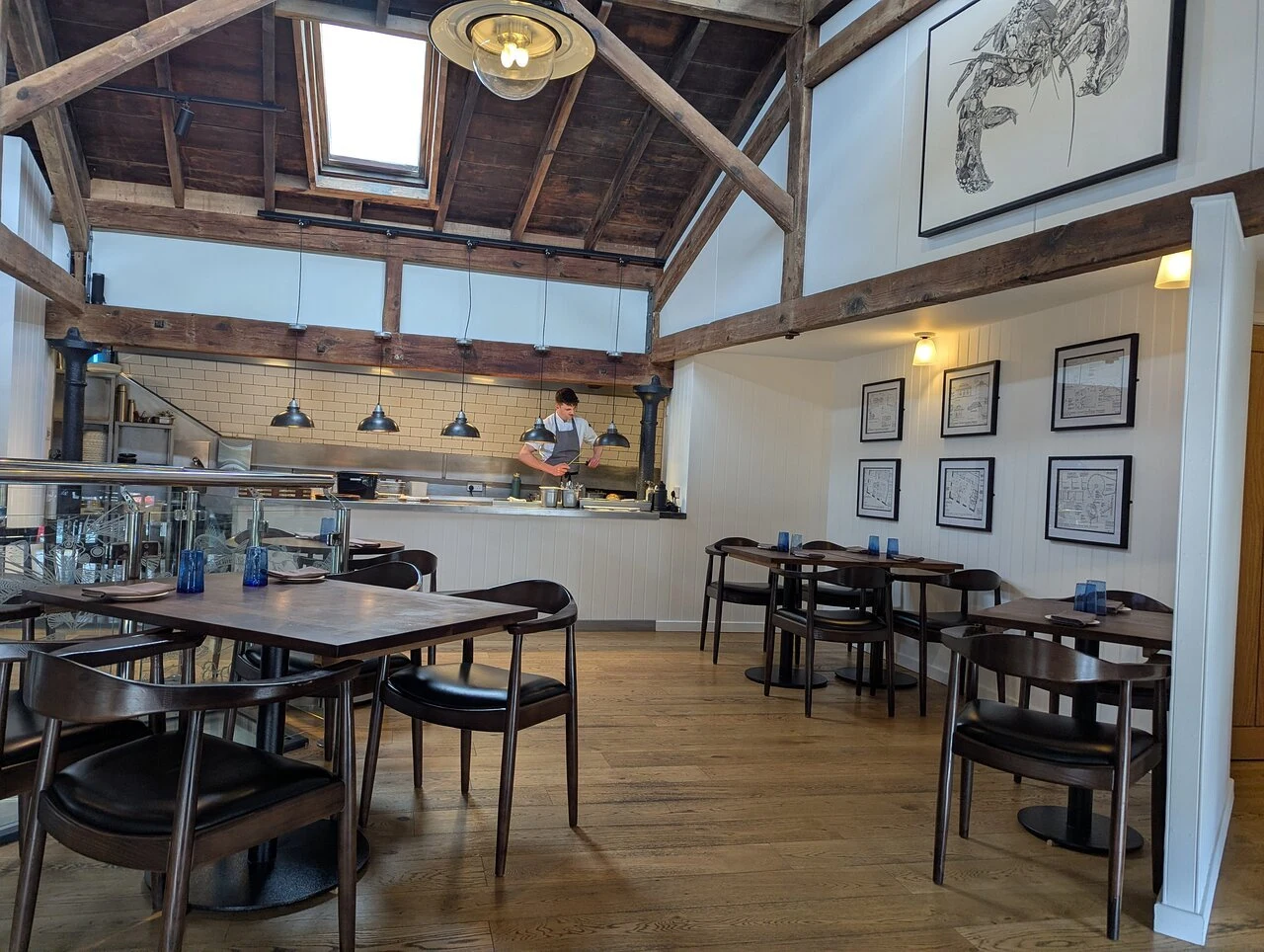
The approach along Custom House Quay tells you something before you reach the door. Weymouth's working harbour is the kind of place where fishing boats tie up a few metres from restaurant tables, and the building at number 1 makes that relationship explicit rather than decorative. The Grade II-listed former fishmarket, constructed from the same Portland stone that distinguishes so much of this stretch of the Dorset coast, has the structural confidence of something built to last. A solid spiral staircase leads from a working fishmonger on the ground floor up into a high-raftered dining room where the open kitchen sits in full view and the atmosphere runs to clean modern lines without sacrificing the character of the original building. The arrangement is not accidental: Weyfish, the fishmonger below, and Catch, the restaurant above, share a supply chain that runs to the boats visible through the windows.
The Port-to-Plate Case, Made Clearly
Britain's coastal restaurant scene has long claimed proximity to the sea as a selling point, but the gap between that claim and actual practice is often wide. Sourcing language at this level normally means a regional supplier with a next-day delivery slot. Catch narrows that gap considerably. The tasting menu names the fishing vessel and the skipper responsible for each dish, so a portion of squid arrives with a reference to the boat that caught it and the person who was aboard. That level of traceability is uncommon at any price point in the UK, and it reframes the act of reading a menu as something closer to reading a logbook.
The centrepiece course, described as "The Catch," changes according to what has actually landed that day: freshly landed, local, seasonal, and tidal are the governing constraints, not a fixed recipe. In practical terms, this means the kitchen's planning horizon is short. Dishes are built around availability rather than availability being sourced around dishes, which is the harder discipline to sustain. Chef-patron Ben Champkin, whose CV includes a stint as sous-chef at L'Enclume in Cartmel, brings a technical framework to ingredients that can otherwise be reduced to simplicity by default. The combination of that training and this supply chain is what gives Catch its position in the Dorset dining conversation.
Reading the Menu as a Document of the Harbour
The range of the sourcing is as instructive as the traceability. Native blue lobster appears alongside skate jowl, a cut that most restaurants with this kind of kitchen discipline would ignore in favour of more legible premium product. That the jowl receives serious treatment rather than being buried in a supporting role signals something about how the menu is constructed: the boat lands what it lands, and the kitchen's job is to find the right preparation, not to filter for the most marketable species.
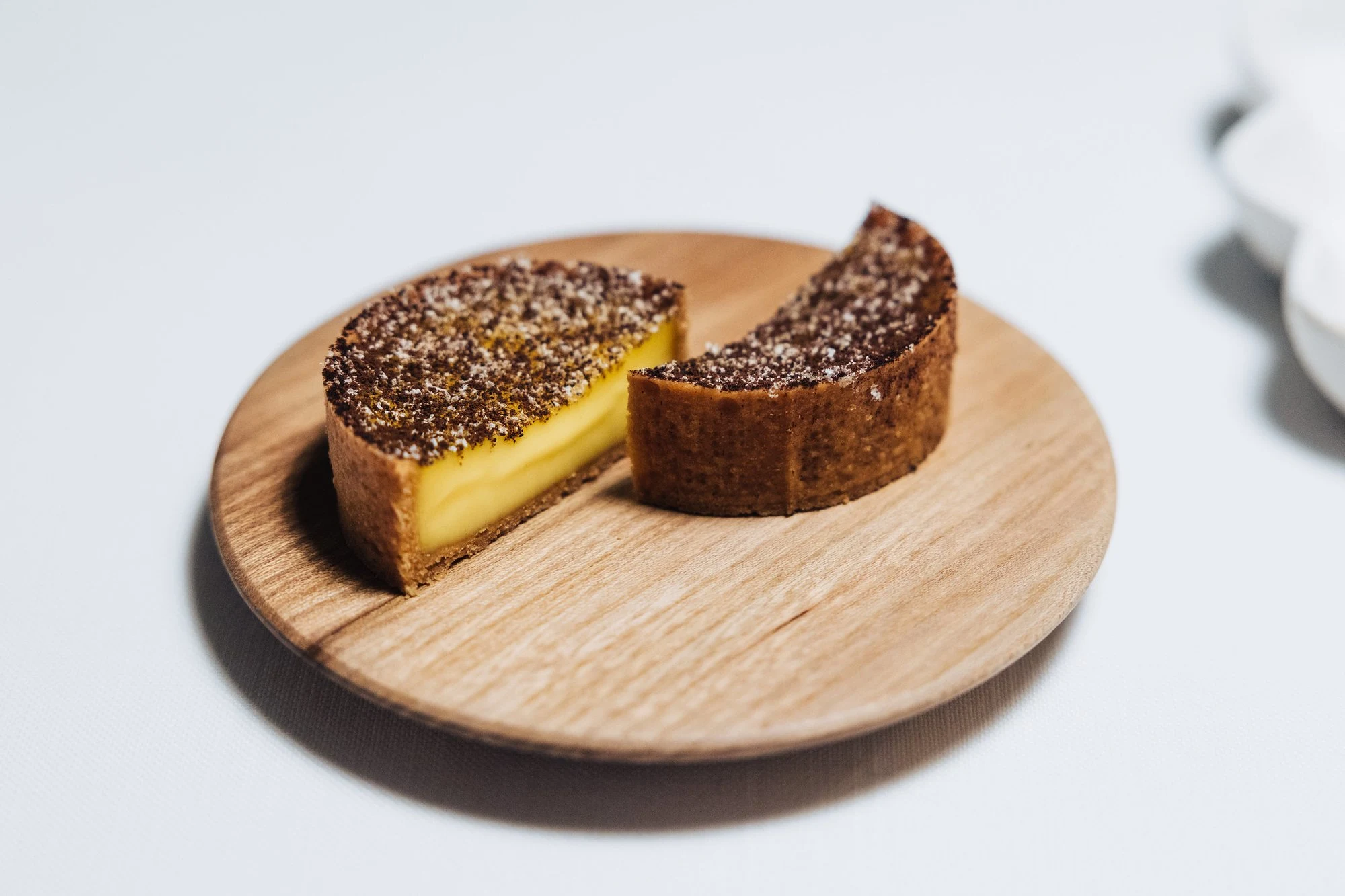
From the documented menu record, braised squid croquettes dressed with pork fat sit alongside citrus-cured monkfish with yoghurt as opening moves. Bay prawns arrive with celeriac and whey; potted crab comes with hollandaise and broth. A dark wholemeal sourdough course bridges savoury and sweet. The pre-dessert uses golden beetroot sorbet with orange sherbet in a sweet-savoury register, before the final course, documented as baked dark chocolate with sourdough ice cream, closes the sequence. The through-line is restraint applied to produce that doesn't need embellishment so much as considered framing.
For context at the serious end of British seafood cooking, the port-to-plate discipline here invites comparison with places like hide and fox in Saltwood and, further afield, the intensely local sourcing models visible at Gambero Rosso in Marina di Gioiosa Ionica and Alici on the Amalfi Coast. Each operates inside a different culinary tradition, but all share the same fundamental premise: the sea, not the kitchen's ambitions, sets the agenda.
What the Michelin Plate Signals About Positioning
Catch has held a Michelin Plate in 2024 and 2025. The Plate is Michelin's marker for restaurants serving food of good quality, sitting below the star tier but above the general run of listed venues. In the context of a Dorset harbourside town rather than a metropolitan dining district, it places Catch inside a competitive set that includes serious regional cooking across the south of England, not just local comparison. The kitchen's L'Enclume lineage is relevant here: that restaurant, in the Lake District village of Cartmel, operates at the far end of the British fine-dining range. The techniques and procurement instincts developed in that environment translate credibly to a setting where the raw material quality is exceptional by default.
Weymouth's harbourside is not a traditional address for this tier of cooking. That the restaurant has built a reputation significant enough to attract Michelin recognition in this location is as much a statement about the supply chain as about the kitchen's skill, and the two are not separable.
Planning a Visit
Catch operates at the ££££ price point, which positions it as a considered occasion rather than a casual drop-in. The tasting menu format is the primary offering, with shorter menus available at lunch and early evening for those not committing to the full sequence. The wine list is documented as a sharp selection of European and English bottles opening from around £30, which represents fair value relative to the food tier. Given the Google rating of 4.8 across 304 reviews, booking ahead is advisable, particularly through the summer months when Weymouth's harbour draws significant visitor traffic.
The restaurant sits at 1 Custom House Quay, within the historic harbourside district.
For those comparing Catch against other tasting-menu addresses in the British regions, the reference points are restaurants like Midsummer House in Cambridge or Gidleigh Park in Chagford, which operate at comparable price tiers with different ingredient emphases. The distinction at Catch is specificity of supply: the fishing boats are not a backdrop but a named component of the menu itself.
Questions
Frequently asked
Who works at Catch at The Old Fishmarket?
Made By profiles Ben Champkin (Other) at Catch at The Old Fishmarket.
How expensive is Catch at The Old Fishmarket?
Catch at The Old Fishmarket is listed at a price level of $$$.
Where is Catch at The Old Fishmarket and what does it serve?
Catch at The Old Fishmarket is in Weymouth Harbour, Weymouth, serving Modern Seafood Tasting.
The field
How it compares
| Place | Cuisine | Notes | Awards |
|---|---|---|---|
| Catch at The Old Fishmarket | Modern Seafood Tasting | Weymouth Harbour, $$$ | · |
| Fishølogy | Modern Seafood Tasting | Barcelona | Michelin 1 Star |
| Jordnær | Modern Nordic Seafood Fine Dining | Gentofte | Michelin 3 Stars, World's 50 Best |
| Outlaw's Fish Kitchen | Modern Seafood Tasting | Port Isaac | Michelin 1 Star |
| Robuchon au Dôme | Contemporary French Fine Dining | Macau | Michelin 3 Stars |
| Row on 5 | Modern British Fine Dining with Mediterranean & Asian Influences | London | Michelin 2 Stars |
| The Modern | Contemporary American Fine Dining | New York City | Michelin 2 Stars |
In residence
Similar places
Modern Seafood Tasting
Fishølogy
Barcelona, Spain
★
Modern Nordic Seafood Fine Dining
Jordnær
Gentofte, Denmark
★★★ · 50 Best
Modern Seafood Tasting
Outlaw's Fish Kitchen
Port Isaac, United Kingdom
★
Contemporary French Fine Dining
Robuchon au Dôme
Macau, Macau
★★★
Modern British Fine Dining with Mediterranean & Asian Influences
Row on 5
London, United Kingdom
★★
Contemporary American Fine Dining
The Modern
New York City, United States
★★