- Falstaff Winery - Listed · 2026
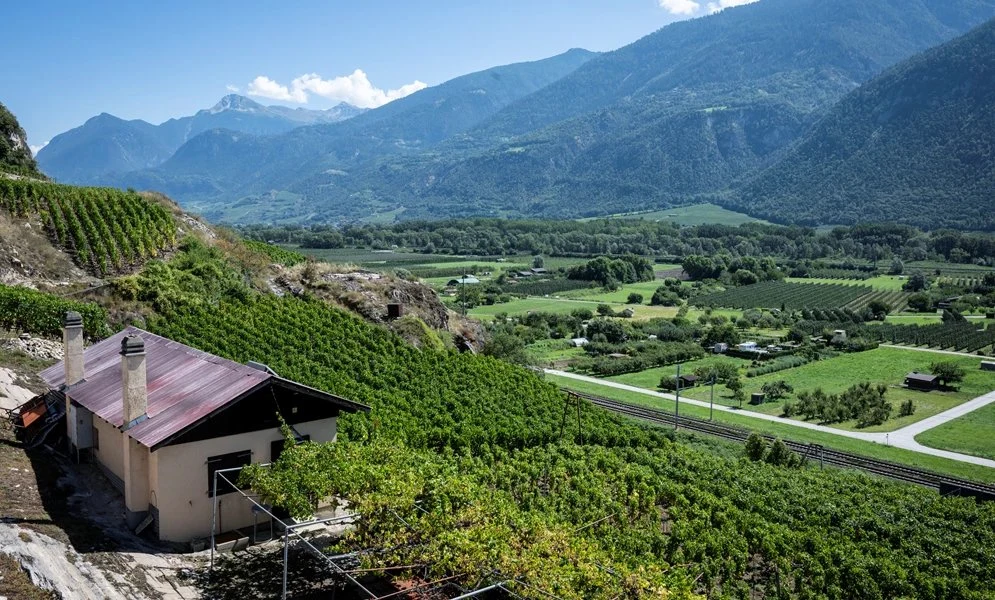
In Saint-Léonard, wine culture does not need theatrical architecture to make its point. The stronger signal is quieter: cellar doors, working-village rhythms, and bottles built around grapes that rarely travel far outside Valais. Cave Bétrisey belongs to that register, where the experience is less about grand estate choreography than about seeing how a small Swiss cellar frames local varieties in direct, practical terms.
Valais rewards drinkers who pay attention to altitude, exposure and grape identity. The region’s warm, dry valley conditions and cool nights give producers room to work with both freshness and ripeness, while its patchwork of local varieties keeps the conversation from collapsing into international sameness. Here, Rèze, Roussane and Fumin are not curiosities placed on a list for decoration; they are part of the reason to seek out a cellar visit in Saint-Léonard at all.
Valais varieties take the lead in a cellar-first tasting
The useful way to read this cellar is through its grape choices. Rèze carries historical weight in Valais, Roussane points toward aromatic white-wine structure, and Fumin adds an alpine red-wine accent rarely encountered in mainstream export shelves. Alongside them, Humagne Rouge and Cornalin place the cellar firmly inside the canton’s red-wine tradition rather than in a generic Swiss tasting format.
Nuit St-Léonard® gives the portfolio its clearest red-wine anchor: a blend of Humagne Rouge and Cornalin associated with Les Rives de la Lienne in Saint-Léonard and Uvrier. Its production details matter because they show a cellar style more interested in extraction control and local identity than in international polish. The red is made with destemming, heated grape mash during maceration, and stainless-steel ageing; its stated drinking window runs three to eight years, with a serving range of 14–16°C. Those details place it in the category of structured regional red rather than casual souvenir bottle.
Fendant de Saint-Léonard Grand Cru plays the other side of the Valais argument. Chasselas, known locally as Fendant, is often misunderstood by visitors who expect volume or perfume as proof of seriousness. In Valais, its value is more about line, place and table use. A cellar that treats Fendant alongside Rèze, Roussane, Fumin, Humagne Rouge and Cornalin is making a clear statement: the canton’s identity is broader than a single grape or style.
A family-run Valais model, not an estate spectacle
Swiss wine tourism often operates at a smaller scale than visitors expect from better-known regions. That is part of its appeal. Cave Bétrisey has been run by Antoine and Christophe Bétrisey since 1993, following the foundation laid by Jean Bétrisey. Antoine is associated with winemaking, Christophe with cellar work, and that division of labour fits the Valais pattern of family production where technical roles and hospitality often sit close together.
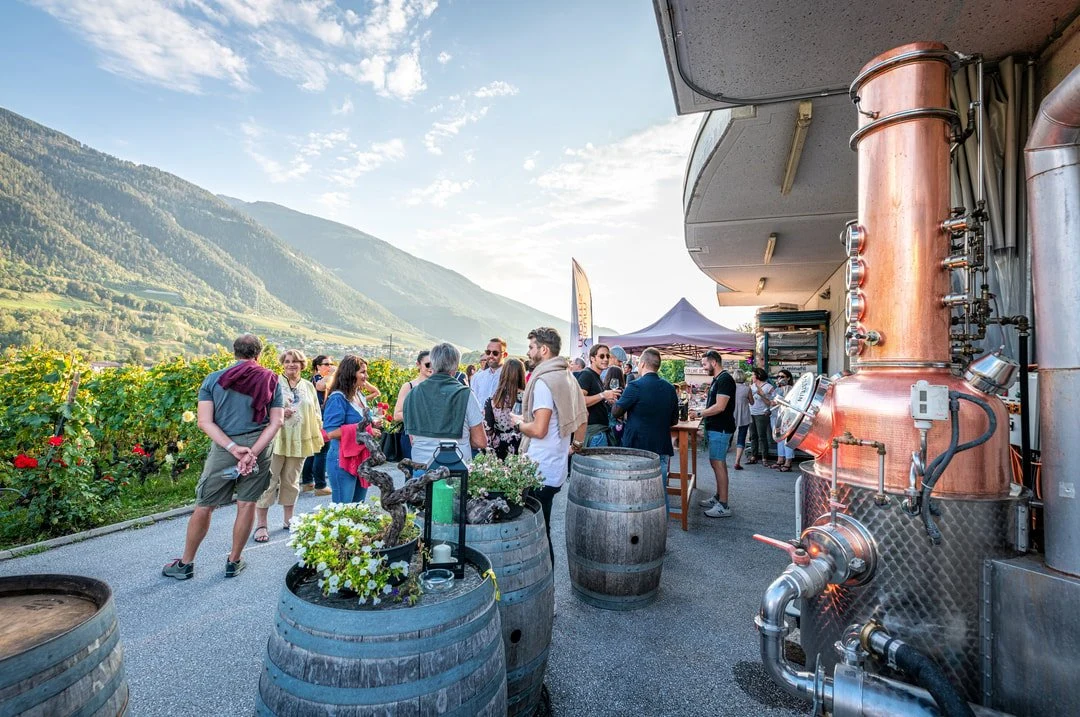
The cellar describes itself through an artisanal, cellar-focused atmosphere, and that is the right expectation to bring. The setting is traditional rather than designed as a lifestyle stage set. The production scale is small, the noise level is quiet, and the visit format centres on guided tasting rather than vineyard touring. For travellers who want a polished hospitality complex, this will feel restrained. For drinkers interested in how Saint-Léonard expresses itself through bottles, the restraint is the point.
The broader Saint-Léonard context helps. The village sits within Valais AOC, between the gravitational pull of larger wine towns and the agricultural intimacy of local cellars. Its proximity to the Lac Souterrain adds a notable geographic marker, but the wine story here is still agricultural first: slopes, irrigation, exposure, and the habit of keeping regional varieties in production. Cave Bétrisey’s role is not to summarize all of Valais; it offers a compact reading of one village cellar working inside that larger tradition.
How to place it in a Saint-Léonard wine day
Visit makes the most sense as part of a Saint-Léonard wine-focused itinerary rather than a standalone luxury excursion. The cellar is suited to wine education, solo exploration and group outings, with a guided tasting format and a cellar atmosphere that rewards questions about grape variety, ageing and local food use. Outdoor seating and food pairing are not the point here; the stronger value is the direct encounter with a producer working in the Valais idiom.
For a wider look at the area, start with Our full St Leonard wineries guide, then branch into nearby cellar reading through Bétrisey & Albrecht Vins and Cave de la Brunière. Travellers building a complete stay can pair that with Our full St Leonard restaurants guide, Our full St Leonard hotels guide, Our full St Leonard bars guide and Our full St Leonard experiences guide.
Readers using this as a Swiss-wine benchmark can also compare regional approaches beyond Valais through 180°Süd in Frick, A & A Weinbau in Henggart, A. & C. Chevalley in Lutry, aagne weingut in Hallau, Abbaye de Mont in Mont Sur Rolle and Adrian & Diego Mathier Nouveau Salquenen in Salgesch. For a broader cross-border lens, add »der Steiner« Hans Steiner in Podersdorf am See and & Handwein in Mannheim.
Questions
Frequently asked
Who works at Cave Bétrisey?
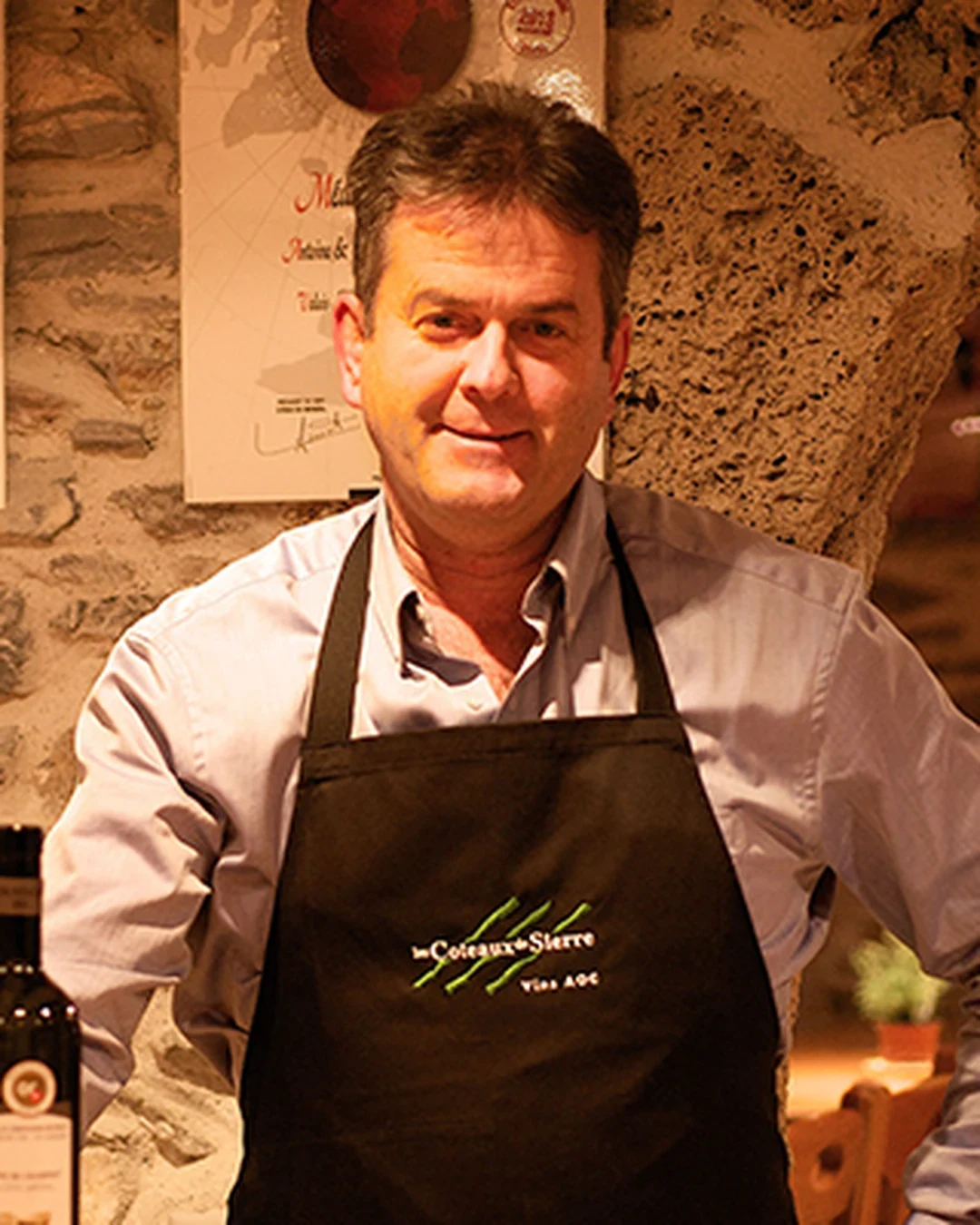
Made By profiles Christophe Bétrisey (Winemaker) at Cave Bétrisey.
How expensive is Cave Bétrisey?
Cave Bétrisey is listed at a price level of $$.
The field
How it compares
| Place | Notes | Awards |
|---|---|---|
| Cave Bétrisey | Saint-Léonard, $$ | · |
| Bétrisey & Albrecht Vins | St Leonard | · |
| Cave de la Brunière | St Leonard | · |
| Domaine Faiveley | Nuits-Saint-Georges | World's 50 Best |
| Domaine Henri Jayer | Burgundy | · |
| Ridge Vineyards | Cupertino | World's 50 Best |
| Tenuta San Guido | Bolgheri | · |