
Valais fruit in steel and cement
- Falstaff Winery - Listed · 2026
A cellar learned before it was led
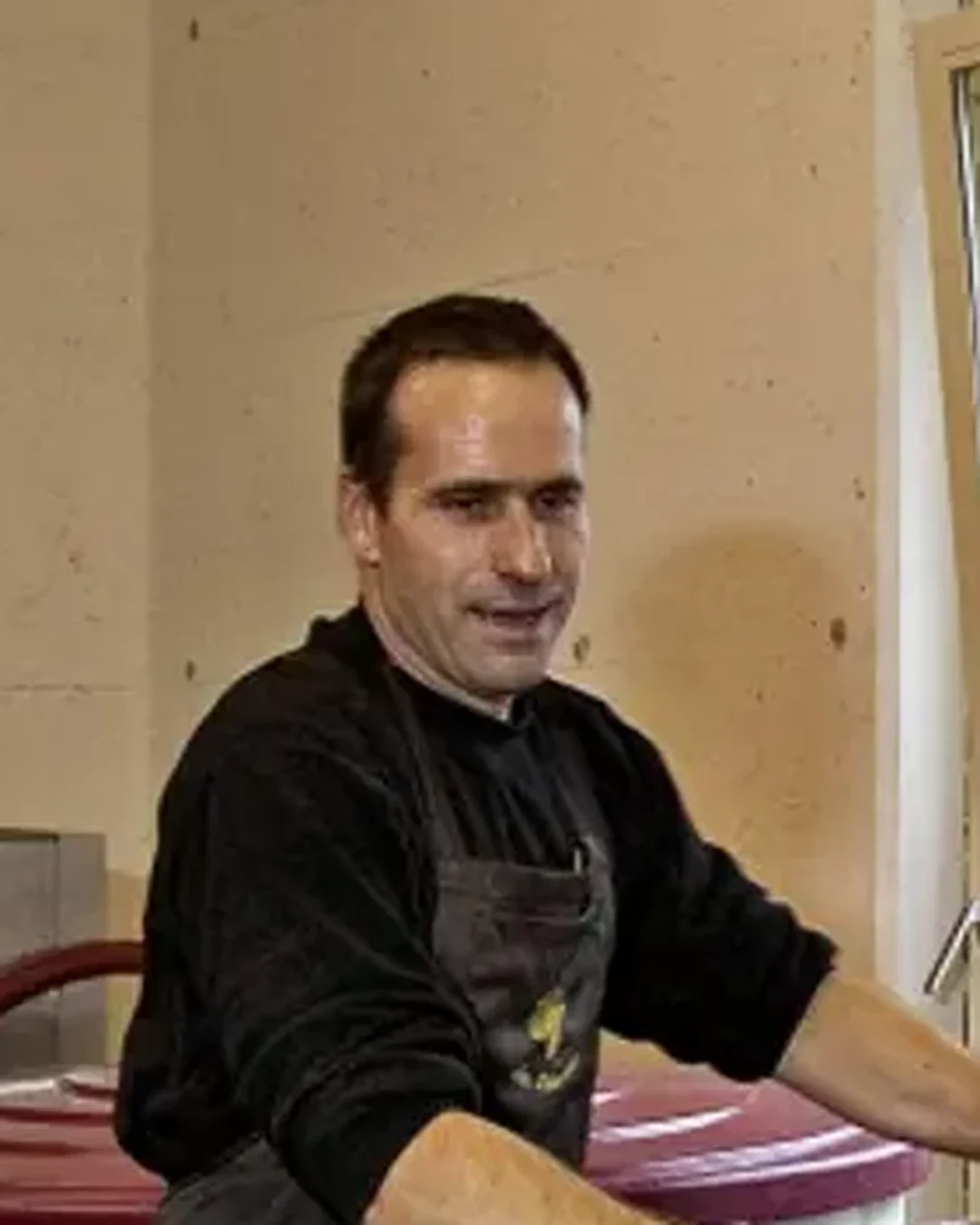
Old cement tanks and stainless steel set the working rhythm for Serge Roh, winemaker at Cave Les Ruinettes - Serge Roh in Vétroz. He came to the family winery after training at Ecole de Changins, then worked inside the house from 1987 to 1999 before taking the winemaker’s role in 1999. That sequence matters here because the apprenticeship was not a tour of houses or a catalogue of cellars. It was repetition in one family cave, with the same village, the same parcels, and the same pressure to keep a Valais line legible from vintage to vintage.
Roh’s tenure gives the cellar its fixed point. The family’s roots reach back to Alsace and into the Swiss Valais in the 17th century, with settlement first in Conthey and later in Vétroz. At the bench, that history becomes less a story than a constraint: make the wines in a way that keeps the site visible. The house works within Valais AOC, with Gamay, Pinot Noir, Diolinoir, Chasselas, Cornalin, and Petite Arvine among its grapes, and with Vétroz not as a backdrop but as the working material.
Vétroz fruit held in steel and cement
The estate works approximately 3 hectares of vineyard in Vétroz, with sustainable agriculture named as part of the method and hand harvesting used for the red blends. Dôle de Vétroz gives the clearest view of the cellar’s proportions: Gamay at 40%, Pinot Noir at 40%, and Diolinoir at 20%, drawn from small parcels and fermented and aged in stainless steel. The choice keeps the fruit and acidity forward, without oak taking the foreground.
The white side of the cellar stays close to Valais identity. Fendant de Vétroz is built from Chasselas, while Amigne comes from a single hectare plot with vines described as 65 years old, often made in a demi-sec style. Old cement tanks remain part of the fermentation and aging vocabulary, and the vineyard work includes traditional tools such as horse plows. These are not decorative gestures. They are the long way when the point is to keep the grape, the village, and the cellar in the same sentence.
The village entrance and the cellar door
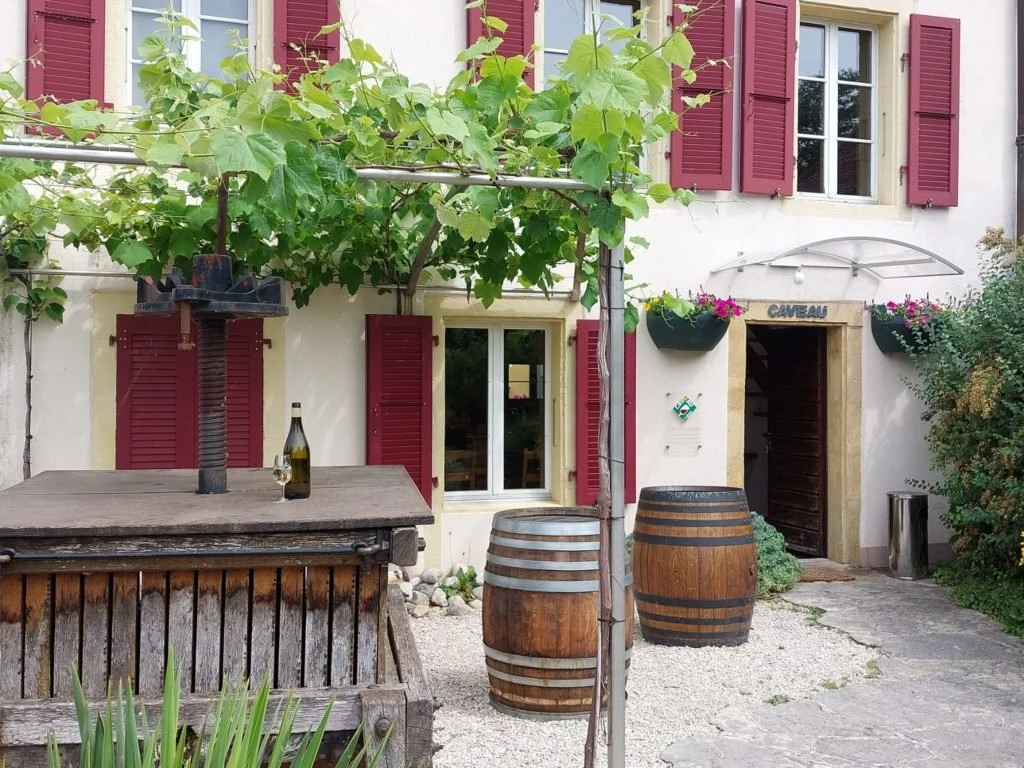
The cave stands at the entrance to Vétroz, where the winemaking facilities meet the village before the visitor reaches any romance of landscape. Inside, the work reads as family scale rather than spectacle: tanks, parcels, grape names, and the accumulated judgment of a maker who has stayed with one house since the 1990s. The room belongs to the wines before it belongs to hospitality.
That restraint suits the portfolio. Dôle de Vétroz, Fendant de Vétroz, Amigne de Vétroz, Cornalin, and Roh’s Ruinettes Noir each keep the language close to place and variety.
Questions
Frequently asked
Who makes the wines at Cave Les Ruinettes - Serge Roh?
Serge Roh is the winemaker at Cave Les Ruinettes - Serge Roh in Vétroz. He trained at Ecole de Changins, worked in the family house from 1987 to 1999, and has held the winemaker’s role since 1999.
What kinds of wines are made here?
The cellar works within Valais AOC and makes wines from grapes including Gamay, Pinot Noir, Diolinoir, Chasselas, Cornalin, and Petite Arvine. Named wines include Dôle de Vétroz, Fendant de Vétroz, Amigne de Vétroz, Cornalin, and Ruinettes Noir.
What is the estate known for in Vétroz?
Cave Les Ruinettes - Serge Roh works with about 3 hectares of vineyard in Vétroz, and the site is treated as the main material for the wines rather than a backdrop. The cellar sits at the entrance to the village, and the wines are made to keep the grape, the village, and the cellar closely linked.
How are the wines made?
The estate uses sustainable agriculture, and hand harvesting is used for the red blends. Old cement tanks and stainless steel remain part of the fermentation and aging work, and the vineyard also uses traditional tools such as horse plows.
The field
How it compares
| Place | Notes |
|---|---|
| Cave Les Ruinettes - Serge Roh | Vétroz, $$$ |
| Alexandre de Torrenté Sàrl | Vetroz |
| Cave Arte Vinum | Vetroz |
| Cave Chantevigne | Vetroz |
| Cave du Vieux Moulin – Famille Papilloud | Vetroz |
| La Madeleine – André Fontannaz et filles | Vetroz |
| Régence Balavaud | Vetroz |