Caves de la Béroche
- 01CitySaint-Aubin-Sauges, Switzerland
- Falstaff Winery - Listed · 2026
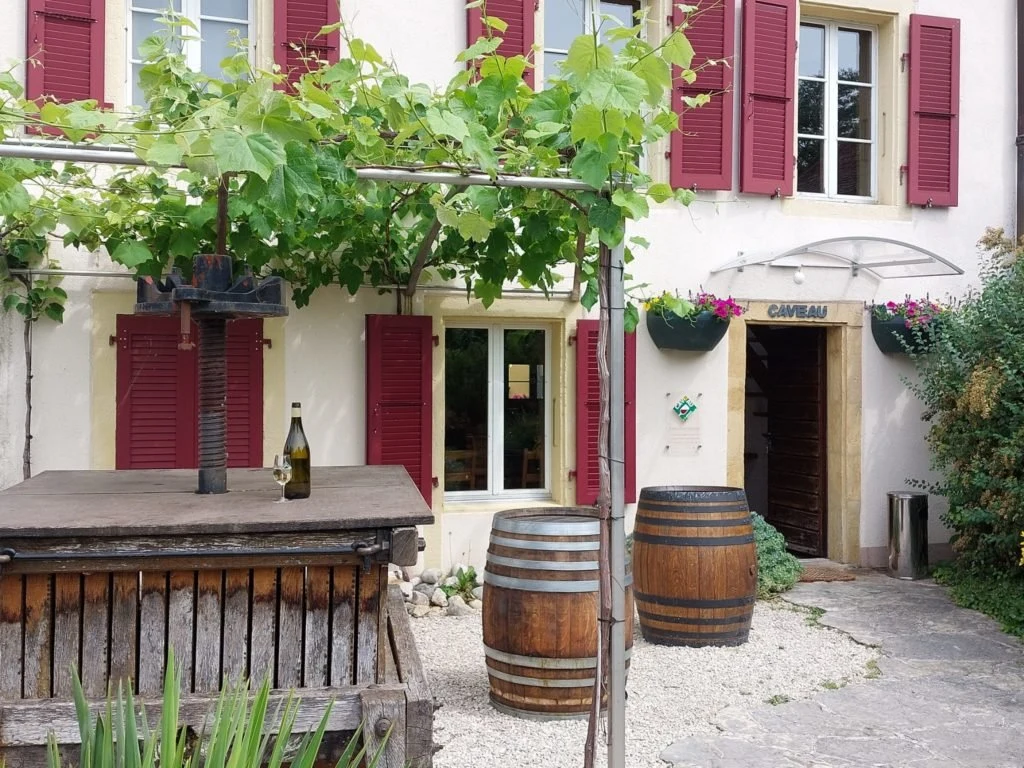
Caves de la Béroche in Saint-Aubin-Sauges is best presented as a traditional Swiss cooperative cellar rather than a formal restaurant, polished estate salon, or destination built around elaborate dining rituals. The picture is warm, rustic, cozy, lively, and scenic, with a convivial atmosphere built around wine tasting and local character. Its focus is on expert-guided tastings in an oenothèque and on organic, terroir-driven wines, which gives the venue a grounded identity: this is a place to listen, taste, ask questions, and connect the glass to the surrounding region.
That distinction matters for setting expectations. Caves de la Béroche is not best approached as a venue where the main story is table service, chef-driven cooking, or a highly choreographed hospitality performance. Its appeal is quieter and more direct. The setting reads as cellar-first and community-rooted, with the kind of unpretentious mood that can make a tasting feel both informative and sociable. The pleasure is in the combination of local wine culture, a relaxed cooperative framework, and the chance to experience regional character without the gloss of a luxury showroom.
Local terroir through a cooperative lens
The most reliable way to frame Caves de la Béroche is as a Saint-Aubin-Sauges cellar experience centered on regional wine culture. It is described as a cooperative setting with a classic, welcoming feel, where the emphasis is on explanation, tasting, and a sense of place rather than luxury staging. In practical terms, that means the venue’s personality comes through less as spectacle and more as encounter: a visitor is there to understand how the wines are presented, how the cellar speaks about its place, and how a cooperative context shapes the tone of the visit.
This cooperative lens also helps explain why the atmosphere is so central to the experience. Warm, rustic, cozy, and lively are not incidental adjectives here; they are part of what separates the venue from a more formal wine address. The setting suggests a kind of Swiss cellar hospitality that values clarity, conviviality, and local continuity. For visitors, that can make the tasting feel approachable even when the subject is serious. The wines are not treated as abstract luxury objects, but as expressions of place, interpreted through guided conversation and a traditional cellar environment.
The cellar’s identity includes an organic, terroir-driven approach to wine. Specific grape varieties, vineyard holdings, soils, founding dates, awards, and production details are not confirmed here, so visitors should treat the experience more broadly: a chance to understand local Swiss wine through a guided oenothèque tasting in a relaxed cooperative environment.
What the tasting format teaches
Oenothèque format is central to the appeal. Caves de la Béroche is not best described through a menu, chef, seat count, or restaurant-style service model; the grounded draw is expert-guided tasting. Expect a conversational, welcoming cellar atmosphere where the visit is shaped by wine explanation and the character of the place. The oenothèque framing also keeps attention on learning through tasting, rather than on the surrounding markers that often define restaurants or highly polished hospitality venues.
That learning can be simple but meaningful. A guided tasting gives structure to the visit, helping guests move beyond just liking or disliking a glass and toward a clearer sense of how the cellar presents its own wines. In a terroir-driven context, the language of place matters, but the experience remains relaxed rather than academic. The most satisfying way to engage is to treat the tasting as a conversation: attentive, curious, and open to the explanations offered by the people guiding it.
Because only the broader organic and terroir-driven wine focus is confirmed, it is better not to promise particular bottles, vintages, awards, or tasting lengths. The safest expectation is a guided introduction to the cellar’s wines in a traditional cooperative setting. That conservative framing is useful: it protects the visitor from over-specific assumptions and keeps the venue’s real strengths in view. The confirmed appeal is the combination of expert guidance, cooperative atmosphere, and local wine identity, rather than any single named wine or fixed tasting script.
For planning, the confirmed price level is $$.
How to place it in a Swiss wine itinerary
For travelers building time in Saint-Aubin-Sauges, Caves de la Béroche fits as a warm, traditional, wine-focused stop with an oenothèque tasting emphasis. It is especially relevant for visitors who want a relaxed cooperative cellar rather than a formal dining-room experience. In an itinerary, it works well when understood as a place-based tasting visit: not a meal-centered booking, not a luxury estate performance, but a cellar encounter rooted in Swiss wine culture.
That makes it a good match for travelers who value atmosphere as much as specification. The scenic and convivial qualities already associated with the venue point toward a visit that is as much about mood and context as it is about the individual glasses poured. Guests looking for a polished restaurant narrative may need to adjust expectations, while those interested in local character, guided explanation, and a traditional cooperative feel are more likely to understand its appeal immediately.
When comparing options, keep the frame local and simple: Caves de la Béroche is the named venue to consider in Saint-Aubin-Sauges, while other dining or travel planning in the area should be researched separately and directly. The strongest reason to include it is not that it replaces a restaurant or a broader regional itinerary, but that it adds a focused cellar experience with a clear sense of place, organic and terroir-driven emphasis, and a welcoming oenothèque format.
Questions
Frequently asked
How expensive is Caves de la Béroche?
Caves de la Béroche is listed at a price level of $$.
The field
How it compares
| Place | Notes | Awards |
|---|---|---|
| Caves de la Béroche | St-Aubin-Sauges, $$ | · |
| Biondi-Santi Tenuta Greppo | Montalcino | · |
| Château Cos d'Estournel | Saint-Estèphe | World's 50 Best |
| Domaine Armand Rousseau | Gevrey-Chambertin | · |
| Domaine Jacques-Frédéric Mugnier | Premeaux-Prissey | · |
| Domaines Barons de Rothschild (Lafite) | Bordeaux | · |
| Weingut Egon Müller | Wiltingen | · |