Château Croix de Labrie
- 01CitySaint-Christophe-des-Bardes, France
Organic Saint-Émilion, worked by hand
- Falstaff Winery - 2 Stars · 2026
Compost tea before the cellar
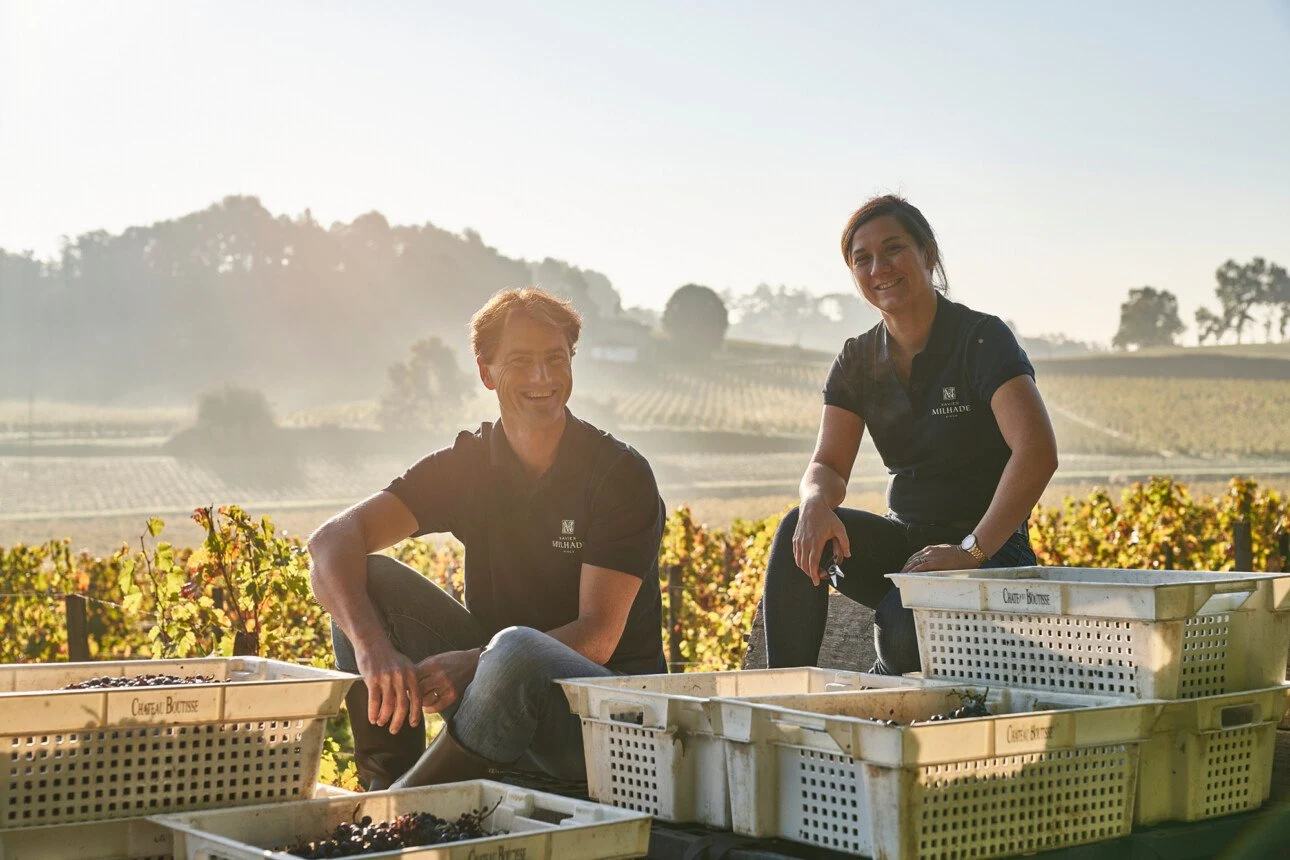
Axelle Courdurié makes oxygenated compost teas for soil regeneration as winemaker at Château Croix de Labrie in Saint-Christophe-des-Bardes. The gesture sits before extraction, barrel choice, or blend. It begins with the ground. At this small Saint-Émilion Grand Cru estate, Axelle Courdurié holds the work close: owner and winemaker, with vineyard and cellar decisions passing through the same hands. The estate dates its modern life to 1991, while the cellar reaches back to 1687, a useful measure of the place’s double tempo. One part is old stone and inherited agricultural fact. The other is daily correction, season by season.
Courdurié states the method plainly: “At Croix de Labrie, we farm the vines organically.” The estate entered conversion in 2018 and was certified organic in 2020. In parallel, she farms the vineyard biodynamically, keeping the attention below ground as much as above it. The house’s language stays practical, from pruning to bottling, with no tidy separation between fieldwork and finished wine. That matters here because the estate is small enough for a decision in the rows to remain visible in the glass.
A mosaic worked plot by plot
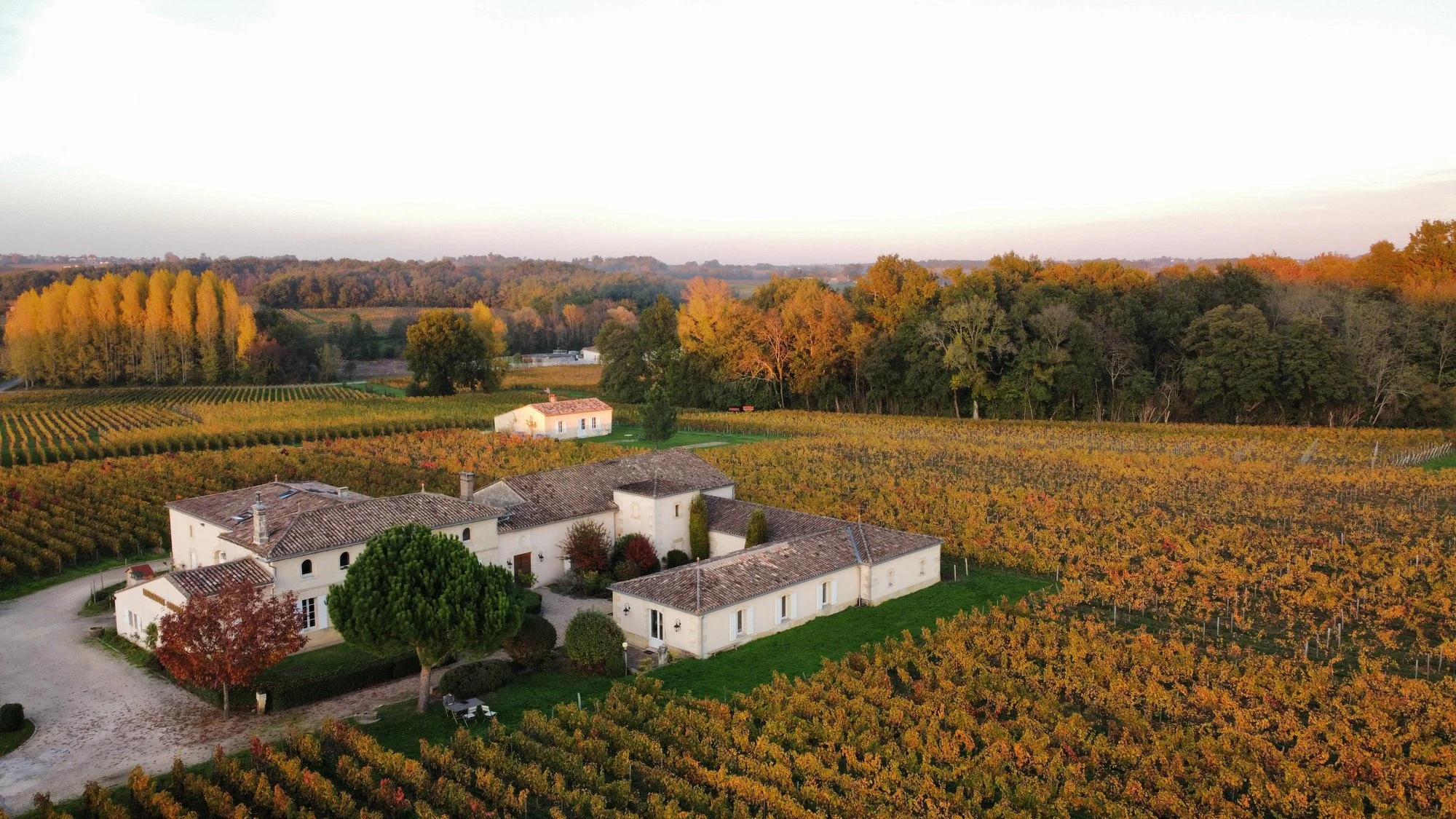
The vineyard is given as 5.78 hectares, spread across Badon, Saint-Sulpice, and the clay-limestone plateau of Saint-Christophe-des-Bardes. The soils move from brown sandy limestone and clay over iron-rich subsoil to clay-limestone on ferruginous ground near the foot of the Côte Pavie. Croix de Labrie treats those parcels as a mosaic rather than a single block, a method that asks for separate attention before any blend can make sense.
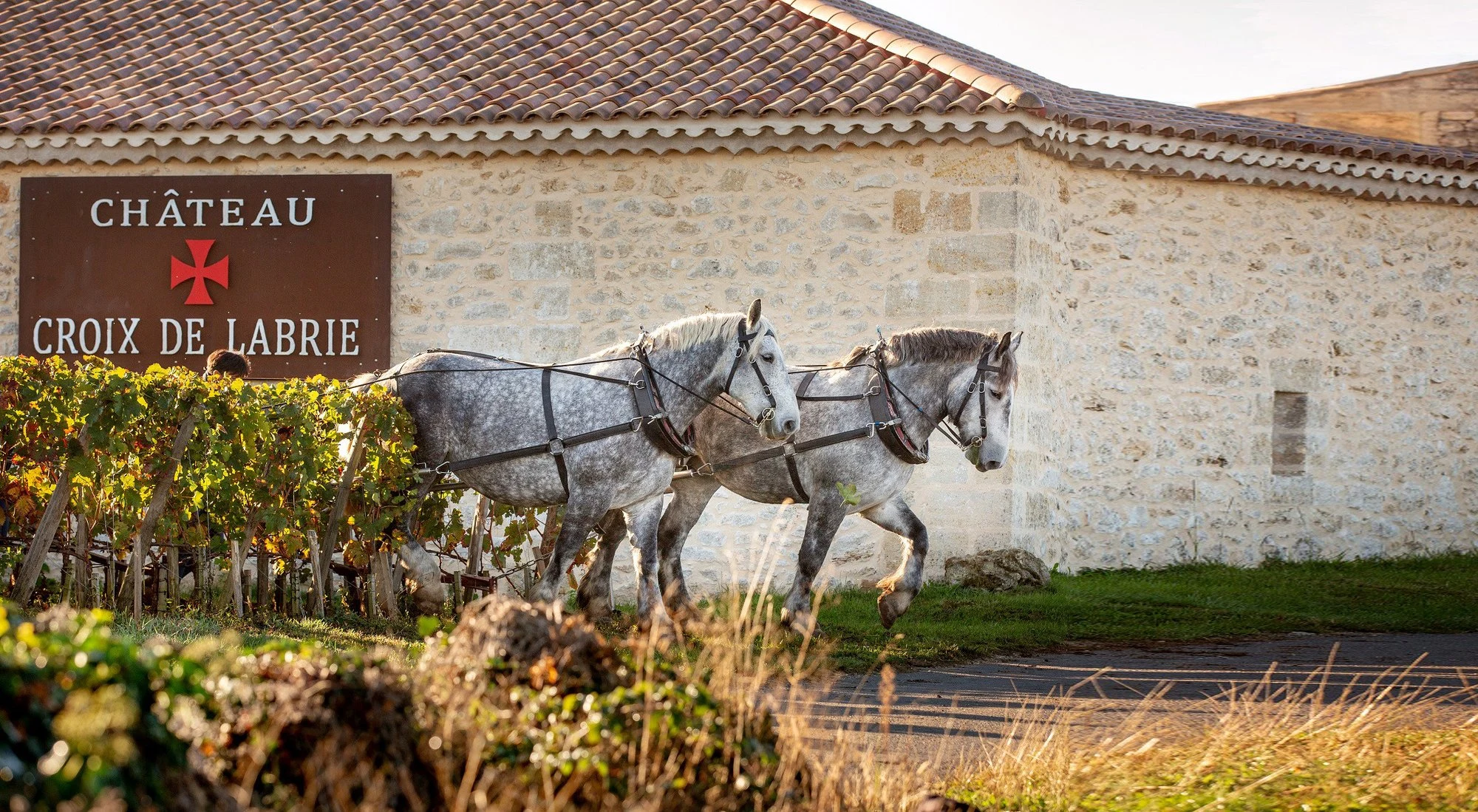
Merlot carries 90% of the plantings, with 7% Cabernet Sauvignon and 3% Cabernet Franc. The average vine age is reported as 60 years. The vines are plowed by horse and pruned according to the Poussard method; harvest is manual. In the cellar, fermentation takes place in small oak barrels and stainless steel tanks, then the wine ages in 100% new French oak for 16 to 18 months. Annual production is given as 15,000 bottles, about 1,250 cases. The numbers are modest, but the method is not slight. It is a close-scale discipline, one in which density and fruit come from selection, old vines, and the patience of élevage.
Stone, gardens, and a quiet tasting room
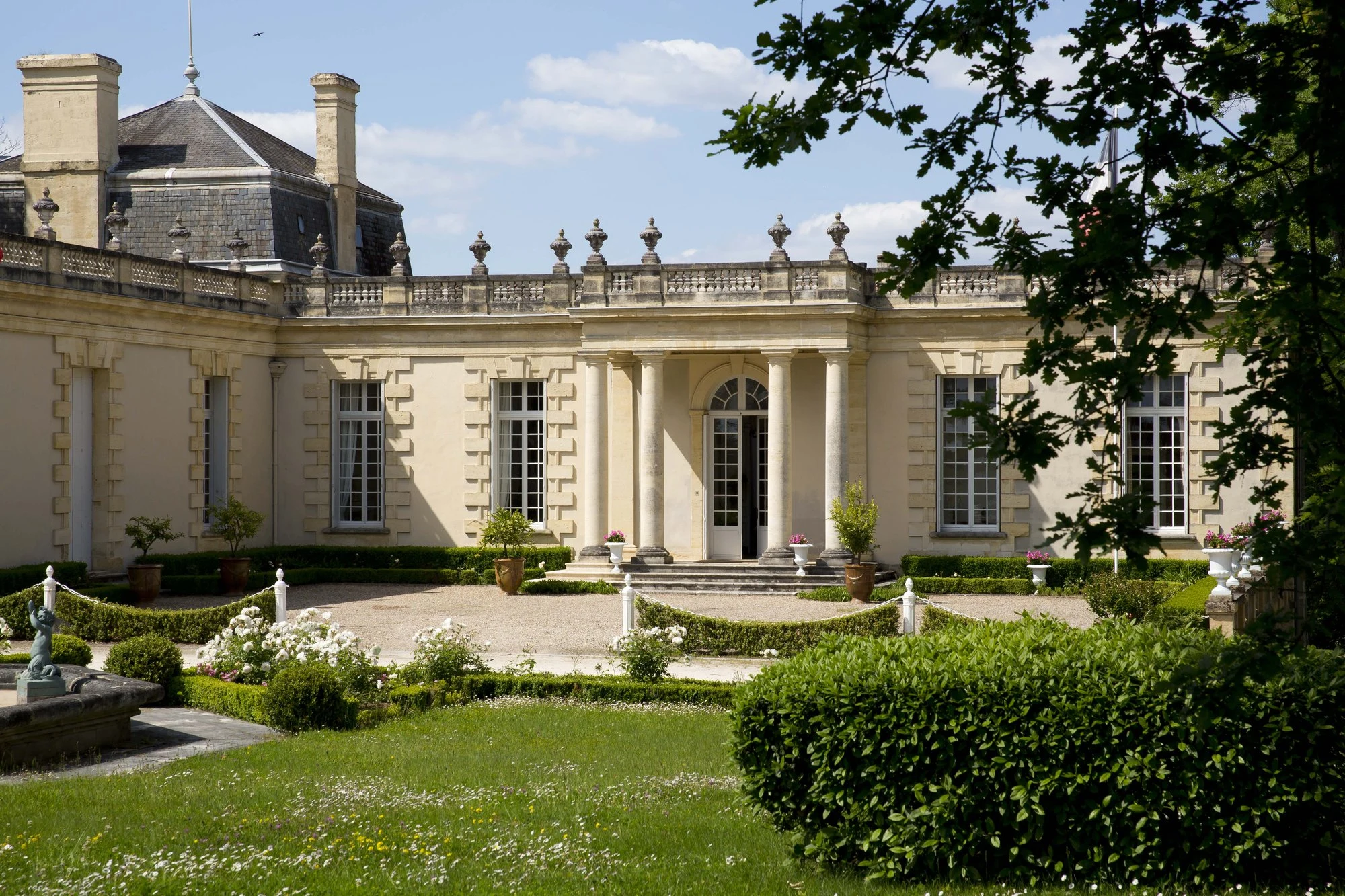
The estate sits on the heights of Saint-Christophe-des-Bardes, near Saint-Émilion, with vineyard gardens around a historic 17th-century house. The room is quiet rather than theatrical. Visits are intimate, with the countryside doing less to decorate the work than to explain it: rows outside, cellar within, the same limestone presence running through both.
In that setting, Croix de Labrie’s scale becomes part of its texture. The cellar does not need the noise of a large house to make its argument. Barrels, tanks, and the garden’s stillness keep the eye close to process. The flagship Château Croix de Labrie and Chapelle de Labrie both begin there, in the parcels of Badon, Saint-Sulpice, and Saint-Christophe-des-Bardes.
Questions
Frequently asked
Who runs Château Croix de Labrie?
Axelle Courdurié is the owner and winemaker at Château Croix de Labrie, and the vineyard and cellar decisions pass through her hands.
What kind of farming does the estate follow?
The estate farms organically, entered conversion in 2018, and was certified organic in 2020. Courdurié also farms the vineyard biodynamically.
What is the estate known for in the cellar and vineyards?
Croix de Labrie works a small Saint-Émilion Grand Cru estate of 5.78 hectares, with mostly Merlot and old vines that average 60 years. The vines are plowed by horse, pruned according to the Poussard method, and harvested by hand.
How are visits arranged?
Visits are by appointment only, and the tasting room is described as quiet and intimate.
What should visitors know before coming?
The dress code is smart casual, there is on-site parking, and the estate sits in Saint-Christophe-des-Bardes near Saint-Émilion.
The field
How it compares
| Place | Notes |
|---|---|
| Château Croix de Labrie | Saint-Christophe-des-Bardes, $$$ |
| Château Boutisse | Saint-Christophe-des-Bardes |
| Château Fombrauge | Saint-Christophe-des-Bardes |
| Château Haut-Sarpe | Saint-Christophe-des-Bardes |
| Château Laplagnotte-Bellevue | Saint-Christophe-des-Bardes |
| Château Le Rey (Tour Saint Christophe) | Saint-Christophe-des-Bardes |
| Enclos de Viaud | Saint-Christophe-des-Bardes |
Similar places
Château Boutisse
Saint-Christophe-des-Bardes, France

Château Fombrauge
Saint-Christophe-des-Bardes, France
Château Haut-Sarpe
Saint-Christophe-des-Bardes, France
Château Laplagnotte-Bellevue
Saint-Christophe-des-Bardes, France
Château Le Rey (Tour Saint Christophe)
Saint-Christophe-des-Bardes, France
Enclos de Viaud
Saint-Christophe-des-Bardes, France