Château Mazeyres
- 01CityLibourne, France
- Falstaff Winery - 1 Stars · 2026
The approach to Château Mazeyres is all Right Bank restraint: a tree-lined lane, vineyard rows around a Directoire-style manor, and the quiet register of a working Pomerol estate rather than a stage-managed cellar door. In Libourne, where wine tourism can easily flatten into château photography and label collecting, this address is more useful for understanding how Pomerol’s soils shape the glass. The story is not grandeur for its own sake. It is gravel, clay, Merlot, and the recent Bordeaux shift toward farming credentials that can be read in vineyard practice rather than brochure language.
Pomerol through gravel, clay, and a Merlot-led blend
Pomerol’s identity depends on nuance at small scale. The appellation is compact by Bordeaux standards, and its reputation rests heavily on Merlot grown over variations of gravel, clay, and sand. Château Mazeyres works 25.5 hectares across sandy gravel with clay-gravel subsoil and parcels on the Catusseau plateau with sand over clay. That matters because the estate’s main wine follows a classical Right Bank structure: 73.1% Merlot, 24.3% Cabernet Franc, and 2.6% Petit Verdot. The point is not variety for variety’s sake, but the way Merlot supplies the center of gravity while Cabernet Franc sharpens the frame and Petit Verdot adds a small measure of depth.
The Sunday letter
Find new places through the people who run them.
Our Sunday email brings you the chefs, winemakers and hoteliers behind our newest stories. See a sample before you subscribe.
See a sample of the Sunday emailOne email a week. Unsubscribe from any issue.
The estate’s production choices lean toward preserving that site expression. Farming has been biodynamic since 2012, with organic certification since 2015 and biodynamic certification since 2018; membership in Biodyvin places it within the stricter European conversation around biodynamic viticulture. In a region where château hierarchy often dominates the discussion, those certifications give the visit a different emphasis. The vineyard becomes the main text. Compost preparations, reduced chemical dependence, manual work, and plot-by-plot attention are not decorative details here; they explain why the tasting is as much about agricultural method as finished wine.
Alain Moueix, a fourth-generation Libourne winegrower and oenologist, has been associated with the estate’s management since 1992, a tenure long enough to make the farming transition meaningful rather than cosmetic. The Guillard family’s arrival in 2020 continued that direction. For visitors, the useful lens is continuity: an old Pomerol site, a manor acquired by the Querre family in the early 20th century, institutional ownership later in the century, then a modern phase defined by biodynamics and Right Bank precision.
A château visit built around farming, not spectacle
The hospitality format suits travelers who want the mechanics of Pomerol explained at estate level. Visits are guided and can include vineyard and cellar context, with French and English offered. The tone is educational rather than performative, helped by a quiet setting and vineyard views around the manor. Dog-friendly grounds and outdoor space make the estate less formal than its architecture first suggests, though the audience is still adults focused on wine rather than a family day out.
Critical recognition gives useful context without turning the estate into a scorecard. Tastingbook has rated the 2022, 2020, and 2018 vintages at 93 points, while Falstaff rated the 2019 vintage at 92 points. Those numbers place the wine in a serious Pomerol conversation, but the more interesting distinction is the combination of Right Bank classicism and certified biodynamic farming. In practical terms, this is a strong choice for visitors who want to understand why Pomerol can feel plush without becoming heavy, and why soil management has become part of the luxury vocabulary in Bordeaux.
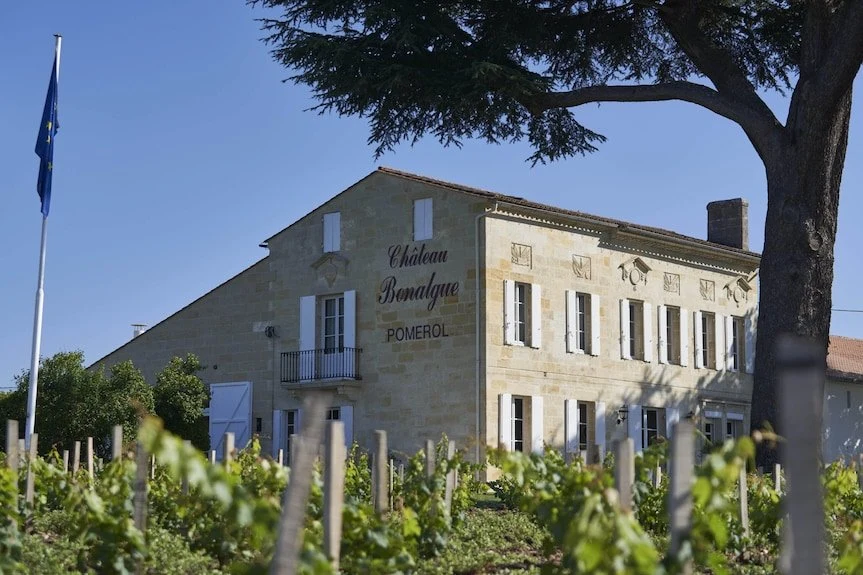
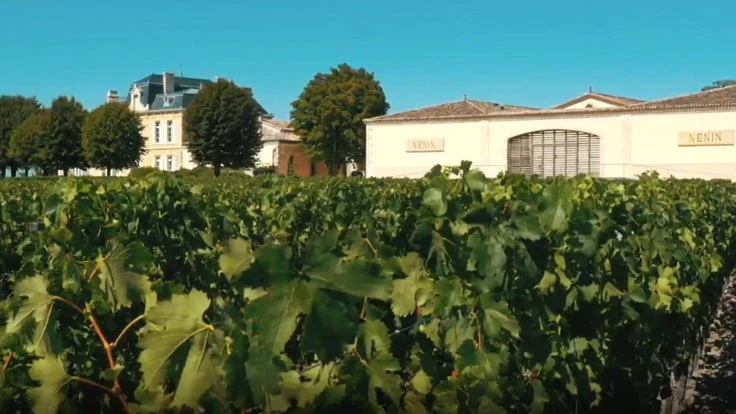
Libourne rewards a broader wine itinerary, especially for travelers using the city as a base rather than treating it as a quick stop outside Bordeaux. For more estate context nearby, keep Our full Libourne wineries guide close, then compare local routes with Chateau Fleur de Jean Gue, Château Bonalgue, Château Certan-Giraud, Château de Sales, and Château Fayat. Build the rest of the stay through Our full Libourne restaurants guide, Our full Libourne hotels guide, Our full Libourne bars guide, and Our full Libourne experiences guide. For a wider French and European wine map, useful contrasts include A. Margaine in Villers-Marmery, Abbaye de Fontfroide in Narbonne, Abbotts & Delaunay in Marseillette, »der Steiner« Hans Steiner in Podersdorf am See, and & Handwein in Mannheim.
Questions
Frequently asked
How expensive is Château Mazeyres?
Château Mazeyres is listed at a price level of $$$.
The field
How it compares
| Place | Notes |
|---|---|
| Château Mazeyres | Pomerol / edge of Libourne, $$$ |
| Château Bonalgue | Libourne |
| Château Haut-Maillet | Libourne |
| Château Lagrange à Pomerol | Libourne |
| Château Nénin | Libourne |
| Château Tauzinat l'Hermitage | Libourne |
| Jean-Pierre Moueix, Christian Moueix | Libourne |
Similar places
The Sunday letter
Get the next Made By story in your inbox.
We send one email every Sunday morning with the places and people we covered that week.
See a sample of the Sunday emailOne email a week. Unsubscribe from any issue.