Château Nénin
- 01CityLibourne, France
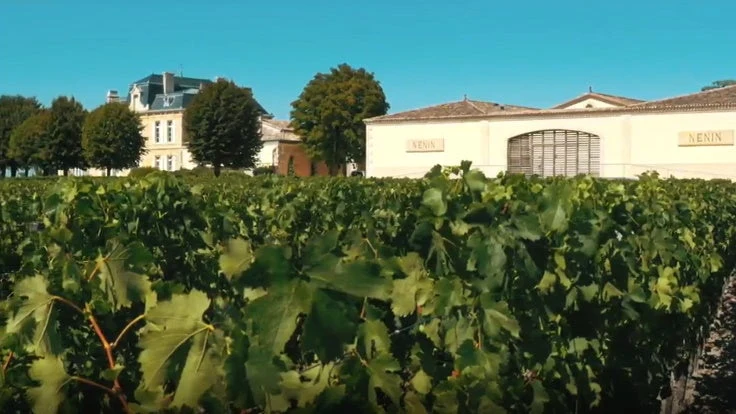
Merlot on Pomerol clay-gravel
- Falstaff Winery - 3 Stars · 2026
- Michelin Main Selection · 2026
- Pearl 4 Star Prestige · 2025
Stewardship on the Pomerol plateau
The decisions start in the vineyard, where Jean-Hubert Delon works as winemaker at Château Nénin in Pomerol, Libourne, holding a Bordeaux estate to its ground rather than to fashion. That sense of ground is the point: the vineyard is not treated as a backdrop, but as the first place where the château’s direction is set, before selection, proportion or release are allowed to take shape. Jean-Hubert Delon also stands behind Château Léoville Las Cases and Château Potensac, a set of houses that asks for continuity, restraint and a clear reading of place. The link between them is not a gesture of style, but a steady insistence that each house should remain legible on its own terms. At Château Nénin, that reading begins with Merlot, supported by Cabernet Franc and Cabernet Sauvignon, inside the frame of Pomerol AOC. Ownership here is not decorative. It sits close to selection, proportion and release, the quiet work of deciding what the château can carry in a given year and what should stay in the background.
Clay, gravel and a Merlot-led discipline
Château Nénin is large for Pomerol, with 32 hectares set on clay-gravel soils. The estate names silica-rich clay, gravel, quartz, granite, iron and basalt pebbles as part of that ground, a mixed geology that gives the vineyard more than one register. Merlot leads the program, as it often does on this side of Bordeaux, but the presence of Cabernet Franc and Cabernet Sauvignon matters; they are part of the structure available to the hands in the cellar. The wines are described in the house’s own orbit as racy, powerful and complex, with freshness and purity of fruit. Those words point toward a style that needs both weight and lift. In practice, the discipline is less about announcing concentration than preserving line: fruit that remains clear, tannin that can take time, and a finish that keeps the clay and gravel in view. The château works conventionally, at a scale that is still small in the wider wine world but substantial for this appellation.
A quiet cellar for a powerful place
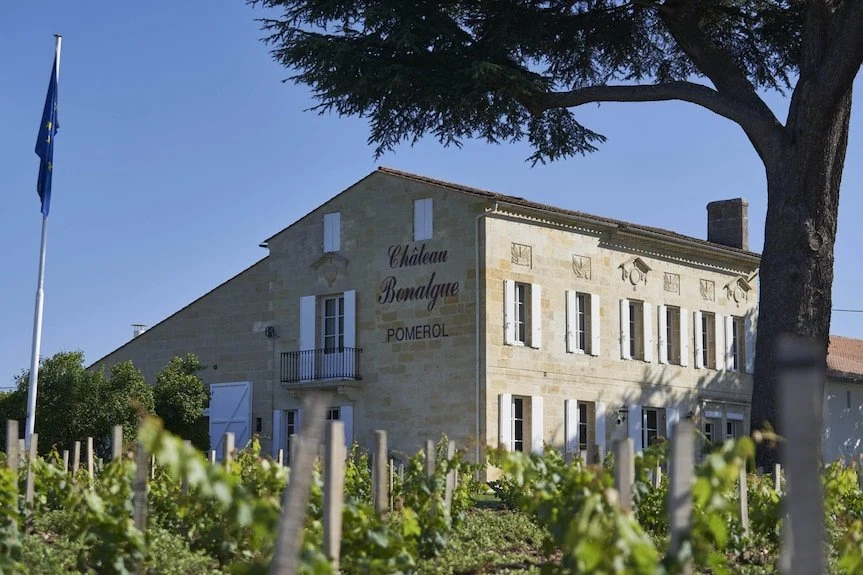
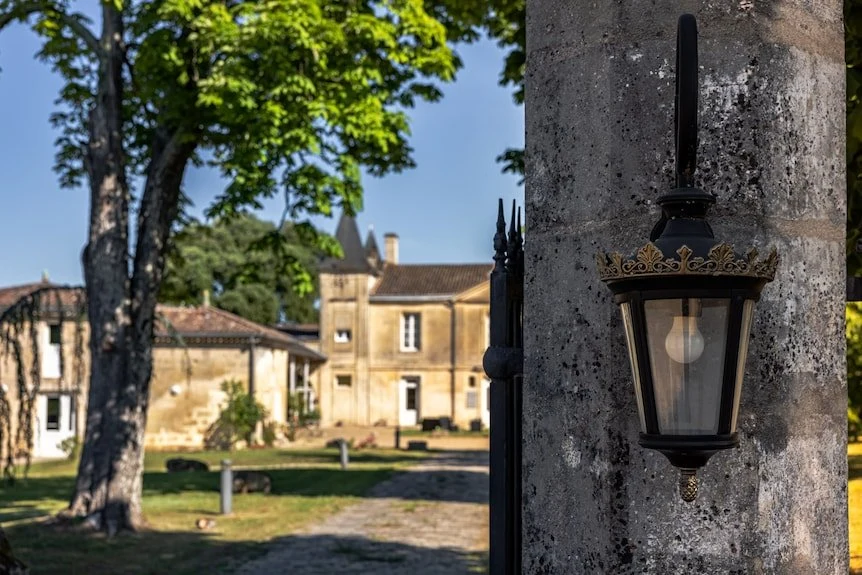
The atmosphere around the work is classic and refined, with modernized facilities set among historic Pomerol vineyards. This is not a loud room. The cellar and tasting room belong to a quieter register, one suited to decisions that reveal themselves slowly: a vat kept apart, a parcel held in reserve, a blend tightened by a small movement rather than a grand gesture. Outside, the plateau gives the estate its first vocabulary. Inside, the cellar translates it through still red wine, Merlot at the center, Cabernet Franc and Cabernet Sauvignon in support. Château Nénin’s scale gives Delon room to work across variation without losing the house line. The close of the craft remains concrete: clay, gravel, under Château Nénin.
Questions
Frequently asked
Who makes the wines at Château Nénin?
Jean-Hubert Delon works as winemaker at Château Nénin in Pomerol. He also stands behind Château Léoville Las Cases and Château Potensac.
What kind of vineyard site does Château Nénin have?
The estate sits on 32 hectares in Pomerol on clay-gravel soils. The ground is described as including silica-rich clay, gravel, quartz, granite, iron and basalt pebbles.
What grapes are used here?
Merlot leads at Château Nénin, supported by Cabernet Franc and Cabernet Sauvignon.
How can visits be arranged?
Visits are by appointment only. The dress code is smart casual, and there is on-site parking.
The field
How it compares
| Place | Notes |
|---|---|
| Château Nénin | Pomerol, $$$$ |
| Château Bonalgue | Libourne |
| Chateau Fleur de Jean Gue | Libourne |
| Château Haut-Maillet | Libourne |
| Château Lagrange à Pomerol | Libourne |
| Château Taillefer | Libourne |
| Château Tauzinat l'Hermitage | Libourne |