Chapter One
- 01CuisineModern European Fine Dining
- 02CityLondon, United Kingdom
Nordic restraint, European sauce work
- Michelin Plate · 2026
- AA Rosettes 3 Rosettes · 2026
- The Good Food Guide GFG Very Good · 2025
- Michelin Plate · 2025
- Michelin Plate · 2024
- Opinionated About Dining Classical in Europe Ranked #164 · 2024
- Opinionated About Dining Classical in Europe Highly Recommended · 2023
- Opinionated About Dining Classical in Europe Ranked #99 · 2023
Sweetness against smoke at the pass
Chapter One in London sets sweetness against smoke, keeping acidity and richness in conversation rather than competition. There are no big tricks in the plates: each element sharpened, each garnish made to carry weight, nothing added for noise.
The house identity has been shaped over many years by Andrew McLeish, executive chef and owner, whose training included the Ritz and Chez Nico under Nico Ladenis. What he inherited there was a taste for sophistication carried by flavour rather than by ornament, and it is still the working discipline: modern European cooking, controlled seasoning, a preference for balance over display, and the kind of plate that asks the pass to stay exact. Suppliers are chosen at the top of the market, and the dishes are built to taste strongly of their components without overcomplication.
Modern European technique without the noise
The program at Chapter One is built around a la carte cooking and a set menu, with modern European technique as the working language. The kitchen reaches for luxury ingredients, but the gesture is usually classical: roasting, grilling, veloute, puree, a sauce set cleanly against protein. Venison tartar, halibut with lobster and truffled mash sit naturally in that grammar, as do Sladesdown Farm duck, Cornish monkfish, Skrei cod and new-season Kentish lamb when the menu turns toward them.
McLeish's side of the house has long favoured strong components rather than decorative complexity. A duck galantine can take pickled walnut puree, celeriac remoulade and hazelnut dressing without losing its line. Tandoori Cornish monkfish meets courgette tzatziki, scorched cucumber, coriander and pomelo dressing. Roast Skrei cod has appeared with sauteed spinach, chive, pomelo and potato veloute. The brasserie adds a more direct register, including Josper-grilled steaks, oysters and Chicken Milanese, but the same rule applies: heat, seasoning, sauce and garnish have to land together.
A bright room with a formal pulse
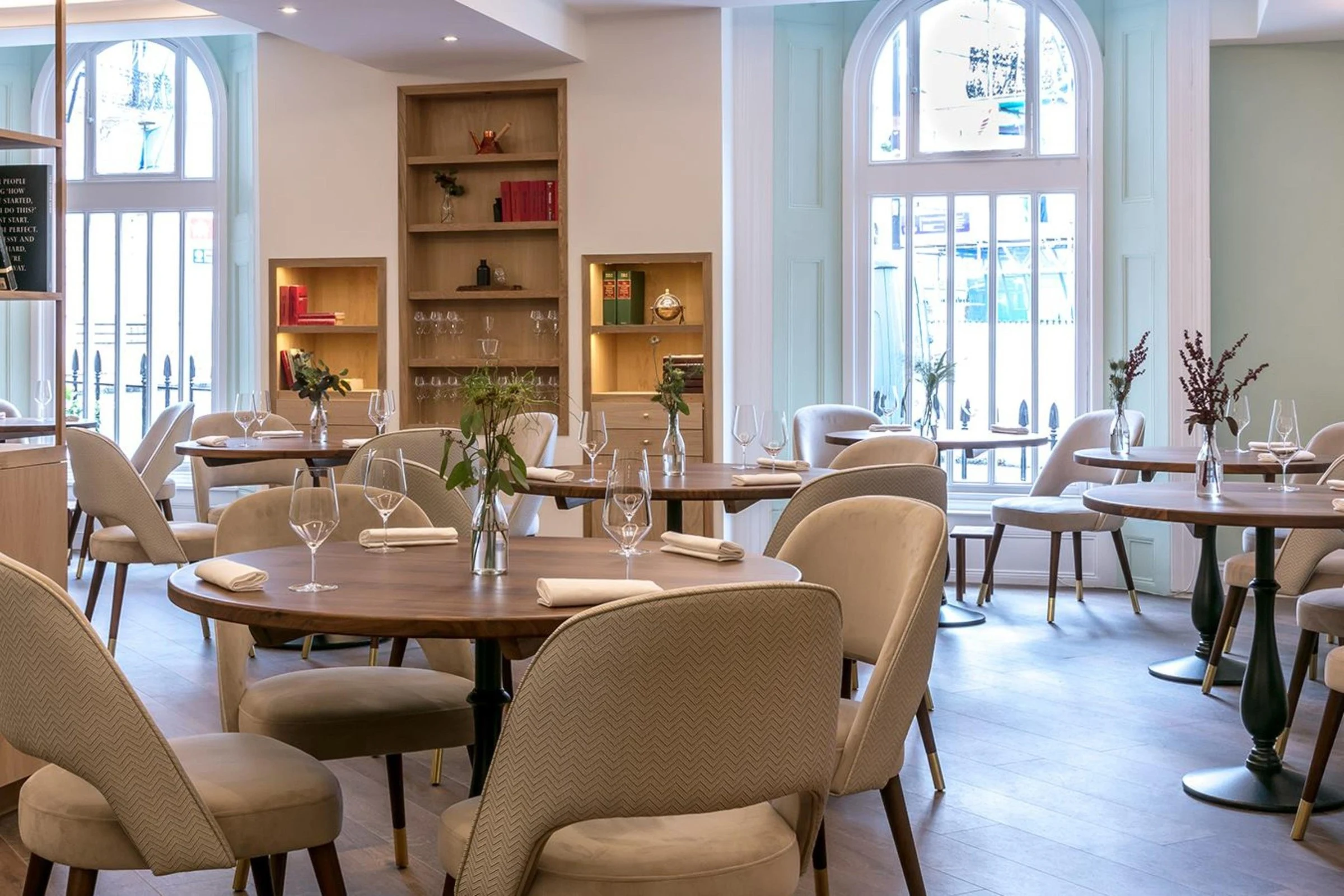
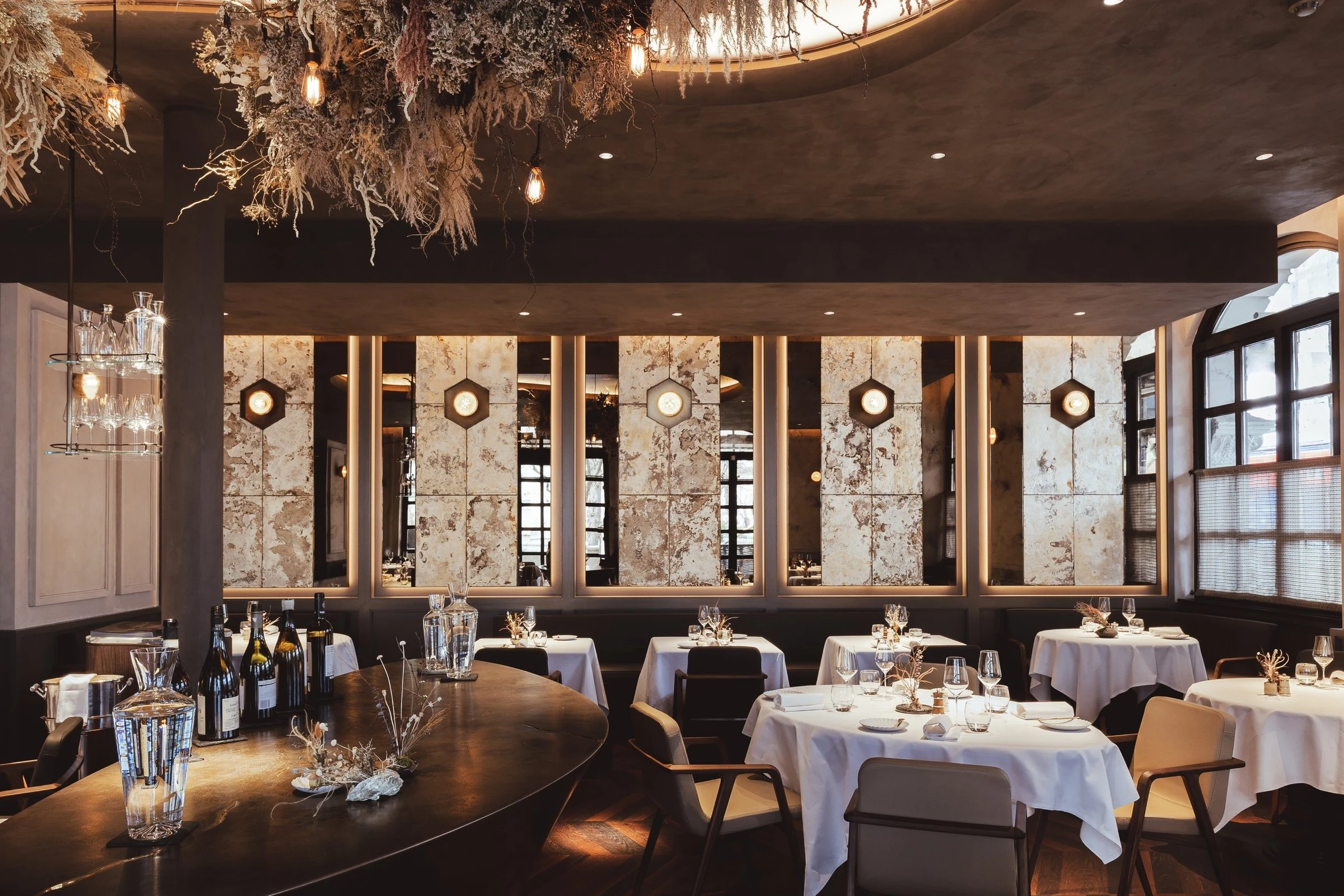
The room at Chapter One is bright, modern and spacious, with an elegance that avoids fuss. Crisp linen, gastronomic artwork and a well-drilled front of house give the main restaurant its formal pulse, while the wider house includes a bar, brasserie and covered terrace. The noise stays conversational. Plates move through a dining room designed for attention, not theatre.
That matters to the cooking. A dish such as halibut with lobster needs the pass to protect temperature and sauce texture; truffled mash asks for restraint, because too much perfume can flatten the plate. In the room, those decisions arrive quietly. The guest sees the finished surface, but the work has already happened at the bench, in the oven, under the salamander, and in the last spoon of jus before the plate leaves the pass.
The local discipline holds
Chapter One has held 3 AA Rosettes and has a history of Michelin recognition, including a star that belonged to this Locksbottom address until 2007. Those figures are useful only because they point back to a longer habit: a suburban dining room on Farnborough Common working at a level that keeps technique visible without turning it into display.
The menu is where the house states its position, not the announcement. The seasonal plates carry it, especially when game, Cornish fish or Kentish lamb gives the kitchen something with enough character to stand up to the sauce work at Chapter One.
Questions
Frequently asked
What kind of restaurant is Chapter One?
Chapter One is a modern European fine dining restaurant in Locksbottom, with an a la carte menu and a set menu.
Who is behind the kitchen?
The house is shaped by Andrew McLeish, who is executive chef and owner.
What dishes is Chapter One known for?
The menu includes venison tartar, halibut with lobster and truffled mash, and the wider kitchen also works with dishes such as Sladesdown Farm duck, Cornish monkfish, Skrei cod and Kentish lamb.
What recognition does Chapter One hold?
It holds three AA Rosettes and has a history of Michelin recognition, including a star at this Locksbottom address until 2007.
How should bookings be made?
Reservations are recommended, and bookings are taken directly.
The field
How it compares
| Place | Cuisine | Notes | Awards |
|---|---|---|---|
| Chapter One | Modern European Fine Dining | Farnborough, $$$ | · |
| CORE by Clare Smyth | Modern British Fine Dining | London | Michelin 3 Stars, World's 50 Best |
| Ikoyi | Modern West African Fine Dining | London | Michelin 2 Stars, World's 50 Best |
| Kitchen Table | Modern British Fine Dining | London | Michelin 2 Stars |
| KOL | Modern Mexican Fine Dining | London | Michelin 1 Star, World's 50 Best |
| Row on 5 | Modern British Fine Dining with Mediterranean & Asian Influences | London | Michelin 2 Stars |
| The Ledbury | Modern British Fine Dining | London | Michelin 3 Stars, World's 50 Best |
Similar places
Modern British Fine Dining
CORE by Clare Smyth
London, United Kingdom
★★★ · 50 Best
Modern West African Fine Dining
Ikoyi
London, United Kingdom
★★ · 50 Best
Modern British Fine Dining
Kitchen Table
London, United Kingdom
★★
Modern Mexican Fine Dining
KOL
London, United Kingdom
★ · 50 Best
Modern British Fine Dining with Mediterranean & Asian Influences
Row on 5
London, United Kingdom
★★
Modern British Fine Dining
The Ledbury
London, United Kingdom
★★★ · 50 Best