Château Moya
- 01CityFronsac, France
Organic Merlot on clay-limestone
- Falstaff Winery - Listed · 2026
The hill sets the cellar’s pace
Clay and limestone set the first terms before Damien Landouar, Winemaker at Château Moya in Fronsac, brings the fruit inside. His work here sits within Vignobles Sullivan, where he has served as Director General since 2016, holding estate direction and cellar responsibility in the same frame. Château Moya joined that group in 2019, after its first vintage in 2009, and Landouar’s task is less reinvention than calibration: keeping a Castillon Côtes de Bordeaux wine legible from vintage to vintage, with Merlot carrying the house character and Cabernet Sauvignon adding its line of structure. His formation is agronomic as much as oenological; he studied at Vayres Rural Institute after a degree in agronomy, and the vineyard remains the place where the method begins. The estate does not present Château Moya as a tourism stage. It reads as a working right-bank property, certified organic, with decisions made for still red wine and for the continuity of the label. The 2012 Château Moya and 2015 Château Moya remain useful reference points for that continuity, two releases under the same name, separated by vintage rather than by intention.
Merlot from a clay-limestone rise
The vineyard is small enough for choices to stay close to the bench: 20-acre on a clay-limestone hill, about 230 feet above the valley floor, with vines averaging 39 years of age. Since the 2013 vintage, the estate has carried ECOCERT organic certification, a discipline that puts soil health and canopy decisions ahead of correction in the cellar. The blend is published as 93% Merlot and 7% Cabernet Sauvignon, a right-bank shape that suits Castillon’s slightly warmer, drier position east of Saint-Émilion and south of Fronsac. Landouar and the team ferment in both wood tanks and stainless steel, using one vessel for texture and the other for fruit clarity. The barrel program follows a plain ratio, 50% new barrels and 50% used barrels. That balance matters. Too much new oak would take command of a wine built on ripe red fruit; too little would leave the frame without enough seasoning. Château Moya’s production remains boutique in scale, between 30,000 and 40,000 bottles annually since 2009.
A quiet vineyard above the valley
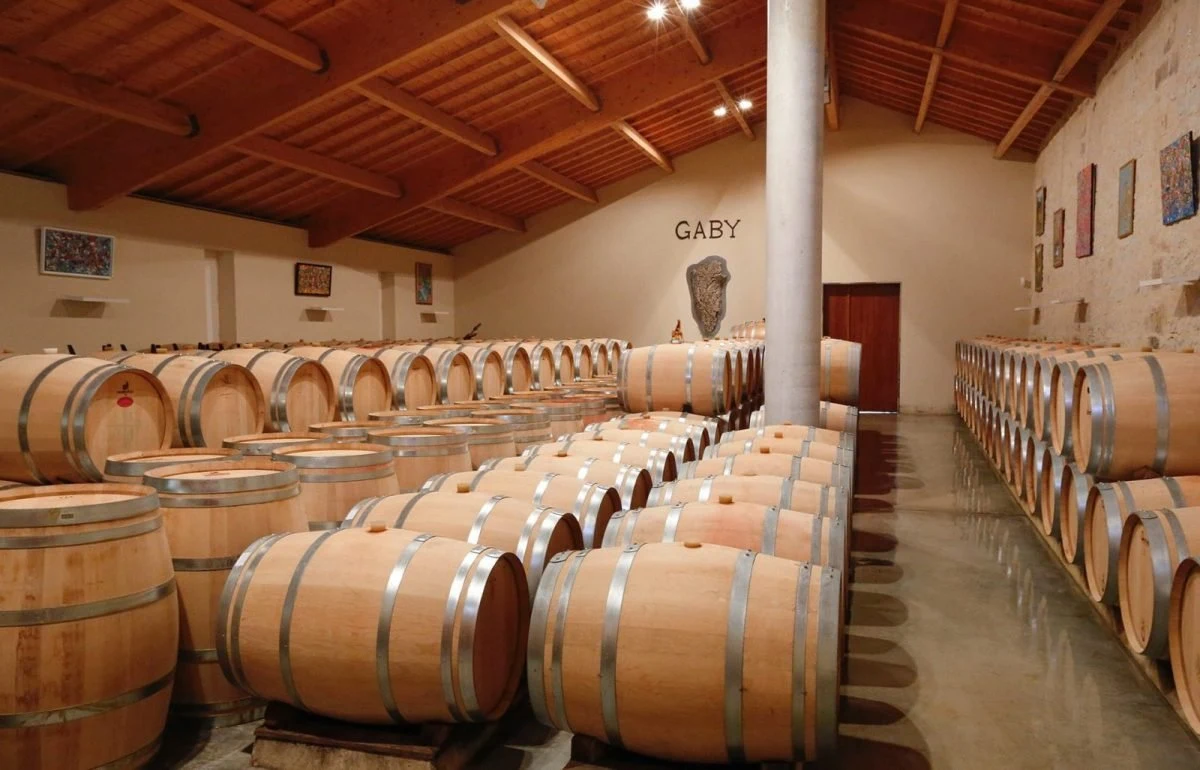
The cellar’s work belongs to a hilltop rather than a courtyard. From the estate, the view runs 360-degree across vineyards near Saint-Émilion and Fronsac, and the quiet changes how the place feels: not withdrawn, but focused. The tasting room and vineyard tour sit within that rural pace, secondary to the vines and to the cellar program that follows them. Rows of Merlot take the sun on the clay-limestone slope; Cabernet Sauvignon has a smaller role, but a clear one. In the warehouse and cellar, the distinction between stainless steel, wood tank, new barrel, and used barrel is not decorative language. It is the architecture of the wine. Château Moya asks to be read through those parts, with the 2015 Château Moya still carrying the name of the place in the glass.
Questions
Frequently asked
What is Château Moya known for?
Château Moya makes organic Merlot-led Bordeaux from a clay-limestone hill in Fronsac, within Castillon Côtes de Bordeaux. The blend is published as 93% Merlot and 7% Cabernet Sauvignon, with Cabernet Sauvignon adding structure.
Who is responsible for the wine here?
Damien Landouar is the winemaker at Château Moya, and he has also served as Director General of Vignobles Sullivan since 2016. His background is agronomic as well as oenological, and he studied at Vayres Rural Institute after a degree in agronomy.
How is the wine made?
The estate ferments in both wood tanks and stainless steel, and the barrel programme is split evenly between new and used barrels. Since the 2013 vintage, Château Moya has carried ECOCERT organic certification.
Can you visit Château Moya?
The estate presents itself as a working right-bank property rather than a tourism stage, but it does include a tasting room and vineyard tour. Visits are by appointment only, and there is on-site parking.
The field
How it compares
| Place | Notes |
|---|---|
| Château Moya | Castillon Côtes de Bordeaux, $$$ |
| Château Arnauton | Fronsac |
| Château Barrabaque | Fronsac |
| Château Chadenne | Fronsac |
| Château de Carlmagnus | Fronsac |
| Château Gaby | Fronsac |
| Château Toumalin | Fronsac |