Coffee & Co
- 01CityTbilisi, Georgia
Coffee at counter scale
Process carried to the counter
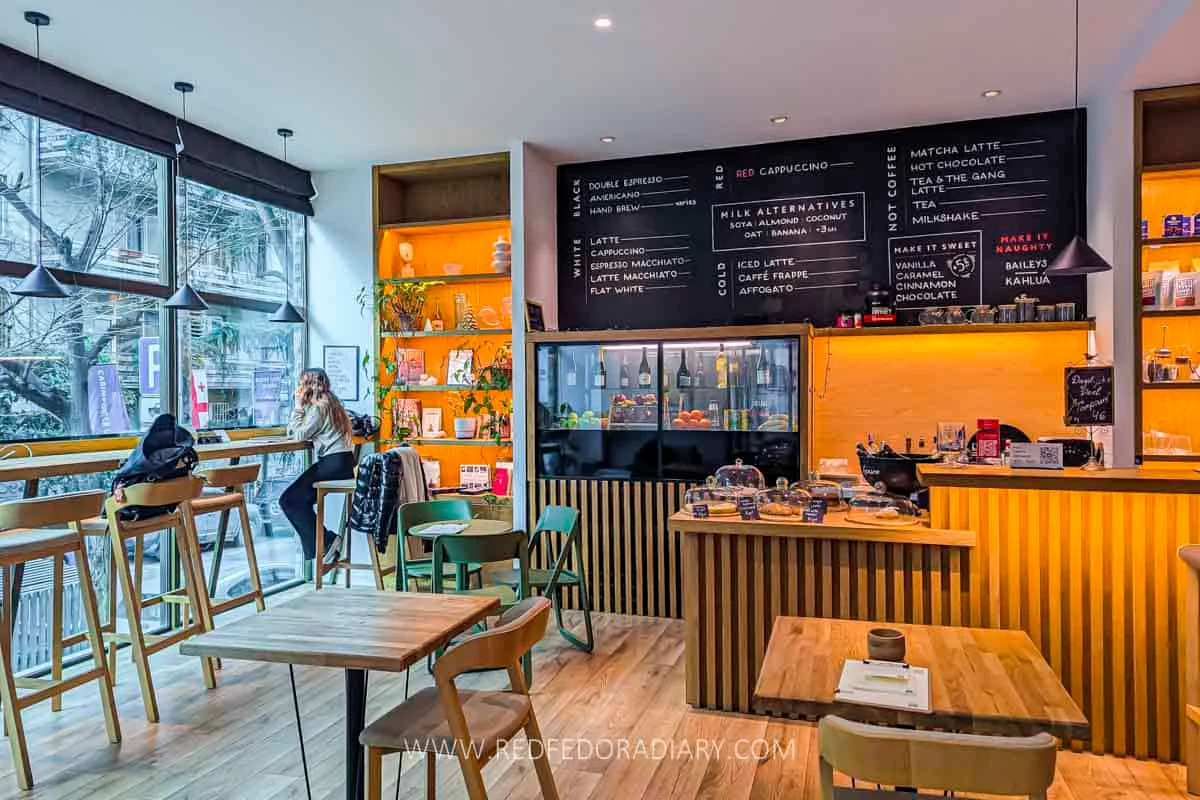
The coffee brief sits at counter height at Coffee & Co in Tbilisi, where the station is small enough that each gesture lands in the room: the cup set down, the order called, the short exchange across the counter before the next drink begins. The café opened in 2024 and works in a Cafe and European frame, with coffee as the stated centre and counter service instead of a long dining-room pass.
That format changes what craft means. A kitchen can hide stages of preparation behind doors; a small coffee counter lets almost none of the sequence disappear. The grind, the dose, the pour, the handover and the reset all happen close to the guest, so repeatability becomes part of the hospitality rather than a technical concern kept out of sight.
A small room, fifteen places
Coffee & Co seats up to fifteen people across indoor and outdoor places, which makes it closer to a bench-side encounter than a broad dining room. The scale asks the service to stay quiet and exact. A cup travels only a short way before it reaches the table; conversation sits near the counter; the outdoor seats keep the street in view while the indoor seats hold the work close.
The atmosphere is charming, intimate and relaxed, and the footprint is integral to it. A café this size cannot rely on spectacle. It has to earn its pace through proportion, temperature and the attention of whoever is working the station, which is a narrow frame with very little room for excess.
The craft stays close
The venue does not make a long list of claims, and there is no published account of a founder, a roasting programme or a house origin story to lean on. What the room offers instead is the fit between a beverage-led rhythm and a space where the counter, the room and the guest are never far apart.
Judgement in a place like this comes through repetitions rather than declarations: the next order, the next cup, the next reset of a fifteen-seat room. A café counter is one of the few trades where the guest watches the entire production cycle from start to finish, several times over, in the space of a short visit. Any drift in the routine is visible immediately, and so is its correction.
Coffee & Co has been open since 2024, which is a short record and an honest one. What the room has to show for it is the arrangement itself: fifteen places, indoors and out, and the counter close enough that a cup can be handed over rather than delivered. A café that size cannot carry a large menu or a broad kitchen, so what it sells is the drink and the handover, in that order.
Everything else follows from those two things. Seating that small keeps the service personal by necessity rather than by policy, and the split between indoor and outdoor places gives the room two speeds, one for staying and one for passing through Tbilisi with a cup in hand.
Questions
Frequently asked
What kind of place is Coffee & Co?
Coffee & Co is a counter café in Tbilisi, opened in 2024, with coffee at the centre and a Cafe and European frame.
How many people does it seat?
The café seats up to fifteen people across indoor and outdoor places.
What is the service style like?
Service happens at the counter rather than through a long dining-room pass, so the order, the cup and the handover all stay close to the guest.
Is Coffee & Co walk-in friendly?
Yes, Coffee & Co is walk-in friendly.
The field
How it compares
| Place | Notes | Cuisine |
|---|---|---|
| Coffee & Co | Tbilisi, $ | · |
| Andytown | San Francisco | cafe |
| Fuku | Amsterdam | · |
| La Cabra Coffee Roasters | Copenhagen | · |
| Le Café By Nicolas Rouzaud | London | · |
| MOK Coffee | Brussels | · |
| Vacation Coffee | Melbourne | · |