Costa di Bussia
- 01CityMonforte d'Alba, Italy
- Falstaff Winery - Listed · 2026
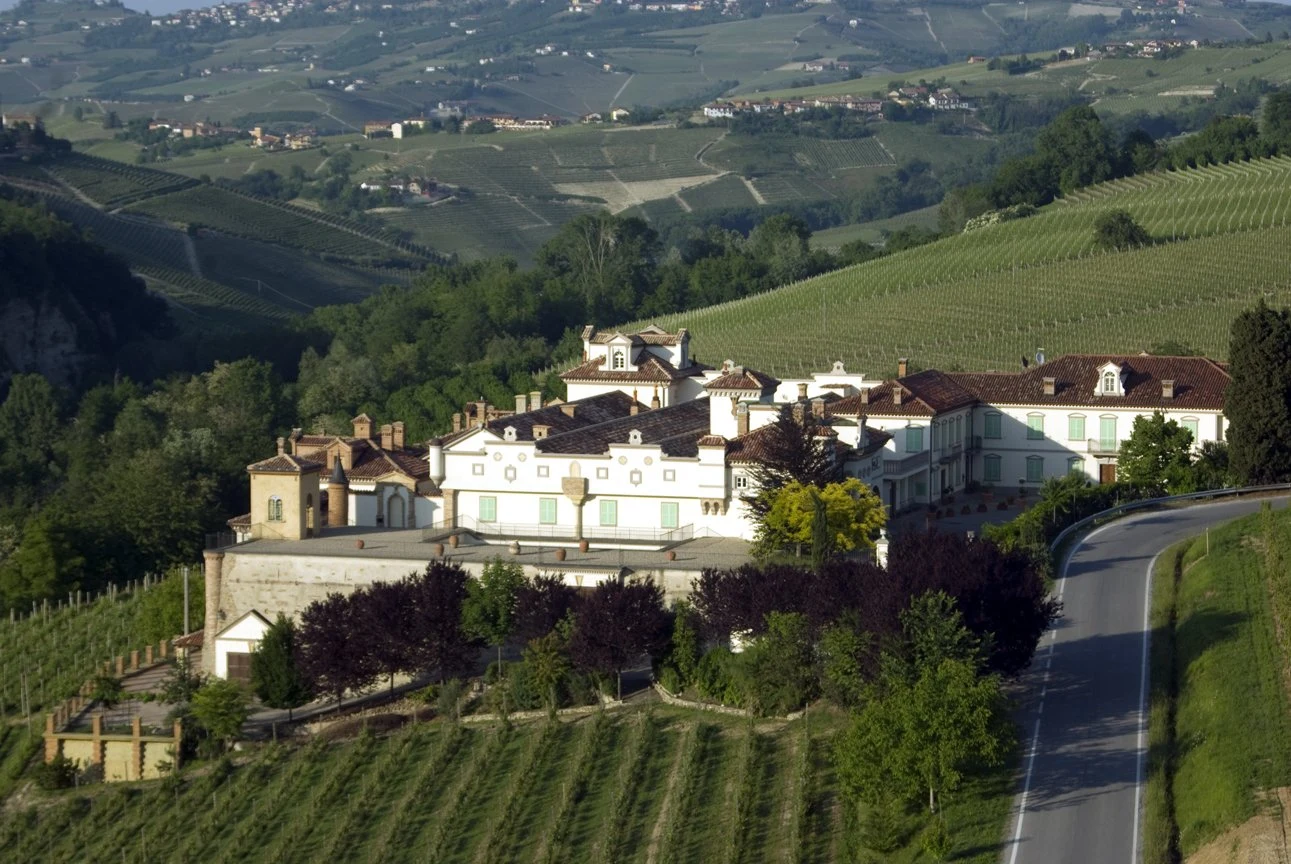
Approaching a Barolo estate on Bussia hill is a reminder that the Langhe is not a backdrop for wine, but the machinery behind it. Vine rows fold across the slopes between Monforte d’Alba and Barolo, and the old cascina format gives the experience a rural scale: farmhouse, cellar, tasting room, museum, and vineyards close enough to make the sequence feel connected rather than staged. Costa di Bussia belongs to that older grammar of Piedmont hospitality, where the landscape comes before the label.
For travellers mapping Monforte d’Alba, this is a useful counterpoint to the restaurant-and-village circuit. The town’s wine identity is built on slope, exposure, Nebbiolo, and long memory; the more interesting visits explain those forces without turning them into theatre. For wider planning, pair winery time with our full Monforte d'Alba restaurants guide, our full Monforte d'Alba hotels guide, our full Monforte d'Alba bars guide, our full Monforte d'Alba wineries guide, and our full Monforte d'Alba experiences guide.
Bussia hill, read through Nebbiolo rather than decoration
Barolo often gets flattened into prestige language, but Bussia is more precise than that. The hill’s identity sits in the relationship between clay-marl and sandstone-marl soils, with Nebbiolo as the main interpreter. Costa di Bussia works from 11 estate hectares, planted chiefly to Nebbiolo, with Barbera, Dolcetto, and Chardonnay completing the vineyard picture. That proportion matters: the visit is anchored in Barolo and Langhe reds, not a broad, international tasting-room catalogue.
The estate’s production follows an estate-grown model, which gives the tasting a clear through-line. The point is not simply that the wines come from a famous appellation; it is that the same hill, farmed in parcels and expressed across several bottlings, becomes the subject. Barolo D.O.C.G. appears in multiple forms, including Bussia, Bussia Vigna Campo dei Buoi, Bussia Luigi Arnulfo, and Bussia Riserva. Around that core sit Barbera d’Alba, Dolcetto d’Alba, Langhe Chardonnay, Langhe Nebbiolo Arcaplà, Barolo Chinato, and Grappa di Barolo.
That range tells a useful story about the Langhe. Nebbiolo carries the region’s intellectual weight, but local drinking culture is broader: Dolcetto for immediacy, Barbera for acidity and table use, Chinato and grappa for the after-dinner register. A focused estate tasting can show that hierarchy more clearly than a wine bar flight because the differences are tied to one property’s land rather than assembled from unrelated producers.
A 1874 estate where history is part of the format
The heritage here is concrete. Luigi Arnulfo founded the estate in 1874, and the property is also known as Tenuta Arnulfo. The late 19th-century export story gives the estate more than local age: Arnulfo shipped Barolo to California, and historic bottles from 1874 and 1883 were later found in the farmhouse. In a region where tradition is often used loosely, those dates create a sharper frame for understanding Monforte’s place in the international history of Barolo.
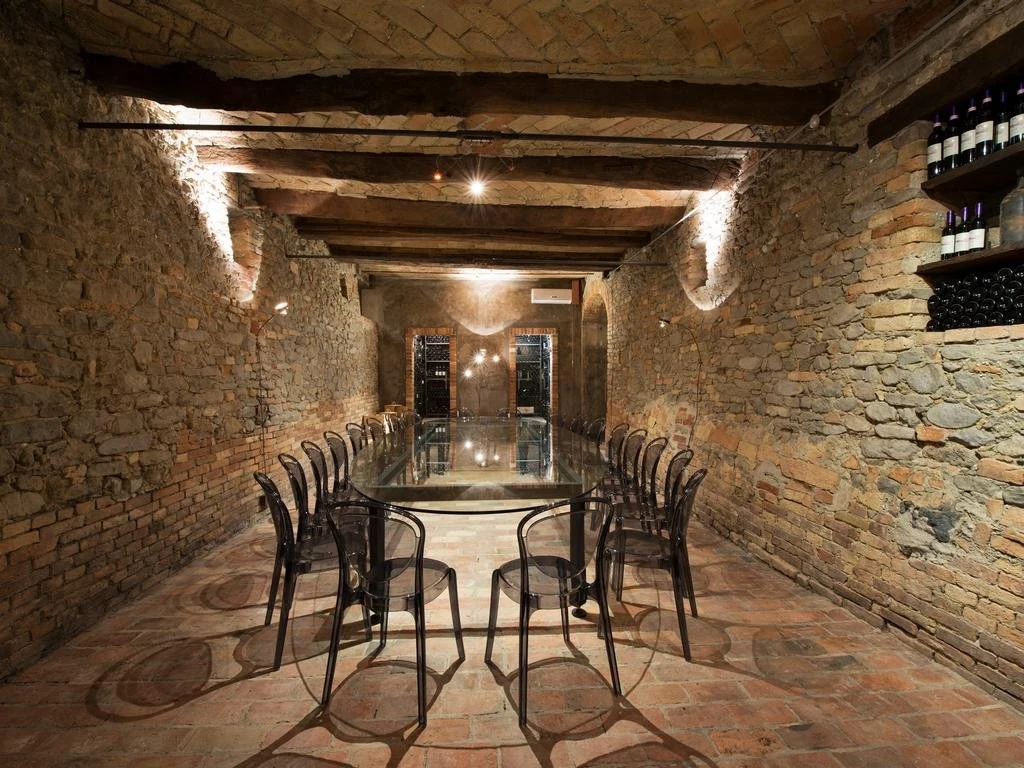
The museum is the part of the visit that keeps that history from becoming decorative. It sits alongside vineyard and cellar touring, so the chronology of the estate is connected to production rather than separated into a heritage display. For travellers with a serious interest in Piedmont, that combination has value: Barolo’s modern reputation can feel inevitable from a distance, but estates like this show the commercial, agricultural, and export decisions that helped build it.
Farmhouse setting also changes the rhythm of the experience. Costa di Bussia includes a small agriturismo in what was once Arnulfo’s apartment, with three rooms and a shared living kitchen. That matters for the Langhe because wine travel here rewards slower pacing. A day structured only around tastings can blur; staying close to the vineyards makes the region’s agricultural logic easier to understand, especially when vineyard, cellar, and village meals occupy the same small radius.
How to place it within a Monforte d'Alba wine itinerary
Monforte d’Alba is dense with serious wine addresses, and the stronger itinerary is not the one that chases quantity. It is the one that builds contrast: historic estates, different cru expressions, family-scale visits, and meals that keep the palate grounded in Piedmont rather than in tasting-room abstraction. Costa di Bussia fits the heritage-and-terroir slot, particularly for travellers who want Bussia explained through an estate property rather than only through finished bottles.
Nearby planning can sensibly include other Monforte winery pages such as Aldo Conterno, Amalia Cascina in Langa, Attilio Ghisolfi, Azienda Agricola Elio Grasso, and Azienda Agricola Giacomo Fenocchio. Those links belong in the planning layer, not as a ranking exercise: Barolo travel is more revealing when each stop has a defined purpose.
The tasting formats here include guided tastings, vineyard tours with tasting, and museum visits with tasting, offered in Italian and English. The atmosphere is quiet and rural, with outdoor space and vineyard views as part of the estate’s appeal. It is better suited to wine education, a romantic rural stay, a small group, or a solo traveller building a serious Langhe itinerary than to a high-energy social tasting.
The practical read is simple: come for Bussia, not for breadth. The strongest reason to put Costa di Bussia into a Monforte schedule is its concentration of signals: an 1874 founding, 11 estate hectares, a museum linked to the founder, a Barolo D.O.C.G. focus, and an agriturismo that keeps the experience within the vineyard landscape. In a region where many visits can feel polished into sameness, this one is useful because it keeps the land, the farmhouse, and the historical record in the same conversation.
Travellers extending wine research beyond Piedmont can also compare how estate identity changes across regions through 3GP SRL in Treviso, 47 Anno Domini in Trebaseleghe, A Mano Wine in Noci, »der Steiner« Hans Steiner in Podersdorf am See, and & Handwein in Mannheim.
Questions
Frequently asked
How expensive is Costa di Bussia?
Costa di Bussia is listed at a price level of $$.
The field
How it compares
| Place | Notes |
|---|---|
| Costa di Bussia | Bussia, $$ |
| Aldo Conterno | Monforte d'Alba |
| Giacomo Conterno | Monforte d'Alba |
| Gianfranco Alessandria | Monforte d'Alba |
| Parusso | Monforte d'Alba |
| Piero Benevelli | Monforte d'Alba |
| Tre Pile | Monforte d'Alba |