Dindo
- 01CityFumane, Italy

Appassimento above Fumane
- Falstaff Winery - Listed · 2026
Third generation on Mount Sant'Urbano
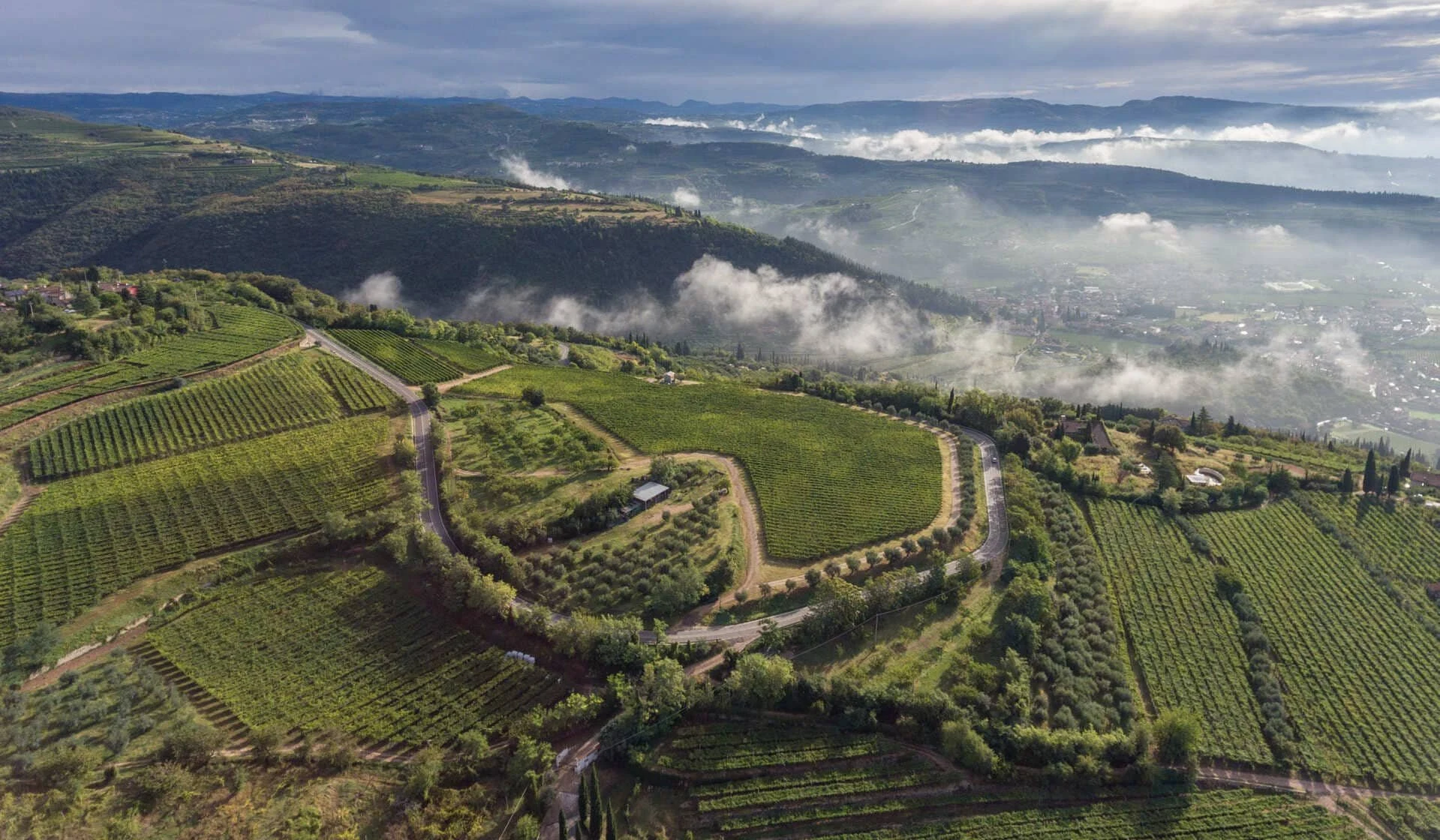
Hand selection starts before the cellar decides anything. Giovanni Dindo, winemaker at Dindo in Fumane, works from the family estate on Mount Sant'Urbano, where the vineyard looks down over the town and the valley below. The house began in the 1960s, and Giovanni now carries the third generation's charge: Valpolicella Classica read through family practice, clay and limestone, and the varieties that define the place, Corvina, Corvinone, Rondinella and Molinara.
His lineage is not presented as ornament. It sits in the daily sequence of the estate, from fruit brought in by hand to the choices made for Valpolicella, Ripasso, Amarone and Recioto. Giovanni speaks of love and respect for the territory, traditional methods, and the use of newer technique where it serves the glass. That is the local discipline here. The predecessor is the family itself, generations of Dindo hands holding the same brief without turning it into a museum piece.
Appassimento as the long way
The work has its own calendar. For Amarone della Valpolicella, Dindo uses hand-harvested grapes dried for 4 months, a traditional appassimento that concentrates the berries until each grape loses about 40% of its weight. After pressing, the must macerates for 30–40 days at 18°C, then the wine ages for 3 years in barriques and large oak casks. The figures matter because they are not decorative. They tell you where the wine gets its density.
Valpolicella follows a different line: maceration on skins for about 10 days at 25–28°C, first fermentation in stainless steel, then about one year in oak. Ripasso is made by passing Valpolicella back over Amarone pomace for about 15 days at low temperature, with another year in oak. Recioto takes the cellar further into patience, with grapes dried for 5–6 months, sugars concentrated to 100–120 g/L, and a 30-day maceration at 18°C before resting in steel tanks for six months at low temperature.
The cellar above Fumane
The place is small enough for the owners' presence to change the room. Tastings at Dindo are guided, close to the work, and often shaped by Giovanni and Sara answering questions as the wines move from classic Valpolicella into the heavier register of Amarone and the sweetness of Recioto. The cellar spaces are simple, the tasting room conversational, and the view from Mount Sant'Urbano keeps the vineyard in sight rather than turning it into a backdrop.
That intimacy suits an estate of about five hectares. The bench here is the vineyard, the drying room, the cask, the glass on the counter. Nothing needs to be inflated. The method is visible in the order of the wines and in the way the same grapes can become Valpolicella Classico, Valpolicella Ripasso Classico Superiore, Amarone della Valpolicella Classico and Amarone della Valpolicella Classico Riserva 2017.
Questions
Frequently asked
Who makes the wines at Dindo?
Giovanni Dindo is the winemaker at Dindo in Fumane, working from the family estate on Mount Sant'Urbano. The estate is now in its third generation.
What wines does Dindo make?
The estate makes Valpolicella, Ripasso, Amarone and Recioto, using the varieties that define Valpolicella Classica: Corvina, Corvinone, Rondinella and Molinara.
How are the wines made?
Dindo works with hand selection and traditional methods, including appassimento for Amarone and Recioto, and ripasso for its Ripasso wine. Newer technique is used where it serves the glass.
Can you visit Dindo without an appointment?
Visits are by appointment only, and tastings are guided in the cellar.
The field
How it compares
| Place | Notes |
|---|---|
| Dindo | Valpolicella Classica, $$ |
| Allegrini | Fumane |
| Corteforte | Fumane |
| Le Banchette | Fumane |
| Le Bertarole | Fumane |
| Secondo Marco | Fumane |
| Stefano Accordini | Fumane |