Made ByWinery
- Michelin Main Selection · 2026
- Falstaff Winery - Listed · 2026
- Pearl 2 Star Prestige · 2025
The Sunday letter
Find new places through the people who run them.
Our Sunday email brings you the chefs, winemakers and hoteliers behind our newest stories. See a sample before you subscribe.
See a sample of the Sunday emailOne email a week. Unsubscribe from any issue.
The southern Côte de Beaune in Burgundy produces the region's most undervalued white-wine sites, parcels where vineyard fundamentals and pricing sit decisively out of alignment with the recognition structure that governs Grand Cru allocation lists. Domaine Bachelet-Monnot, founded in 2005 by brothers Marc and Alexandre Bachelet from a combination of family vineyards and long-term leases from their father (Bachelet) and uncle (Monnot), sits at the centre of that value-arbitrage opportunity, operating as a young négociant-domaine with holdings across Maranges, Santenay, Puligny-Montrachet, and Chassagne-Montrachet. The domaine entered production during Burgundy's shift toward precision viticulture and minimal-intervention cellar practice, a generation after the Leflaive and Ramonet houses set the technical floor for oxidative-style white Burgundy, and sits now as one of the clearest exemplars of the contemporary low-sulfur school applied to southern Côte de Beaune fruit.
Bachelet trained in Burgundy's négociant structure and worked harvests across the Côte before establishing the domaine with approximately ten hectares under management, split between owned parcels and long-term grower contracts. The holdings cluster in Maranges and Santenay, both appellations historically underpriced relative to their northern neighbors, with smaller parcels in Puligny-Montrachet Premier Cru and village Chassagne. The first commercial vintage, 2005, entered the market at a point when the southern Côte was beginning to attract allocations from American and northern European importers seeking volume alternatives to the oversubscribed Grand Cru sites further north. Bachelet-Monnot's production model follows the classic Burgundy négociant-domaine split: roughly sixty percent of fruit comes from owned parcels farmed under domaine supervision, forty percent from contracted growers whose vineyards Bachelet manages or advises during the growing season. That ratio places the operation between pure domaine holdings (Domaine Leflaive, Domaine Ramonet) and pure négociant models (Maison Louis Jadot, Maison Joseph Drouhin), and reflects the capital structure available to a young operation.
The cellar protocol at Bachelet-Monnot sits decisively inside the oxidative-handling, low-sulfur school that has shaped white Burgundy since the early 2000s, when a cohort of younger winemakers, many trained under Jean-Marc Roulot at Domaine Roulot in Meursault or influenced by the Coche-Dury cellar practice, began extending lees contact, reducing sulfur additions at crush and at bottling, and treating barrel oxidation as a textural tool rather than a flaw to be managed. Bachelet ferments in barrel with indigenous yeast, does not rack during élevage, and bottles with minimal sulfur, typically under thirty parts per million free SO2 at release, well below the fifty to seventy ppm baseline common in Burgundy through the 1990s. Lees stirring (bâtonnage) is applied selectively and varies by cuvée: Premier Cru parcels in Puligny-Montrachet receive light bâtonnage during the first six months of élevage to build mid-palate weight, while village-level Maranges and Santenay bottlings are left on gross lees without stirring to preserve primary fruit clarity. The cellar uses a high percentage of new oak, roughly thirty to forty percent across the range, with Premier Cru bottlings seeing fifty percent new cooperage, but the barrels are sourced from coopers who work with low-toast regimes (Tonnellerie Rousseau, Tonnellerie Damy), and the élevage period runs twelve to sixteen months, shorter than the eighteen to twenty-four month baseline at houses like Domaine Leflaive. The result is a house style that sits between the reductive, high-acid precision of northern Meursault (Domaine Roulot, Domaine des Comtes Lafon) and the richer, more oxidative profile of Chassagne producers working in the Ramonet lineage. Bachelet-Monnot whites show more texture and phenolic grip than the typical Meursault bottling, but less overt richness and lower residual sugar perception than Chassagne from warmer vintages.
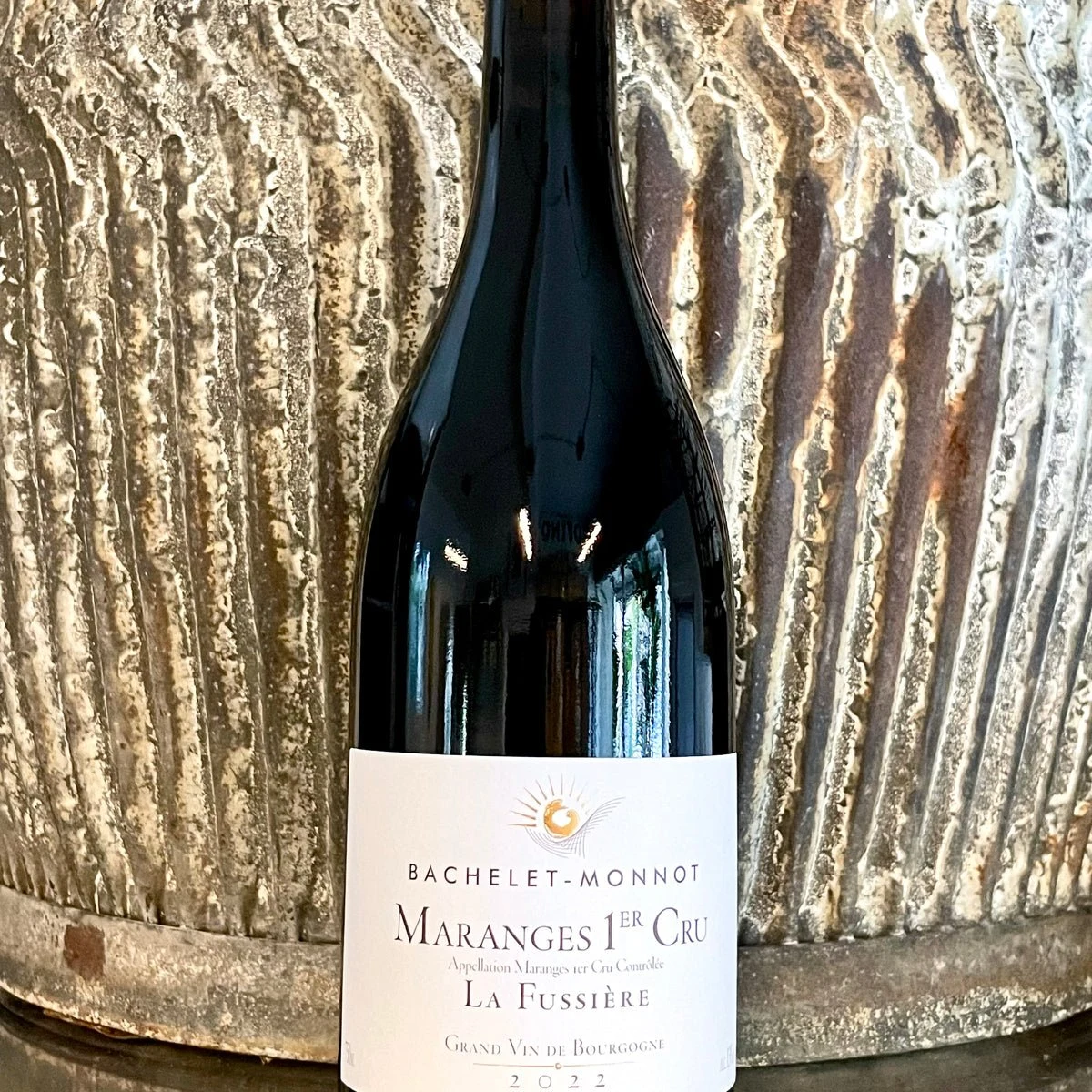
The domaine's vineyard holdings in Maranges and Santenay anchor the range and define the house's value proposition inside the broader Burgundy market. Maranges, the southernmost white-wine appellation in the Côte de Beaune, sits on limestone soils similar in composition to those in Santenay and Chassagne but has historically been undervalued due to lower name recognition and smaller production volumes. Bachelet-Monnot farms approximately four hectares in Maranges across several parcels, all planted to Chardonnay on mid-slope exposures with southeast to south orientation. The elevation here, roughly 300 to 350 meters above sea level, is slightly higher than the valley-floor parcels in Chassagne, and the resulting wines show higher acidity and tighter phenolic structure than village Chassagne from the same vintage. Bachelet's Maranges bottling, released as a village-level cuvée, is typically priced at forty to fifty euros ex-cellar, roughly half the price of equivalent Premier Cru Chassagne and one-third the price of Premier Cru Puligny. That pricing gap reflects appellation hierarchy rather than qualitative difference in the vineyard or the cellar, and positions Maranges as the clearest arbitrage opportunity in the southern Côte for trade buyers building white Burgundy programs on constrained budgets.
Santenay, the next appellation north of Maranges, has similarly been undervalued relative to its vineyard fundamentals. Bachelet-Monnot farms roughly two hectares in Santenay, including parcels in the Premier Cru climat "Les Gravières," a site known for red-clay topsoil over limestone bedrock and historically planted to Pinot Noir. Bachelet's Santenay Premier Cru "Les Gravières" bottling, made from Chardonnay planted in the 1980s, shows more phenolic weight and lower acid tension than the Maranges cuvée, with a flavor profile that sits closer to Chassagne than to Meursault. The wine is aged in forty to fifty percent new oak and bottled after fourteen months, and is typically priced at sixty to seventy euros ex-cellar, roughly twenty percent below equivalent Premier Cru Chassagne from producers like Domaine Ramonet or Domaine Jean-Noël Gagnard. The cellar released approximately 1,200 bottles of the 2019 vintage, a small allocation that reflects both the limited parcel size and Bachelet's practice of declassifying fruit in weaker vintages rather than bottling under the Premier Cru designation.
The domaine's smaller holdings in Puligny-Montrachet and Chassagne-Montrachet provide the recognition anchors for the range and function as the entry point for allocations to high-end retail accounts and Michelin-starred restaurant lists. Bachelet-Monnot produces a village-level Puligny-Montrachet cuvée and a Premier Cru Puligny-Montrachet "Les Referts," both sourced from contracted growers rather than from owned parcels. "Les Referts" sits on the southern edge of the Puligny appellation, adjacent to Chassagne, and the vineyard's clay content is higher than the pure limestone sites further north in the appellation. Bachelet's "Les Referts" bottling, first produced in 2013, shows more mid-palate density and less piercing acidity than Premier Cru sites like "Les Pucelles" or "Les Combettes," and the house style, extended lees contact, moderate new oak, low sulfur, pushes the wine further in that direction. The result is a Puligny that reads stylistically closer to Chassagne, a positioning that has drawn both praise and criticism in the trade press. That stylistic divergence reflects the broader debate inside white Burgundy production about oxidative handling and the appropriate level of phenolic extraction, a debate that has intensified as more producers have adopted low-sulfur protocols over the past decade.
Bachelet-Monnot's production volume sits at approximately 5,000 to 6,000 cases annually across all cuvées, a scale that places the domaine in the small-to-mid-sized category for Burgundy négociants. Roughly forty percent of that volume is exported, with the United States and northern Europe (United Kingdom, Belgium, Switzerland) as the primary markets. The domaine works with a small group of importers who specialize in low-intervention Burgundy and who typically allocate the Premier Cru bottlings to restaurant accounts rather than to retail. That structure reflects the pricing reality of the southern Côte. Maranges and Santenay can move volume at forty to fifty euros ex-cellar, while Premier Cru Puligny at ninety to one hundred euros ex-cellar requires a narrower buyer base.
Access to Bachelet-Monnot bottlings follows the standard Burgundy allocation model for a young domaine without decades of relationship capital. The Premier Cru cuvées ("Les Referts," "Les Gravières") are allocated through long-standing restaurant accounts and retail buyers who have supported the domaine since the early vintages, and new accounts typically enter the allocation through the village-level and Maranges bottlings. The cellar does not operate a direct-sales mailing list for consumers, and cellar-door visits are by appointment only, primarily for trade buyers and importers rather than for casual tourism. That access structure is typical for Burgundy producers at this scale and reflects the broader shift in the region toward relationship-driven allocations as demand for white Burgundy has outstripped supply over the past fifteen years. Bachelet-Monnot's positioning inside that allocation hierarchy, a young domaine without Grand Cru holdings, operating in undervalued appellations, working inside a low-sulfur cellar protocol that divides critical opinion, means that the domaine sits outside the top tier of Burgundy allocations (Domaine Leflaive, Domaine Ramonet, Coche-Dury) but functions as a volume-accessible alternative for buyers who understand the southern Côte's value proposition and are comfortable with oxidative-style white Burgundy.
The domaine's peer set inside the southern Côte includes a small group of producers who have emerged over the past twenty years working inside similar oxidative-handling protocols and similar appellation footprints. Domaine Vincent Dancer in Chassagne-Montrachet, founded in 1996, operates at a similar scale and follows a comparable cellar practice: indigenous fermentation, extended lees contact, low sulfur, and is similarly positioned as a volume-accessible alternative to the top-tier Chassagne houses. Domaine Marc Colin in Saint-Aubin, a neighboring appellation to the west of Chassagne, works a slightly larger production volume and has deeper appellation recognition, but follows a more reductive cellar style with higher sulfur additions and shorter élevage periods, placing it outside the oxidative school where Bachelet-Monnot sits. Domaine Hubert Lamy, also in Saint-Aubin, operates inside the oxidative lineage and has been working extended lees contact and low-sulfur protocols since the early 2000s, making it one of the clearest stylistic comps to Bachelet-Monnot despite the different appellation base. The Lamy cellar, however, works with lower new-oak percentages (twenty to thirty percent versus Bachelet-Monnot's thirty to fifty percent), and the resulting wines show less overt wood influence and tighter phenolic structure, a difference that reflects both cellar philosophy and the cooler microclimate in Saint-Aubin relative to Maranges and Santenay.
Bachelet-Monnot's positioning inside the broader Burgundy market reflects both the domaine's youth and the structural dynamics of the southern Côte as a wine region. The domaine entered production at a moment when Burgundy pricing was accelerating rapidly. The average ex-cellar price for Premier Cru white Burgundy doubled between 2010 and 2020, driven by growing demand from Asian markets and from American collectors, and when the southern appellations were beginning to attract serious attention from sommeliers and retail buyers seeking alternatives to oversubscribed sites in Meursault, Puligny, and Chassagne. That timing has allowed Bachelet-Monnot to build a loyal allocation base without the decades-long relationship capital required to access allocations from older, more established houses, and has positioned the domaine as one of the reference points for the southern Côte's contemporary wine culture. That critical divergence mirrors the broader debate inside white Burgundy about the appropriate level of sulfur, the role of oxidation in texture-building, and the balance between site typicity and house style, a debate that has intensified as more producers have adopted low-intervention protocols over the past two decades.
Questions
Frequently asked
Who works at Domaine Bachelet-Monnot?
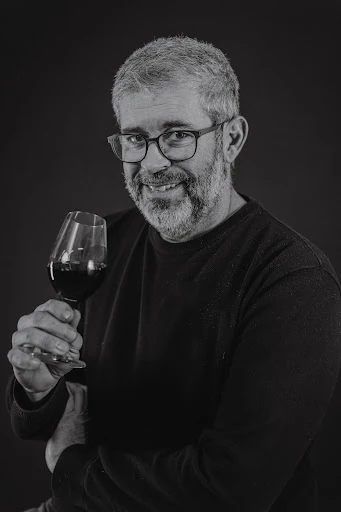
Made By profiles Alexandre Bachelet (Winemaker), Marc Bachelet (Winemaker) and Alex Bachelet (Other) at Domaine Bachelet-Monnot.
How expensive is Domaine Bachelet-Monnot?
Domaine Bachelet-Monnot is listed at a price level of $$$.
The field
How it compares
| Place | Notes | Awards |
|---|---|---|
| Domaine Bachelet-Monnot | Dezize-lès-Maranges, $$$ | · |
| Dom Pérignon | Hautvillers | · |
| Domaine Henri Jayer | Vosne-Romanée | · |
| Domaine Jacques-Frédéric Mugnier | Premeaux-Prissey | · |
| Familienweingut Tement | Ehrenhausen | World's 50 Best |
| Felton Road Wines | Bannockburn | World's 50 Best |
| Nicolas Perrault | Dezize-lès-Maranges | · |
In residence
Similar places

The Sunday letter
Get the next Made By story in your inbox.
We send one email every Sunday morning with the places and people we covered that week.
See a sample of the Sunday emailOne email a week. Unsubscribe from any issue.