Chef in Residence
Nicolas Bonnet
Winemaker
Nicolas Bonnet makes Geneva whites and Pinot Noir as winemaker at Domaine de la Comtesse ELDEGARDE Nicolas Bonnet in Satigny.
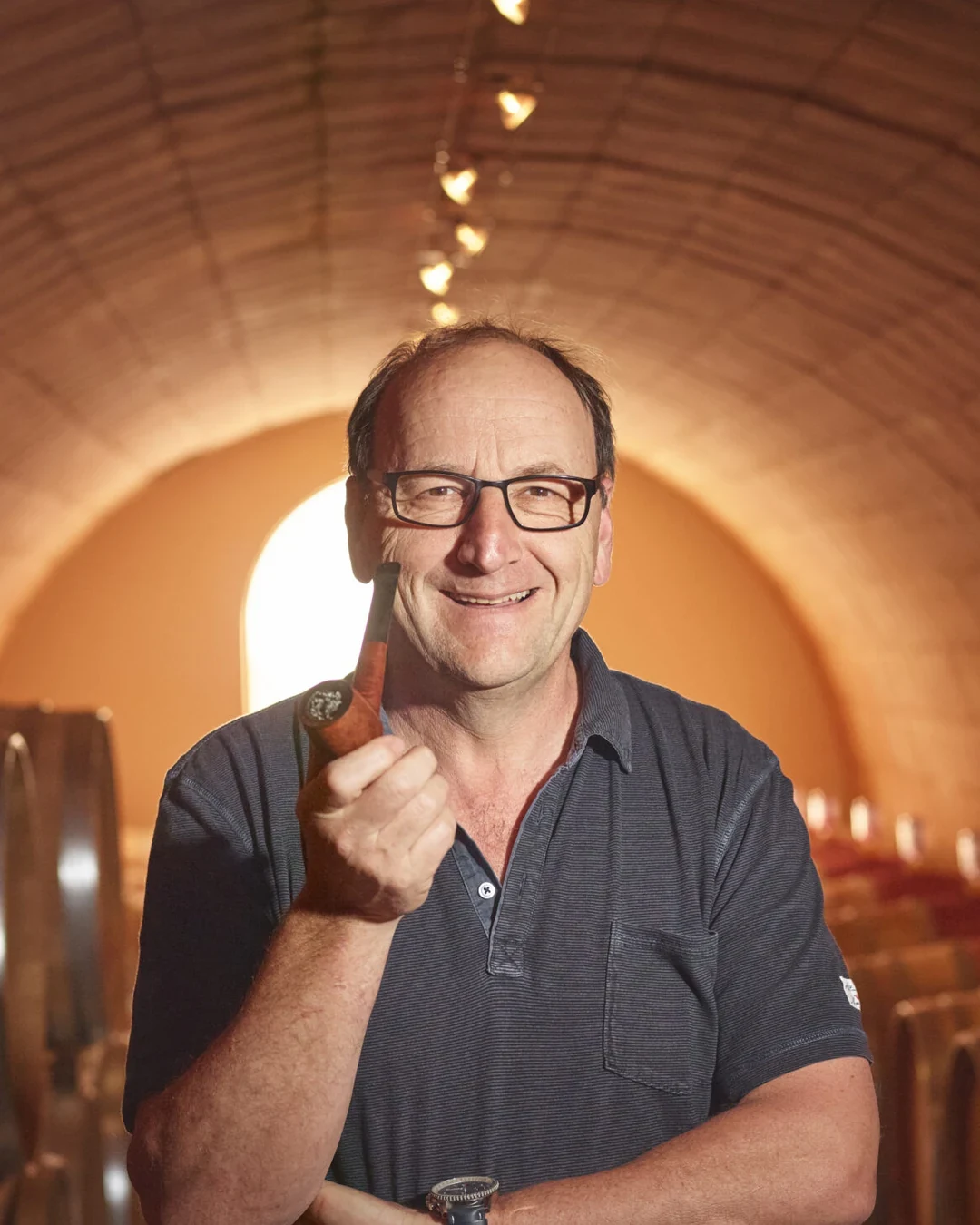
Clay-silt soil is the first material Nicolas Bonnet handles as winemaker at Domaine de la Comtesse ELDEGARDE Nicolas Bonnet in Satigny, before Pinot Gris reaches the cellar. His reading of Geneva begins under the vine, with ground that he describes as based mainly on clay-silt soils. For Bonnet, that is not background. It is the condition that lets a variety keep its own shape.
His work here follows the same argument he made when he introduced Sauvignon Gris in Switzerland for La Cave de Genève: the grape matters most when the site gives it room to speak clearly. “This type of soil does not impose a particular profile on the grape, but instead makes it possible to produce what we call varietal wines, where the aromatic expression of each variety can fully flourish, each with its own typicity.” The sentence carries his method. He does not frame terroir as romance; he frames it as discipline, a way of keeping the hand present without letting it become the subject.
The domaine was formed as Comtesse Eldegarde SA in 2021, with its headquarters in Satigny. The public story around Bonnet is sparse by choice. His apprenticeship and training line are not stated by the house, so the lineage available to the glass is the one he names most directly: Geneva soil, varietal expression, and the restraint required to let both remain legible.
The cellar program is built around selectivity rather than breadth for its own sake. The clearest published detail is a secret 1-hectare parcel for Pinot Noir, a site kept close enough that the parcel itself becomes part of the discipline. That wine is élevé en fût de chêne, raised in oak barrel, inside a familiar Burgundian grammar without turning the Swiss setting into an imitation of somewhere else.
The domaine is also associated with a wider range than the quiet public profile might suggest: 18 different wines are offered, including white wine and Pinot Noir, with Pinot Gris named in the structured focus of the house. Bonnet’s own signature line elsewhere includes Sauvignon Blanc, Savagnin Fièvre jaune, and Sauvignon Gris, varieties that sit comfortably with his insistence on aromatic definition. The point is not a catalogue. It is a cellar vocabulary organized by tension, clarity, and the register each grape can carry when the ground does not force it into a single profile.
His explanation of water is just as practical. “The clay acts like a sponge,” he says. “It is a water regulator that absorbs excess water and releases it during periods of drought.” In that account, the vineyard is not passive raw material. It is a buffer, a timing device, and a quiet partner in the work.
The room around this work is described less by spectacle than by absence: quiet, rustic, scenic, small in scale. Satigny sits within the Geneva appellation, close enough to the city’s public life and still shaped by the patience of vineyard rows, cellar decisions, and bottles that move through a narrow circle. The tasting room does not need a louder script when the cellar is organized around such guarded material.
That discretion has become part of the place. Bonnet’s wines have been called “quasiment introuvables,” almost impossible to find, a phrase that can sound like theater until it is set beside the 1-hectare Pinot Noir parcel and the decision to keep its location private. The house’s next statement is likely to arrive in the same form as its last one: a bottle shaped by clay-silt, oak, and Nicolas Bonnet’s Pinot Noir.
Satigny, Canton of Geneva, Schweiz
Satigny