Lavaux parcels, family cellar hands
- Falstaff Winery - Listed · 2026
A vigneron kept close to one estate
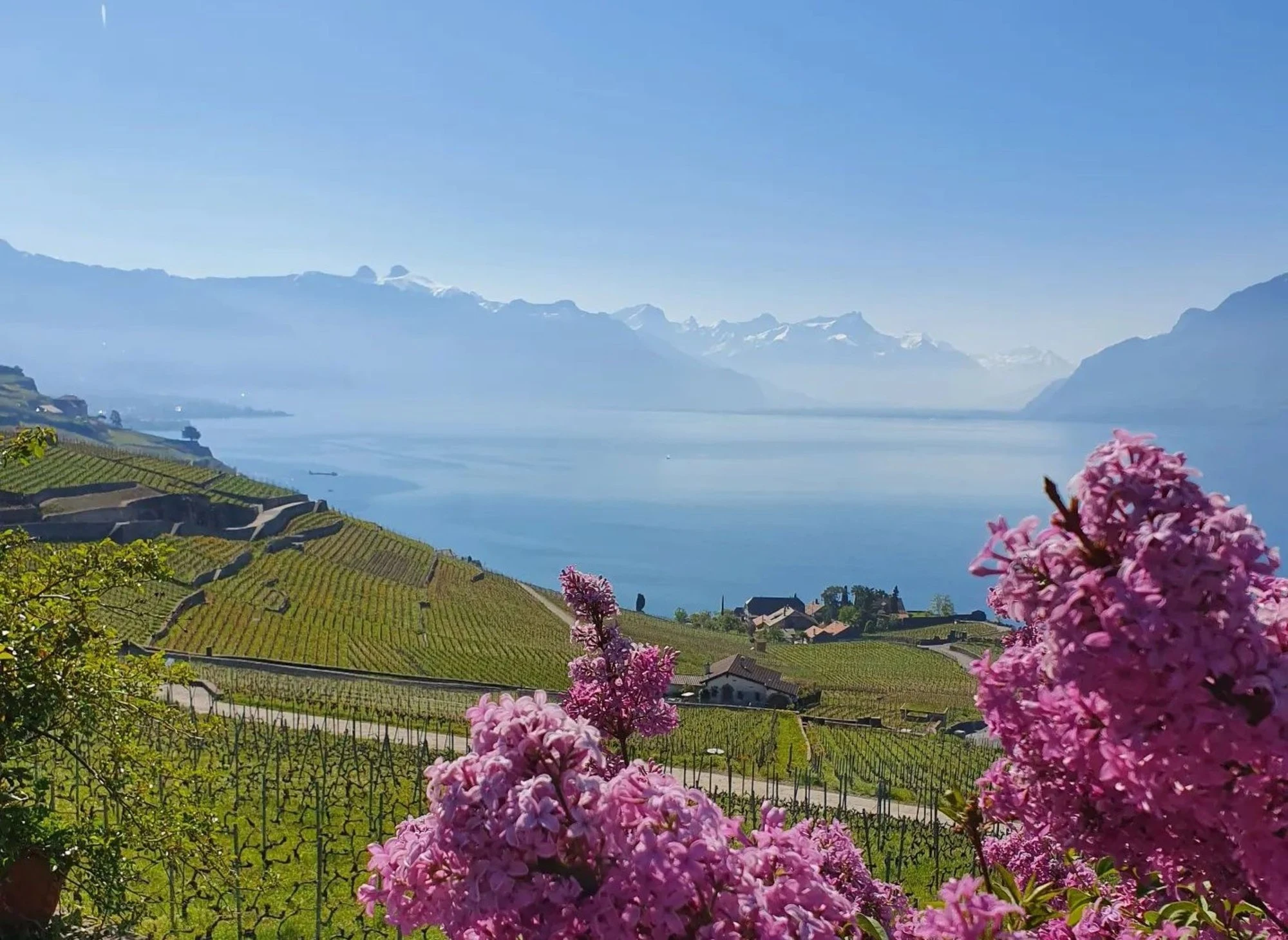
The vines at Les Rueyres ask for repeated passes, not gestures made for display. Laurent Cossy, winemaker at Domaine des Rueyres in Chexbres, works from that premise in the Lavaux terraces, where the domaine sits between Chardonne and Saint-Saphorin. His role is also that of propriétaire, which keeps the decisions of the vineyard, the cellar and the family house under the same pair of hands. The estate began in 1957, when his grandfather established the vineyard after agricultural studies at Changins, and the work has stayed in the family through three generations. That lineage matters here because the place is small enough for habit to become method. The domaine works about 6.5 hectares, with all fruit drawn from its own parcels, and the annual production is roughly 50,000 bottles. Cossy’s practice is described in plain terms: reasoned viticulture, minimal intervention, a respectful approach to the product. In Lavaux, those words have practical weight. The slopes face south, the lake moderates the weather, and each parcel asks to be read more than conquered.
Chasselas, reds and a restrained cellar hand
The program moves across Chasselas, Malbec, Merlot, Cabernet Franc and Syrah, with still whites, reds, rosé, sparkling wine and dessert wine in the range. Around 15 wine references come from the estate, including Saint-Saphorin Grand Cru Chasselas and Chardonne Grand Cru in the Sélection Prestige line. The cellar’s discipline is low-intervention rather than doctrinaire: mechanical weeding in the vines, natural products where possible, and vinification intended to preserve the equilibrium of the fruit. The Lavaux AOC parcels sit in Chardonne and Saint-Saphorin, and the wines follow that split rather than hiding it. Chasselas carries the mineral and fresh register associated with these terraces; the reds and rosés are made for structure without losing lift. Sparkling wines and artisanal spirits extend the house work without changing its center of gravity. Cossy does not treat the domaine as a collection of labels. He treats it as a set of parcels that return, season after season, to the same bench-side questions: ripeness, balance, extraction, patience.
The caveau below the terraces
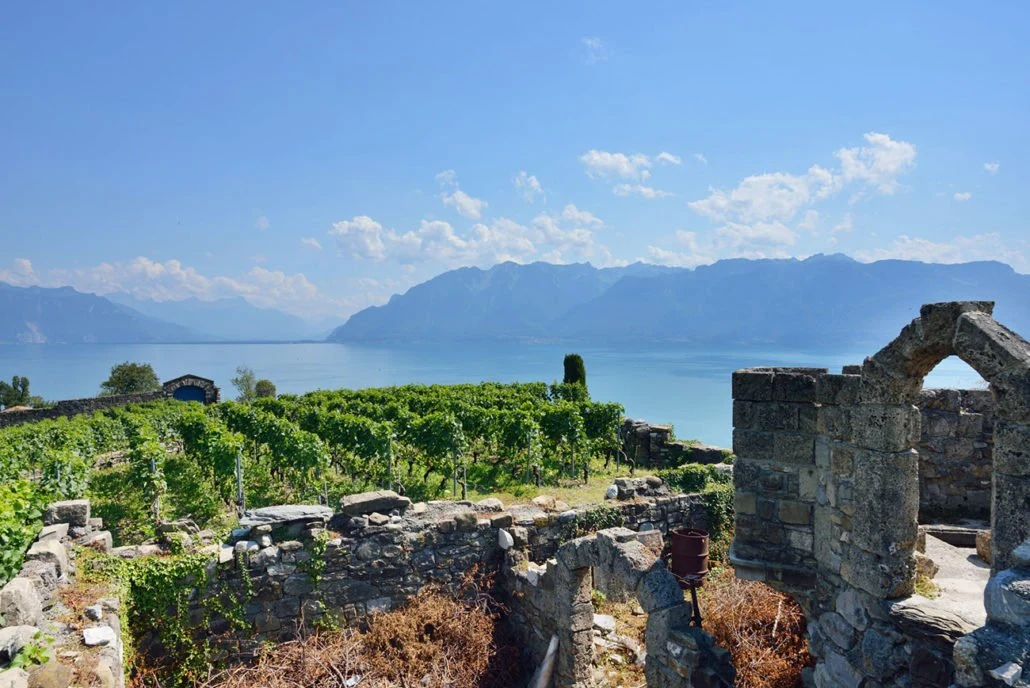
The room at Domaine des Rueyres keeps the scale of a family estate. The historic cellar, once used for production, now serves as an intimate caveau for tastings and private gatherings, with the older fabric of the house still present around the glass. Outside, the UNESCO-listed Lavaux terraces climb and fold between Chardonne and Saint-Saphorin; inside, the conversation stays at cellar volume. The setting gives the wines their frame without needing scenery to do the work. A visitor meets the domaine through the counter, the bottles, and the family’s direct sale from vineyard to customer. That directness is not a sales flourish here. It is part of the method, a way to keep the distance short between the slope, the cellar and the person drinking Saint-Saphorin Grand Cru Chasselas.
Questions
Frequently asked
Who runs Domaine des Rueyres?
Laurent Cossy is the winemaker and proprietor at Domaine des Rueyres in Chexbres, and the estate has stayed in the family through three generations.
What kind of wines does the domaine make?
The range includes Chasselas, Malbec, Merlot, Cabernet Franc and Syrah, as well as still whites, reds, rosé, sparkling wine and dessert wine.
What is the estate known for in Lavaux?
The domaine works about 6.5 hectares in the Lavaux terraces, with all fruit drawn from its own parcels in Chardonne and Saint-Saphorin, and it bottles around 50,000 wines a year.
Can visitors taste wine at the estate?
The historic cellar now serves as an intimate caveau for tastings and private gatherings, and visits are by appointment only.
The field
How it compares
| Place | Notes |
|---|---|
| Domaine des Rueyres | Lavaux, $$ |
| Cave de Champ de Clos | Chexbres |
| Constant Jomini Sàrl | Chexbres |
| Domaine Bovy | Chexbres |
| Les Fils Rogivue | Chexbres |
| Pierre-Luc Leyvraz | Chexbres |
| Raymond Chappuis | Chexbres |