Made ByWinery
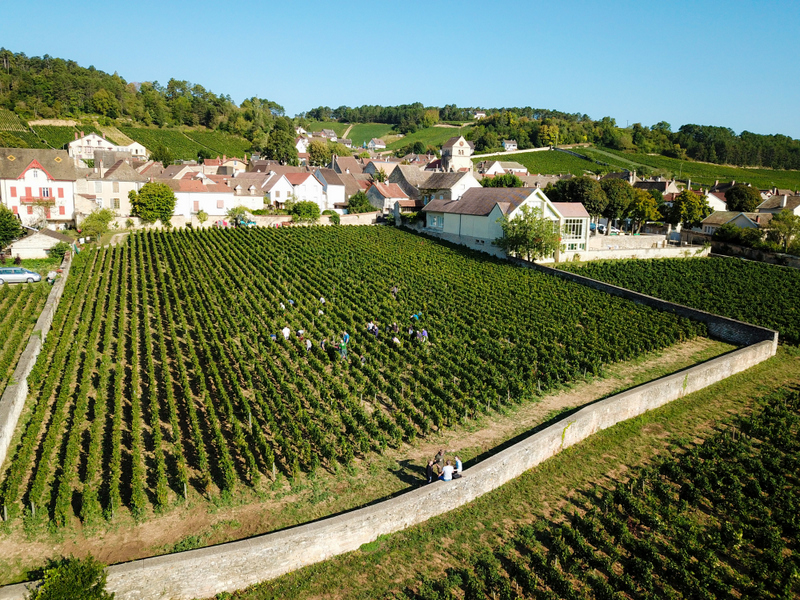
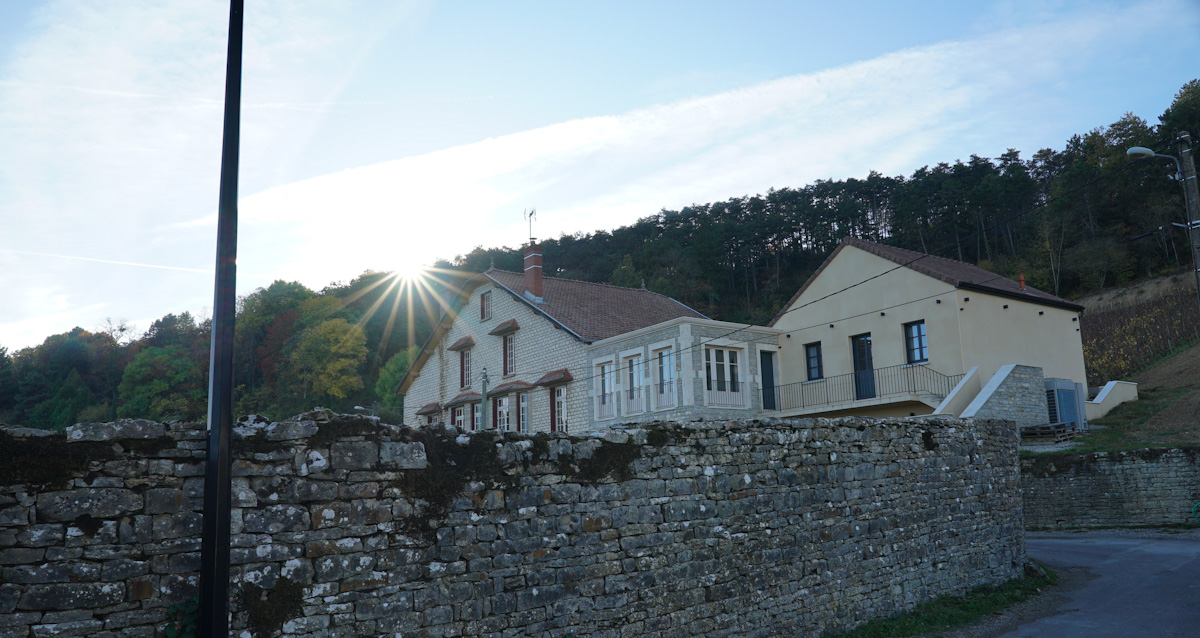
Domaine Michel Lafarge in Volnay pairs biodynamic, organic production with cave tastings, vineyard tours, and a historic building setting.
At a glance
- Price
- $$$
- Neighborhood
- Volnay
Volnay's long-lived domaines operate inside a village tradition that has been unbroken since the late nineteenth century, when parcels were first bottled and sold under estate labels rather than sold in bulk to négociants. The great Volnay houses that survived phylloxera and replanted in the 1880s and 1890s established the technical baseline for the appellation: whole-cluster fermentation percentages in the high teens or low twenties, élevage in older oak rather than new, a preference for finesse over extraction. A handful of those houses remain under the same family names today. Domaine Michel Lafarge sits at the center of that lineage, a working operation that has been under family control since the domaine came into the Lafarge family through marriage with the Gillotte family in the early nineteenth century. The estate has been run by Michel's son Frédéric Lafarge since the early 1980s. The domaine's reputation inside the Burgundy trade rests on Frédéric's sustained technical clarity around whole-cluster fermentation and on the estate's uncommonly long aging program, which positions its flagship Volnay 1er Cru cuvées closer to the long-élévage school of the Côte de Nuits than to the majority of Côte de Beaune producers. Michel Lafarge trained his son Frédéric through the 1970s and early 1980s in the traditional Volnay mode: low yields, whole-cluster fermentation at percentages that varied by vintage but never dropped below 15%, and élevage in foudres and older pièces rather than in new barriques. Michel retired from active winemaking in the early 1980s, and Frédéric took full control of the cellar in 1983. The technical pivot under Frédéric was not a break from the house style but a tightening of it: where Michel had varied whole-cluster percentages by vintage, Frédéric formalized a protocol that runs between 25% and 40% whole clusters across the domaine's Volnay holdings, with the higher percentages reserved for the estate's oldest-vine parcels in Volnay 1er Cru Clos des Chênes and Volnay 1er Cru Clos du Château des Ducs. The result is a cuvée profile that shows more stem tannin and less fruit-driven immediacy than the majority of Volnay wines, and that requires longer cellaring to integrate, typically eight to twelve years from vintage, against the four-to-six-year norm for village-level Volnay and the six-to-eight-year norm for most premier cru bottlings. The domaine farms 12 hectares across Volnay, Meursault, Pommard, and Beaune, with approximately 8.5 hectares under Pinot Noir and the remaining 3.5 hectares under Chardonnay. The Volnay holdings are the technical core of the estate: roughly 4 hectares divided across three premier cru parcels—Clos des Chênes (1.6 hectares, planted 1950–1955), Clos du Château des Ducs (0.5 hectares, planted 1948, a monopole parcel), and Mitans (0.5 hectares, planted 1962)—and approximately 2 hectares of village-level Volnay from parcels in Les Lurets and Vendanges Sélectionnées. The Clos des Chênes parcel is the house's flagship; the vines average 70 years of age, and the fruit from that parcel receives the longest élevage in the cellar, typically 18 to 20 months in barrique with a new-oak percentage that has never exceeded 15% and that currently sits at 10% under Frédéric's protocol. The Clos du Château des Ducs monopole, a walled parcel immediately adjacent to the village church, is bottled separately and released in smaller volume, typically 1,200 to 1,500 bottles per vintage against 4,000 to 5,000 bottles of the Clos des Chênes. Frédéric converted the estate to organic viticulture in 1998, and the domaine was certified organic under ECOCERT in 2000. The conversion was early within the Volnay peer set. Domaine Marquis d'Angerville did not convert until 2006, and Domaine de Montille (which farms parcels across Volnay, Pommard, and Beaune) did not complete conversion until 2005. Frédéric's protocol inside the organic framework is stricter than the ECOCERT baseline: no synthetic herbicides or fungicides, no synthetic fertilizers, and no use of copper-based treatments above 3 kilograms per hectare per year, against the 6-kilogram ECOCERT ceiling. Yields are held low through green harvest and through rigorous winter pruning; typical yields across the estate's premier cru parcels run between 30 and 35 hectoliters per hectare, against the appellation maximum of 42 hectoliters per hectare for Volnay 1er Cru. Vinification at the domaine follows the whole-cluster protocol described above, with a cold pre-fermentation maceration of four to five days, a natural-yeast fermentation at temperatures that peak between 30°C and 32°C, and a post-fermentation maceration of seven to ten days. Total cuvaison, the period from the start of pre-fermentation maceration to the end of post-fermentation maceration, runs between 18 and 22 days, which sits at the long end of the Volnay norm. Frédéric does not use enzymes, commercial yeasts, or acidification; he racks once during élevage and does not fine or filter before bottling. The house style that results from this protocol is firmly in the classical Burgundy register: restrained fruit, high-toned red berry and floral aromatics, a pronounced mineral backbone, and a tannic structure that reads as savory rather than as sweet. The wines are deliberately structured for aging and are not approachable young; trade reviewers and collectors inside the Burgundy market typically cellar Lafarge premier cru bottlings for a minimum of eight years from vintage before opening. The domaine's Meursault holdings, approximately 2 hectares divided across village-level parcels and a small premier cru parcel in Meursault 1er Cru Genevrières, are vinified and aged in the same cellar as the Volnay reds, but the protocol differs in key respects. The Chardonnay fruit is whole-cluster pressed, settled for 24 hours, and then transferred to barrique for fermentation and élevage. Frédéric uses a slightly higher new-oak percentage for the Meursault cuvées, typically 20% to 25% new oak, and the wines undergo full malolactic conversion, against the partial or blocked malolactic that has become common in the Meursault peer set over the past two decades. The resulting style is richer and more oxidative than the prevailing Meursault mode, and the wines age in a similar arc to the reds: eight to twelve years from vintage for the premier cru, six to eight years for the village-level bottling. The domaine's production is small by Burgundy standards, and the allocation structure reflects that constraint. Total annual production across all cuvées runs between 45,000 and 50,000 bottles, with approximately 60% of that volume going to export markets and the remaining 40% sold domestically. The estate does not sell wine through the Hospices de Beaune auction and does not release wines en primeur; all wines are sold as finished bottlings after élevage is complete, typically 18 to 24 months after harvest. The domaine operates an allocation list for direct buyers, but the majority of the estate's production is sold through long-standing relationships with importers and négociants, and little wine is available through the domaine's cellar door. Frédéric releases wines at prices that sit in the middle tier of the Volnay premier cru market, below the top-tier pricing of Domaine de la Pousse d'Or and Domaine de Montille, but above the village-level baseline set by cooperative bottlings and smaller grower estates. The domaine's standing inside the Burgundy trade is anchored by Frédéric's technical consistency and by the estate's unbroken family lineage, which spans four generations. Frédéric's son Michel Lafarge joined the domaine in 2015 and has been working alongside his father in the cellar since that vintage; the succession is expected to formalize over the next several years as Frédéric reduces his active role. The house style under the younger Michel is not expected to shift. The whole-cluster protocol, the long élevage, the restrained oak regime, and the domaine's position inside the Volnay peer set are stable. Trade coverage of the estate in Vinous, Decanter, and The World of Fine Wine consistently places Lafarge in the top tier of Volnay producers, alongside Domaine Marquis d'Angerville, Domaine de Montille, and Domaine Hubert de Montille, and the estate's premier cru cuvées trade on the secondary market at multiples that reflect that positioning. Access and Allocation Domaine Michel Lafarge does not operate a public tasting room, and cellar visits are by appointment only, arranged through direct contact with the estate or through the domaine's long-standing importer relationships. The estate does not sell wine retail through its own channels; all sales are conducted through the allocation list or through the domaine's distributor network. Buyers seeking current-release wines typically work through specialized Burgundy importers or through fine-wine retailers with established allocations. The secondary market for older vintages is active, and the estate's flagship Volnay 1er Cru Clos des Chênes bottlings from the 1990s and 2000s trade at auction and through specialist merchants at prices that sit in the mid-tier of the Volnay premier cru secondary market, below Domaine de la Romanée-Conti and Domaine Leroy, but above most village-level and smaller premier cru producers. The estate releases no library stock and does not participate in en primeur sales; all wines are sold as finished bottlings after the full élevage period. Frequently Asked Questions Where does Domaine Michel Lafarge sit in the peer set? Domaine Michel Lafarge sits in the top tier of Volnay producers, positioned alongside Domaine Marquis d'Angerville and Domaine de Montille inside the classical long-élevage school. The domaine's whole-cluster fermentation protocol, typically 25% to 40% whole clusters across premier cru parcels, and its extended aging program (18 to 20 months in barrique for the flagship Clos des Chênes cuvée) place it closer to the Côte de Nuits style than to the majority of Côte de Beaune producers, and the resulting wines require longer cellaring than most Volnay bottlings. Trade reviewers in Vinous, Decanter, and The World of Fine Wine consistently rank Lafarge in the top five Volnay estates, and the domaine's secondary-market pricing reflects that standing. The estate's peer set inside the Volnay appellation is narrow: Domaine Marquis d'Angerville, Domaine de Montille, Domaine Hubert de Montille, and Domaine de la Pousse d'Or. All five estates share a commitment to whole-cluster fermentation, low yields, and long élevage in older oak rather than in new barriques. Who has been at the pass, on the floor, or in the cellar at Domaine Michel Lafarge? The domaine has origins with the Gillotte family in the early nineteenth century, coming into the Lafarge family through marriage, and has remained under family control across four generations. Michel Lafarge ran the estate from the late 1940s through the early 1980s, establishing the house style that emphasized whole-cluster fermentation and long élevage in older oak. Michel's son Frédéric Lafarge took full control of the cellar in 1983 and has been the estate's winemaker for forty years; Frédéric formalized the whole-cluster protocol that now defines the house style, converted the estate to organic viticulture in 1998, and tightened the domaine's yield and oak regimes to their current levels. Frédéric's son Michel Lafarge joined the domaine in 2015 and has been working alongside his father in the cellar since that vintage. The succession from Frédéric to the younger Michel is expected to formalize over the next several years, maintaining the unbroken family lineage that has shaped the estate. How long has Domaine Michel Lafarge been operating? The domaine has origins with the Gillotte family in the early nineteenth century and came into the Lafarge family through marriage. The estate has been under continuous family ownership and operation for over a century. The estate's current winemaker, Frédéric Lafarge, has been running the cellar since 1983, a forty-year tenure that represents one of the longest single-winemaker spans inside the Volnay peer set. The domaine's production has remained stable over that period, approximately 45,000 to 50,000 bottles annually, and the estate's vineyard holdings have expanded modestly through acquisitions in Meursault and Beaune, but the core Volnay parcels have remained unchanged since the mid-twentieth century. How is access to Domaine Michel Lafarge structured? The domaine does not operate a public tasting room and does not sell wine retail through its own channels. Cellar visits are by appointment only, arranged through direct contact with the estate or through the domaine's importer network. The estate operates an allocation list for direct buyers, but the majority of production is sold through long-standing relationships with importers and négociants, and little wine is available at the cellar door. Buyers seeking current-release wines typically work through specialized Burgundy importers or through fine-wine retailers with established allocations. The estate does not release wines en primeur and does not participate in the Hospices de Beaune auction; all wines are sold as finished bottlings after the full élevage period, typically 18 to 24 months after harvest. The secondary market for older vintages is active, and the estate's flagship Volnay 1er Cru Clos des Chênes bottlings from the 1990s and 2000s are available through auction houses and specialist merchants. What craft lineage shaped Domaine Michel Lafarge? The domaine was shaped by the Volnay tradition that crystallized in the late nineteenth century, when the village's leading estates—Domaine Marquis d'Angerville, Domaine de la Pousse d'Or, and the Lafarge family estate among them—began bottling and selling wines under estate labels rather than selling fruit in bulk to négociants. That tradition emphasized whole-cluster fermentation, long élevage in older oak, and a preference for finesse and minerality over extraction and new-oak influence. Michel Lafarge trained his son Frédéric inside that tradition through the 1970s and early 1980s, and Frédéric formalized the house protocols when he took full control of the cellar in 1983. The domaine's peer set inside the Volnay appellation—Domaine Marquis d'Angerville, Domaine de Montille, Domaine Hubert de Montille—shares that lineage, and all estates operate inside the same technical framework: organic or biodynamic viticulture, whole-cluster fermentation at percentages above 20%, long élevage in older oak, and a deliberate structuring of wines for long-term cellaring rather than for immediate approachability.
Know before you go
- Dress code
- smart_casual
- Reservations
- appointment_only
- Parking
- street
- Accessibility
- elevator
Address
15 Rue de la Combe, 21190 Volnay
Volnay · Burgundy
How it compares
- Notes
- Volnay, Pinot Noir, Chardonnay
- Price
- $$$
- Notes
- Volnay, Pinot Noir, Chardonnay
- Price
- $$$$
- Notes
- Volnay, Pinot Noir, Chardonnay
- Price
- $$$
- Notes
- Volnay, Pinot Noir, Chardonnay
- Price
- $$$$
- Notes
- Volnay, Pinot Noir, Chardonnay
- Price
- $$$$
- Notes
- Pommard, Pinot Noir, Chardonnay
- Price
- $$$