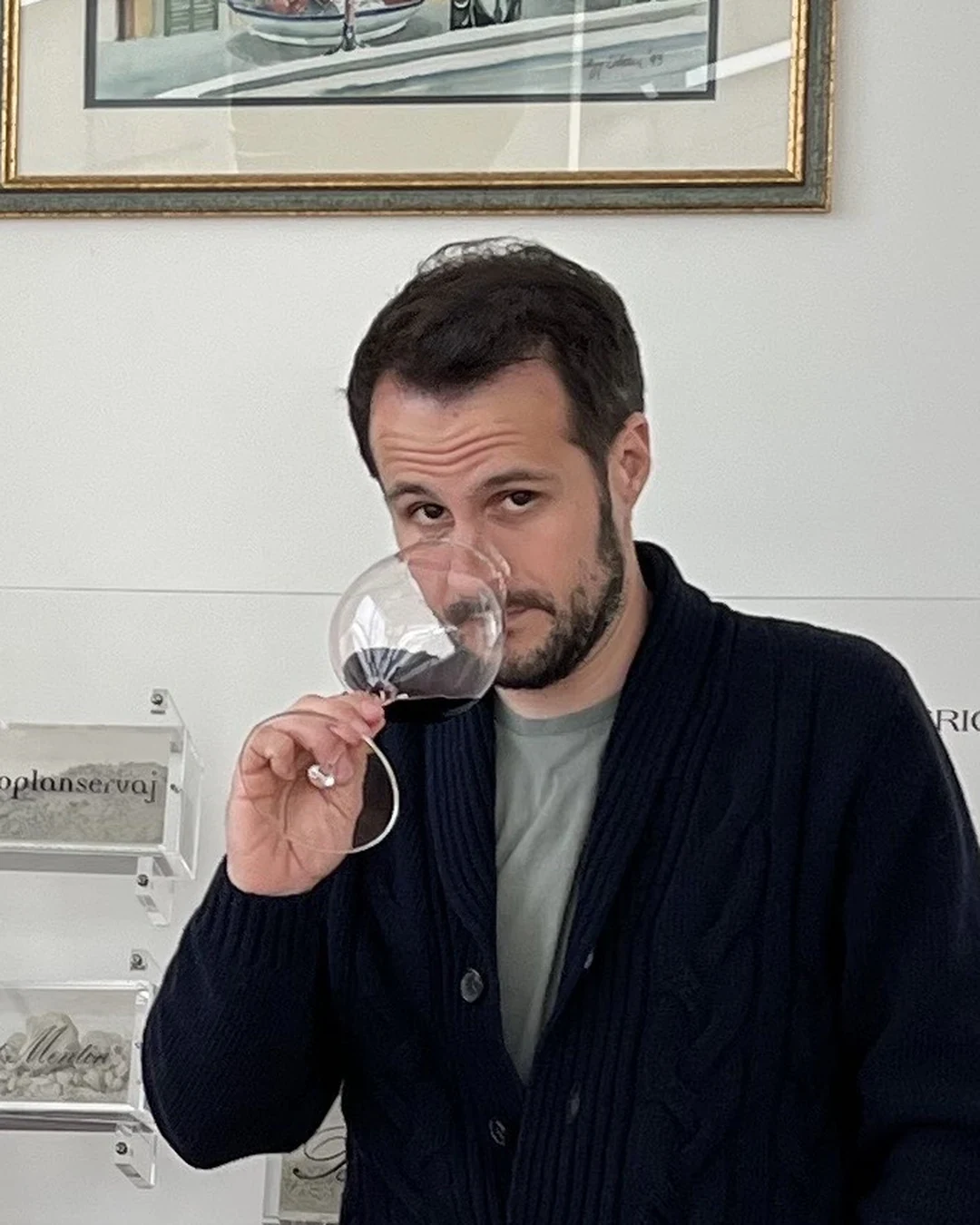
Oscar Arrivabene, winemaker at Domenico Clerico in Monforte d'Alba, makes site-specific Barolo with care in this role there.
Nebbiolo sets the pace in the cellar before any label does. Oscar Arrivabene, winemaker at Domenico Clerico in Monforte d'Alba, reads that pace through Barolo grown around Località Manzoni and the surrounding hills. His route to the station began with training at school, where winemaking meant timing, discipline, and the repeated tasks that either hold under pressure or do not. Work in Valtellina gave that training a sharper sense of place. Later work in Australia and then in Italy widened the frame without making the method less practical.
At Domenico Clerico, Arrivabene's role sits close to both the cellar and the direction of the estate. The house was founded in 1976 by Domenico Clerico, from a family farming background that had supplied grapes before it became its own winemaking name. The estate belongs to the modern Barolo current associated with shorter macerations and French barrique, yet its subject remains old Piedmontese ground: Nebbiolo from Monforte d'Alba, with Barbera and Dolcetto in the wider program. Arrivabene's known specialty here is site-specific Barolo, a discipline that asks the maker to keep each parcel legible rather than forcing one cellar voice over all of them.
The estate works about 21 hectares of vineyards and produces roughly 110,000 bottles annually, with fruit drawn from its own holdings. Nebbiolo anchors the Barolo DOCG work, while Dolcetto and Barbera keep the Piedmontese register broad. The named wines, Ciabot Mentin Ginestra, Pajana, Percristina, Aeroplan Servaj, and Langhe Dolcetto Visadì, give the bench its practical map: crus, commune wine, and varietal bottlings moving through the same cellar discipline.
The Barolo method published for the house carries the modernist signature clearly. Maceration runs 20-30 days in rotor fermentors. Barolo aging includes new French oak barriques, typically 225L, and larger 25-hectoliter casks, with 36 months in barrique followed by 24 months in cask in the cited protocol. That sequence matters because Monforte Nebbiolo brings structure before charm. The cellar does not need to make it louder. It needs to manage extraction, wood, tannin, and time so that Ginestra, Mosconi, and Bussia can remain distinct in the glass.
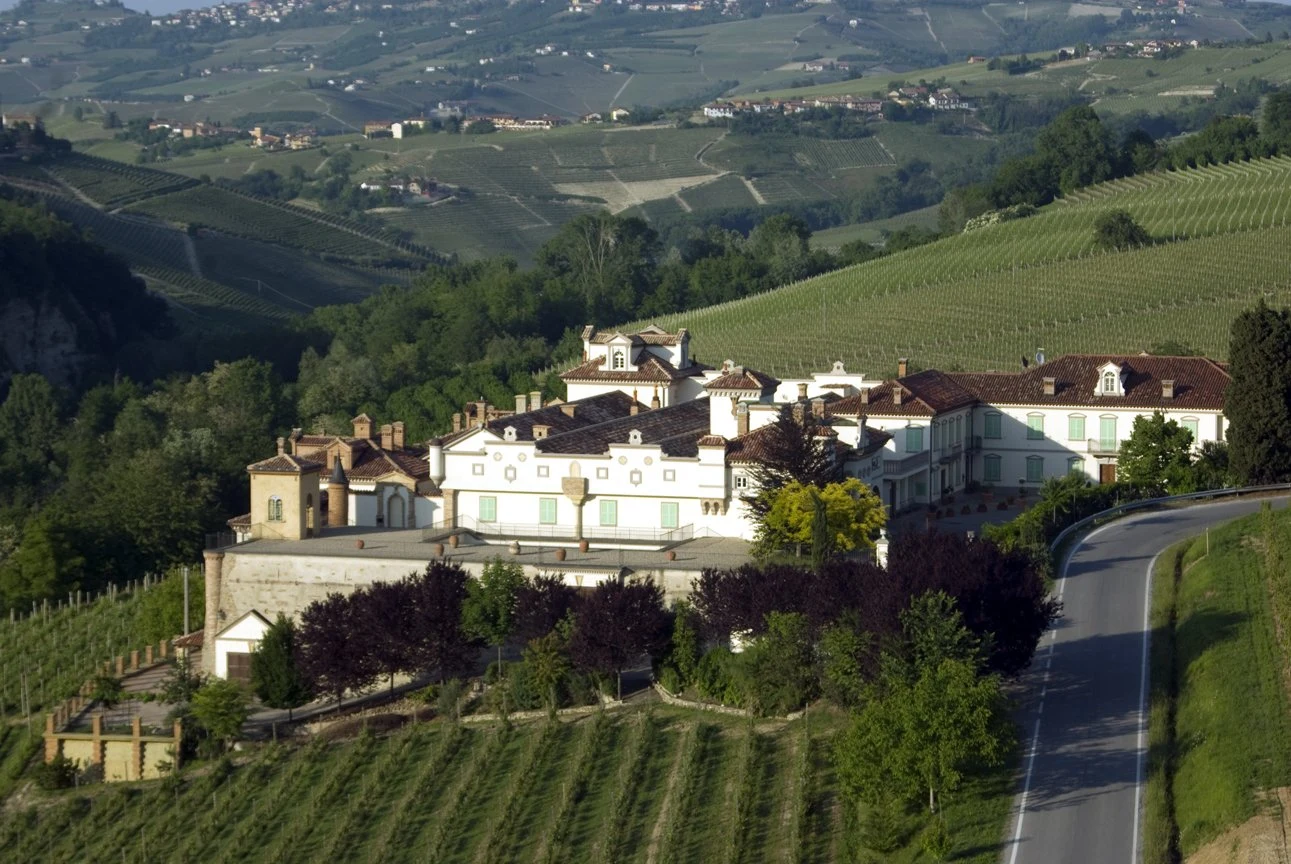
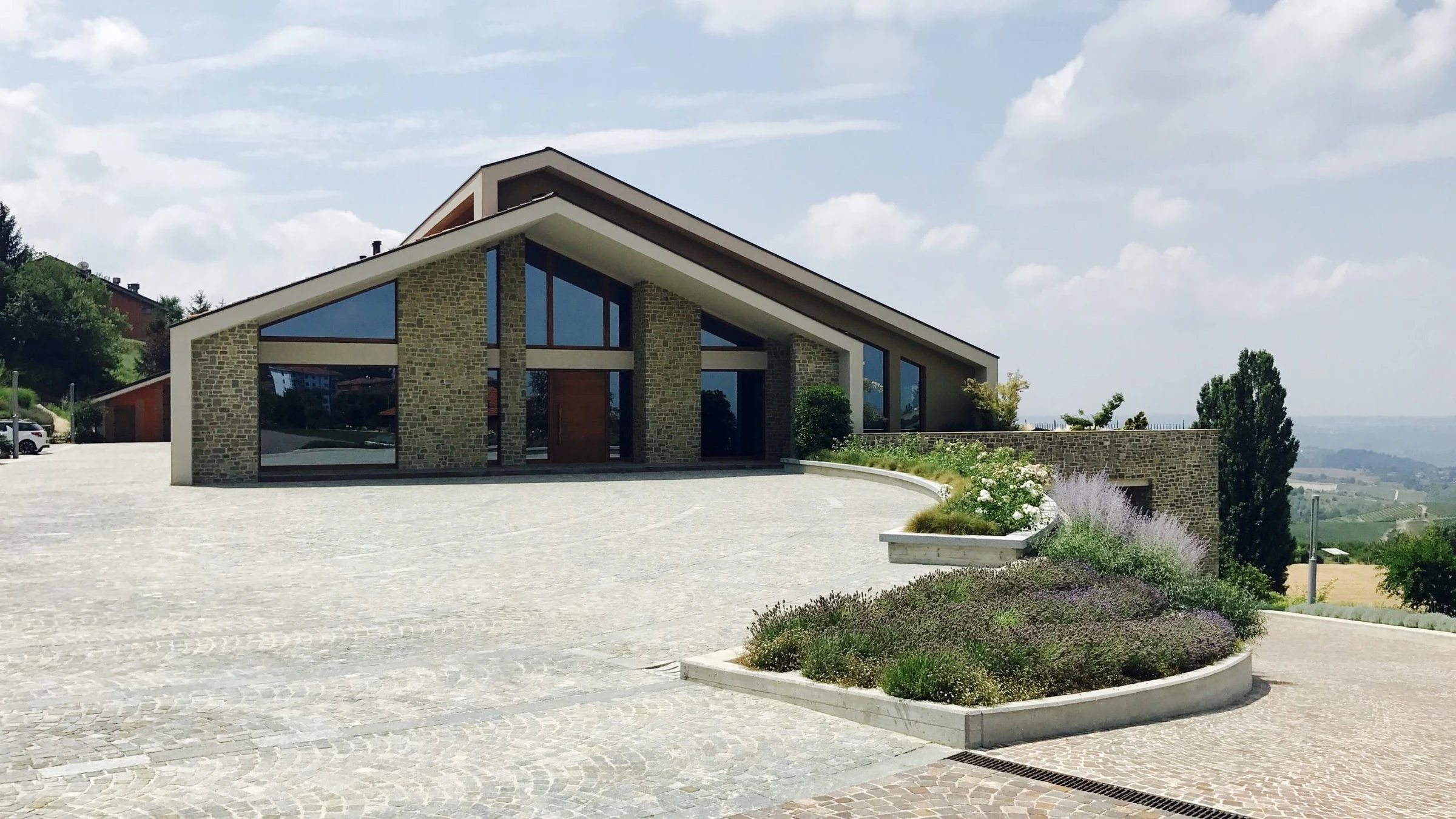
The place is a working estate in the hills of Monforte d'Alba, with the cellar set among Piedmont vineyards and the Langhe spread beyond it. The room is quiet in the way winery rooms are quiet when the work has weight: stone, steel, wood, glass, and the measured movement between tank and barrel. Tastings here happen close to the cellar's grammar, through estate pours, barrel room context, and the line of still red wines that make the house recognizable.
Località Manzoni gives the estate a precise address rather than a backdrop. The surrounding slopes belong to Barolo country, where calcareous-clay soils, exposure, and harvest timing press themselves into Nebbiolo long before fermentation begins. In that setting, Arrivabene's work is less about signature flourish than custody. Each vintage returns him to the same questions of parcel, extraction, and wood, and the answer has to hold in Ciabot Mentin Ginestra.
Monforte d'Alba, Cuneo, Italien
Località Manzoni