Dominikaner Weingut C. von Nell-Breuning
- 01CityKasel, Germany
- Falstaff Winery - Listed · 2026
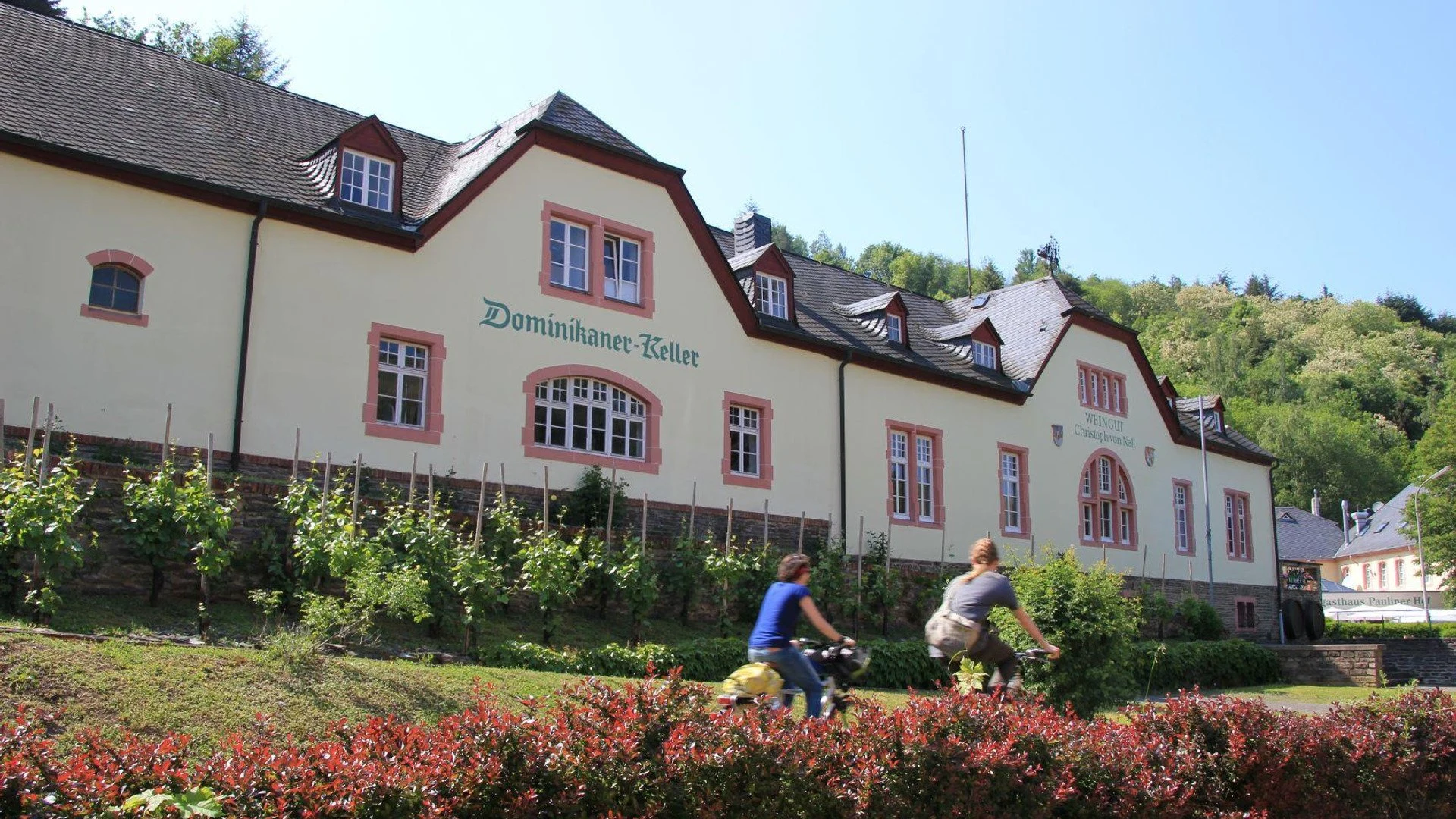
Approaching Kasel, Dominikaner Weingut C. von Nell-Breuning presents itself as a historic, family-run Ruwer valley estate with a quiet, traditional atmosphere. The emphasis is on handcrafted Riesling and Pinot Noir, shaped by steep slate vineyards and cellar work rather than a flashy tasting-room style. It is the kind of wine address where the sense of place matters: the valley, the slope, the stone and the inherited rhythm of estate life all sit in the foreground.
This is a classic, understated and elegant wine address in Kasel. The picture is intentionally narrow: a Ruwer valley estate, rooted in family tradition, where the draw is the setting, the vineyards and the wines rather than a broad hospitality spectacle. That restraint is part of the appeal. Nothing in the available profile suggests a venue trying to overwhelm visitors with add-ons; the confirmed identity is quieter, more focused and more closely tied to wine itself.
Slate, cool air and Riesling with Ruwer tension
The identity of Dominikaner Weingut C. von Nell-Breuning is closely tied to the Ruwer valley and its steep slate vineyards. Riesling is central to the estate’s character, with Pinot Noir also part of the confirmed picture. In this context, slate and slope are not decorative details but the basic frame through which the estate is best understood.
Rather than relying on claims about specific vineyard names, production scale or bottlings, the safest way to understand the estate is through its broader profile: historic, family-run, traditional and focused on handcrafted wine. The atmosphere is quiet and classic, with cellar work presented as part of the estate’s identity. That combination gives the address a measured, old-world feel, where the language around the wines stays close to craftsmanship and origin instead of marketing drama.
For readers mapping wine in Kasel, that makes Dominikaner Weingut C. von Nell-Breuning a grounded reference point for Ruwer Riesling and Pinot Noir. The appeal is not built on a confirmed award list or a documented tasting format here, but on the combination of family history, steep slate vineyards and understated estate character. It is therefore best read as a place of continuity, where the most important signals are the valley setting and the estate’s long, traditional orientation toward wine.
Why the estate style matters in a Ruwer valley setting
Dominikaner Weingut C. von Nell-Breuning is best approached as a traditional Ruwer valley estate rather than as a high-profile modern tasting destination. The details point to handcrafted Riesling and Pinot Noir, a quiet setting and an elegant, restrained feel. That matters because the Ruwer valley context already brings a strong sense of landscape; the estate style described here work with that character rather than distracting from it.
Specific claims about individual bottles, prices, sparkling wine, cellar-door formats or production methods are not confirmed in the available data, so they should not be treated as facts here. What is confirmed is the estate’s classic atmosphere and its connection to steep slate vineyards and cellar work. The absence of extra detail is useful in its own way, because it keeps the profile focused on the fundamentals that are actually supported.
That makes the venue useful for travellers who want a more traditional wine-estate context in Kasel. The page should be read as a concise profile rather than a complete technical dossier on the estate’s vineyard holdings, winemaking choices or visitor arrangements. In practical terms, it points visitors toward a calm, wine-led address, while also making clear that operational specifics should not be assumed from this description alone.
A quiet traditional estate, not a spectacle
The confirmed atmosphere at Dominikaner Weingut C. von Nell-Breuning is quiet, traditional, historic and family-run. It has a classic, understated elegance, with the focus on handcrafted Riesling and Pinot Noir from a Ruwer valley setting shaped by steep slate vineyards. The tone is restrained, and that restraint helps distinguish the estate from places whose main appeal is a broad visitor programme or a highly polished presentation.
For planning, the reliable facts are simple: the venue is in Kasel, the price level is listed as $$$, and the estate’s character is calm and wine-focused. Details such as opening arrangements, tour types, group size, languages, food pairing or private tasting formats are not confirmed here and should be checked directly before making plans. That caution is especially important for anyone building an itinerary, since the available profile describes character more than logistics.
When comparing options, keep the focus on Dominikaner Weingut C. von Nell-Breuning itself or on other dining and wine experiences in Kasel in general terms. The most dependable reason to consider this estate is its verified Ruwer valley identity: historic, family-run, traditional and centered on Riesling, Pinot Noir, steep slate vineyards and cellar work. For travellers drawn to an understated setting and a clearly rooted wine-estate profile, that is the essential story.
Questions
Frequently asked
How expensive is Dominikaner Weingut C. von Nell-Breuning?
Dominikaner Weingut C. von Nell-Breuning is listed at a price level of $$$.
The field
How it compares
| Place | Notes | Awards |
|---|---|---|
| Dominikaner Weingut C. von Nell-Breuning | Ruwertal, $$$ | · |
| Bodegas Salentein | Tunuyán | World's 50 Best |
| Château Cos d'Estournel | Saint-Estèphe | World's 50 Best |
| Château Pontet-Canet | Pauillac | · |
| Domaine Georges Roumier | Chambolle-Musigny | · |
| Jacques Selosse | Avize | · |
| Weinmanufaktur Kasel | Kasel | · |