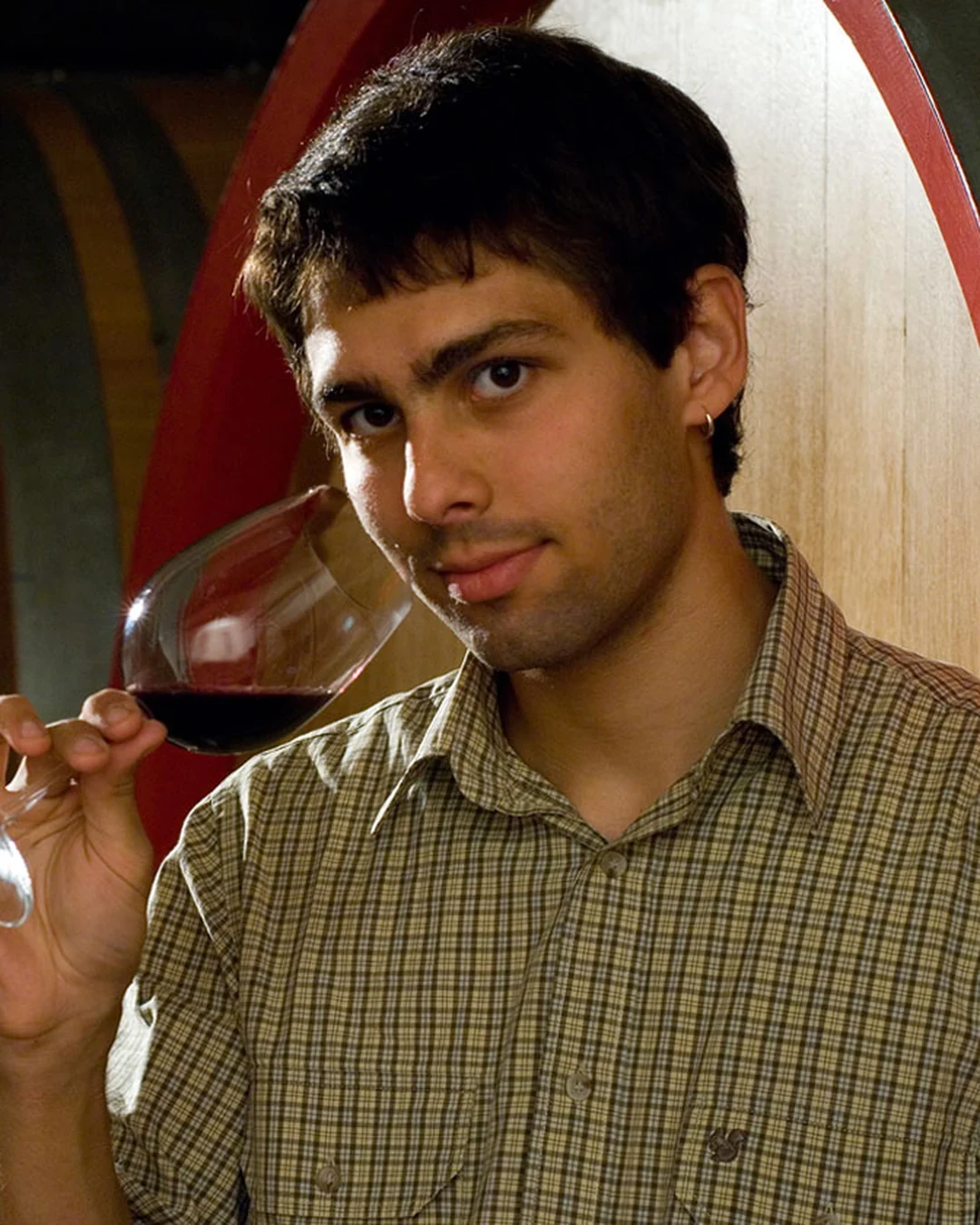
Paolo Dorigati, winemaker at Dorigati in Centro storico Mezzocorona, keeps Teroldego and Methius tied to family cellars there.
Cluster selection comes before the cellar decision. Paolo Dorigati, winemaker at Dorigati in Centro storico Mezzocorona, carries that choice from the vineyards of the Piana Rotaliana into the family cellar. His formation at Istituto Agrario di San Michele all'Adige gives the work its double register, agronomy in the field and oenology below ground. At Dorigati, those two disciplines meet in Teroldego Rotaliano DOC, Lagrein, Rebo, Pinot Grigio, Chardonnay, Pinot Nero, and in the house's Metodo Classico work.
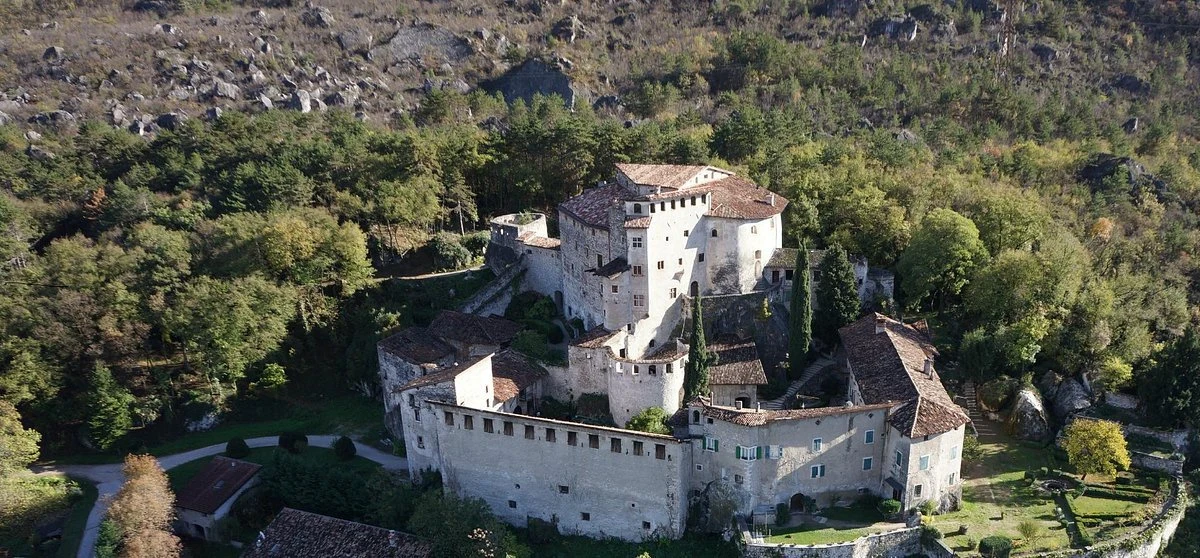
The winery began in 1858 with Luigi Dorigati, and the present family generation works a few dozen meters from that first site. The current building at Via Dante 5 dates to the early 20th century, with later extensions and a renovation completed in 1998. Paolo's station is not an isolated technical post. It sits inside a family-owned estate whose vineyards run through the alluvial plain and up the foothill slopes, and whose cellar has been arranged for the slow work of cooling, fermenting, aging, and holding wine until it is ready to leave the house.
Dorigati's method begins with territorial identity rather than breadth. The estate works the Piana Rotaliana and the pedemontane hills through vineyard distinction, including named parcels such as Bagolari, where Diedri Teroldego Rotaliano Riserva DOC is drawn from. For reserve wines including Diedri and Luigi, the family uses short, discreet pruning and thins the bunches, halving the production volume so the remaining fruit carries more concentration into the vat.
The soils matter here: fluvial and glacial deposits, alluvial stones, drainage from the Noce river torrent. They give Teroldego its color, tannic line, and structural grip. In the cellar, red wines move toward fruit clarity and tannin rather than polish for its own sake. Methius, the company's single sparkling wine since 1986, gives the other side of Paolo's program. It is Trento DOC Metodo Classico, built by second fermentation in bottle, with the cellar's underground steadiness doing part of the work. The house also makes white wines, but its sharpest grammar remains between Teroldego Rotaliano and Methius.
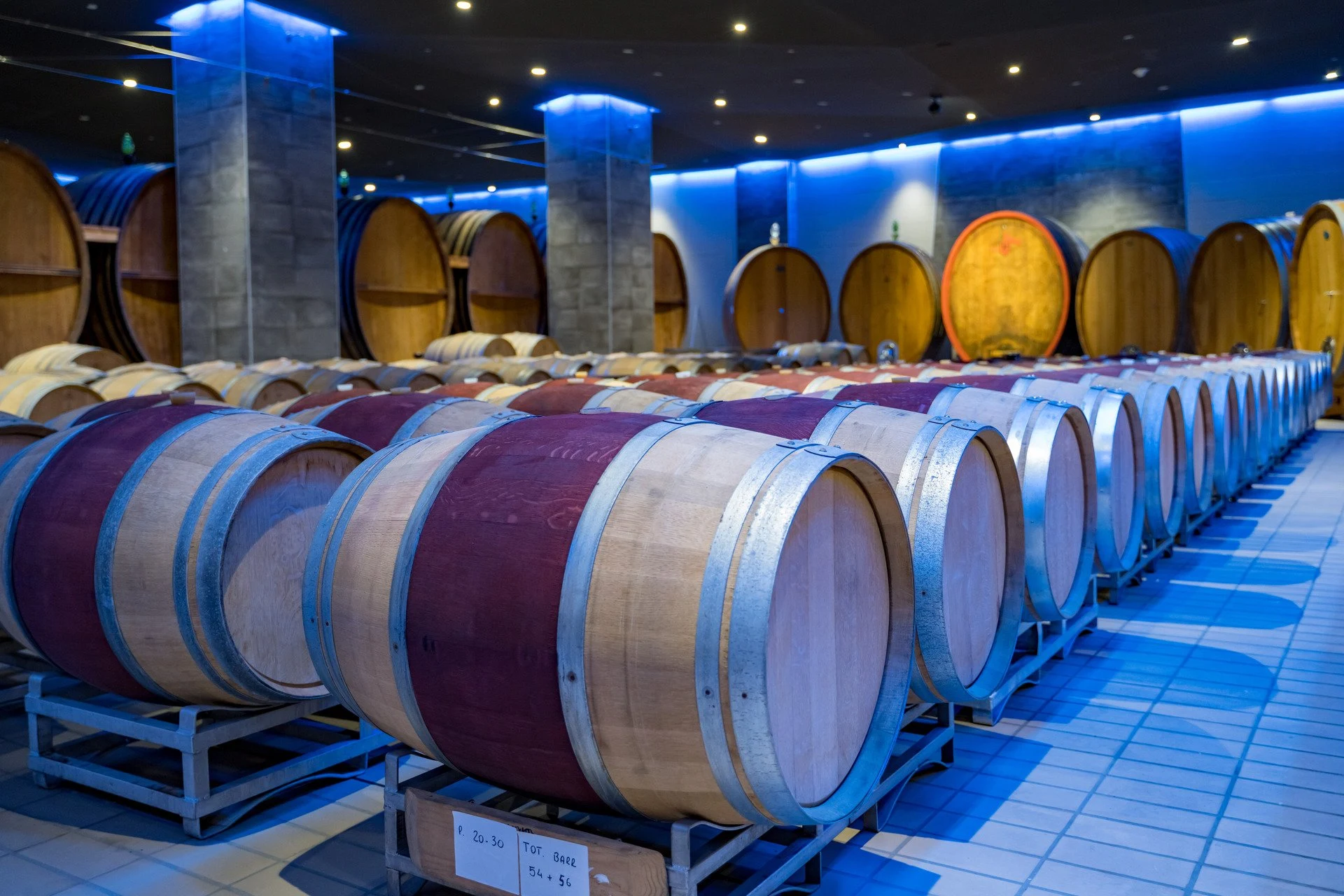
The room is rural without becoming staged. Dorigati sits in the historic center of Mezzocorona, between village squares and daily movement, yet the work turns inward once the cellar door closes. The building has three levels, two of them underground, so the visitor descends into the part of the house where temperature, stone, and time do more than decoration ever could.
In those lower floors, the cellar gives the wines a quieter pace. Bottles rest away from the street; barrels and tanks belong to the same working architecture that has served the family for more than a century. The tasting room above does not need to perform grandeur. The proof is in the descent, in the cool air, and in the way a glass of Methius returns the room to its own method.
Dorigati's work also sits inside a wider regional discipline. The family is part of Teroldego Evolution, a non-profit association formed by the children of winemakers in the Piana Rotaliana to advance the grape across the region's 435 hectares of cultivation. That matters because Paolo's own language for the wines is continuity: “elegance and tradition.” At Dorigati, that phrase has a place to stand, in Bagolari, in the underground cellar, and in Methius.
Mezzocorona, Alto Adige, Italien
Centro storico Mezzocorona