Durbacher Winzergenossenschaft
- 01CityDurbach, Germany
- Falstaff Winery - Listed · 2026
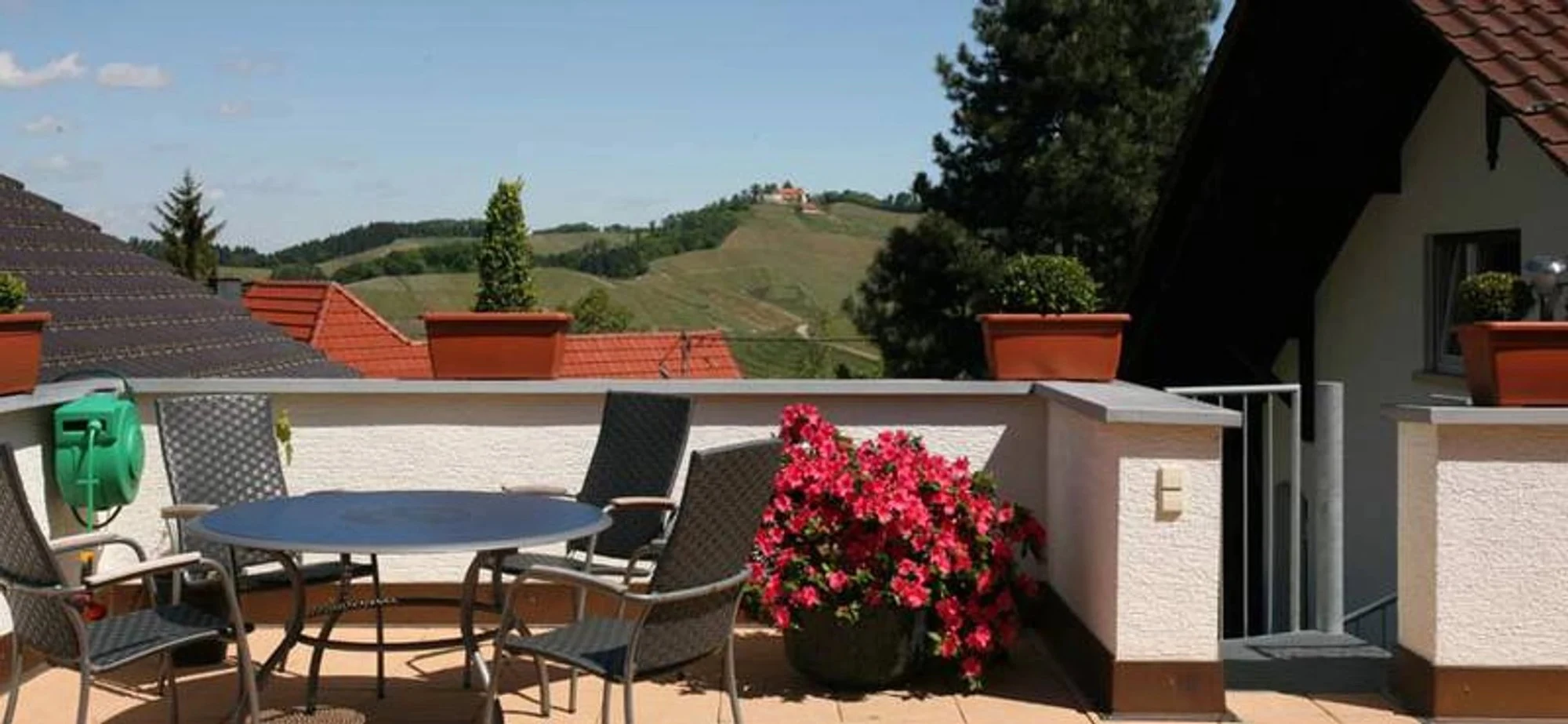
Approaching wine in Durbach means reading the slopes before reading the label. The village sits in Baden’s Ortenau district, where vineyards rise from the valley floor toward higher, cooler sites, and that change in altitude matters: lower parcels give broader ripeness, while the upper slopes preserve firmer acidity and a more linear profile. Durbacher Winzergenossenschaft belongs to that terrain-driven tradition, not as a small estate myth but as a large cooperative system built around the same hillside logic.
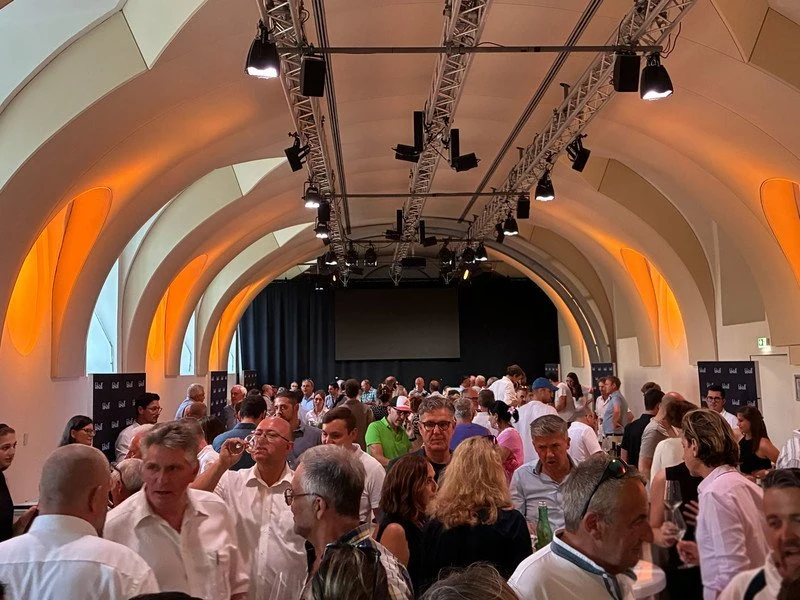
The room itself follows the Baden cooperative model: polished, informal, and more useful than theatrical. This is not the hushed private-cellar format that dominates luxury wine travel elsewhere. It is a Vinothek experience shaped by local growers, practical tasting, and a broad view of Durbach’s production rather than a narrow cult-wine narrative. For travelers trying to understand the village in one stop, that scale is the point.
Steep-slope Baden, read through a cooperative lens
German wine travel often over-rewards the single-name estate. Baden complicates that habit. In villages such as Durbach, cooperatives have long acted as both agricultural infrastructure and cultural memory, giving small growers access to cellar equipment, technical oversight, and a shared commercial identity. Founded in 1928, Durbacher Winzergenossenschaft, now legally operating as Durbacher Winzer eG, represents about 300 member winemakers and cultivates 340 hectares. Those figures place it in a different category from the family-estate tasting room: broader, more democratic, and better suited to showing the range of a village rather than the signature of one proprietor.
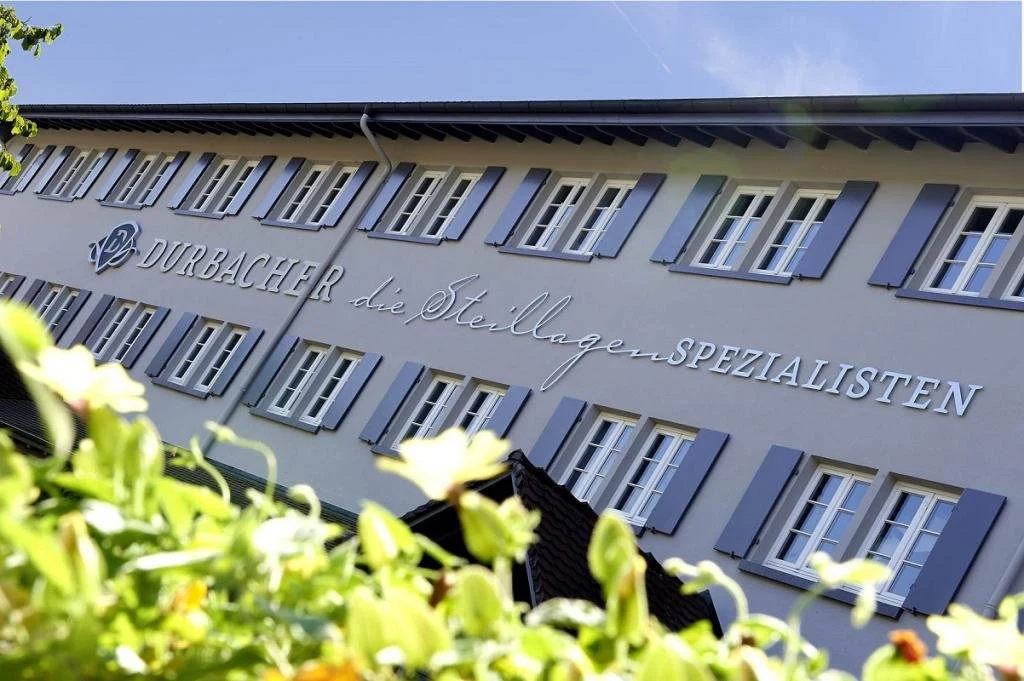
The cooperative’s strongest editorial argument is terroir rather than personality. Its identity as “die Steillagen Spezialisten,” the steep-slope specialists, matches the shape of Durbach itself. Vineyard sites including Kochberg, Ölberg, Plauelrain, and Steinberg allow the cellar to work across changes in exposure, elevation, and soil depth. In a region where Spätburgunder can gain generous fruit from Baden’s warmth, the slope is a form of discipline; in Klingelberger, Durbach’s local name for Riesling, altitude and drainage help keep the wine tied to line and structure.
The historical anchor is unusually clear. Wine growing in Durbach is documented from the 14th century, but 1782 remains the decisive reference point, when Margrave Carl Friedrich of Baden ordered Riesling planted on the Klingenberg plot. That act fixed Klingelberger into local vocabulary and gave Durbach a white-wine identity that still sits alongside Baden’s better-known Spätburgunder strength. The cooperative’s portfolio follows that duality: still red and still white wines, with Spätburgunder accounting for roughly half of plantings and Klingelberger acting as the second major pillar.
What the tasting format tells you about Durbach
A cooperative Vinothek has a different kind of authority from a trophy cellar. It can show breadth quickly. Here, the visitor is not being asked to decode a tiny allocation system or chase a named cuvée; the useful exercise is comparative tasting across Durbach’s main grapes and slope-derived styles. The format suits wine education, group visits, and solo drinkers who want context without ceremony. The atmosphere is quiet and rustic in the cooperative sense: practical, local, and organized around the glass rather than spectacle.
That makes the experience especially relevant for travelers new to Baden. Germany’s international reputation still leans heavily toward Riesling, yet Baden is one of the country’s key regions for Pinot varieties, especially Spätburgunder. Durbach’s position in the Ortenau gives both grapes a credible claim. The warmer valley conditions support red-wine ripeness, while the higher parcels and thinner soils keep whites from feeling slack. A tasting here should be approached less as a hunt for a single bottle and more as a map of how the valley works.
The cooperative also shows how tradition adapts without surrendering its local grammar. The newer “Schöne Zeit” line, including a Weißherbst Rosé and a Weißwein, points toward lighter, more flexible drinking occasions, while the core regional story remains tied to Spätburgunder and Klingelberger. That balance is a common tension in European cooperative wine: maintaining village identity while answering contemporary demand for approachable bottles. Durbach’s advantage is that its historical material is not vague. It has a named Riesling synonym, a documented 1782 planting story, and a cooperative founded in 1928.
How to place it in a Durbach wine itinerary
Durbacher Winzergenossenschaft makes sense early in a Durbach visit because it gives the broadest framework first. After that, smaller addresses can be read with better context: what they emphasize, what they omit, and how they interpret the same village conditions. For wider planning, use Our full Durbach wineries guide, then branch into local producers such as Graf Wolff Metternich, Heinrich Männle, Hofgut Wörner, Schwarzwald.Wein.Gut. Andreas Männle, and Weingut - Weinhaus Schwörer Inh. Josef Rohrer.
The practical rhythm is simple: treat the visit as a structured wine stop rather than a casual bar drop-in. The experience is appointment-led, casual in dress, and useful for groups, with on-site parking and a quiet tasting-room tempo. Its appeal is strongest for visitors who care about place: Baden, Durbach, steep slopes, and the cooperative model as a serious way of translating many growers into one village voice.
Round out the trip with the city guides around the glass: Our full Durbach restaurants guide, Our full Durbach hotels guide, Our full Durbach bars guide, and Our full Durbach experiences guide. For a broader German-speaking wine trail beyond Durbach, keep & Handwein in Mannheim, 2 Naturkinder in Kitzingen, 3 Winner in Bechtheim, »der Steiner« Hans Steiner in Podersdorf am See, and ®walzer in Gneixendorf Bei Krems on the longer list.
Questions
Frequently asked
How expensive is Durbacher Winzergenossenschaft?
Durbacher Winzergenossenschaft is listed at a price level of $$.
The field
How it compares
| Place | Notes |
|---|---|
| Durbacher Winzergenossenschaft | Durbach, $$ |
| Heinrich Männle | Durbach |
| Hofgut Wörner | Durbach |
| Weingut - Weinhaus Schwörer Inh. Josef Rohrer | Durbach |
| Weingut Andreas Laible | Durbach |
| Weingut Danner | Durbach |
| Winzerhof Alfred Huber | Durbach |