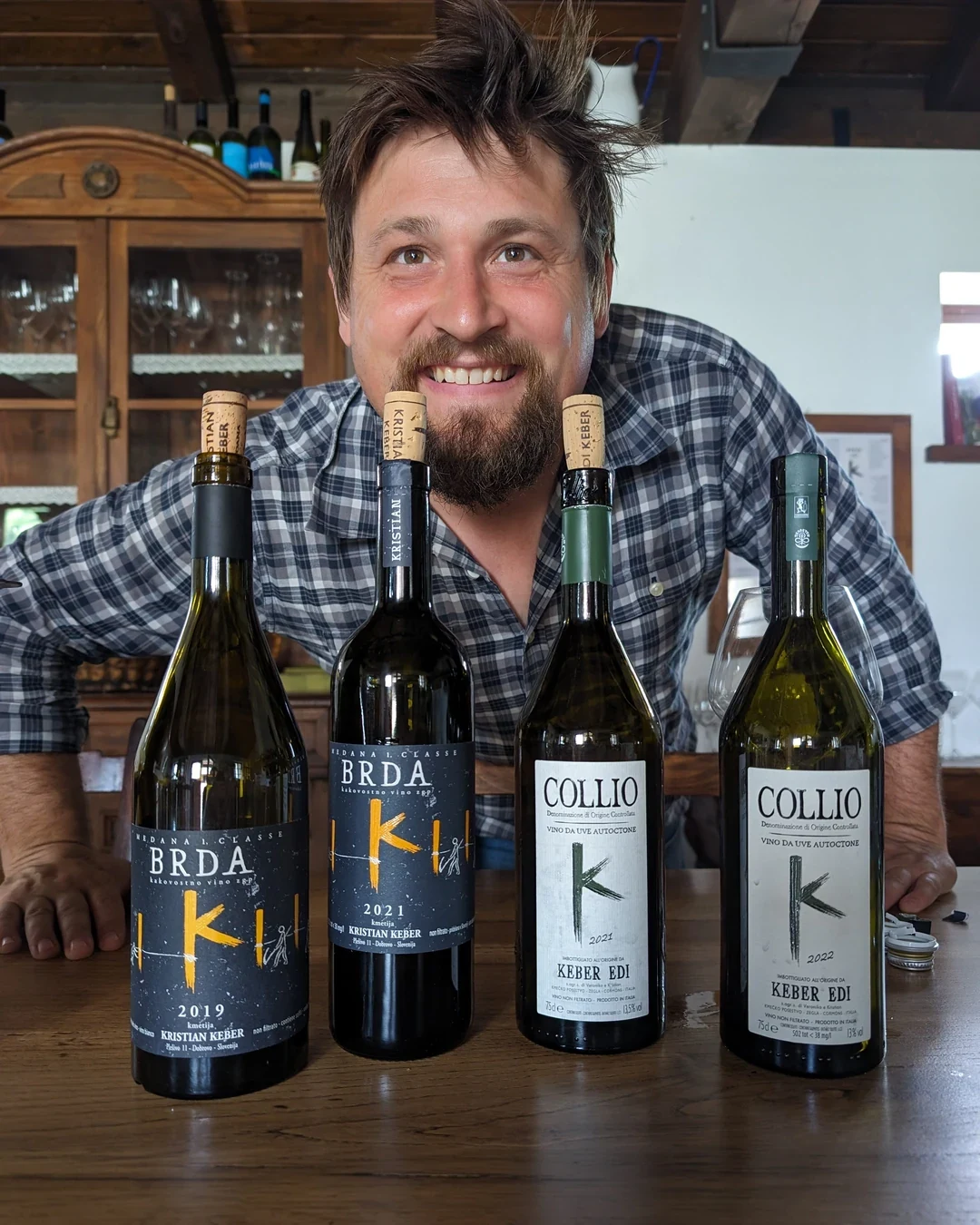
Kristian Keber, winemaker at Edi Keber in Cormons, works one Collio Bianco through ponca soils, native grapes and cement.
The fruit is sorted by area before it reaches cement. Kristian Keber, winemaker at Edi Keber in Cormons, keeps the Collio Bianco close to its old form in the Zegla cru, a few meters from the Slovenian border. He has held the role here since 2008, working in a family estate whose modern story begins with the 1957 vintage and whose vineyards sit on ponca, the friable marl and sandstone that marks this corner of Collio. The house makes essentially one wine, a white blend from Friulano, Ribolla Gialla and Malvasia Istriana, and Kristian’s station is the line between inheritance and decision. His grandfather Roman’s old vineyard in Goriška Brda shaped his own label across the border, but at Edi Keber the discipline is Collio: one cru, native varieties, cement, patience. The family history reaches back more than 300 years of cultivation, with great-grandfather Pepi among the early bottlers in the region. Edi Keber’s own turn came with the choice to return the estate to the traditional Collio Bianco, away from international varieties and back toward the wine that once defined the territory. Kristian continues that method in the vineyard and cellar, while Veronika Keber runs the office and hospitality programs.
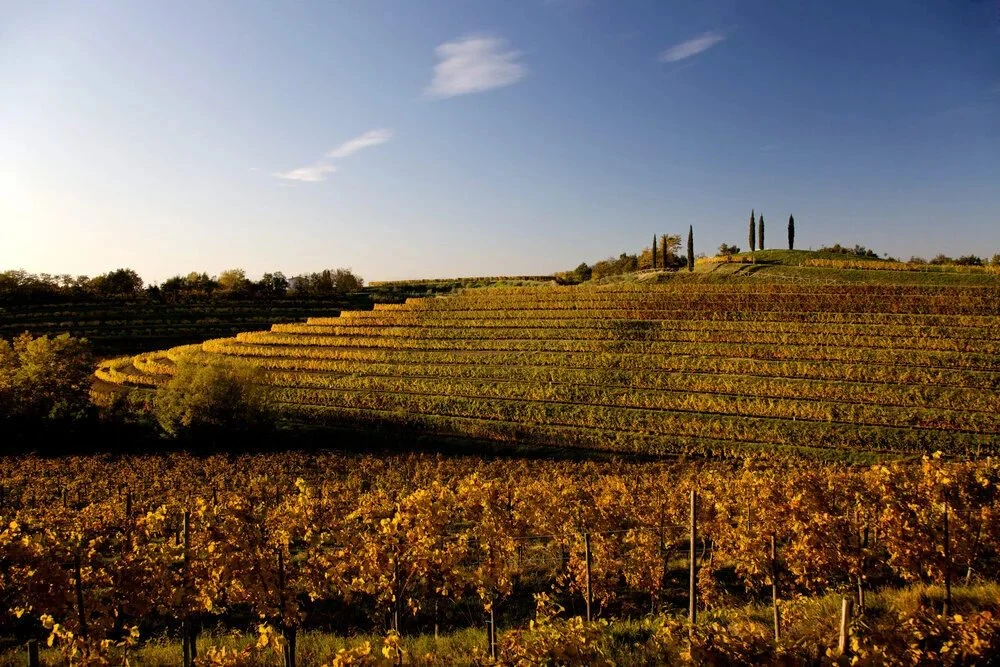
The estate works 12 hectares in Zegla, where ponca can be crumbled by hand yet gives the vines a spare, mineral ground. The yields are small, listed at 1 to 1.5 kg per vine, and the varieties grow intermixed rather than as a cellar correction made later. The proportions for the Collio Bianco are 70%, 15% and 15%, harvested together at maturity, then pressed and kept distinct by area, including Zegla, Plessiva, Quarin and Cormons. Fermentation starts spontaneously, without added yeasts. The wine stays in old cement vats bought by Pepi in the 1960s, not in stainless steel, and matures for more than a year before bottling after at least 18 months. It spends two winters in the cellar and is released without filtration. Kristian has used organic and biodynamic practices here since 2013, with Demeter biodynamic certification alongside organic certification. Copper use is kept below 2 kg per ha of pure copper, with nettle and horsetail teas part of the vineyard work.
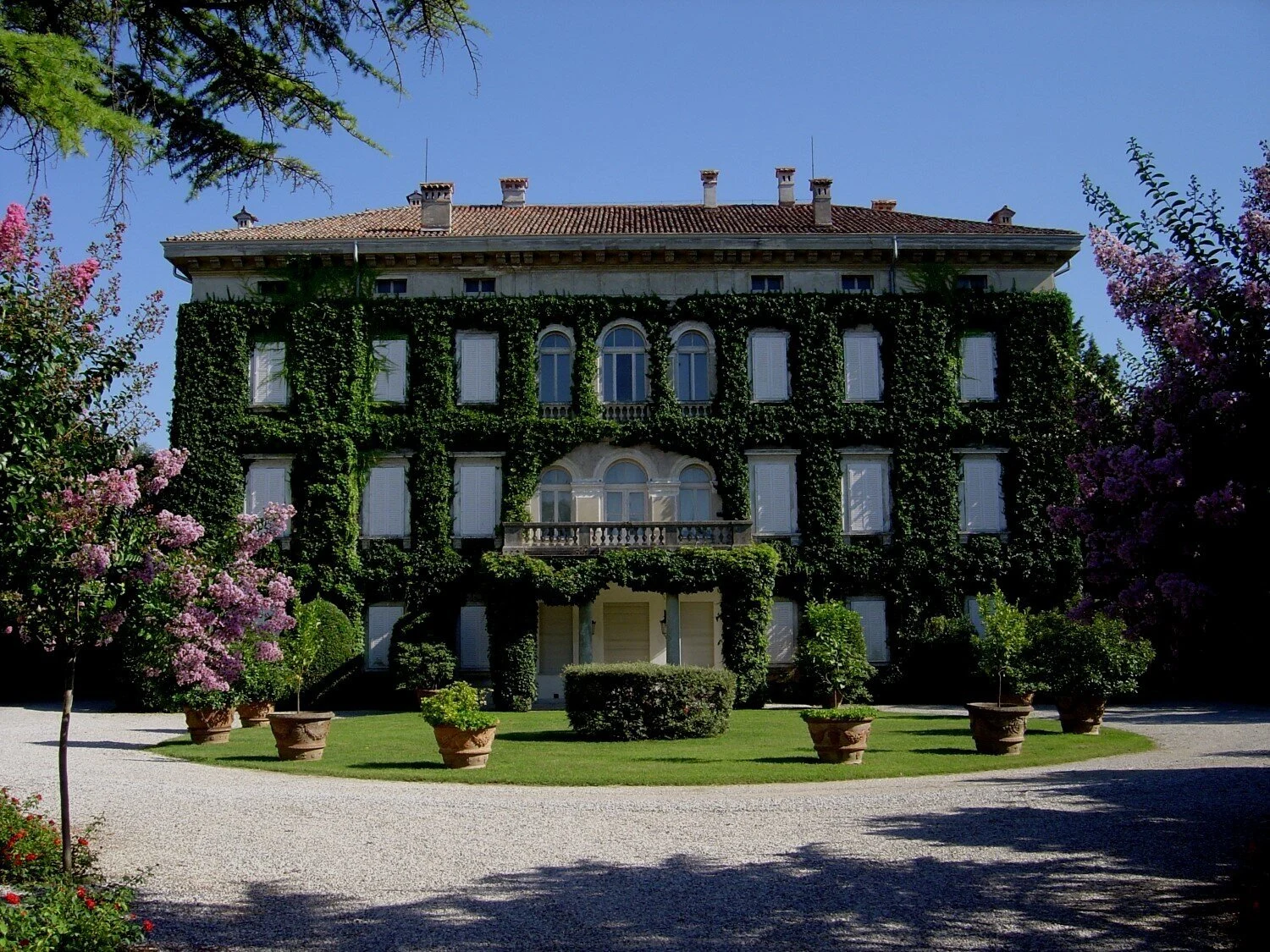
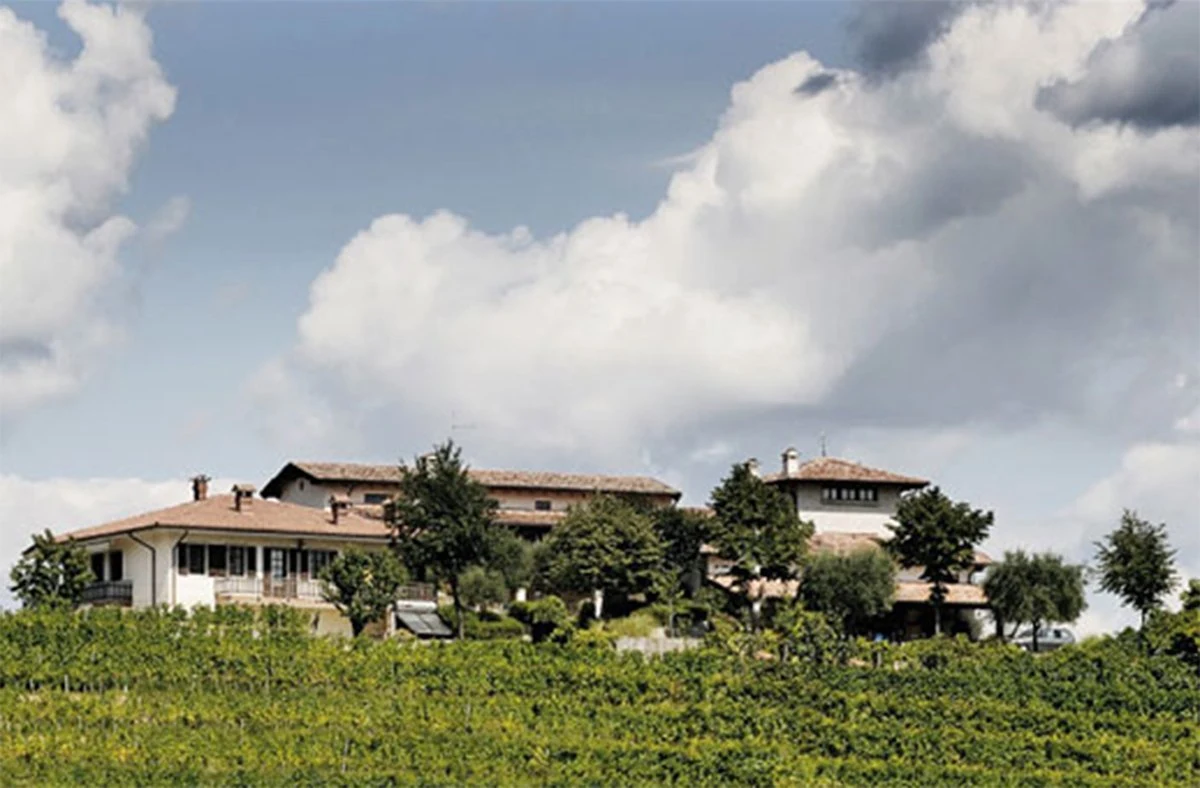
The place feels closer to a working farmstead than to a polished tasting room. Vineyards surround the house in Loc. Zegla, the cellar holds cement rather than new display, and the quiet is part of the program: vineyard, tank, glass, then the family’s account of why this blend still matters here. Visitors are received through vineyard and cellar visits with local products alongside the wine, but the tone stays bench-side, not theatrical. The Collio bottle itself carries some of that restraint, with its conical neck and lighter weight. In the glass, the current release is the same argument the cellar makes in material form: native grapes, ponca, cement, time. Edi Keber produces 48,000 bottles annually of Collio Bianco, including the 2022 vintage, which received 92 points from Wine Advocate. For now, the next movement at this address remains the same patient one: Kristian Keber following the 2022 Collio Bianco through cement and bottle.
Cormons, Friuli-Venezia Giulia, Italien
Zegla