El Pedrusco de Aldealcorvo
In Residence
Gonza de Pedro
Chef
- 01CuisineTraditional Castilian Asador
- 02CityMadrid, Spain
- Michelin Plate · 2026
- Opinionated About Dining Top Restaurants in Europe Recommended · 2026
- Macarfi 7.7 Food Rating · 2026
- Opinionated About Dining Top Restaurants in Europe Ranked #315 · 2025
- Michelin Plate · 2025
- Michelin Plate · 2024
Wood, Fire, and the Weight of Castilian Tradition
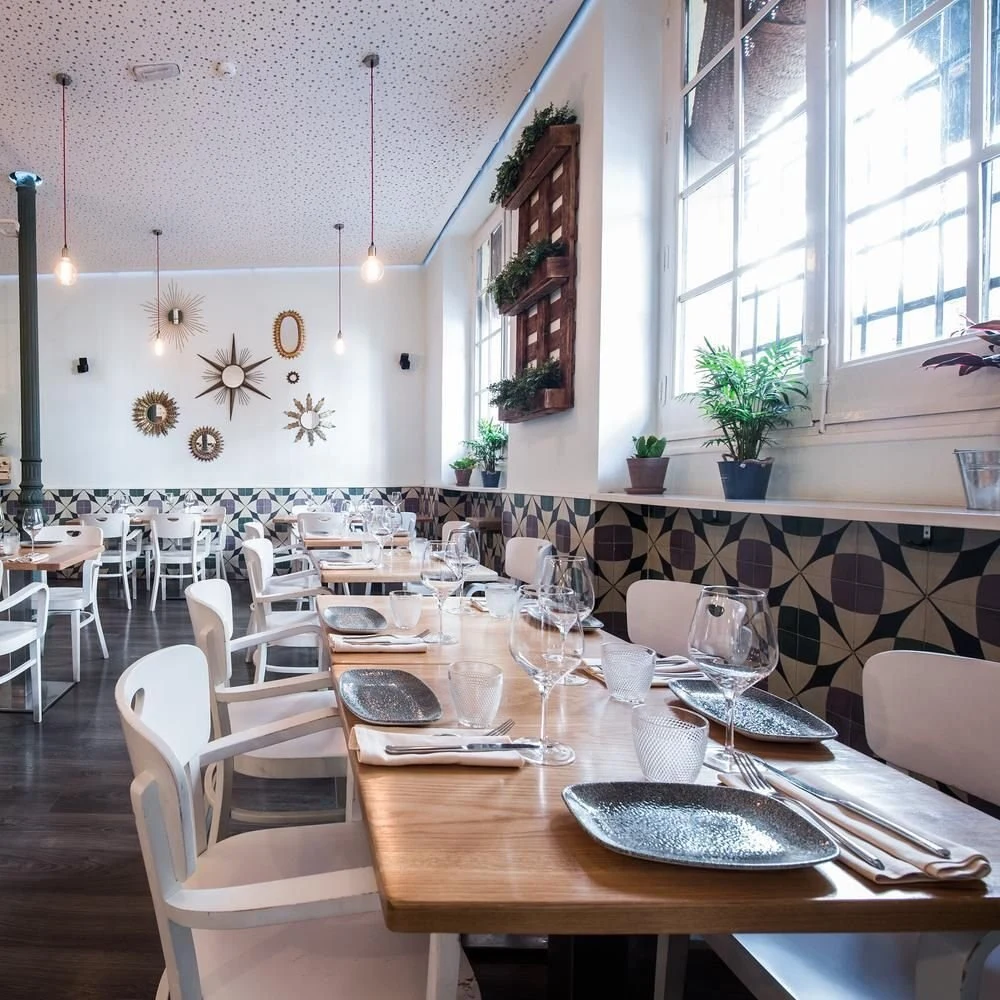
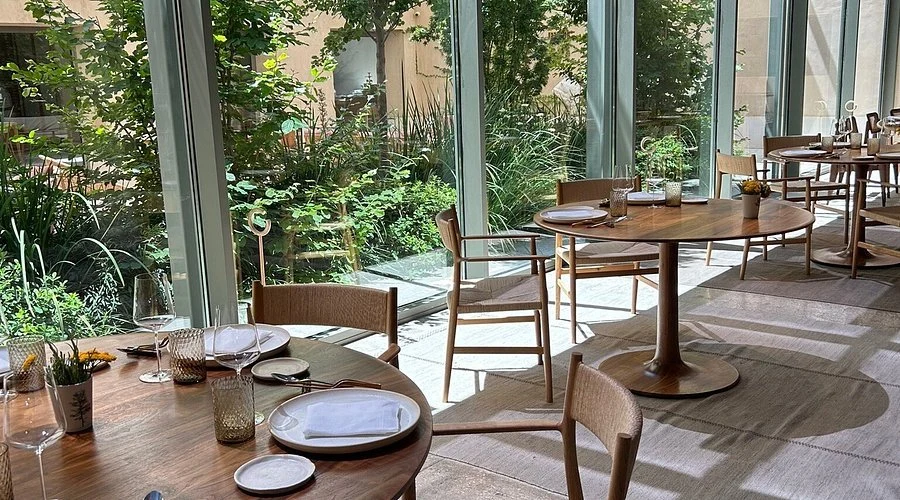
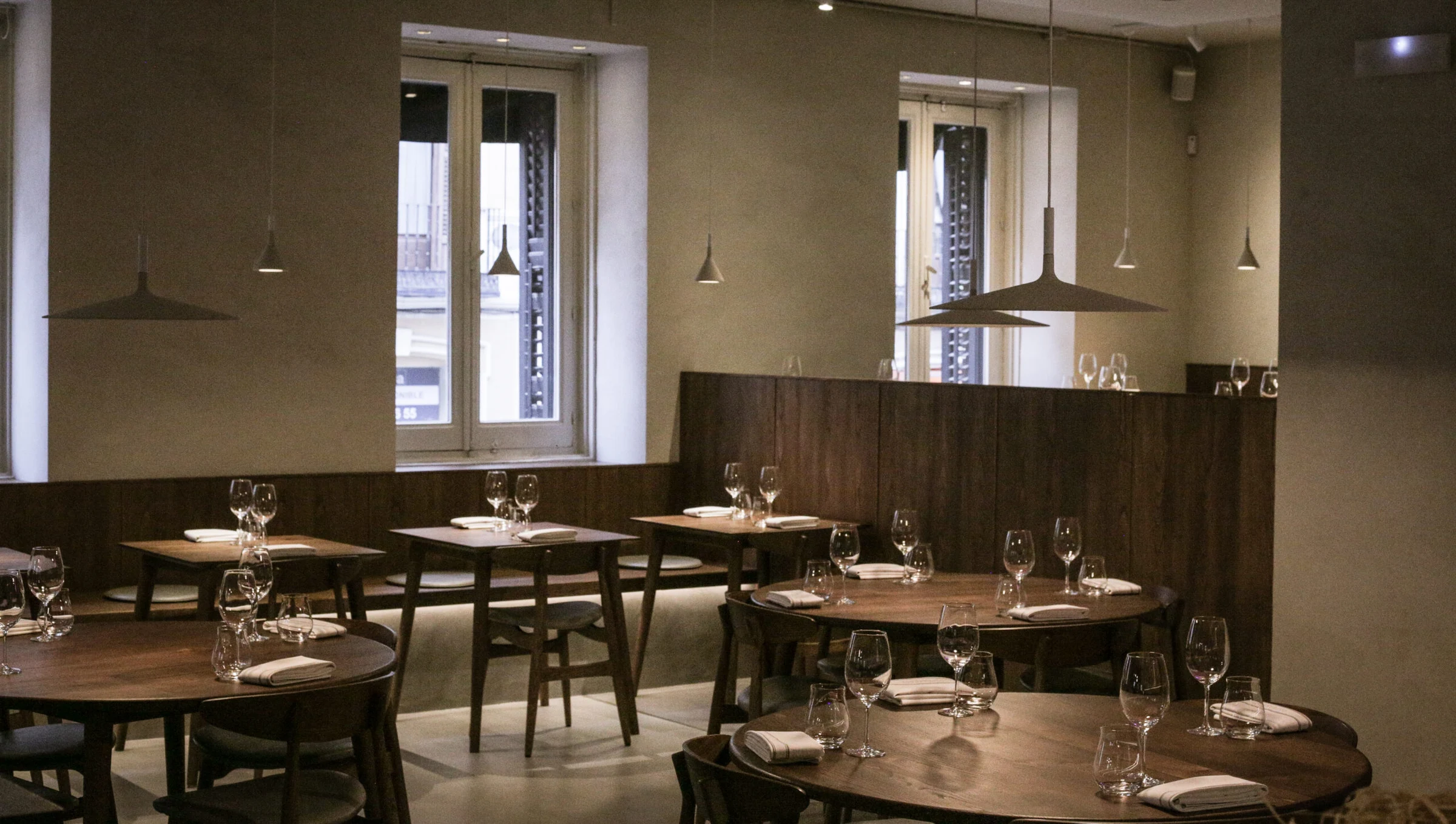
Chamberí is one of Madrid's more residential and understated central districts, the kind of neighbourhood where locals eat rather than tourists graze. On Calle de Juan de Austria, the approach to El Pedrusco de Aldealcorvo signals its intentions immediately: the architecture and interior carry what the Michelin inspectors describe as an "elegant Castilian air", a register that draws on the inland Spanish tradition of stone, wood, and unhurried hospitality rather than the stripped-back modernism that has defined so much of Madrid's recent dining renovation. Before a dish arrives, the room itself is making an argument about what kind of cooking you're about to encounter.
That argument is not about subtlety or provocation. Castilian roasting culture, centred on the Meseta plateau that stretches northwest of Madrid through Segovia and Ávila, is one of Spain's most specific and demanding culinary traditions. The wood-fired horno de asar, the roasting oven, is its instrument, and the standard it sets is uncompromising. The leading examples produce lamb and suckling pig with crackling skin, interiors of almost impossible tenderness, and a depth of flavour that owes everything to live fire and very little to intervention. El Pedrusco de Aldealcorvo operates a century-old wood-fired oven that is still in active use, and the kitchen's output is built around it.
The Sunday letter
Find new places through the people who run them.
Our Sunday email brings you the chefs, winemakers and hoteliers behind our newest stories. See a sample before you subscribe.
See a sample of the Sunday emailOne email a week. Unsubscribe from any issue.
The Oven as Editorial Statement
Madrid's dining conversation in the last decade has been dominated, reasonably enough, by its tasting-menu restaurants. DiverXO holds three Michelin stars and operates at the furthest extreme of creative cooking. Coque, Deessa, and Paco Roncero each hold two Michelin stars and operate at the €€€€ tier with ambitious multi-course formats. DSTAgE adds further creative-Spanish depth to the upper bracket. These are the restaurants that generate international editorial coverage and shape the city's fine-dining identity.
El Pedrusco de Aldealcorvo sits in a completely different conversation. Its Michelin Plate recognition (2025) and ranking of #315 in the Opinionated About Dining Leading Restaurants in Europe (2025) place it among a comparable set of serious, quality-led traditional restaurants rather than tasting-menu destinations. At the €€ price point, it occupies the register that defines how most Madrileños actually eat well, through product, repetition, and mastery of a narrow brief rather than format experimentation. The wood-fired oven is not a nostalgic flourish; it is the central technical claim of the kitchen, and the Michelin Plate signals that the inspectors found that claim credible.
Across Spain's broader dining scene, the relationship between tradition and creativity has produced some of its most significant restaurants. El Celler de Can Roca in Girona, Arzak in San Sebastián, and Azurmendi in Larrabetzu each built their reputations partly by engaging seriously with regional tradition before extending it. The Castilian asador tradition that El Pedrusco de Aldealcorvo represents is a distinct strand of that inheritance: less theorised, more direct, and entirely dependent on the quality of the primary product and the operator's relationship with fire.
What the Kitchen Produces
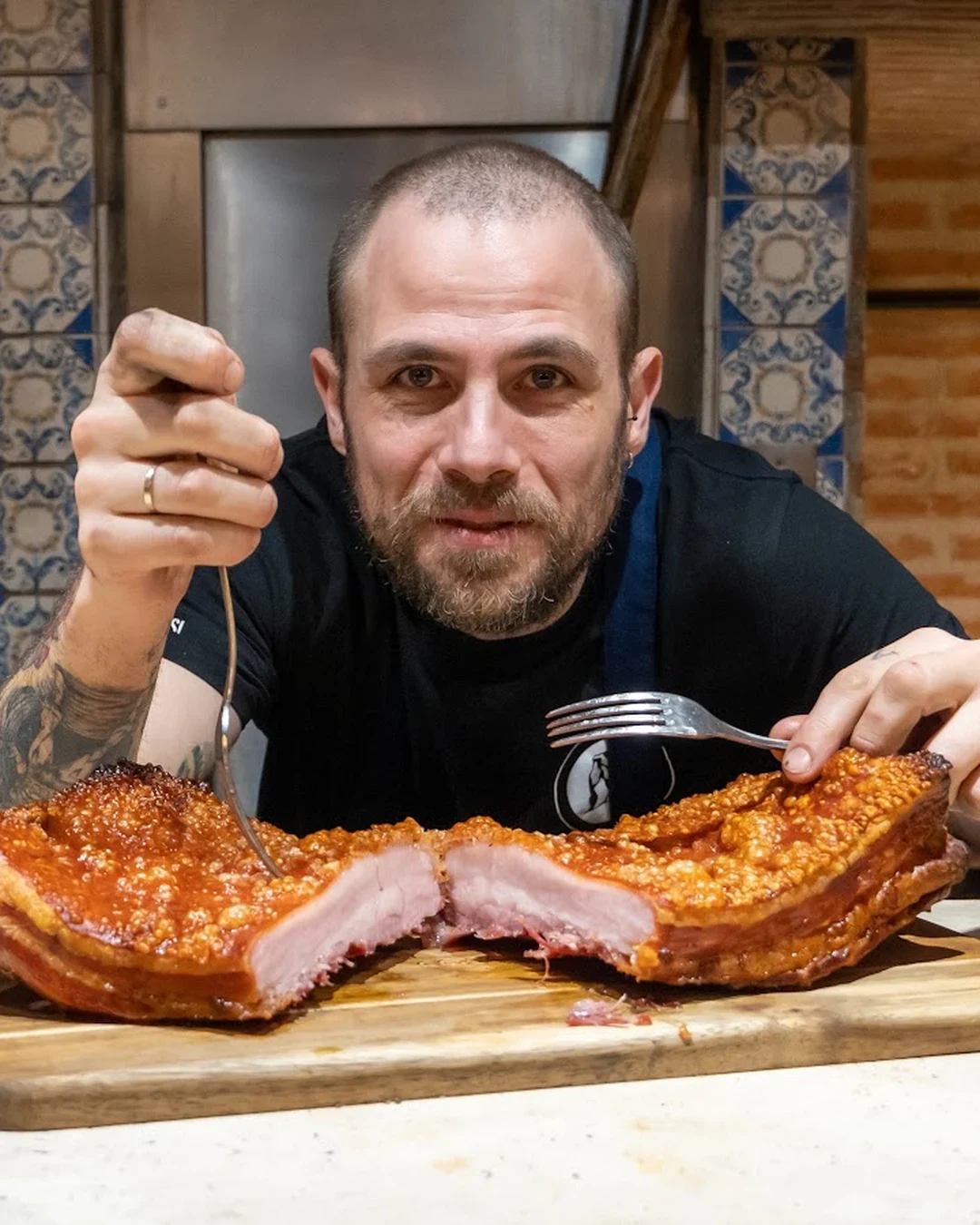
The menu centres on roast lamb and suckling pig, which the Michelin record describes as "the undoubted stars." The kitchen's approach is characterised by lightness of touch alongside intense flavour, a combination that is harder to achieve than it sounds in wood-fired roasting, where the margin between underdone and overworked is narrow and unforgiving. The century-old oven's thermal mass and seasoning play a role that a modern combi oven cannot replicate; this is one of the cases in which equipment age is a genuine quality variable rather than a marketing point.
Beyond the roasts, the menu draws on the broader cooking tradition of the Meseta, dishes built from the ingredients and techniques of Castile's agricultural and pastoral interior. Among the specific preparations called out in the Michelin record, the torreznos deserve particular attention: fried bacon pieces that are first roasted in the wood oven and then finished in extra-virgin olive oil. In a city where torreznos appear on menus at various levels of quality, the two-stage technique employed here, oven then oil, is a point of genuine differentiation. The result is reportedly lighter than the standard version while retaining the textural contrast that makes the dish compelling.
Chef Gonza de Pedro runs the kitchen, and the restaurant is operated as a family business by two brothers. In the context of this particular category, traditional Castilian cooking at a serious level, the family structure and single-location focus are themselves markers of credibility. The discipline required to maintain consistent wood-fired roasting over time rewards commitment rather than scalability.
On the Wine Question
The editorial angle of wood-fired Castilian cooking points naturally toward the red wines of the surrounding regions. The Meseta's culinary tradition has historically paired with the Tempranillo-dominated appellations of Ribera del Duero and, to the west, Toro, wines built for lamb and pork, with the structural weight and dark fruit to work alongside live-fire cooking. More recently, the reclamation of older Garnacha plantings in areas like Cebreros and Gredos, both within Madrid's accessible radius, has opened a parallel set of lighter, more aromatic pairings that have attracted significant sommelier attention across the city's serious restaurants.
The profile of the kitchen, traditional Castilian, wood-fired, product-led, suggests that a thoughtful regional cellar is the logical complement. Spain's wider picture of ambitious restaurant cooking, for reference, includes the seafood-focused work at Aponiente in El Puerto de Santa María, the sibling-kitchen model at Cocina Hermanos Torres in Barcelona, and the long-established Basque authority of Martin Berasategui in Lasarte-Oria, a useful map of how differently Spain's regional traditions have been codified at the leading level.
Planning Your Visit
El Pedrusco de Aldealcorvo is located at Calle de Juan de Austria, 27, in the Chamberí district of Madrid. Chamberí is well-connected by metro and sits within easy reach of central Madrid. The restaurant holds a Google rating of 4.6 from 910 reviews, a signal of consistent performance over volume.
Know Before You Go
- Address: C. de Juan de Austria, 27, Chamberí, 28010 Madrid, Spain
- Cuisine: Castilian, with roast lamb and suckling pig as the kitchen's primary focus
- Price range: €€
- Recognition: Michelin Plate (2024, 2025); Opinionated About Dining Leading Restaurants in Europe #315 (2025)
- Google rating: 4.6 from 815 reviews
- Booking: Reservation recommended
- Hours: Mon: Closed; Tue: 1:30–6 PM; Wed: 1:30–6 PM; Thu: 1:30–6 PM; Fri: 1:30–6 PM, 9 PM–12 AM; Sat: 1:30–6 PM, 9 PM–12 AM; Sun: Closed
What Should I Eat at El Pedrusco de Aldealcorvo?
The roast lamb and suckling pig are the kitchen's primary focus, cooked in a century-old wood-fired oven and representing the Castilian asador tradition at its most direct. The torreznos, oven-roasted then finished in extra-virgin olive oil, are called out specifically in the Michelin record as worth ordering. Beyond those, the menu draws on the broader cooking of the Meseta, the agricultural inland plateau that defines this culinary tradition. At the €€ price point, the restaurant sits in a different register from Madrid's three-star creative kitchens and modern Spanish tasting menus, the logic here is product quality and fire, not format innovation. For international comparisons of product-led cooking at serious restaurants, Le Bernardin in New York City and Atomix in New York City offer useful reference points for how a narrow brief, executed with discipline, builds long-term critical credibility.
Questions
Frequently asked
Who works at El Pedrusco de Aldealcorvo?
Made By profiles Gonza de Pedro (Chef) at El Pedrusco de Aldealcorvo.
How expensive is El Pedrusco de Aldealcorvo?
El Pedrusco de Aldealcorvo is listed at a price level of $$$.
Where is El Pedrusco de Aldealcorvo and what does it serve?
El Pedrusco de Aldealcorvo is in Trafalgar, Madrid, serving Traditional Castilian Asador.
The field
How it compares
| Place | Cuisine | Notes | Awards |
|---|---|---|---|
| El Pedrusco de Aldealcorvo | Traditional Castilian Asador | Trafalgar, $$$ | · |
| Coque | Modern Spanish Fine Dining | Madrid | Michelin 2 Stars |
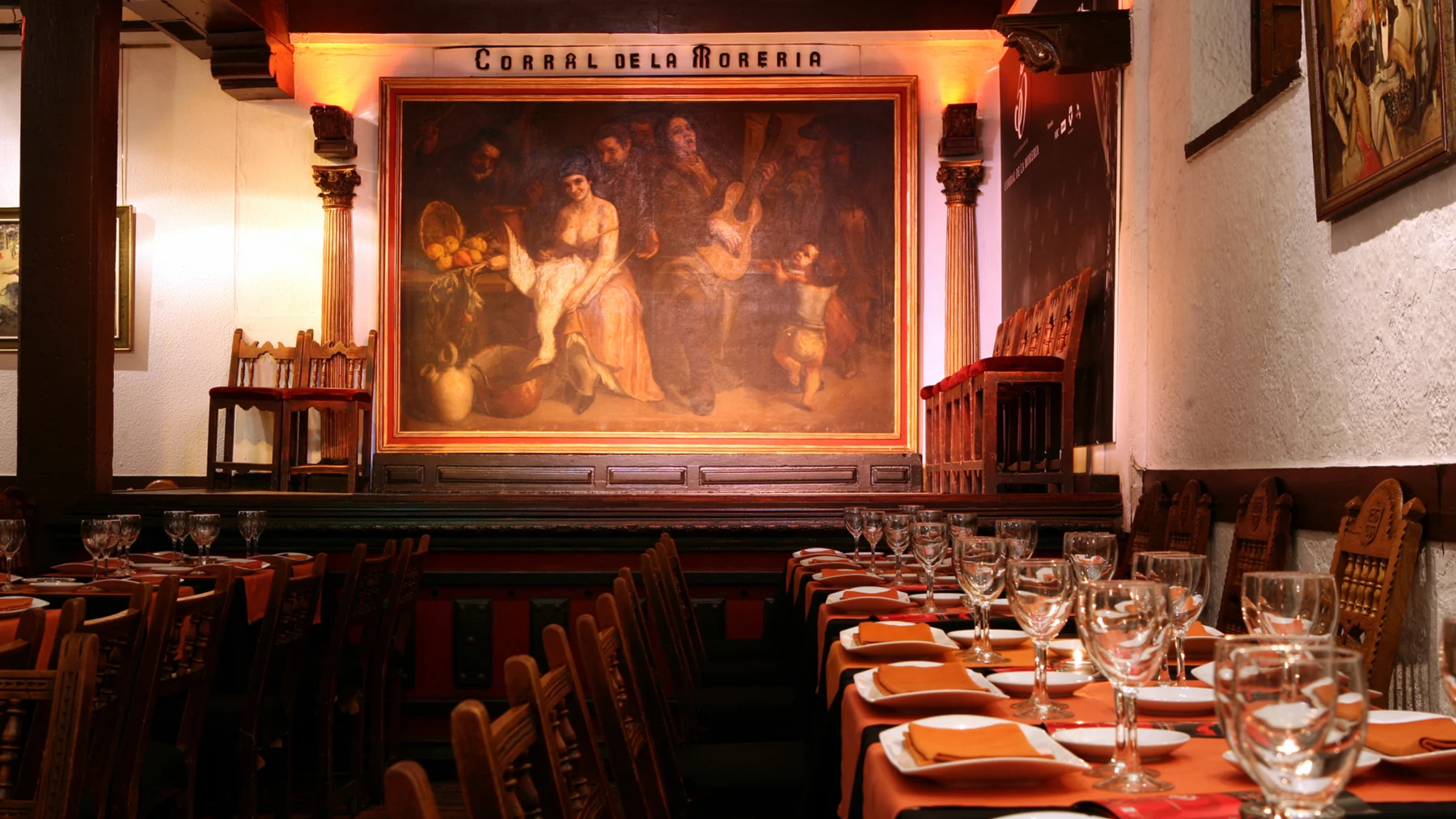
| Corral de la Morería | Modern Spanish Fine Dining with Flamenco | Madrid | Michelin 1 Star |
| Desde 1911 | Premium Seafood Fine Dining | Madrid | Michelin 1 Star |
| DiverXO | Avant-Garde Spanish Tasting Menu | Madrid | Michelin 3 Stars, World's 50 Best |
| DSTAgE | Avant-Garde Spanish Tasting Menus | Madrid | Michelin 2 Stars |
| Paco Roncero | Avant-Garde Spanish Fine Dining | Madrid | Michelin 2 Stars |
In residence
Similar places
Modern Spanish Fine Dining
Coque
Madrid, Spain
★★
Modern Spanish Fine Dining with Flamenco
Corral de la Morería
Madrid, Spain
★
Premium Seafood Fine Dining
Desde 1911
Madrid, Spain
★
Avant-Garde Spanish Tasting Menu
DiverXO
Madrid, Spain
★★★ · 50 Best
Avant-Garde Spanish Tasting Menus
DSTAgE
Madrid, Spain
★★
Avant-Garde Spanish Fine Dining
Paco Roncero
Madrid, Spain
★★

The Sunday letter
Get the next Made By story in your inbox.
We send one email every Sunday morning with the places and people we covered that week.
See a sample of the Sunday emailOne email a week. Unsubscribe from any issue.