Elías
- 01CuisineTraditional Valencian Rice and Grill
- 02CityXinorlet, Spain
Rice over old vine shoots
- Michelin Bib Gourmand · Michelin Guide
- Michelin Bib Gourmand · 2026
- Opinionated About Dining Casual in Europe Ranked #19 · 2026
- Macarfi 7.8 Food Rating · 2026
- Star Wine List · 2026
- Michelin Bib Gourmand · 2025
- Opinionated About Dining Casual in Europe Ranked #54 · 2025
- Opinionated About Dining Casual in Europe Ranked #69 · 2024
- Michelin Bib Gourmand · 2024
- Opinionated About Dining Casual in Europe Ranked #52 · 2023
Rice set over vine wood
The rice reaches the fire before the room has settled at Elías in Xinorlet, a house built around that single gesture. The restaurant’s public story begins with Elías Rodríguez and Antonia Abad, who founded it in 1984 as a modest casa de comidas in the inland Alicante village also written as Chinorlet or El Xinorlet, a pedanía of Monóvar. Their stated aim was to keep the simplicity of Mediterranean cooking legible rather than to modernise it, using produce from the family huerto and cooking over embers and sarmientos. At Elías, the language is older than polish: rabbit, snails, rice, embers, saffron, the dry scent of vine shoots.
The house keeps its attention on traditional Valencian rice and grill work rather than novelty. This address carries a Bib Gourmand in the 2026 Michelin Guide España, recognition for quality at a fair price rather than for ceremony. A paella pan sits low over live sarmientos. The cook watches the grain, the smoke, the liquid line, the forming socorrat. The method asks for patience rather than ornament.
The grill as the central station
Elías cooks its best-known rice with rabbit and snails over open flame, with the fire visible through a glass-walled kitchen. The kitchen treats sarmientos, old vine shoots, as more than fuel; they give the rice and grilled dishes a dry, rural perfume tied to the vineyards around Monóvar, Yecla, and Jumilla. The dish is not made heavy with garnish. It depends on the depth of the stock, the saffron, the thickness of the rice across the pan, and the crisp base that forms only when the heat is judged correctly.
The same fire carries grilled octopus, artichokes, snails, eggs with peppers and ham, mushrooms with truffle, and other starters that stay close to inland Alicante cooking. A sliced potato, truffle, and egg plate is mixed at the table. Gachamiga, roasted almonds, baby squid, and hake salad sit in the same register: product first, technique kept visible, richness checked by salt, smoke, or acidity. The house garden supplies part of the kitchen’s produce, and the menu keeps that country-house habit inside a more finished room.
A cellar behind glass
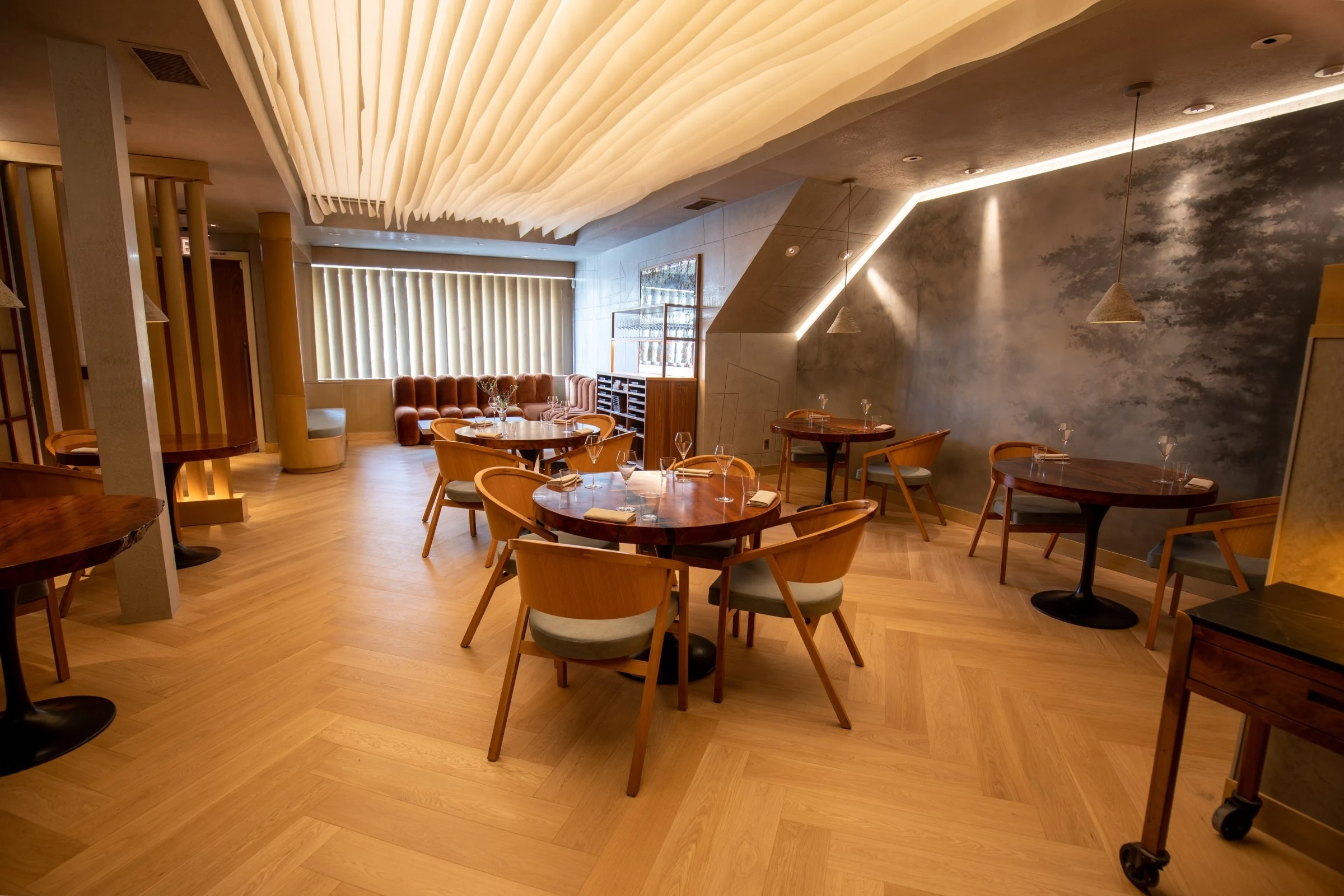
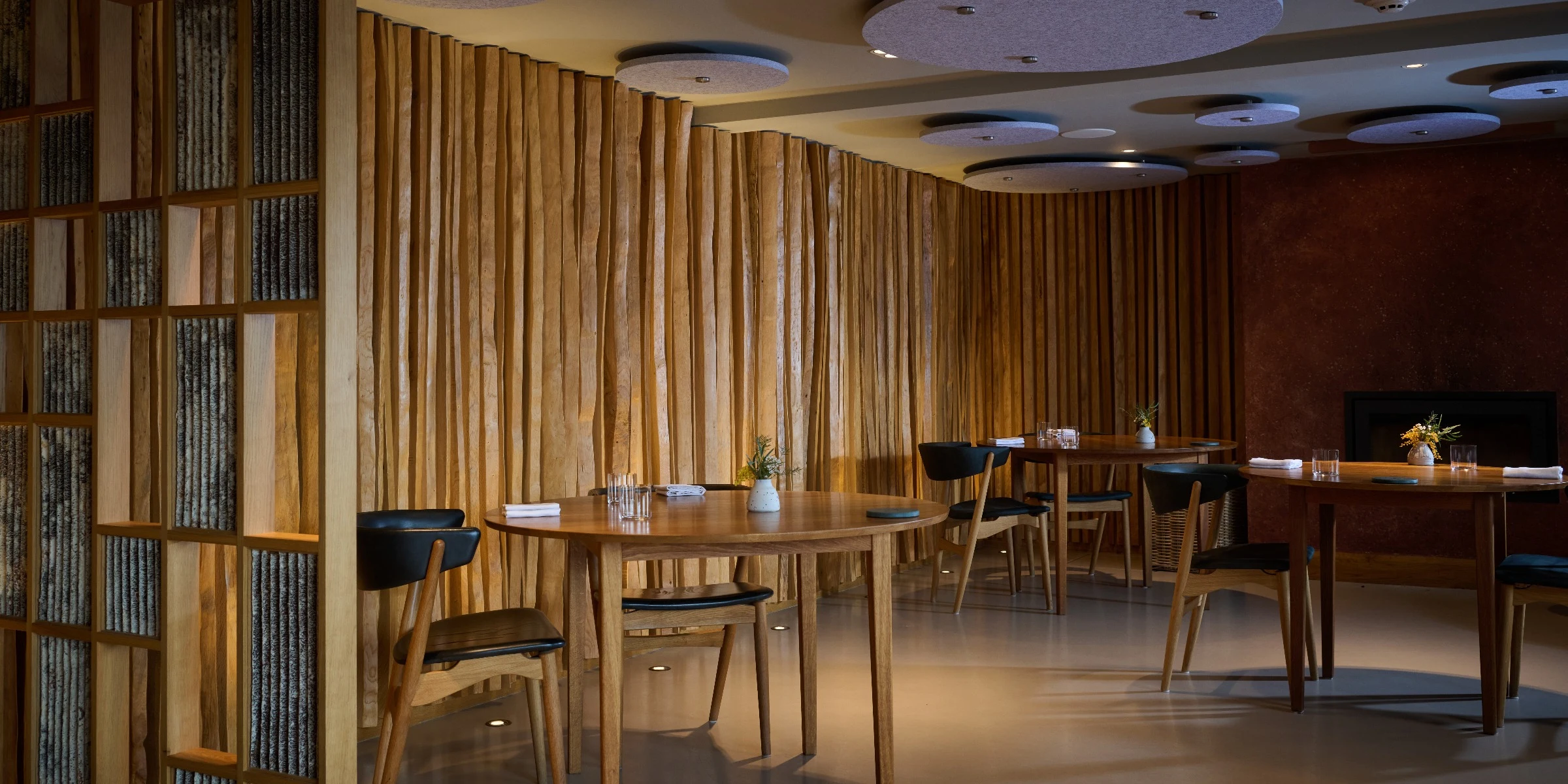
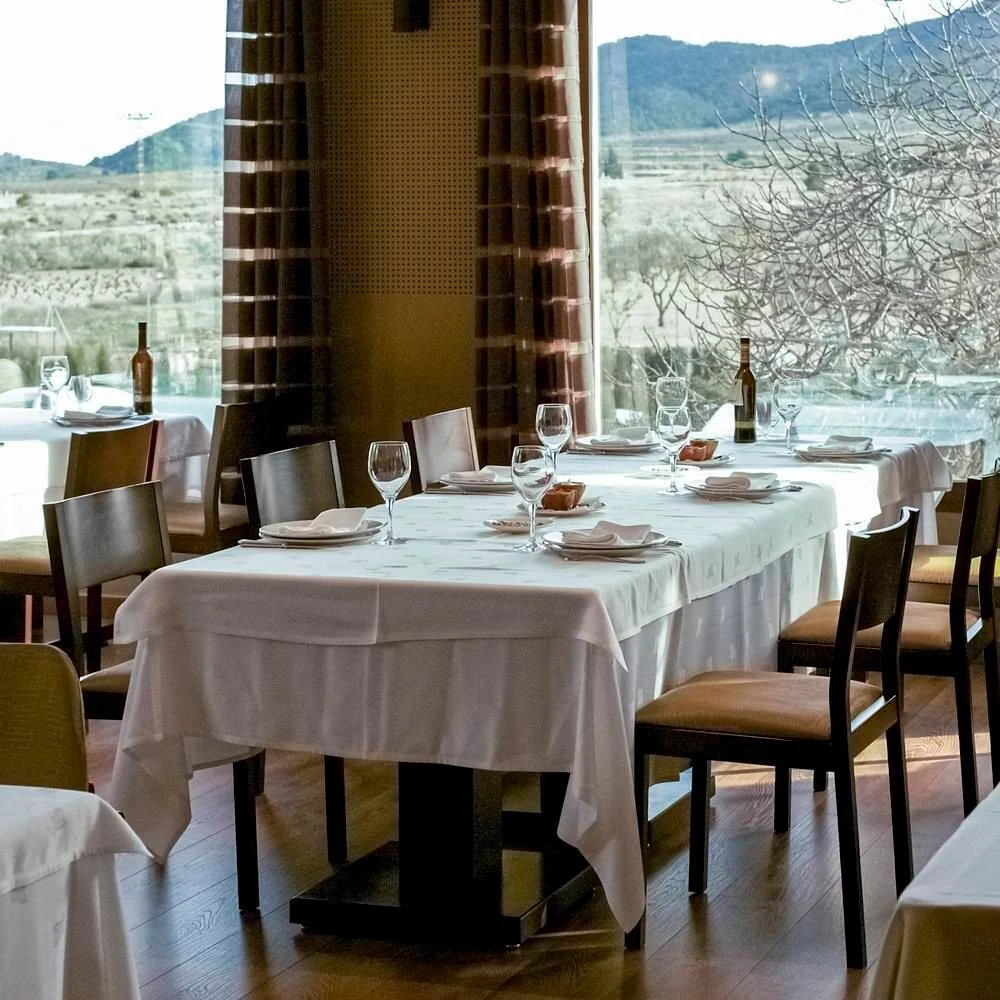
The room has the restraint of a renovated casa de campo: contemporary lines, country warmth, and a view into the work rather than a wall between guest and craft. The open-view grill gives the service a pulse. Flames rise, pans move, smoke gathers and clears. Conversation stays low enough for the crackle to matter.
José María Vicente’s wine program holds the other side of the place. The glass-fronted cellar leans toward regional bottles, especially Monastrell from nearby denominaciones de origen, with Spanish names, cavas, sherries, and vinos de pasto in the wider collection. The pairing logic is local rather than decorative. Rabbit and snails want structure, not sweetness; grilled octopus wants cut and salt. In this room, the cellar and the pass answer the same landscape.
The old village form, kept in use
What matters at Elías is not that a small inland restaurant became polished. It is that the polish did not erase the village form. The founding casa de comidas remains legible in the way rice is treated as a main act, not a side dish, and in the way the grill holds the room’s attention without theatre. If the house’s future is written anywhere, it will be in the pan where rabbit, snails, saffron, and socorrat meet at Elías.
Questions
Frequently asked
What kind of cooking does Elías do?
Elías in Xinorlet focuses on traditional Valencian rice and grill work, with rice cooked over live sarmientos and a grill treated as the central station.
What is the restaurant best known for?
Its best-known rice is cooked with rabbit and snails, and grilled octopus is another named dish.
Does Elías have any recognition?
The restaurant carries a Bib Gourmand in the 2026 Michelin Guide España.
What is the setting like?
The room has the restraint of a renovated casa de campo, with a glass-walled kitchen and a view into the grill and cellar rather than a separation between dining room and work.
The field
How it compares
| Place | Cuisine | Notes | Awards |
|---|---|---|---|
| Elías | Traditional Valencian Rice and Grill | Xinorlet, $$$ | · |
| Alchemist | Avant-Garde Molecular Gastronomy with Social Commentary | Copenhagen | Michelin 2 Stars, World's 50 Best |
| Atelier Crenn | Contemporary French Fine Dining | San Francisco | Michelin 3 Stars, World's 50 Best |
| CORE by Clare Smyth | Modern British Fine Dining | London | Michelin 3 Stars, World's 50 Best |
| Jordnær | Modern Nordic Seafood Fine Dining | Gentofte | Michelin 3 Stars, World's 50 Best |
| Ta Vie | Modern French-Japanese Fine Dining | Hong Kong | Michelin 3 Stars, World's 50 Best |
| The Angel | Modern British-Japanese Fusion | Hetton | Michelin 1 Star |
Similar places
Avant-Garde Molecular Gastronomy with Social Commentary
Alchemist
Copenhagen, Denmark
★★ · 50 Best
Contemporary French Fine Dining
Atelier Crenn
San Francisco, United States
★★★ · 50 Best
Modern British Fine Dining
CORE by Clare Smyth
London, United Kingdom
★★★ · 50 Best
Modern Nordic Seafood Fine Dining
Jordnær
Gentofte, Denmark
★★★ · 50 Best
Modern French-Japanese Fine Dining
Ta Vie
Hong Kong, Hong Kong
★★★ · 50 Best
Modern British-Japanese Fusion
The Angel
Hetton, United Kingdom
★