ELEZO ESPRIT
In Residence
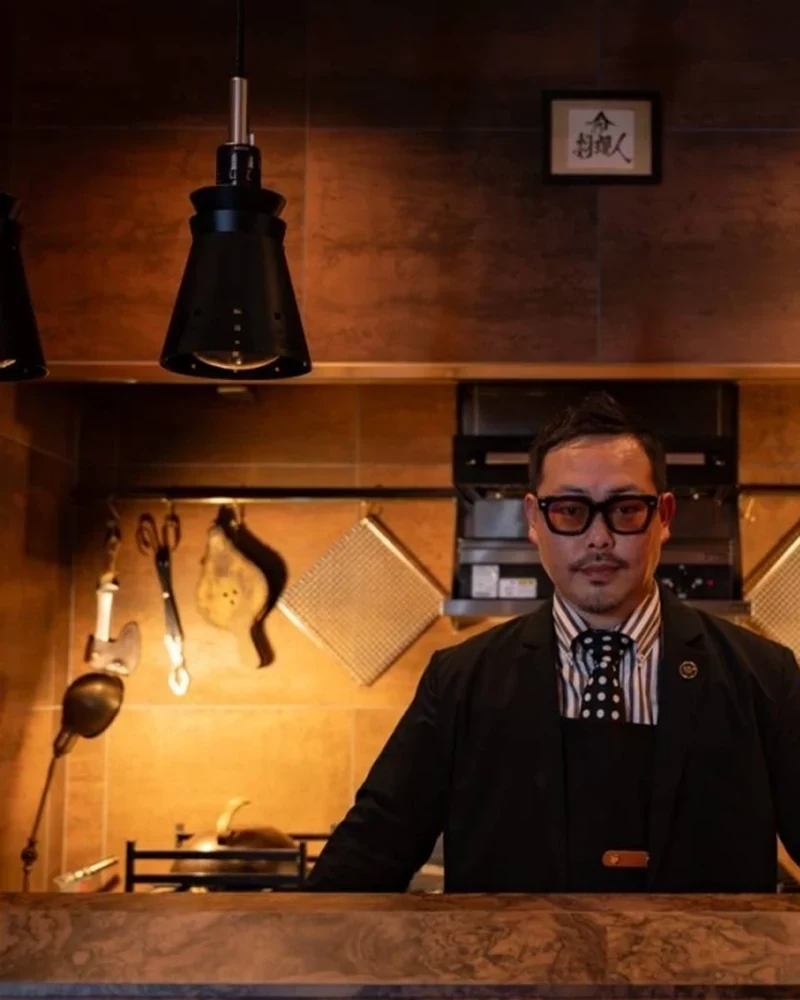
Shota Sasaki
Chef
- 01CuisineModern Japanese Game-Meat Fine Dining
- 02CityHokkaido, Japan
- Opinionated About Dining Top Restaurants in Japan Recommended · 2026
- The Japan Times Destination Restaurants Destination Restaurants Selection #1 · 2024
Rural Hokkaido dining differs from entering a city restaurant district. The scale shifts first: fields, colder air, longer distances, and the sense that dinner is tied to what the region can raise, not what a market can import by noon. ELEZO ESPRIT belongs to that geography. Its Otsu address places it outside usual urban food circuits, and its French category matters less as a passport stamp than as a technique language for Tokachi’s land-based produce.
Hokkaido is often sold through dairy, crab, uni, melon, and winter powder. Tokachi adds pasture, livestock, wheat, beans, and the hard practicality of pioneer agriculture. A meat-focused restaurant here is not simply chasing richness; it works with a regional identity built around breeding, butchery, preservation, and the full cost of turning animals into cuisine. The stated link to Tokachi’s pioneer spirit is more than a tagline; it signals a kitchen interested in provenance before plate styling.
Tokachi provenance gives the French frame its weight
French cooking in rural Japan can go two ways: treating the countryside as scenery for imported luxury cues, or letting the region set the terms while French structure sharpens what is already there. ELEZO ESPRIT sits in the latter category by identity: French in classification, meat-led in subject, Hokkaido in logic.
That distinction matters because Hokkaido’s restaurant culture is not one scene. Sapporo has density and late-night rhythm; resort towns have international demand; remote dining rooms carry a different burden, because the meal must justify the journey through substance rather than convenience. In that setting, a meat-based culinary community is a useful editorial signal. It implies a broader system around sourcing and production, not only a dining room buying premium cuts.
Chef Shota Sasaki’s name gives the restaurant clear authorship, but the more interesting story is the regional format around him. Tokachi’s food identity has always been less decorative than functional. Animals, grain, and cold-weather farming define the table. When French technique enters that context, the point is not Parisian mimicry; it is control, sequencing, stock-making, aging, fat management, and the discipline to make meat feel specific to place rather than generically luxurious.
Recognition in a 2026 Japan restaurants recommended list confirms the restaurant is being read beyond its locality. In Hokkaido, distance can separate serious rural kitchens from metropolitan-counter attention. This is not a ranking claim; it is evidence that this address has entered the national conversation around destination restaurants.
A rural Hokkaido meal built around animals, not spectacle
The strongest reason to pay attention is the category choice. Japan has many refined French rooms, but a Hokkaido restaurant that centers meat and agricultural community sits in a narrower lane. The cooking is better understood through origin: what animal, what landscape, what handling, what relationship between producer and kitchen. That is more demanding than luxury dining built around imported status ingredients.
For travelers, that changes the expectation. This is not the Hokkaido meal for a seafood survey or broad checklist of regional signatures. It belongs to an itinerary that treats Tokachi as agricultural country and meat as cultural evidence. That makes it compelling for provenance-minded diners, but less suited to anyone wanting a light, casual, city-style French dinner.
The restaurant also points to a wider shift in Japanese destination dining. Rural addresses are no longer automatically secondary to Tokyo, Kyoto, or Osaka for ambitious food. They can offer what cities struggle to reproduce: a tighter connection between land, producer, processing, and kitchen. Hokkaido’s geography amplifies that advantage. Distance becomes part of the argument because the meal is tied to a place where the raw materials make sense.
There is useful tension between French formality and frontier agriculture. Tokachi’s pioneer spirit is not soft-focus nostalgia; it suggests settlement, climate, labor, and practical respect for animals. In a meat-led restaurant, that can mean more than luxury language. The editorial question is not whether the room feels grand, but whether the meal makes Hokkaido’s agricultural interior legible.
How to place it within a Hokkaido itinerary
ELEZO ESPRIT is a destination choice within Hokkaido, not an add-on between city errands. The address demands deliberate planning, and the reward is tied to region rather than convenience. Diners building a food trip around Sapporo, Tokachi, and eastern Hokkaido should treat this as a land-and-livestock counterpoint to the island’s better-known seafood narrative.
For a broader regional read, pair this page with Our full Hokkaido restaurants guide, especially if the itinerary needs both rural dining and city meals. Hokkaido’s hospitality context also matters: Our full Hokkaido hotels guide helps frame where to base the trip, while Our full Hokkaido bars guide, Our full Hokkaido wineries guide, and Our full Hokkaido experiences guide map the wider drinking and cultural circuit around the island.
Readers looking at Hokkaido through agricultural dining may also compare the regional emphasis at Agriscape and Auberge Erba Stella, not as substitutes, but as part of the same larger question: how the island’s farms, seasons, and distance from Japan’s largest cities shape ambitious restaurants.
Elsewhere in Japan and beyond, meat, French technique, and regional adaptation take different forms. For wider browsing, see -Grilled beef Sukiyaki- KAMAKURA TANUKIAN 鎌倉 たぬき庵 in Kamakura, . 鮪と炭火焼き うお炭 秋葉原店 in Tokyo,.cafe in Osaka,.know in Kumamoto, (Shoku) Vietnam in Kawasaki, [Curry Senmon Ten] Maruyama Kyoju. in Sapporo, [ki:] in Kyoto, #肉といえば松田 奈良本店 in Kashihara, 1/3 HAMBURGER FACTORY in Kanazawa, 3 Fils Counter, French in Dubai, and 3G Trois Gourmands, French in Ho Chi Minh City.
The verdict is concise: this is a Hokkaido restaurant for diners who care about the chain from land to animal to kitchen. The French label is useful, but provenance is the real subject. In a region too often reduced to seafood and snow, ELEZO ESPRIT gives Tokachi’s inland food culture a more serious place at the table.
Questions
Frequently asked
Who works at ELEZO ESPRIT?
Made By profiles Shota Sasaki (Chef) at ELEZO ESPRIT.
How expensive is ELEZO ESPRIT?
ELEZO ESPRIT is listed at a price level of $$$$.
Where is ELEZO ESPRIT and what does it serve?
ELEZO ESPRIT is in Toyokoro-cho, Nakagawa district, Hokkaido, serving Modern Japanese Game-Meat Fine Dining.
The field
How it compares
| Place | Cuisine | Notes | Awards |
|---|---|---|---|
| ELEZO ESPRIT | Modern Japanese Game-Meat Fine Dining | Toyokoro-cho, Nakagawa district, $$$$ | · |
| Atomix | Modern Korean Tasting Menu | New York City | Michelin 2 Stars, World's 50 Best |
| Burnt Ends | Modern Australian Barbecue | Singapore | Michelin 1 Star, World's 50 Best |
| Casa Marcial | Modern Asturian Fine Dining | Arriondas | Michelin 3 Stars |
| CORE by Clare Smyth | Modern British Fine Dining | London | Michelin 3 Stars, World's 50 Best |
| Les Amis | Classic French Haute Cuisine | Singapore | Michelin 3 Stars, World's 50 Best |
| Moor Hall | Modern British Fine Dining | Aughton | Michelin 3 Stars |
In residence
Similar places
Modern Korean Tasting Menu
Atomix
New York City, United States
★★ · 50 Best
Modern Australian Barbecue
Burnt Ends
Singapore, Singapore
★ · 50 Best
Modern Asturian Fine Dining
Casa Marcial
Arriondas, Spain
★★★
Modern British Fine Dining
CORE by Clare Smyth
London, United Kingdom
★★★ · 50 Best
Classic French Haute Cuisine
Les Amis
Singapore, Singapore
★★★ · 50 Best
Modern British Fine Dining
Moor Hall
Aughton, United Kingdom
★★★