Ente
- 01CuisineModern European Fine Dining
- 02CityWiesbaden, Germany
- 03RecognitionOne Michelin Star
Ente is a restaurant in Wiesbaden, Germany. Explore its food and drink, and use its official website for current menus and visitor details.
- 1 Michelin Star · Michelin Guide
- Michelin 1 Star · 2025
- Michelin 1 Star · 2024
Duck at the center of the pass
Duck returns to the pass before the room sees it. Ente in Wiesbaden sits inside the Nassauer Hof, where the house’s name is not a metaphor but a discipline. Executive chef Michael Kammermeier, a Hessian native, has held this kitchen for close to two decades, and the standard has stayed demanding across that run. The kitchen keeps crispy duck in circulation, along with duck breast with cherry sauce and a pumpkin cake dessert that places season and structure before flourish.
What can be said is narrower and more useful: Ente asks for a chef who can hold a formal dining room steady while giving the plate enough lift to belong to now. The cooking sits in a modern European register, with French technique underneath it and regional, seasonal produce used as the kitchen’s ground. Ente holds one Michelin star and two current awards in the house’s name. Those numbers matter less as decoration than as evidence of a kitchen that has to repeat its standard at service, course by course, across the pass.
Menus built around choice and return
The program gives guests several ways into the same kitchen: tasting menu, prix fixe and à la carte. Two named menus, Küchenrunde and Querbeet, carry the house’s tasting structure, while a three-course duck menu for two can be ordered in advance. A guest might meet Scottish scallop with corn crème brûlée, green asparagus and coconut gelée, or roasted pumpkin seed mousse, or the crisp-skinned duck that has become the dish most closely tied to the name on the door.
The point is not range for its own sake. Ente’s method depends on keeping classical technique visible without letting it become heavy. The kitchen works with seasonal produce, local sourcing where the house can, and presentations that allow small shifts in texture to carry the course. A duck breast with cherry sauce needs timing, rest and a sauce brought to the right point of gloss. Crispy duck needs skin, heat and patience. Pumpkin cake needs restraint, because sweetness can erase the vegetable if the hand is too eager.
The room under the grand hotel ceiling
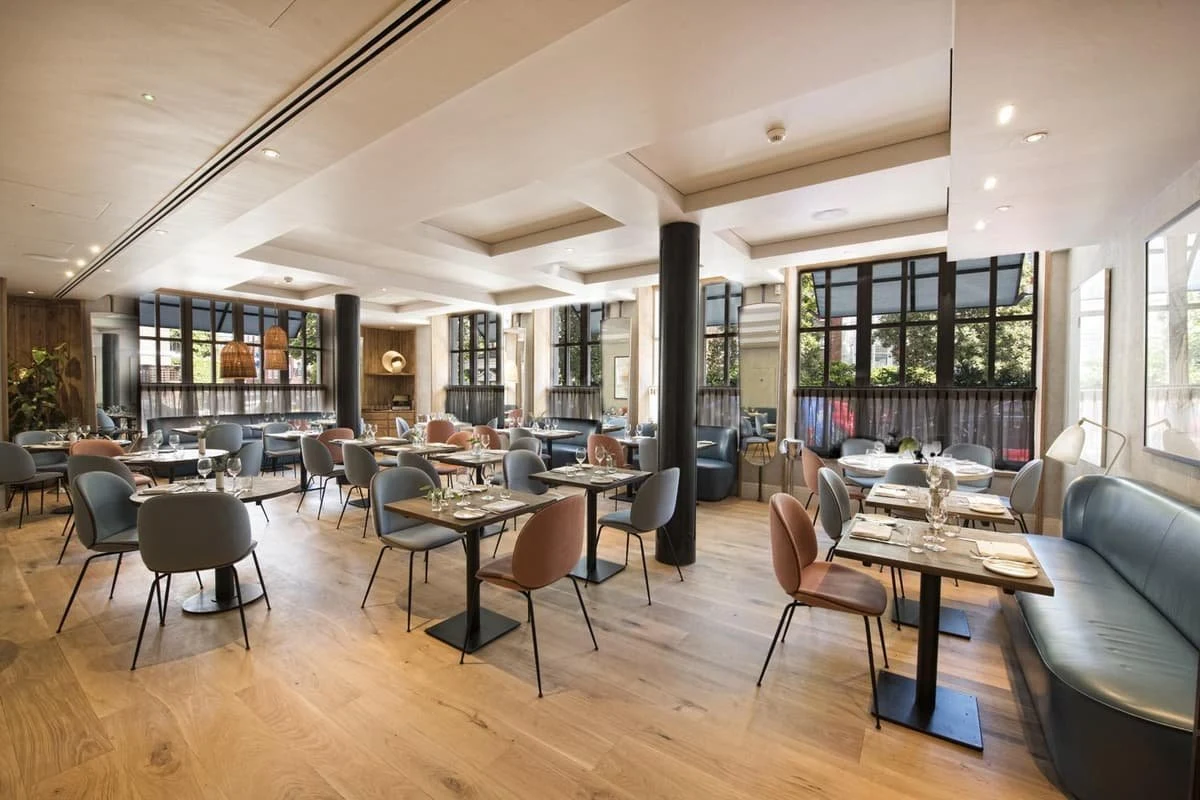
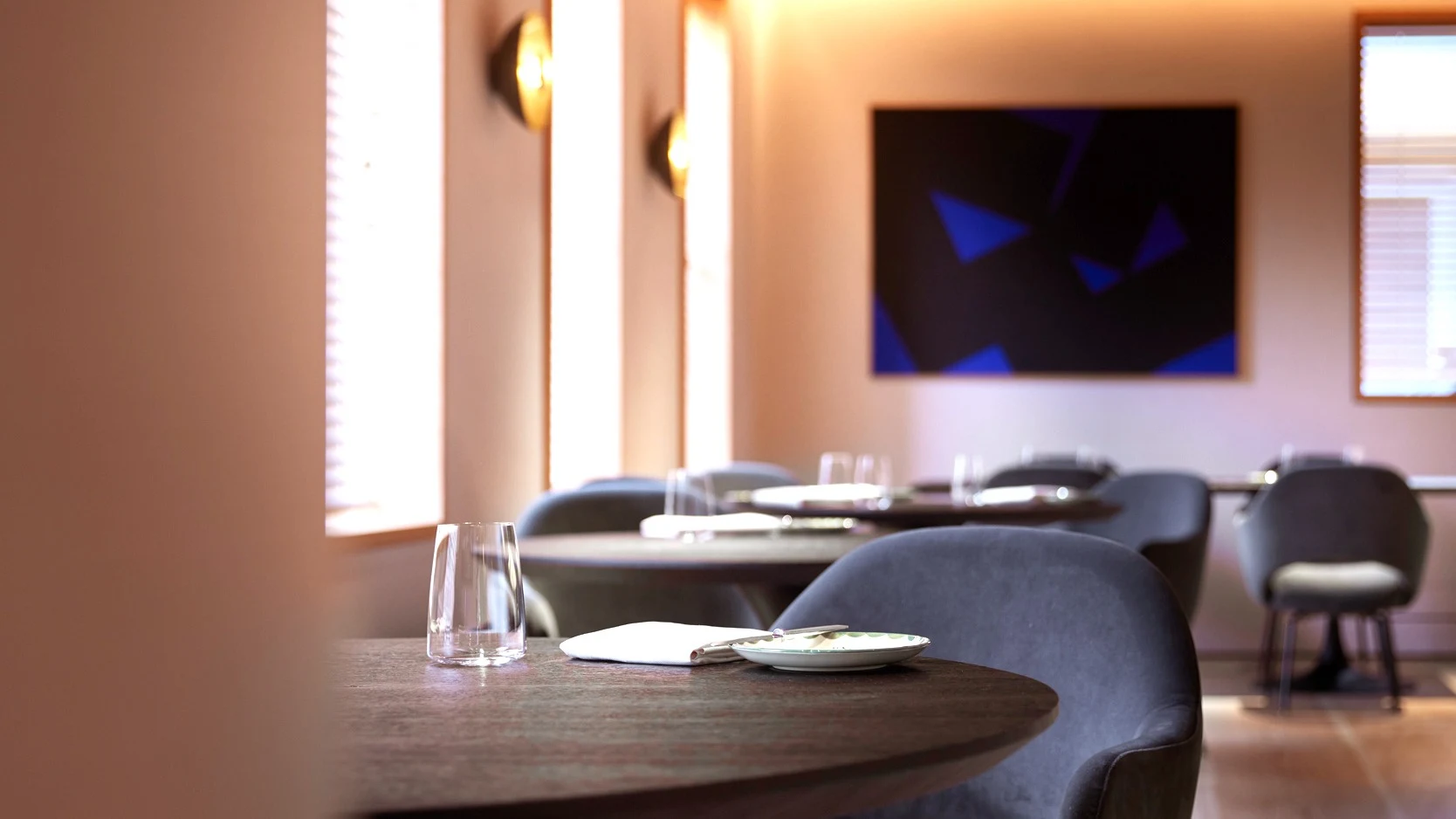
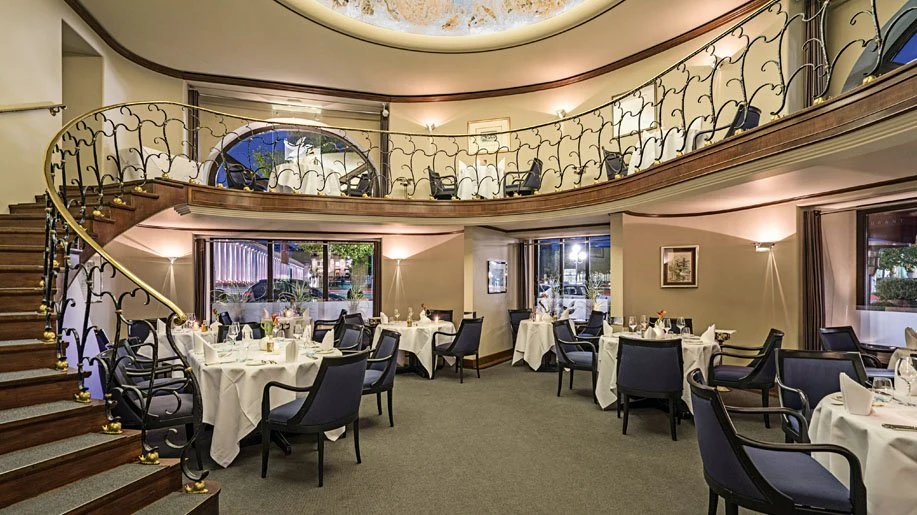
The room is high-ceilinged, quiet and formal, set over two levels joined by a curved staircase. Service moves through that architecture with the manners of a grand hotel, not stiff so much as paced. Plates leave the pass for a dining room that can hold anniversaries, business tables and solitary meals without changing its tone. The counterpoint is warmth: polished service, yes, but not a room that forgets the person at the table.
Ente’s setting inside the Nassauer Hof gives the craft a particular frame. The hotel dates to 1813, and the restaurant carries that sense of continuity without turning the meal into a museum piece. The dining room’s quiet lets the kitchen’s smaller decisions register: the cut of duck breast, the acid in cherry sauce, the way pumpkin moves from savory memory into dessert.
A house measured by repetition
Ente has been described for nearly four decades as one of Wiesbaden’s fixed points for fine dining, and its staying power comes from repetition rather than noise. The kitchen can change a garnish, adjust a menu, or shift the balance of a course, but the discipline remains the same: seasonal ingredients, French bones, modern lightness and a room that asks for calm.
The work at Ente is best read through the dishes the house lets return. The Nassauer Hof features crispy duck, cherry sauce, and the staircase room.
Questions
Frequently asked
What kind of restaurant is Ente?
Ente is a modern European fine dining restaurant in Wiesbaden, inside the Nassauer Hof in Mitte. The cooking uses French technique, seasonal produce and a formal dining room setting.
Who is the chef at Ente?
Executive chef Michael Kammermeier runs the kitchen. He is described as a Hessian native and has held the kitchen for close to two decades.
What is Ente known for?
The restaurant is closely associated with crispy duck, duck breast with cherry sauce and a pumpkin cake dessert. Duck sits at the centre of the kitchen’s work, alongside seasonal dishes built around careful technique and restraint.
What recognition does Ente hold?
Ente holds one Michelin star and two current awards in the house’s name.
How do bookings work at Ente?
Reservations are essential, and bookings are handled through TheFork. The dress code is formal, and there is on-site parking.
The field
How it compares
| Place | Awards | Cuisine | Notes |
|---|---|---|---|
| Ente | Michelin 1 Star | Modern European Fine Dining | Mitte, $$$$ |
| Artichoke | Michelin 1 Star | Modern European Fine Dining | Amersham |
| Elystan Street | Michelin 1 Star | Modern European Fine Dining | London |
| JAN | Michelin 3 Stars, World's 50 Best | Modern European Fine Dining | Munich |
| Lakeside | Michelin 2 Stars | Modern European Fine Dining | Hamburg |
| NOA Chef’s Hall | Michelin 1 Star | Modern European Fine Dining | Tallinn |
| Vila Joya | Michelin 2 Stars, World's 50 Best | Modern European Fine Dining | Albufeira |
Similar places
Modern European Fine Dining
Artichoke
Amersham, United Kingdom
★
Modern European Fine Dining
Elystan Street
London, United Kingdom
★
Modern European Fine Dining
JAN
Munich, Germany
★★★ · 50 Best
Modern European Fine Dining
Lakeside
Hamburg, Germany
★★
Modern European Fine Dining
NOA Chef’s Hall
Tallinn, Estonia
★
Modern European Fine Dining
Vila Joya
Albufeira, Portugal
★★ · 50 Best