- Falstaff Winery - Listed · 2026
At the entrance to the South Styrian wine road, the first impression is architectural as much as vinous: a contemporary vinothek set against the older gravity of castle-cellar vaults. That contrast matters in Styria, where wine tourism often trades on rural intimacy, family names and hillside proximity. Here the story is broader. Erzherzog Johann Weine channels a cooperative model through a polished visitor format, giving Ehrenhausen a place where the region can be read by soil, grape and appellation rather than by a single estate narrative.
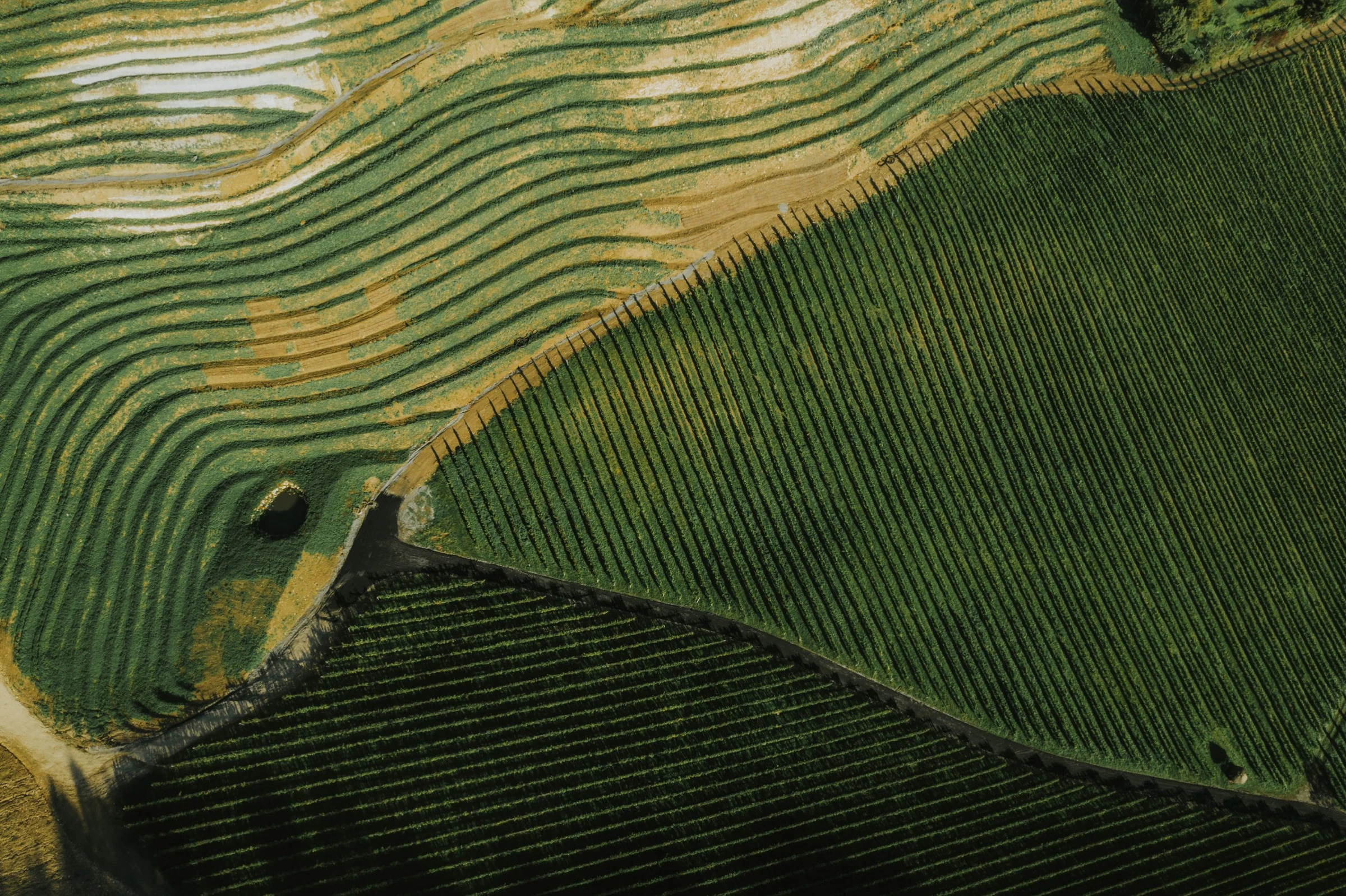
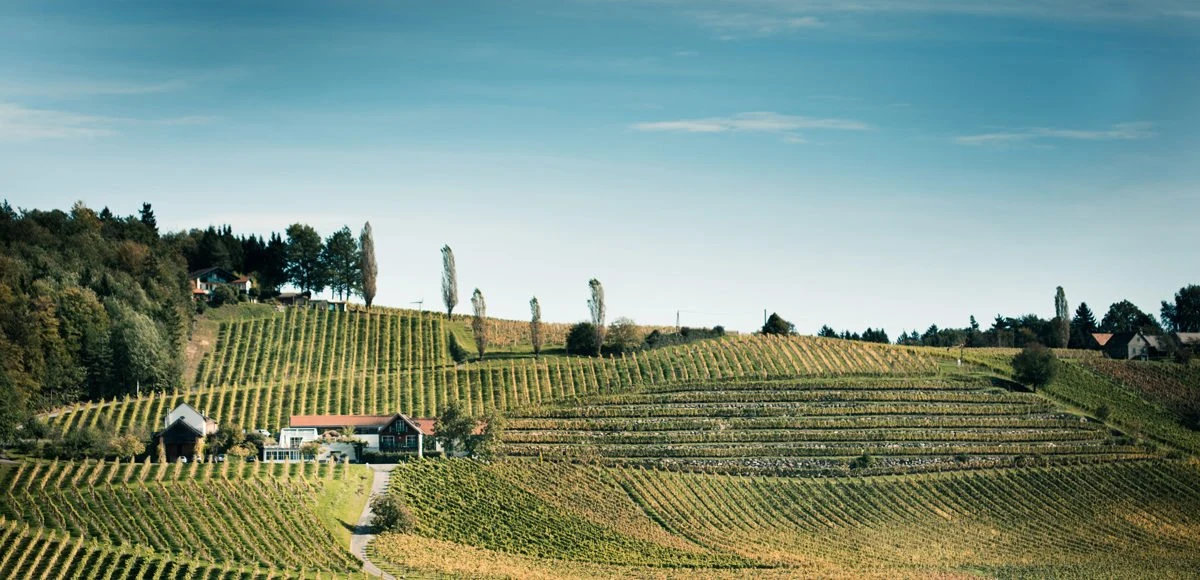
Styrian wine is easy to oversimplify as Sauvignon Blanc country, and the grape is central, but the region is more varied than that shorthand allows. Südsteiermark brings steep slopes, Opok marl and limestone into the conversation; Weststeiermark gives Schilcher its Blauer Wildbacher identity; Vulkanland Steiermark adds volcanic soils and a different register for reds and aromatic whites. A cooperative drawing from roughly 200 hectares and around 200 to 250 grower partners can show that range in a way a smaller cellar rarely can. The trade-off is not mystery or cult allocation, but breadth, consistency and an unusually clear introduction to Styrian origin.
Styria by parcel, not by postcard
The useful lens here is terroir expression at scale. The vineyards feeding the winery are spread across roughly 600 parcels, which makes the portfolio a survey of Styrian geology: limestone, Opok, sand and sandstone, slate, gneiss and volcanic rock. In the glass, that translates into a program led by still whites, with Sauvignon Blanc, Welschriesling, Weißburgunder, Chardonnay and Gelber Muskateller forming the core, alongside Schilcher rosé and a smaller red-wine presence. The current Styrian context is DAC-driven, and since the 2018 vintage the regional hierarchy has pushed producers to foreground origin through Gebietswein, Ortswein and Riedenwein tiers.
That system suits this address. A regional bottling can explain the larger Styrian frame; an Ehrenhausen DAC wine narrows the focus; a Ried wine takes the conversation to a named site. For travelers who want to understand why South Styria has become one of Austria’s sharpest white-wine regions, that progression is more educational than a prestige label alone. It also keeps Schilcher in the right context: not generic rosé, but a West Styrian category tied to Blauer Wildbacher and protected regional identity.
The production story follows the same practical logic. Stainless steel preserves aromatic lift in varieties such as Gelber Muskateller and lighter regional whites, while oak appears where structure and texture matter, including Chardonnay, Weißburgunder, Pinot Noir and selected Riedenwein bottlings. Hand-harvesting is part of the quality picture, and the modern facility gives the cooperative the technical control needed to handle fruit arriving from many parcels without flattening the differences between them.
A cooperative format with castle-cellar memory
Austrian wine culture often prizes the independent family domaine, but Styria also has a community model worth taking seriously. Founded in 1916, this growers’ association carries a century-long cooperative history, and its name points back to Archduke Johann Baptist of Austria, a major figure in Styrian viticulture who promoted agricultural reform and introduced important grape varieties into regional cultivation. The venue’s older cellar setting gives that history a physical anchor, while the 2014 opening of the modern Erzherzog Johann Hut marks the current phase: brighter, more visitor-facing and built for contemporary wine tourism.
Managing director Ing. Peter Stelzl has represented the company since 2008, and winemaker Sieghard Kugel leads the cellar work. Those details are not the point by themselves; they explain how a large cooperative can maintain discipline across many growers and parcels. The better comparison is not to a tiny cellar door chasing scarcity, but to a regional institution built to translate Styrian variety into a coherent portfolio.
Recognition has followed in the channels that matter for Austrian wine drinkers: Concours Mondial du Sauvignon, Mundus Vini, Falstaff, SALON Österreich, Vinaria and Steirischer Landessieger all appear in the winery’s awards history. One useful marker is the 2019 Sauvignon Blanc Ried Pössnitzberg Alte Reben, noted in connection with Vinaria Riedenweinverkostung 2020 at €25.60. That kind of signal places the producer beyond simple tourist-cellar territory, especially when set beside the accessibility of its entry and vinothek lines.
How to read the visit
The visit is strongest when treated as a compact lesson in Styrian categories. Start with the aromatic whites, then move toward Weißburgunder or Chardonnay for texture, and keep Schilcher in the lineup to understand why Weststeiermark resists being folded into a generic Austrian rosé conversation. The cellar-tour and guided-tasting formats suit visitors who want vocabulary around DAC labeling, soils and regional distinctions rather than a purely social pour.
Groups and wine-curious travelers are a natural fit because the format has room for explanation: bar tastings, guided tastings, cellar tours, group tastings and event hosting all sit inside the same operation. The setting also works for a broader Ehrenhausen itinerary. Readers building a wine-focused route can cross-check nearby editorial pages such as Der Rebenhof, Der Rebenhof – Hartmut Aubell, Ewald Zweytick Wein, Familienweingut Tement and KulturWeingut Kästenburg, then widen the planning lens with our full Ehrenhausen wineries guide, our full Ehrenhausen restaurants guide, our full Ehrenhausen hotels guide, our full Ehrenhausen bars guide and our full Ehrenhausen experiences guide.
For a wider Austrian and international wine map, the same archive also reaches beyond Ehrenhausen, from »der Steiner« Hans Steiner in Podersdorf am See and ®walzer in Gneixendorf Bei Krems to 1516 Brewing Company Distillery in Vienna, & Handwein in Mannheim and 00 Wines in Carlton. Within that larger field, Erzherzog Johann Weine is valuable because it explains Styria through accumulation: many growers, many parcels, several appellation voices and one controlled tasting frame.
Questions
Frequently asked
Who works at Erzherzog Johann Weine?
Made By profiles Sieghard Kugel (Winemaker) at Erzherzog Johann Weine.
How expensive is Erzherzog Johann Weine?
Erzherzog Johann Weine is listed at a price level of $$.
The field
How it compares
| Place | Notes | Awards |
|---|---|---|
| Erzherzog Johann Weine | Südsteiermark / Ehrenhausen an der Weinstraße, $$ | · |
| Familienweingut Tement | Ehrenhausen | World's 50 Best |
| KulturWeingut Kästenburg | Ehrenhausen | · |
| La Maison Tea Royal, Weingut Schauer X Weingut Firmenich | Ehrenhausen | · |
| Rauschend Feine Weine | Ehrenhausen | · |
| Weingut Georgiberg GnbR | Ehrenhausen | · |
| Weingut Gross | Ehrenhausen | · |