ESPRIT C. KEI GINZA
- 01CuisineContemporary French with Japanese Influence
- 02CityTokyo, Japan
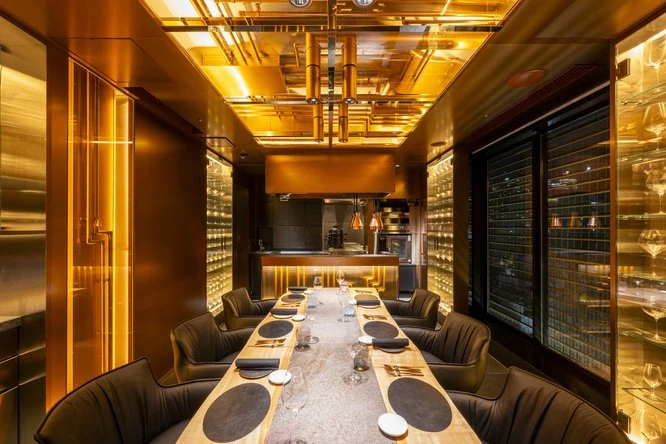
À la carte from an open pass
- Star Wine List · 2026
- La Liste Top Restaurants: 76pts · 2026
- Michelin Plate · 2026
- Michelin Plate · 2025
- La Liste Top Restaurants: 75.5pts · 2025
- Michelin Plate · 2024
The à la carte decision in Ginza
The à la carte format put Kei Kobayashi, collaborator and chef behind ESPRIT C. KEI GINZA in Ginza, Tokyo, in a different register from the Paris table that made his name. He did not bring a fixed procession to this 11th-floor room. He set a premise: a grand open kitchen, French discipline, Japanese product attention, and the freedom for guests to compose their own meal from the pass.
Kobayashi’s line into this address ran through Nagano, Tokyo, and France. His own account of Nagano is plain enough to matter: “In Nagano, where I was born and raised, I feel that good local products were always within my reach.” Restaurant training in Japan gave him the first frame for preparation, sauce, service, and endurance. From 1998, work in France with Gilles Goujon and Alain Ducasse at Plaza Athénée put that product memory inside a stricter French grammar. Restaurant Kei in Paris opened in 2011 and received three Michelin stars in 2020, a recognition that belonged to that Paris house. ESPRIT C. KEI GINZA opened in 2024 with Toraya, the Japanese confectionery maker founded in the early 16th century, as a collaboration shaped by that longer discipline.
A laboratory built around choice
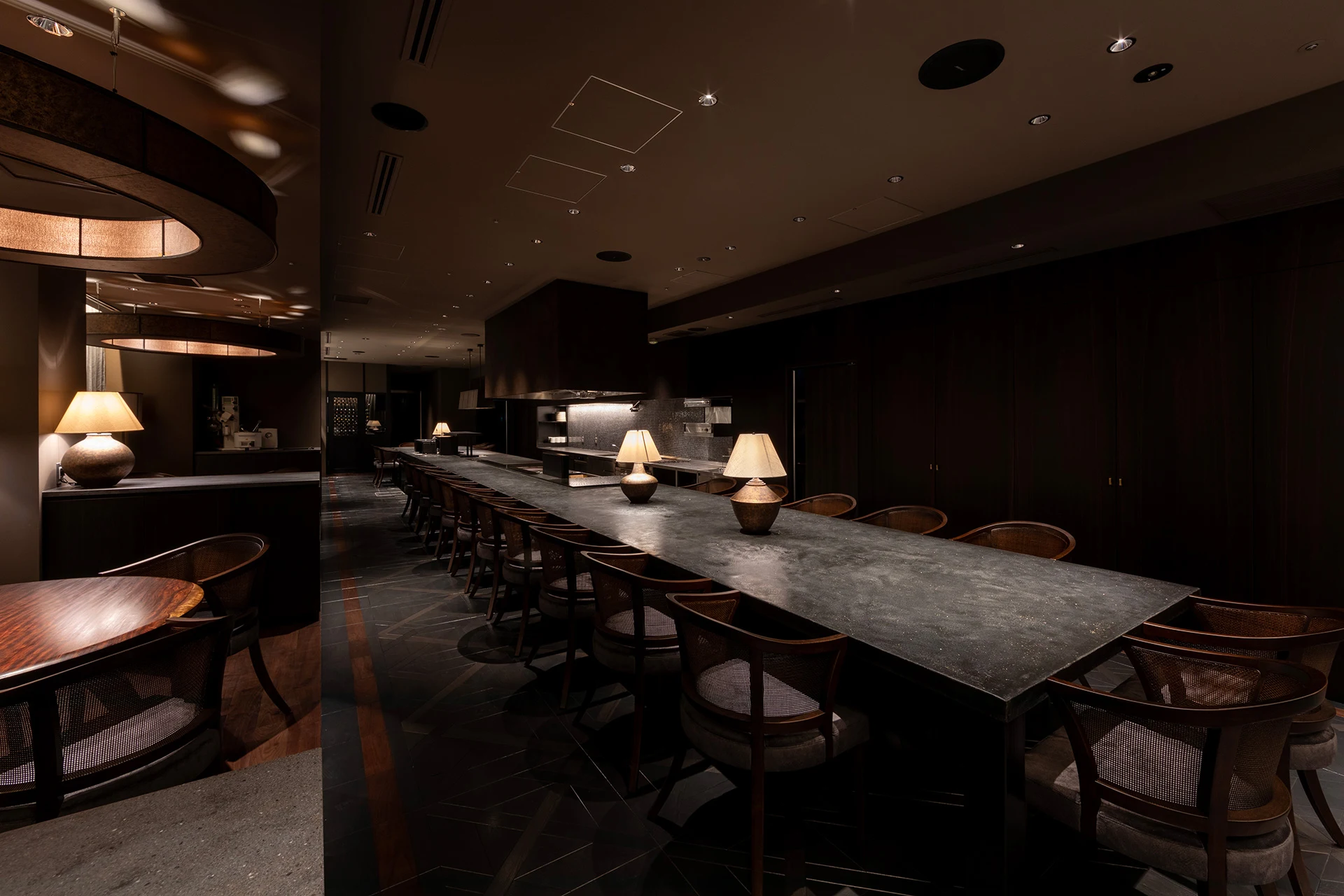
The “C.” in the name stands for cuisine and creation, and the room makes that visible through counter dining and a kitchen placed where the work can be watched. The menu’s structure matters as much as any single plate. Instead of asking the table to submit to a fixed sequence, the restaurant lets diners choose, share, and build a course rhythm dish by dish. That is not casualness. It is a controlled form of research.
The signatures name the register clearly: Omar Blue Shrimp Fry with Caviar and Sauce Gribiche, Crystal Caviar Selected by Chef Kei Kobayashi, and Vacharan. Fish and seasonal combinations carry much of the menu’s weight, with French technique used as a method rather than a costume. The kitchen’s stated aim is to push beyond classical French cuisine, but the method still depends on the old tools: sauce, temperature, texture, sequencing, and the discipline of the pass. ESPRIT C. KEI GINZA received three stars in the Michelin Guide Tokyo 2026, recognition attached to this Ginza address.
The cellar beside the pass
The wine program gives the room another working axis. The cellar holds about 8,000 bottles, with 5,000 kept on site and the balance in a dedicated warehouse. French wine forms 90% of the collection, led by Bordeaux, Burgundy, and the Rhône Valley. The Rhône section runs to around 100 varieties, including 50 Châteauneuf-du-Pape reds, with many bottles from the early 2000s or earlier and a strong presence from the 1990s.
Sake and cocktails sit beside that French spine rather than outside it. In practice, the beverage program has to answer the same question as the kitchen: how much structure can a room hold while still allowing the guest to choose? Half-bottles from France help that answer at the table, especially in a format built for shared dishes and changing pace.
Wood, stone, and the open room
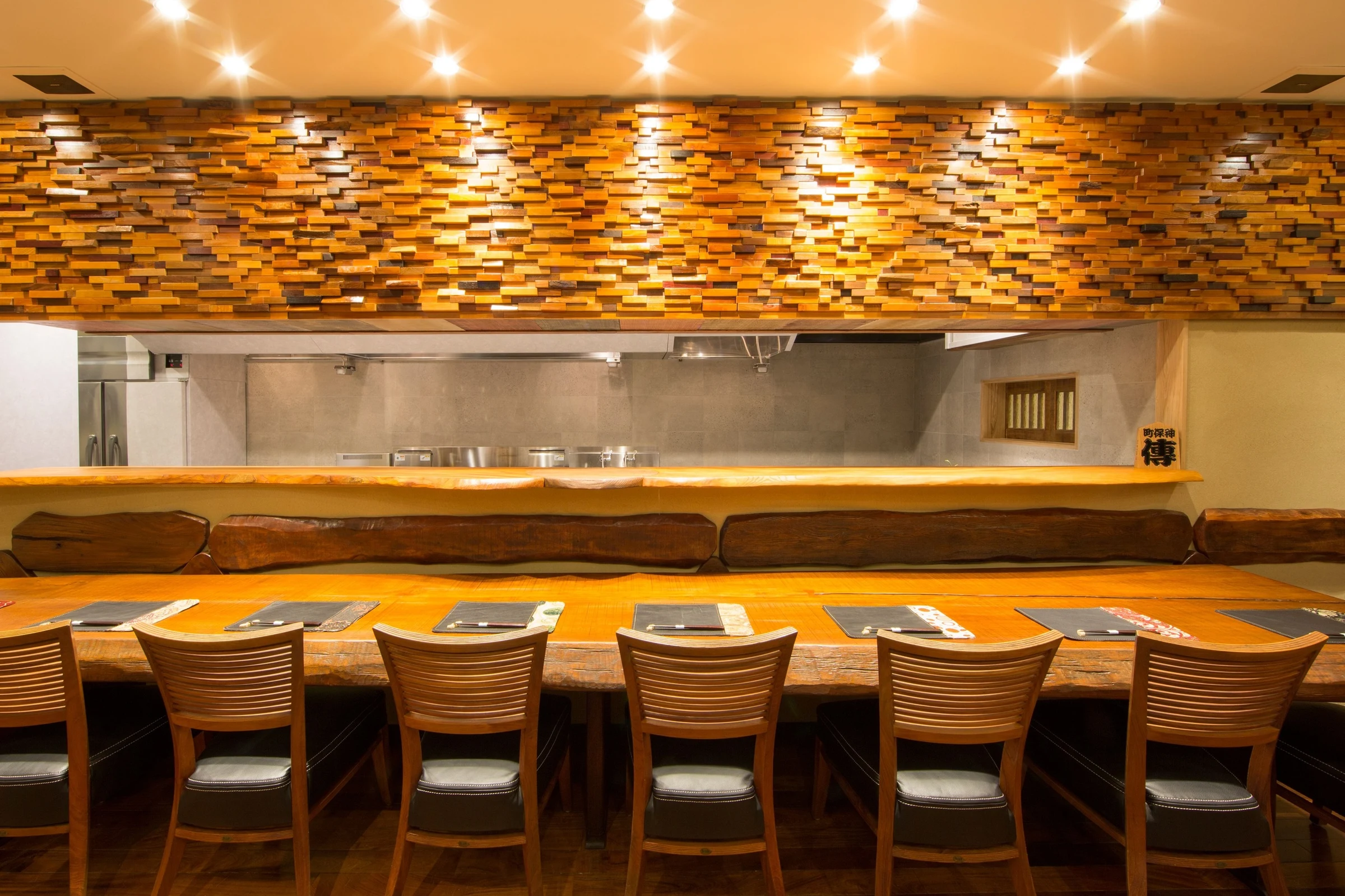
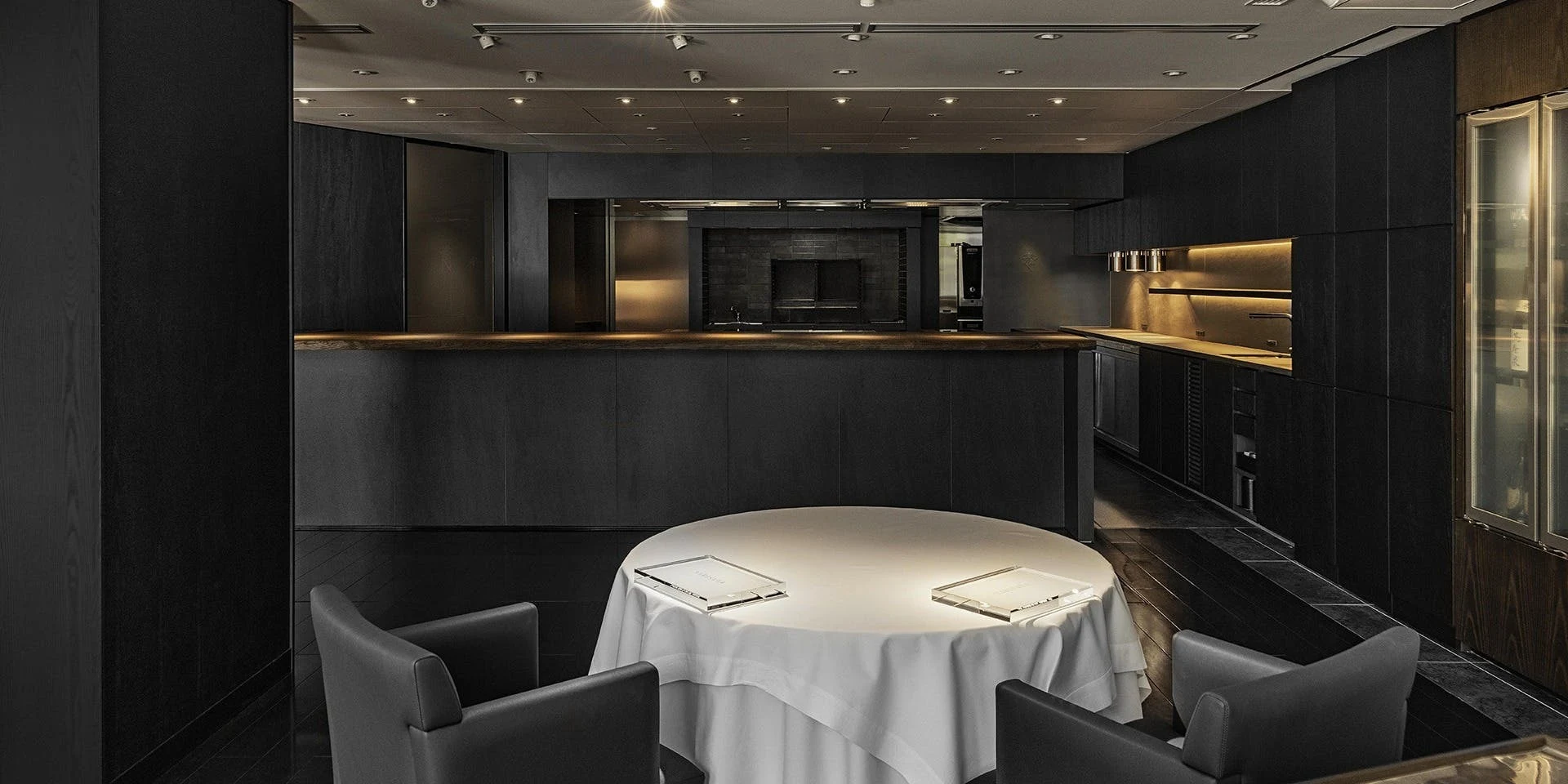
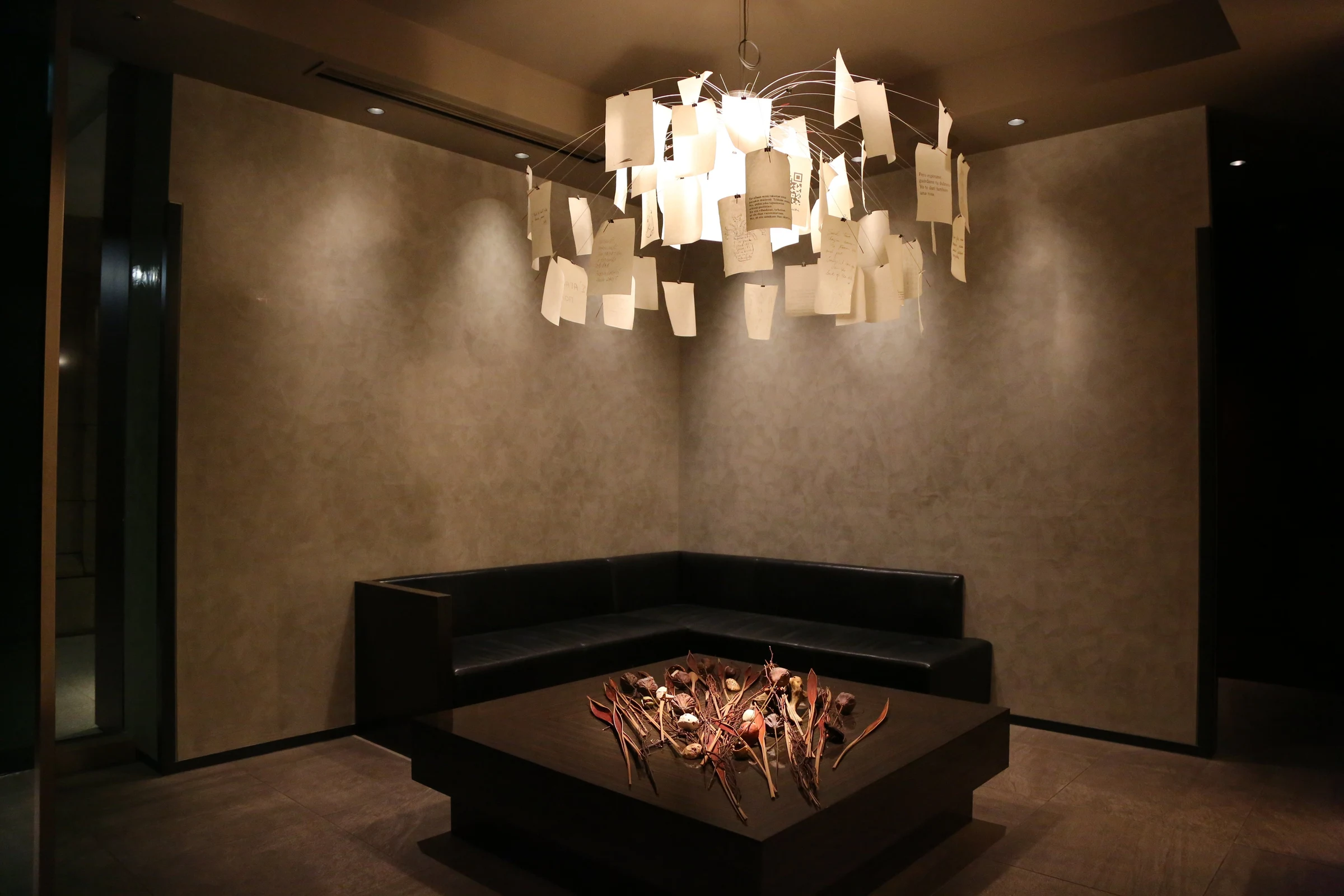
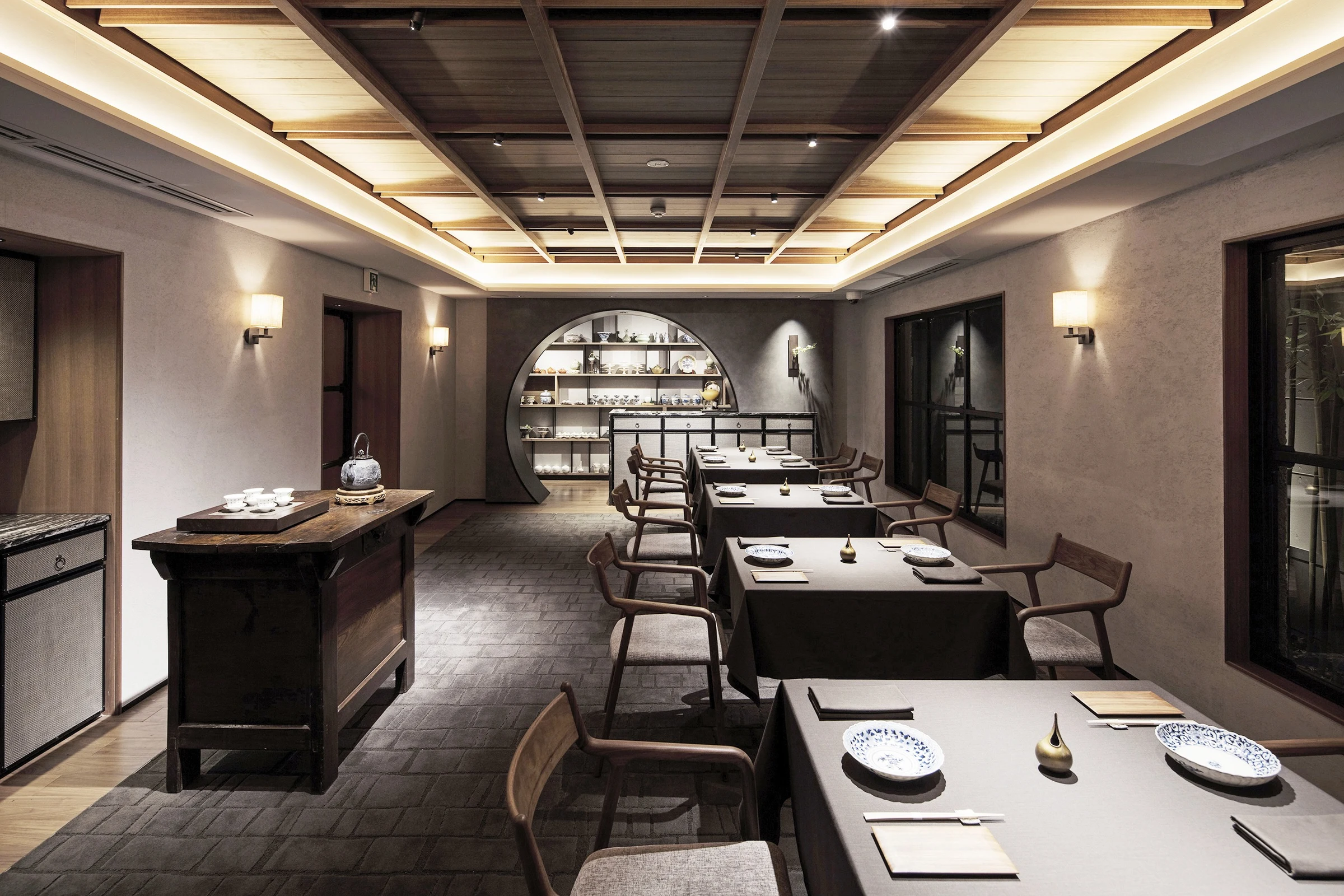
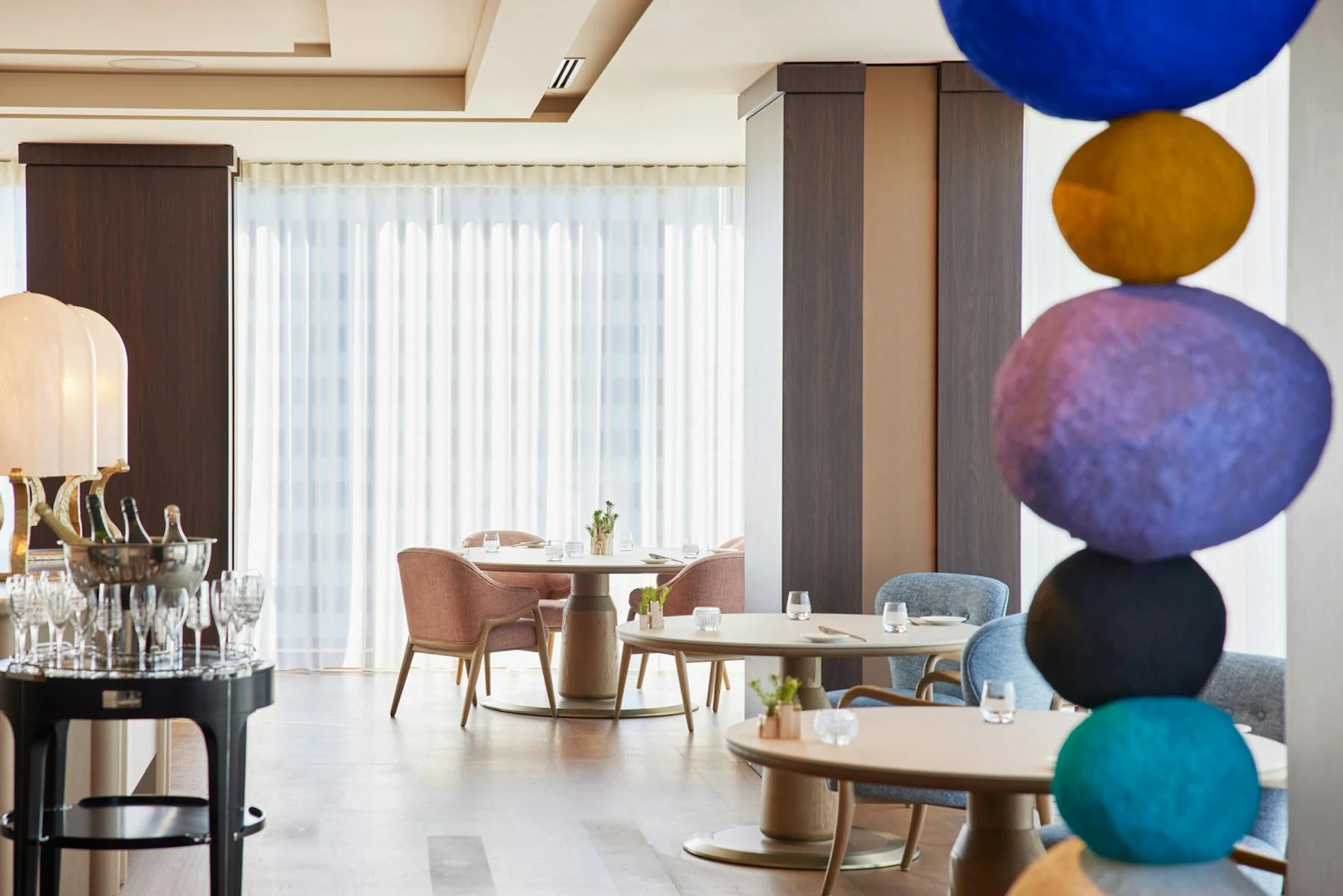
The room carries the collaboration in material terms. Stone, tied here to French design, meets wood, tied to Japanese architecture, while the ceiling shifts from checkerboard pattern to cave-like installation. Wooden blocks hang overhead, an integrated chandelier pulls the eye upward, and the windows place Ginza beneath the work rather than around it.
At the counter, the open kitchen keeps the pass in view. Plates move from the bench to the room without the ceremony becoming opaque. The close attention belongs to the dish in front of the guest, whether that is caviar, blue shrimp, or the Vacharan at ESPRIT C. KEI GINZA.
Questions
Frequently asked
What kind of restaurant is ESPRIT C. KEI GINZA?
ESPRIT C. KEI GINZA is a contemporary French restaurant with Japanese influence in Ginza. It is built around an à la carte format rather than a fixed tasting sequence, with a grand open kitchen and counter dining.
Who is behind the restaurant?
The restaurant is shaped by Kei Kobayashi, whose background runs from Nagano to Tokyo and then to France. He worked in France from 1998, including at Gilles Goujon and Alain Ducasse at Plaza Athénée, and later opened Restaurant Kei in Paris in 2011.
What should diners know about the menu?
The menu is designed for choice, letting diners compose their own meal dish by dish. Signature dishes include Omar Blue Shrimp Fry with Caviar and Sauce Gribiche, Crystal Caviar Selected by Chef Kei Kobayashi, and Vacharan.
How is the wine list organised?
The cellar holds about 8,000 bottles, with 5,000 kept on site and the rest in a dedicated warehouse. French wine makes up 90% of the collection, with Bordeaux, Burgundy, and the Rhône Valley especially well represented.
What are the booking and dress requirements?
Reservations are essential at ESPRIT C. KEI GINZA, and bookings are taken through Omakase. The dress code is smart casual.
The field
How it compares
| Place | Cuisine | Notes | Awards |
|---|---|---|---|
| ESPRIT C. KEI GINZA | Contemporary French with Japanese Influence | Chūō, $$$$ | · |
| Den | Modern Japanese Kaiseki | Tokyo | Michelin 2 Stars, World's 50 Best |
| Florilège | Modern French-Japanese Plant-Based Fine Dining | Tokyo | Michelin 2 Stars, World's 50 Best |
| Narisawa | Modern Japanese Satoyama Fine Dining | Tokyo | Michelin 2 Stars, World's 50 Best |
| Quintessence | Modern French Fine Dining | Tokyo | Michelin 3 Stars |
| Sazenka | Modern Chinese Fine Dining | Tokyo | Michelin 3 Stars, World's 50 Best |
| Sézanne | Modern French Fine Dining | Tokyo | Michelin 3 Stars, World's 50 Best |
Similar places
Modern Japanese Kaiseki
Den
Tokyo, Japan
★★ · 50 Best
Modern French-Japanese Plant-Based Fine Dining
Florilège
Tokyo, Japan
★★ · 50 Best
Modern Japanese Satoyama Fine Dining
Narisawa
Tokyo, Japan
★★ · 50 Best
Modern French Fine Dining
Quintessence
Tokyo, Japan
★★★
Modern Chinese Fine Dining
Sazenka
Tokyo, Japan
★★★ · 50 Best
Modern French Fine Dining
Sézanne
Tokyo, Japan
★★★ · 50 Best