Fattoria Santo Stefano
- 01CityGreve in Chianti, Italy
- Falstaff Winery - Listed · 2026
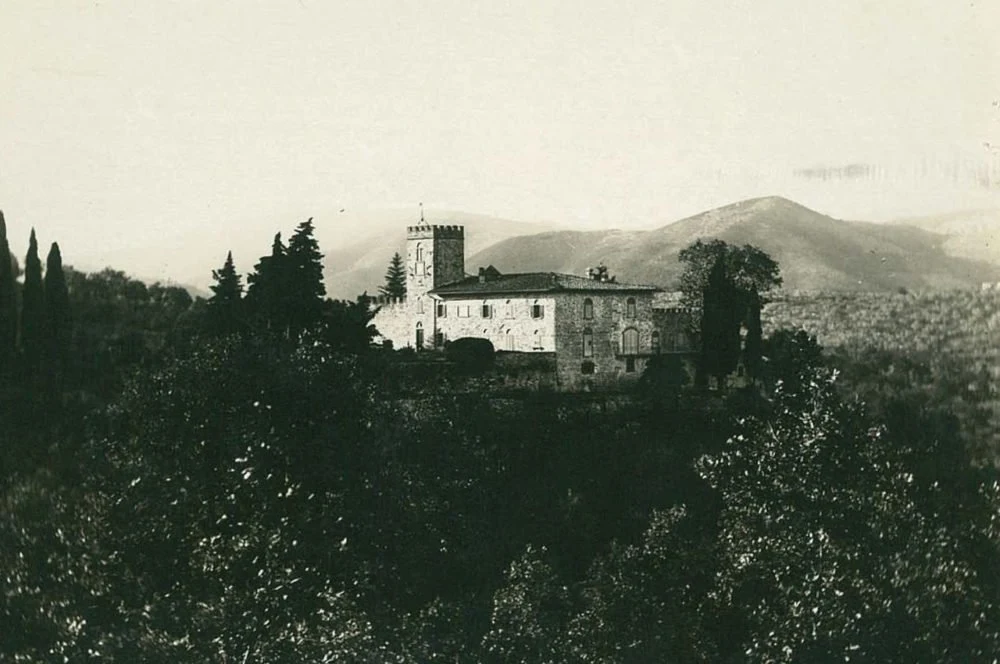
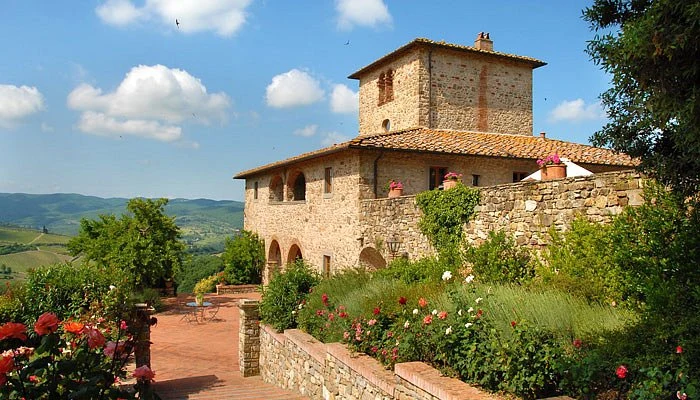
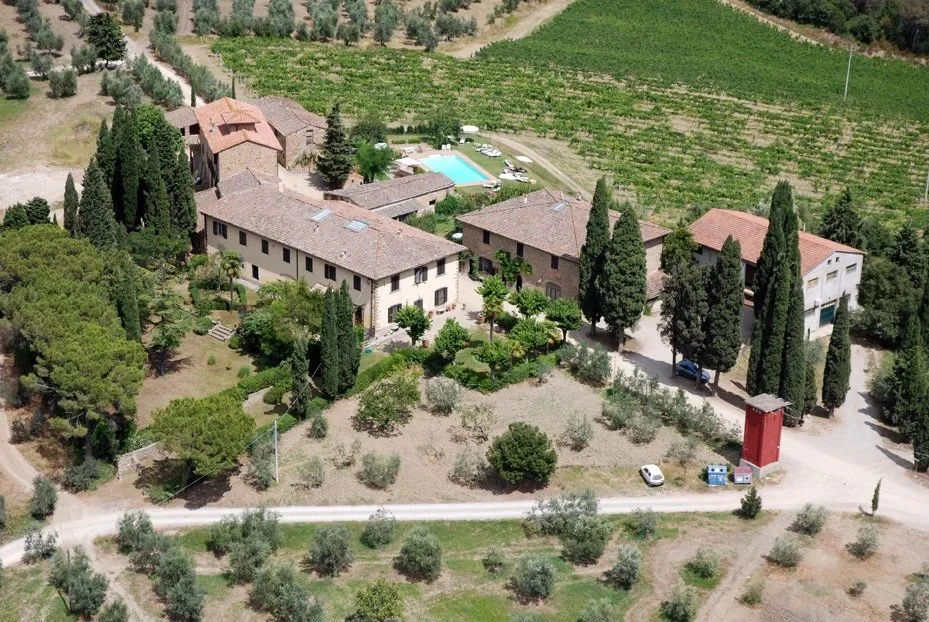
Approach Greve in Chianti’s hillside estates and the logic of Chianti Classico becomes physical before it becomes technical: vineyards broken by olive trees, pine edges, farm buildings, and ridgelines that catch enough altitude to keep Sangiovese from feeling heavy. Fattoria Santo Stefano belongs to that older Tuscan category where winery, farm stay and family estate overlap. The setting is rural rather than polished-resort formal, with the experience built around wine, olive oil, quiet countryside and the kind of agricultural hospitality that has shaped the region’s appeal for decades.
That matters because Greve in Chianti can pull visitors in two directions. One version is rapid wine tourism, a tasting squeezed between scenic drives. The other is slower and more agricultural, where the estate’s fields, buildings and products explain one another. Fattoria Santo Stefano sits in the second camp. The Bendinelli family has owned the estate since 1961, and the property’s identity is tied to a working-farm model rather than a tasting-room-only format.
Chianti Classico through altitude, Sangiovese and olive groves
The estate sits on the slopes above Greve in Chianti at about 380 metres, in Chianti Classico DOCG country. That elevation is not decorative trivia. In this part of Tuscany, altitude helps preserve freshness in Sangiovese, especially when the wines are expected to carry both acidity and tannin at the table. Fattoria Santo Stefano’s planted varieties include Sangiovese, Colorino, Cabernet Sauvignon, Merlot, Trebbiano and Malvasia, a mix that reflects the region’s long conversation between local tradition and broader Tuscan blending habits.
The clearest technical signal comes from the Chianti Classico D.O.C.G. 2022: 100% hand-harvested Sangiovese, picked in October, at 14% alcohol with total acidity listed at 5.60 g/l. That is enough information to place the wine stylistically without pretending to know cellar details that are not public. It points toward a food-oriented Chianti Classico profile, structured by acidity and tannin rather than by sheer ripeness alone.
Estate’s range follows a familiar but useful regional architecture: Chianti Classico, Chianti Classico Riserva “Drugo,” Chianti Classico Gran Selezione, rosato, bianco, Vinsanto del Chianti Classico, grappa di Chianti Classico and extra virgin olive oil. For visitors, that breadth is more instructive than a single prestige bottling. It shows how a Tuscan farm estate turns grapes, olives and hospitality into one coherent experience. Annual production is cited at roughly 900 hl of Chianti wine and 50 quintals of extra virgin olive oil, with around 20 hectares of vineyard and 40 hectares of olive groves, which places the property in a medium estate-winery register rather than an industrial or micro-production niche.
Agriturismo hospitality, not cellar-door spectacle
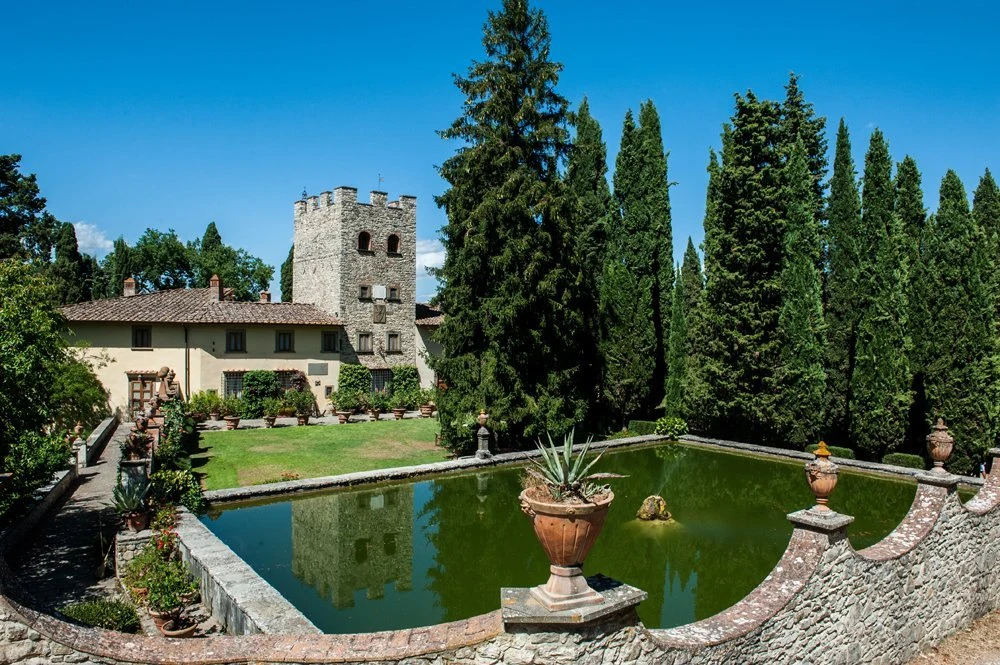
Tuscan agriturismo tradition works when the hospitality feels connected to agriculture rather than staged around it. Here, the format includes estate tastings, guided visits, private tastings, wine and olive oil pairings, vineyard walks, accommodation in apartments or the manor-house setting, cooking classes, and seasonal farm events. The estate also hosts private celebrations, which fits the rural-villa pattern common across Chianti: historic buildings, terraces, open-air meals and vineyard views used as part of the social experience.
This is a useful distinction for planning a wine-country day. A visit here is better read as a farm-based Chianti Classico stop than as a luxury tasting laboratory. The estate produces wine and olive oil, receives guests by reservation, and can fold the tasting into a broader countryside rhythm: walking through vineyard and olive-grove ground, tasting across regional categories, then staying on site or continuing through Greve’s wine routes. The experience is especially suited to travellers who want context around Sangiovese rather than a purely label-driven tasting.
Recognition sits in the wine-media and tourism-listing tier rather than in a trophy cabinet of named awards. Gambero Rosso and Club Oenologique have given attention to the estate’s wines, including the Gran Selezione ’19, and the property appears in wine-tourism channels as a visitable family-run winery. That level of recognition is proportionate to the estate’s role: serious enough for wine-interested visitors, relaxed enough for travellers who want olive oil, views and rural hospitality alongside the glass.
How to place it within a Greve in Chianti itinerary
Greve in Chianti rewards a slower map. The town and surrounding hills are dense with wineries, agriturismi, restaurants and small rural roads, so the stronger itinerary is not the one that counts the largest number of tastings. It is the one that varies format: a family estate, a more formal producer, a lunch stop, then a village or countryside stay. For a wider scan of the area, start with Our full Greve in Chianti wineries guide, then add dining and lodging context through Our full Greve in Chianti restaurants guide and Our full Greve in Chianti hotels guide. Evening planning is better handled separately via Our full Greve in Chianti bars guide, while structured activities belong in Our full Greve in Chianti experiences guide.
Within Greve’s winery circuit, it is useful to compare formats across producers rather than chase a single template. Nearby research paths might include Ambrogio e Giovanni Folonari Tenute, Antico Borgo di Sugame, Azienda Agricola La Torraccia di Presura, Basilica Cafaggio and Cafaggio. For a broader Italian and European wine-travel frame beyond Chianti, cross-reference 3GP SRL in Treviso, 47 Anno Domini in Trebaseleghe, A Mano Wine in Noci, »der Steiner« Hans Steiner in Podersdorf am See and & Handwein in Mannheim.
The editorial case for Fattoria Santo Stefano is strongest when the visit is treated as terroir in the full Tuscan sense: Sangiovese in Chianti Classico, olive oil from the same agricultural world, hillside altitude, and hospitality shaped by a family-run farm estate. It is not the address for visitors who want a high-gloss tasting room detached from rural life. It is the better fit for those who want the wine to remain visibly connected to the land around it.
Questions
Frequently asked
How expensive is Fattoria Santo Stefano?
Fattoria Santo Stefano is listed at a price level of $$.
The field
How it compares
| Place | Notes |
|---|---|
| Fattoria Santo Stefano | Greve in Chianti, $$ |
| Castello di Querceto | Greve in Chianti |
| Castello di Verrazzano | Greve in Chianti |
| Fontodi | Greve in Chianti |
| Isola delle Falcole | Greve in Chianti |
| Tenuta la Novella | Greve in Chianti |
| Terreno | Greve in Chianti |