Fleur de Neige
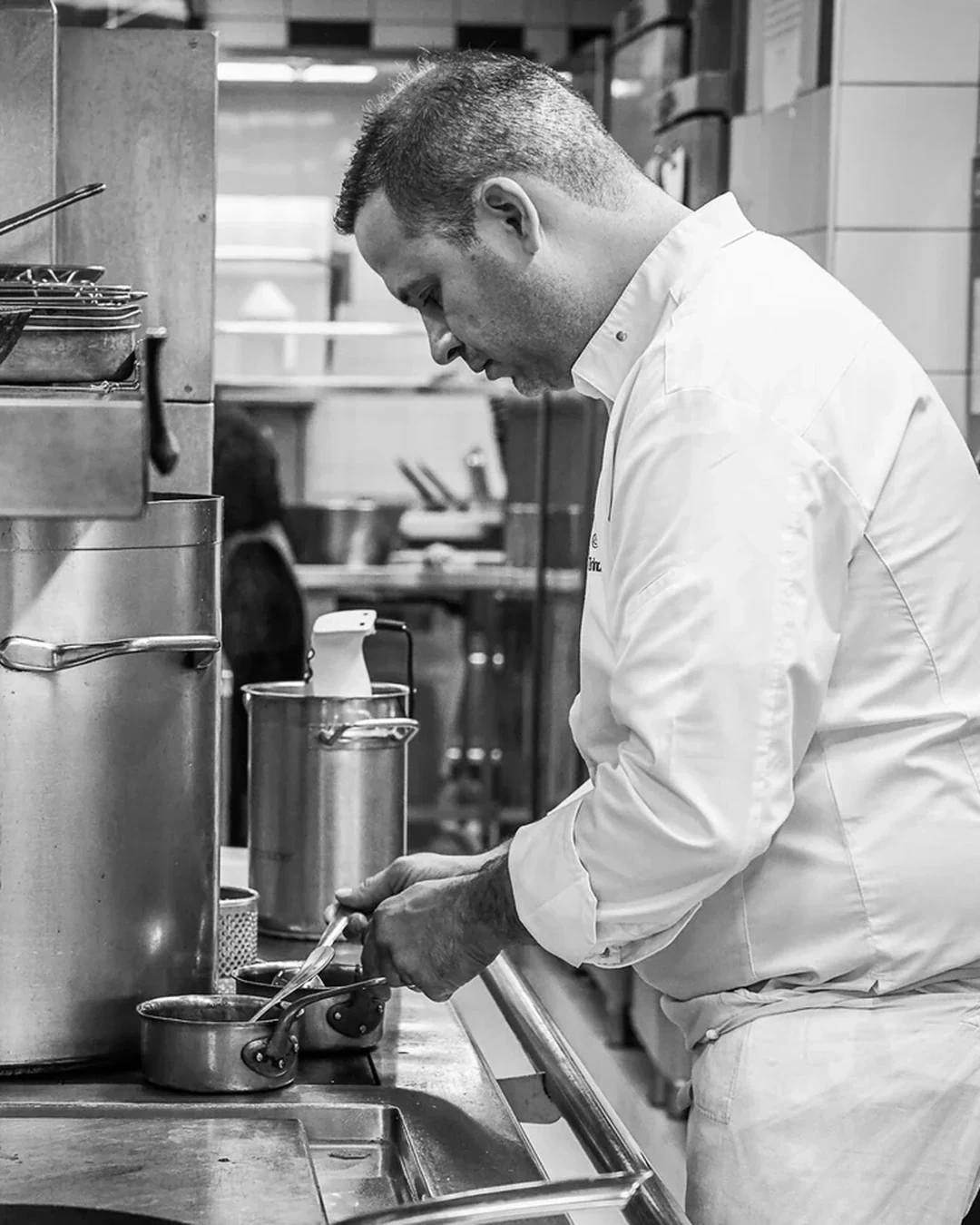
In Residence
Sébastien Trincaz
Chef
- 01CuisineCreative Savoyard Cuisine
- 02CityChâtel, France
- Michelin Plate · 2026
- Michelin Plate · 2025
- Michelin Plate · 2024
Where the Mountains Set the Terms
The Route de Vonnes climbs out of central Châtel toward the upper village, and the shift in atmosphere is immediate. By the time you reach 564 Route de Vonnes, the ski-resort noise has thinned and the physical scale of the Portes du Soleil presses in from all sides. This is the kind of address where the setting is not incidental to the meal, it is the first argument the restaurant makes. Châtel sits at the junction of French and Swiss skiing territory, and its dining scene has long reflected that dual character: hearty mountain food that takes its proportions seriously, served in rooms built for people who have spent the day in cold air at altitude.
Within that local context, Fleur de Neige occupies a specific position. It holds a Michelin Plate for both 2024 and 2025, which in Michelin's own classification signals cooking that is described as "good quality", a meaningful threshold in a resort town where the majority of restaurants operate without any inspector recognition at all. A 4.5 rating across 525 Google reviews reinforces that the recognition is not merely nominal. This is a kitchen that earns its audience visit after visit, across the variable pressures of a ski season.
Traditional Cuisine in a Resort Town: What That Actually Means
Alpine France has its own grammar for what "traditional cuisine" means at the table. It is not the same conversation happening at, say, Auberge Grand'Maison in Mûr-de-Bretagne or Auga in Gijón, where tradition is rooted in coastal or pastoral identity. In a high-altitude French resort, traditional cuisine carries the weight of a specific larder, reblochon, tartiflette, diots, fondue, and the better kitchens are distinguished not by abandoning that vocabulary but by executing it with discipline and sourcing it with care.
Chef Sébastien Trincaz operates within that tradition at Fleur de Neige. His kitchen's Michelin Plate recognition, sustained across two consecutive years, suggests a consistency that matters particularly in Alpine cooking, where the temptation toward shortcuts in a high-turnover season is a known pressure. The comparison is instructive: elsewhere in the French Alps, restaurants like Flocons de Sel in Megève have pushed Alpine ingredients toward three-star ambition. Fleur de Neige operates at a different register, approachable in price and format relative to that tier, but occupying a recognisably serious position within Châtel itself.
Châtel's Dining Tier and Where Fleur de Neige Sits
Châtel's restaurant scene at the €€€ price point divides broadly into two approaches. One is creative and contemporary, L'Impulsif represents that direction in Châtel, working with a creative format at the same price tier. The other approach stays closer to the regional canon. Fleur de Neige, alongside La Poya and Le Vieux Four, belongs to the traditionalist side of that divide. All three carry the same cuisine classification and price range, which makes the Michelin distinction at Fleur de Neige worth noting, it is a tiebreaker of sorts when choosing between addresses at identical price points.
The broader French tradition of placing serious kitchens inside mountain villages has a long pedigree. You find it expressed at very different scales: from Paul Bocuse's Auberge du Pont de Collonges in Collonges-au-Mont-d'Or, where the idea of a destination restaurant embedded in a non-metropolitan setting was practically invented, to Bras in Laguiole, where the setting is as much the argument as the food. Châtel does not aspire to those altitudes of ambition, but it shares the underlying logic: a kitchen anchored in its place, taking the local seriously.
What to Order and How to Approach the Meal
Order from the traditional end of the menu. Signature dishes are not listed in the public record for Fleur de Neige, but the cuisine classification and Michelin Plate positioning point clearly toward a kitchen that does the regional canon at a competent and consistent level. In an Alpine traditional kitchen at this price point, that typically means dishes built around mountain dairy, cured meats, and preparations suited to cold weather, the kind of food where execution matters more than novelty. At €€€ pricing in Châtel, expect a meal that runs into the mid-to-upper range of resort dining without reaching the full tasting-menu territory of starred Alpine addresses elsewhere in France.
Chef Trincaz's role here is worth understanding in editorial terms. The Michelin Plate is a signal of consistent quality rather than a personal star. In the French restaurant tradition, that distinction matters: from the lineage of houses like Troisgros in Ouches or Auberge de l'Ill in Illhaeusern at the highest tier, down through regionally recognised addresses, what connects them is a sustained standard across services. Fleur de Neige's two consecutive Plates point to a kitchen operating with that kind of discipline.
Planning Your Visit
Fleur de Neige is located at 564 Route de Vonnes, 74390 Châtel, in the upper part of the village. The €€€ price range positions this as a considered dinner rather than a casual stop, appropriate for the occasion rather than the spontaneous end-of-piste meal.
For a fuller picture of where to eat in the area, see our full Châtel restaurants guide. Accommodation context is covered in our Châtel hotels guide, and if you want to extend the evening, our Châtel bars guide covers the after-dinner options. For broader Alpine and French dining reference, the range runs from Mirazur in Menton and Alléno Paris au Pavillon Ledoyen at the summit of French fine dining, to AM par Alexandre Mazzia in Marseille for a sense of what contemporary French ambition looks like outside the capital. Fleur de Neige operates in a very different register from all of these, but it does so with the kind of sustained recognition that makes it the address to book when you want a serious traditional meal in Châtel rather than a resort-standard one. Additional local context on wineries and experiences is available through our Châtel wineries guide and our Châtel experiences guide.
Questions
Frequently asked
Who works at Fleur de Neige?
Made By profiles Sébastien Trincaz (Chef) at Fleur de Neige.
How expensive is Fleur de Neige?
Fleur de Neige is listed at a price level of $$$.
Where is Fleur de Neige and what does it serve?
Fleur de Neige is in Châtel, Châtel, serving Creative Savoyard Cuisine.
The field
How it compares
| Place | Cuisine | Notes | Awards |
|---|---|---|---|
| Fleur de Neige | Creative Savoyard Cuisine | Châtel, $$$ | · |
| Alchemist | Avant-Garde Molecular Gastronomy with Social Commentary | Copenhagen | Michelin 2 Stars, World's 50 Best |
| Alinea | Avant-Garde Molecular Gastronomy | Chicago | Michelin 3 Stars, World's 50 Best |
| DiverXO | Avant-Garde Spanish Tasting Menu | Madrid | Michelin 3 Stars, World's 50 Best |
| Forest Side | Modern British Fine Dining | Grasmere | Michelin 1 Star |
| Le Taillevent | Classic and Modern French Fine Dining | Paris | Michelin 2 Stars, World's 50 Best |
| Ynyshir Hall | Modern Fusion Fine Dining | Machynlleth | Michelin 2 Stars |
In residence
Similar places
Avant-Garde Molecular Gastronomy with Social Commentary
Alchemist
Copenhagen, Denmark
★★ · 50 Best
Avant-Garde Molecular Gastronomy
Alinea
Chicago, United States
★★★ · 50 Best
Avant-Garde Spanish Tasting Menu
DiverXO
Madrid, Spain
★★★ · 50 Best
Modern British Fine Dining
Forest Side
Grasmere, United Kingdom
★
Classic and Modern French Fine Dining
Le Taillevent
Paris, France
★★ · 50 Best
Modern Fusion Fine Dining
Ynyshir Hall
Machynlleth, United Kingdom
★★