
- Falstaff Winery - Listed · 2026
Approach the West Perth base as an office, not a vineyard. The mood is quiet, professional and administrative, a long way from the theatre of cellar-door lawns and barrel rooms. That distinction matters: Fogarty Wine Group belongs to the modern Australian wine-business model, where terroir is managed across regions rather than expressed through a single tasting counter.
For travellers, that makes the place an unusual entry in a wine itinerary. The interest is not a glass-by-glass hospitality format in the city; it is the structure behind a multi-estate portfolio that reaches across Western Australia, Victoria, New South Wales and Tasmania. In a country where wine identity is often tied tightly to one valley or one family property, this group works by assembling regional voices under one operating roof.
A West Perth head office for a multi-region Australian wine portfolio
Australia’s premium wine conversation is no longer only about single estates with cellar doors at the end of a gravel road. Corporate and family-controlled groups now play a serious role in preserving older labels, scaling vineyard management and giving smaller regional brands access to production infrastructure. Fogarty Wine Group sits in that category: family-controlled, based in West Perth, and built around a collection of wine businesses rather than a single estate address.
The portfolio is the editorial point. It includes Dalwhinnie in Victoria’s Pyrenees, Lake’s Folly in the Hunter Valley, Deep Woods Estate and Evans & Tate in Margaret River, Millbrook Winery in the Perth Hills, Smithbrook in Pemberton, plus Lowestoft and Tasmanian Vintners in Tasmania. That spread gives the group exposure to several Australian wine climates: maritime Margaret River, forested Pemberton, inland Victorian cool-climate country, Hunter Valley heritage and island Tasmania.
This is terroir expression at portfolio scale. A single-region producer has to make its case through one climate, one set of soils and one local tradition. A group like this can move between regions with different ripening windows and stylistic expectations. The result is not one house style in the narrow sense, but a set of regional bets: Western Australian depth, Tasmanian cool-climate precision, Hunter Valley history and Pyrenees structure.
The group also operates vineyard management services and a bottling facility, which separates it from a passive brand owner. In wine, control over vineyard work and packaging infrastructure can shape consistency, timing and commercial reach. That does not turn every label into the same wine, and it should not. The stronger reading is operational: the business has the tools to support multiple regional identities without depending entirely on outside contractors.
Terroir is the story, but hospitality is distributed across the estates
West Perth gives the group an urban administrative centre, while the wines themselves belong to the regions. That separation is useful for understanding how to use the name in travel planning. The head office is not the natural substitute for a Margaret River tasting day, a Hunter Valley appointment or a Tasmanian cellar-door circuit. It is the business hub behind those estate-level experiences.
That model has become more common as Australian wine matures. Older and regionally important labels can sit inside larger platforms while keeping their local associations. Lake’s Folly, established in 1963, brings Hunter Valley heritage into the portfolio. Smithbrook, established in 1988 in Pemberton, points to a smaller-scale, appointment-led style of regional hospitality. Those estate-level differences matter more than any attempt to flatten the group into a single visitor format.
For readers comparing wine stops in and around the city, the distinction is practical as well as editorial. A conventional cellar door promises tasting flights, retail shelves and a visitor rhythm. Fogarty Wine Group’s West Perth presence reads as a corporate and operational address connected to wine education, trade context and portfolio-level engagement. It suits travellers who want to understand Australian wine as an industry, not only as a sequence of vineyard views.
The ownership story also places the group within Western Australia’s broader business culture. Peter Fogarty is publicly associated with wine as well as corporate advisory, property, water, agriculture, renewables and carbon investment. That wider land-and-capital background helps explain why the wine group feels less like a single romantic estate narrative and more like a long-horizon agricultural platform.
How to place it within a West Perth wine itinerary
West Perth is not a wine region in the way Margaret River or the Hunter Valley are wine regions. Its role here is civic and commercial: an office-city setting for a company whose production footprint lies elsewhere. That makes the venue a specialist stop, better matched to corporate wine education, trade interest or serious portfolio research than to casual cellar-door browsing.
The price positioning sits in the premium bracket, and the setting is business casual rather than rural leisure. The format is small in feel, quiet and appointment-led, with the stronger visitor logic tied to structured engagement rather than walk-in tourism. Travellers looking for vineyards, food pairing or outdoor seating should treat the individual estate properties as the relevant destination instead of expecting the West Perth base to perform that role.
Editorially, the case for paying attention is clear: Fogarty Wine Group represents the way Australian fine wine increasingly operates across climate zones. It gathers heritage, cool-climate ambition and Western Australian strength into a single family-controlled platform. That makes it useful for understanding the industry behind the bottle, especially for readers who care about how regional identity survives inside larger wine businesses.
For broader city planning, use Our full West Perth wineries guide alongside Our full West Perth restaurants guide, Our full West Perth hotels guide, Our full West Perth bars guide and Our full West Perth experiences guide. For a wider Australian and international wine map, see 19 Crimes in Southbank, Accolade Fine Wines in Melbourne, Adelina Wines in Clare Valley, Alice Springs Brewing Co in Alice Springs, Alkina Estate in Greenock, Alkina Wine Estate in Barossa Valley, All Saints Estate in Rutherglen, Allegiance Wines in Alstonville, »der Steiner« Hans Steiner in Podersdorf am See and & Handwein in Mannheim.
Questions
Frequently asked
Who works at Fogarty Wine Group?
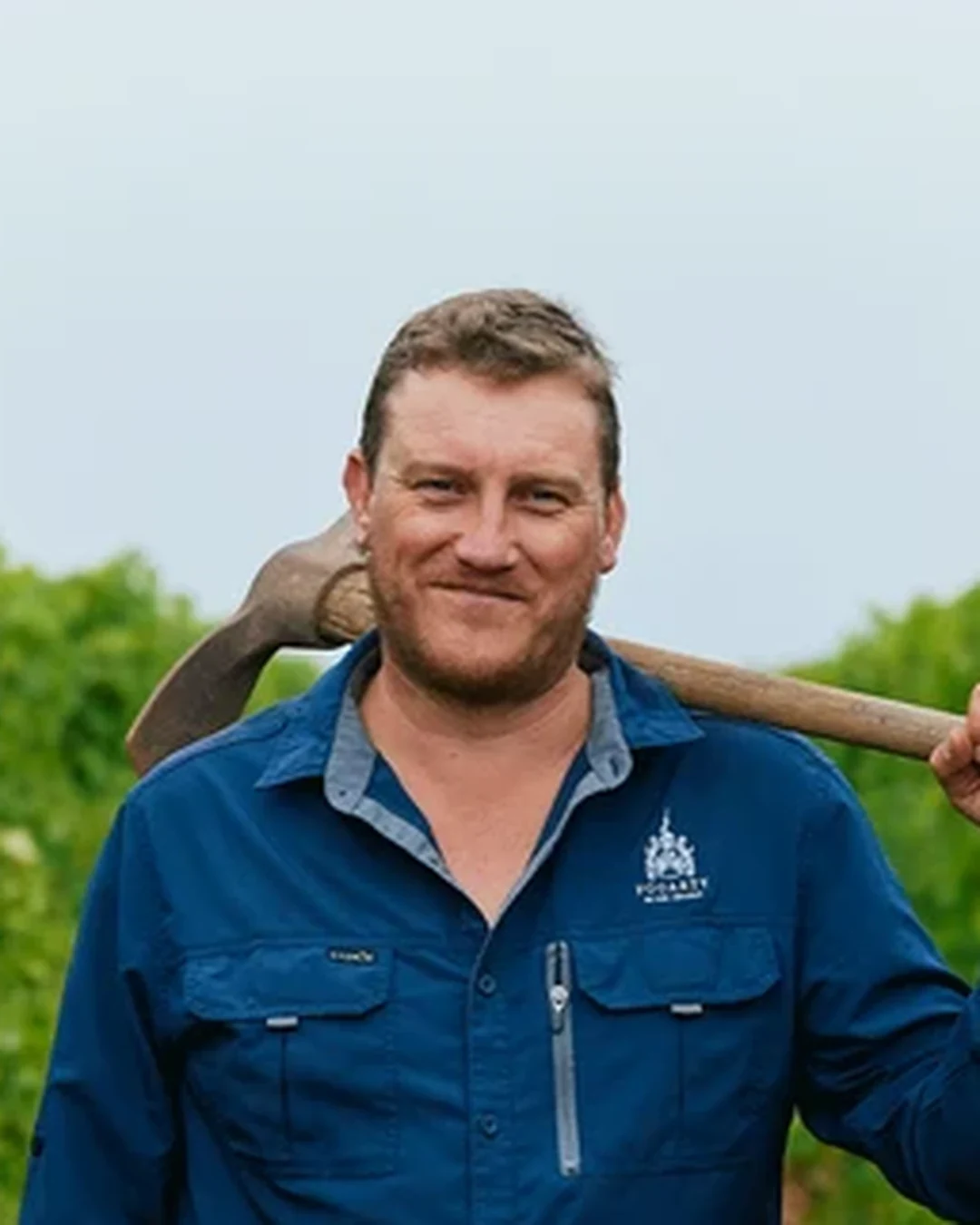
Made By profiles John Fogarty (Winemaker) at Fogarty Wine Group.
How expensive is Fogarty Wine Group?
Fogarty Wine Group is listed at a price level of $$$.
The field
How it compares
| Place | Notes | Awards |
|---|---|---|
| Fogarty Wine Group | West Perth, $$$ | · |
| Catena Zapata | Agrelo | World's 50 Best |
| Château Léoville Barton | Saint-Julien-Beychevelle | · |
| Château Palmer | Margaux | · |
| Domaines Barons de Rothschild (Lafite) | Bordeaux | · |
| Gaja | Barbaresco | World's 50 Best |
| Schloss Johannisberg | Geisenheim-Johannisberg | World's 50 Best |